








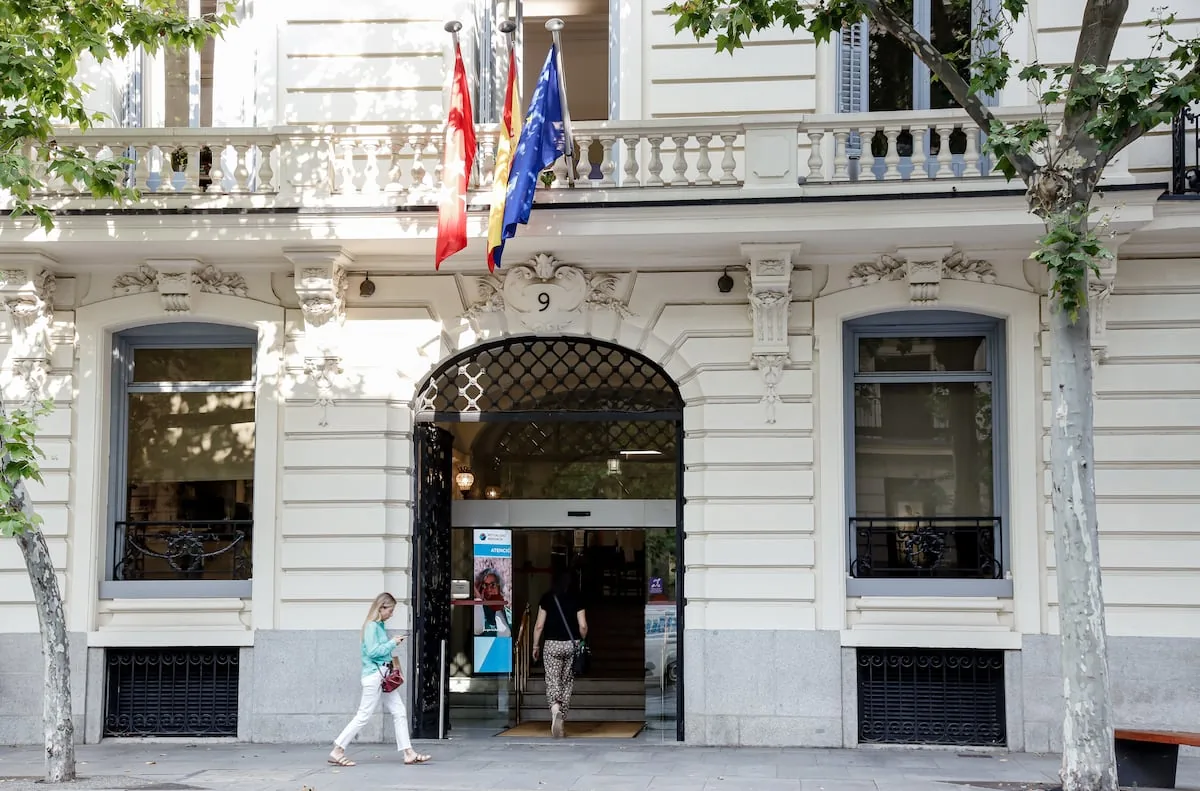
In December 2025, the Madrid Bar Association announced on its website: “ICAM’s new university center [affiliated with the Complutense University] opens pre-registration for the 2026-2027 academic year with a Law degree.” Even in February, it held an open day attended by interested students and their families, according to a press release. But the new inauguration date for the degree on the website is September 2027. No trace of the three master’s degrees. What has happened in the meantime? The press department explains that the delay is due to an “objective of guaranteeing its implementation under the best academic, organizational, and quality conditions.”
Read more Having children is for the rich
They need to carry out works at the Serrano 9 and 11 premises and “complete the processing and authorization procedures for the degree within the most appropriate times for its correct execution,” ICAM continues. The postgraduate degrees about which this newspaper has inquired are not mentioned.
Not a week goes by without news on a project that last January was sued in court by two PSOE lawyer-deputies of the Madrid Assembly (in a personal capacity) and the central government. ICAM appeared in the Attorney General’s case in March 2024, and Isabel Díaz Ayuso’s government authorized the affiliation of the center to the Complutense, in the middle of the trial, on November 11. This has strained relations between the association and the Executive to the extreme.
The inauguration of the affiliated center opens a new debate, that of professional associations entering regulated education. In 2013, the General Legal Service of the Community of Madrid issued a report against a professional association being able to own a center affiliated with a university. Without having changed the legislation, it has now ruled in favor if ICAM, as it has done, changed its statutes to include regulated teaching.
ICAM has adjusted its prices so much, half that of private universities in Madrid, that its economic solvency is in question. This was revealed in the viability report of the project by the Ministry of Education, and a subsequent move shows growing concern.
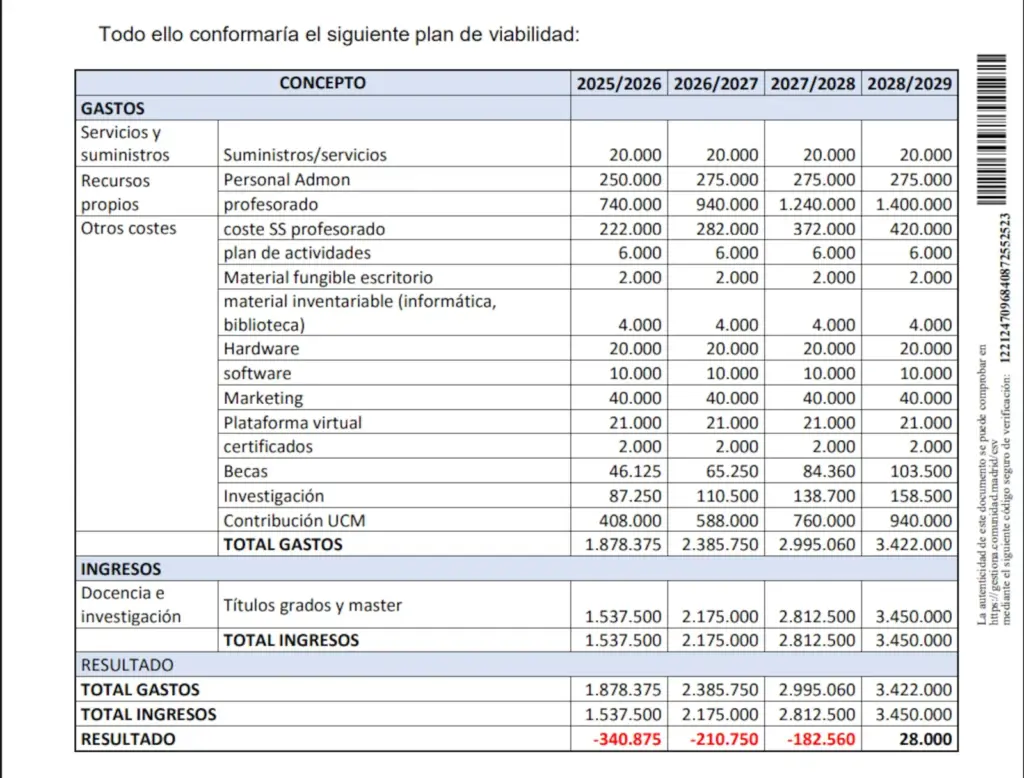
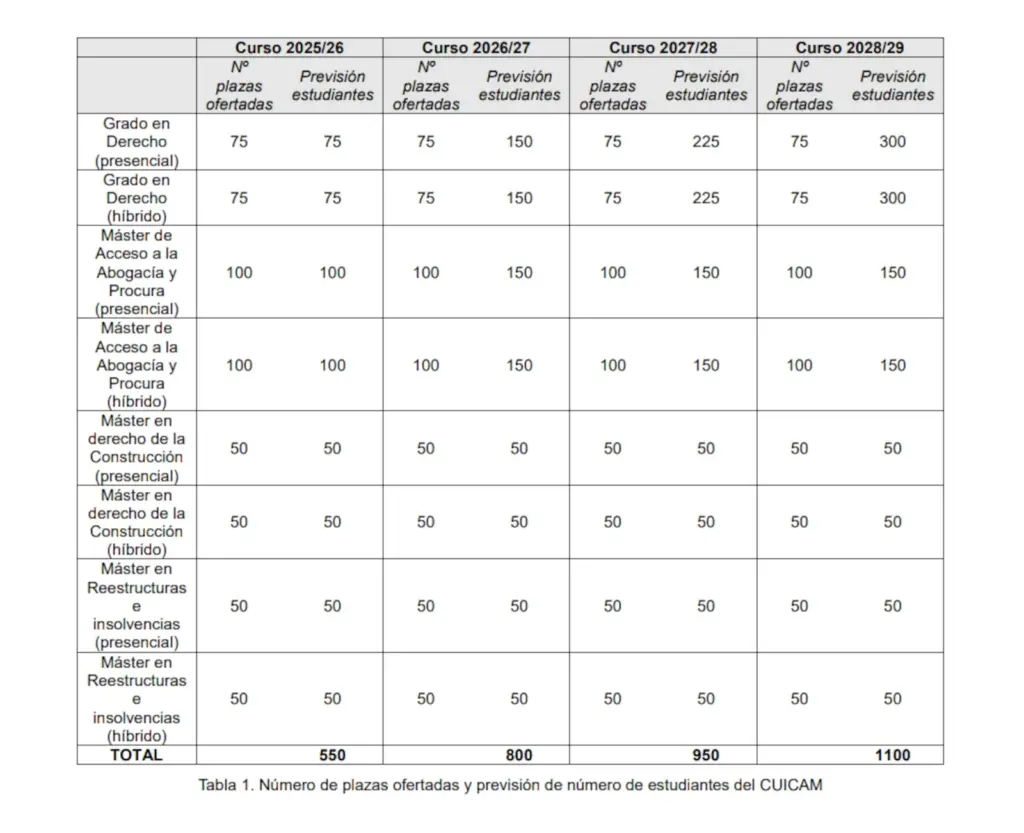
The curriculum was approved in November, and this January, the Complutense Law faculty board voted in favor of modifying the Cuicam degree’s report, so that all 150 places are in-person (5,000 euros per course), instead of 75 in remote mode (3,500). This means an additional 112,500 euros annually in the first year, if the places are filled. And it could reach an additional 414,400 euros ―when implemented from first to fourth year of Law―, if the total forecast of 552 students is met (it is estimated that 48 will drop out without finishing the degree, an optimistic calculation). According to this new calculation after the change in places, they will move out of the red in the fourth year, not with profits of 28,000 euros, but of 432,400.
The objective is to fill the 150 degree places from its inauguration and the 500 places of the three master’s degrees (access to the profession, construction law, and restructurings and insolvencies) within five years.
This increase in income is a small relief for the association, which has seen its financial lawsuit with IBM, which is still ongoing, become more complicated. In 2019, ICAM filed a lawsuit against the American company and its subsidiary Viewnext for breach of a digital transformation project. In 2022, a court of first instance partially upheld its claim and ordered the companies to pay the association more than five million for damages resulting from the breach. But the sentence was revoked by the Provincial Court of Madrid last December and obliges ICAM to pay 935,455.85 euros to the technology companies after the appeal was upheld.
The socialist deputies who filed the lawsuit feel victimized by the affiliation, which could affect them as members. “Part of the mandatory fee must be allocated to this business venture, instead of dedicating it to welfare or postgraduate training functions, which are necessary activities for members,” they state in their appeal. According to the expert report they provide ―prior to the increase in degree income―, the projected losses of 207,500 euros for Cuicam’s first academic year are equivalent to a 53.4% reduction in the economic result of 2022, and 24.2% in 2023.
The Technical General Secretariat reproaches ICAM in its report that the documentation sent “does not quantify the investments to be made nor their financing. Nor is the amount of the amortization of said investment in each fiscal year foreseen, which, on the other hand, would increase expenses.” Furthermore, it states that “the establishment of a guarantee” should be required, since with the creation of the commercial company Centro Universitario ICAM SL, “ICAM’s backing cannot be considered a guarantee of the maintenance of the activity.”
“The Association has complied with legality in each and every step it has taken; and we fully trust that Justice will clarify any doubts that may arise,” adds its press department. From the response, it is inferred that a guarantee of the affiliated center’s economic solvency was established.
The Madri+d Foundation, which depends on Ayuso, rejected the project twice and capitulated on the third attempt. “If a professor taught about 250 hours annually, 46 professors would be required, nine more than anticipated,” its technicians concluded.
Given the delay, former Attorneys General Consuelo Madrigal and Eduardo Torres Dulce, former President of the Constitutional Court Pedro-González Trevijano, and former Dean of Madrid notaries Ignacio Solís remain waiting to teach at ICAM within a year and a half.