









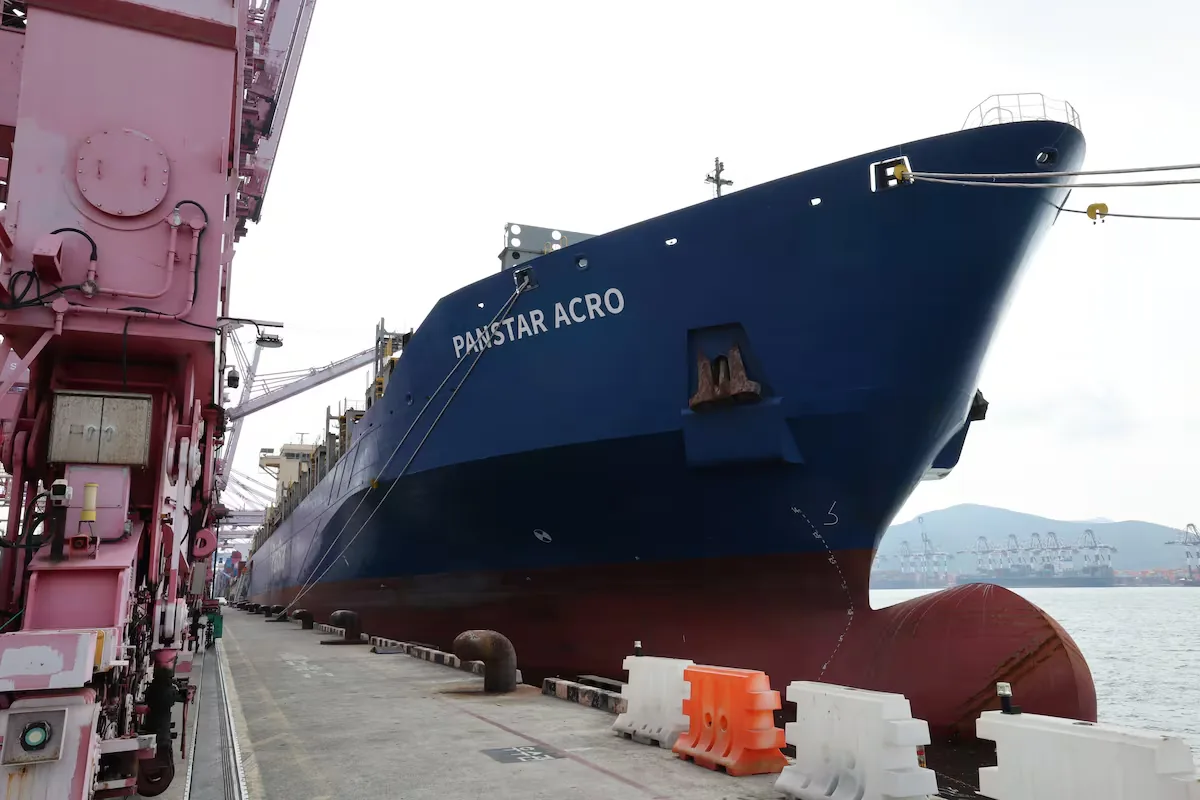
It was last Wednesday and Saturday, in the populous ports of Qingdao (China) and Busan (South Korea). Two medium-sized cargo ships with names unknown to the general public, the Dubai Tower and the PanStar Acro, cast off bound for the British ports of Teesport and Felixstowe via the Arctic, then continuing to other points in northern Europe. A significant move in the always frenetic world of maritime trade that also redraws the contours of the economy and, yes, geopolitics as well: it shifts power and influence towards the northern hemisphere, to the detriment of the south, and gives another dangerous advantage, one more, to Vladimir Putin’s Russia.
Regular connections between Asia and Europe via the North Pole — the intention of the Chinese Sea Legend is for the link to be weekly; its South Korean counterpart is still in the testing phase — were unimaginable a couple of decades ago, when global warming was already wreaking havoc but the ice still covered most of the Barents Sea.
Today, however, the sector estimates navigability in the area at about three or four months — from August to October, although with increasing possibilities of extension towards the end of the period — thus making viable a route that drastically cuts times compared to the most used alternative to connect Asia and Europe — the one that passes through the Suez Canal — and exponentially compared to the one that crosses the African continent, south of the Cape of Good Hope.
“If the 20th century was the century of the Malacca Strait, the 21st century will be the century of the Bering Strait,” predicts Arancha González Laya, dean of the School of International Affairs at Sciences Po Paris in her recently published Alone in the World (Arpa, 2026). “One of the greatest reconfigurations of global logistics has begun,” projects the former Spanish Foreign Minister.
With the Red Sea, gateway to Suez, under constant Houthi dagger and the Strait of Hormuz doubly blocked by the US and Israel’s war against Iran, the situation could not be more favorable for the so-called Northern Sea Route. It shortens times, by up to 40% according to Kjell Stokvik, director of the High North Logistics Center, a figure that “will be reduced even further in the future, with transpolar routes.” It allows for greater ship rotation. It reduces fuel consumption, key in times of scarcity. It avoids the risk of armed attacks. And, although the premiums demanded by insurers are high, these have also increased significantly in Middle Eastern waters, leveling the playing field.
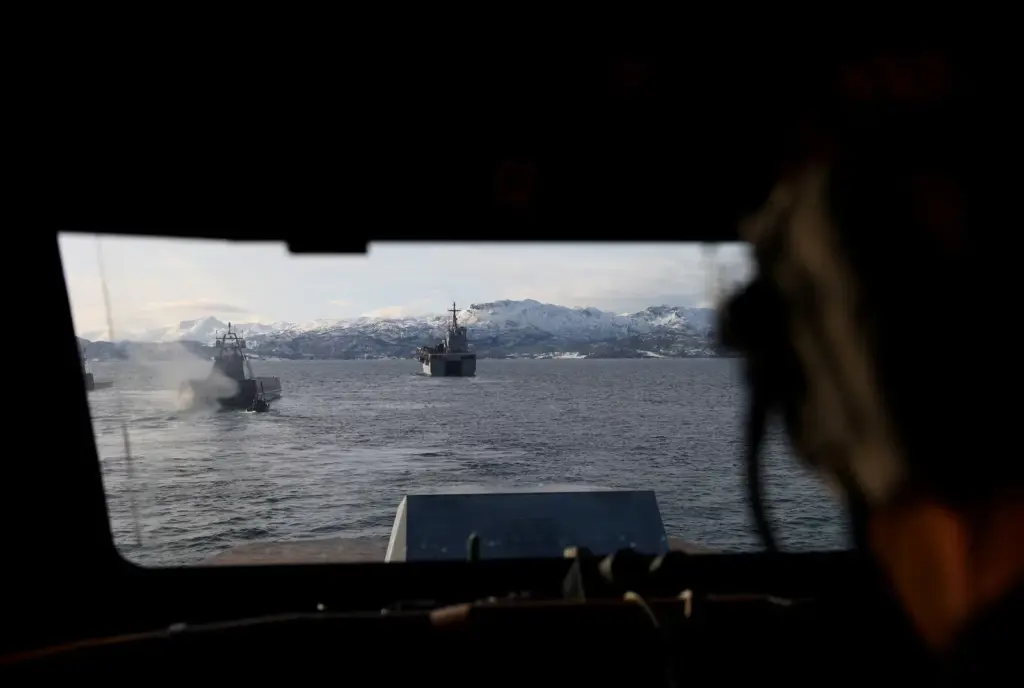
However, the drawbacks are significant. The first is environmental damage. If this route is feasible today, it is precisely because of the relentless advance of ocean warming and the continuous melting of the Arctic Circle: icebreakers are only needed in the final stretch of the season, well into October. Despite the lower fossil fuel consumption of ships, the opening of this new route can worsen both pollution and damage to biodiversity in a unique region in the world, a natural sanctuary of incalculable value. “These cargo ships risk collision with mammals and other species in an area that also heavily depends on fishing,” recalls Javier Arnaut, professor at the University of Greenland-Ilisimatusarfik.
The second challenge, emphasizes Anjali V. Bhatt, researcher at the Peterson Institute, has to do with the control Russia exerts over it. If Iran — and now also the US — wants to claim control of Hormuz, charging tolls at will, to the north of the north it is the nuclear company Rosatom, owned by the Kremlin, that issues navigation permits. Collecting, of course, increasing sums of money at a time of pressing economic need in Moscow. The flip side is Egypt: if the Arctic route consolidates, it will mean a financial loss for the already hole-ridden coffers of the African country, heavily dependent on transit through the Suez Canal.
“From Shanghai northwards any ship via the Arctic route arrives earlier in Europe [than via Suez]. But it will always have one drawback: there are no points where ships can make intermediate stops,” explains Jordi Torrent, consultant and secretary general of the Mediterranean Association of Ports. “From Asia to Algeciras, they can call at four or five ports (Singapore, Dubai, Egypt, Malta…). Via the Arctic, however, there is nothing, and that is a structural limitation.”
Spain has benefited from detours around the Cape of Good Hope, strengthening its role as a gateway to Europe through the Strait of Gibraltar, one of the few free maritime routes. Valencia and Barcelona have seen their business soar, and Algeciras stands as a critical port on a global scale. The Arctic route could diminish this influence.
Although still without regular services, last year a total of 103 transits (one way or return) were recorded via the Arctic route, six more than in 2024 and 60 more than in 2022, according to figures from the High North Logistics Center, based in Kirkenes (Norway). Mostly Russian and Chinese ships. Those numbers, however, still pale compared to the more than 24,000 ships that passed through Suez in 2024, the last before the Middle East war reached its peak.
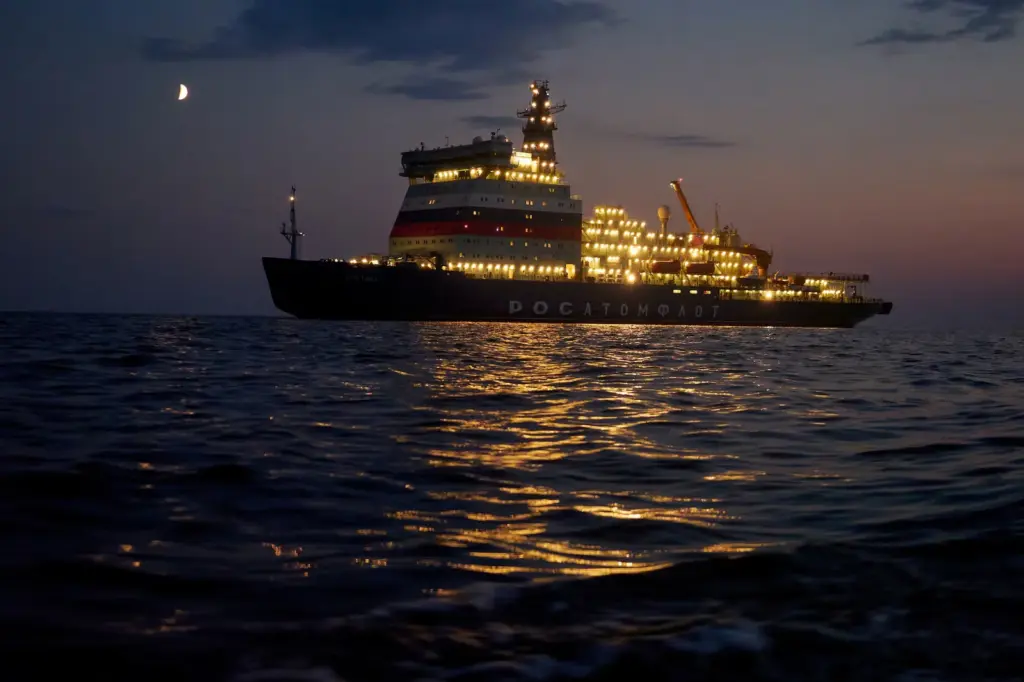
Neither North America nor Europe remain indifferent to these commercial movements — and of all kinds: military and energy, among others — in an Arctic that has become one of the hottest spots in the world regarding the clash between powers. The Donald Trump administration combined repeated annexation threats to Greenland with the announcement of a large purchase of Finnish-made icebreakers to exceed fifty units in its fleet. Canada also does not want to be left behind, having just announced the construction of six more ships.
“The opening of these routes generates anxiety in the US about using the other Arctic route, the Northwest Passage, over which Greenland has rights,” outlines Arnaut. “It increases the value [of the island under Danish sovereignty] for Trump, and shows that the progressive commercialization of the Arctic goes far beyond the economic: it has strategic value.”
Brussels, meanwhile, is preparing to unveil in the coming weeks the main lines of its Arctic strategy for the coming years. It does not have bad cards, neither due to geographic proximity nor historical hegemony in the area of several of its partners (Finland, Denmark, Sweden), but, as in many other aspects, many voices lament the lack of ambition: that it cannot, in short, overcome its herbivorous inclination when the big carnivores, from Russia to the US via China, show their fangs.
Summit in Lapland
Aware of the urgencies, Helsinki, the capital with the most to say in a region where it stakes its own beans, has just convened this week a high-level summit to be held on September 13 and 14 in Rovaniemi (Lapland). “The Arctic is an increasingly important part of the European security environment, and the EU has direct interests in its stability, security, and sustainable development,” reads the call to the leaders of the north and east of the bloc.
“Europe’s challenge is not lack of involvement, but ensuring greater coordination and a clearer strategic orientation,” demands Stokvik, from the High North Logistics Center. Michael Bravo, from the Scott Polar Research Institute, affiliated with the University of Cambridge, also believes that the Twenty-Seven can “benefit from these advances [in Arctic navigation].” He says they have “both the opportunity and the capacity to contribute constructively to shaping the future of the region, ensuring it has adequate environmental protection and economic stability.”
More skeptical is Alla Pozdnakova, from the Scandinavian Institute of Maritime Law, affiliated with the University of Oslo. “It is fascinating to see the plans of China and South Korea, but I doubt these routes have positive implications under current circumstances, neither for the Arctic states nor for the rest of Europe.” Rather the opposite, she writes by email, “it is likely that geopolitical tension will increase, and that Arctic coastal countries like Norway will be exposed to greater risks of polluting accidents in the harsh conditions of Arctic waters: the ecological damage that an accident involving a container ship can cause to the marine environment is enormous.”
Weapon for Moscow
“Russia not only manipulates Europe with natural gas, but also with the Arctic: it can vary what it charges shipping companies for crossing it and because it has the possibility to block it whenever it wants, like Iran with Hormuz,” warns Vasco Sánchez Rodrigues, associate professor at Cardiff University, by phone. He also emphasizes the importance of this maritime route for exporting Russian oil and gas. Also as a usual channel for the trafficking of weapons and troops originating or destined for the Eurasian giant.
It is, in the words of Carlos Santana, director of the advanced supply chain program at IE, “a change of feudal lord,” of master and lord of the route. More power for Moscow and also for Beijing: “For China, the Arctic is not only a potentially shorter route; it is, above all, a new strategic option.” And for the Kremlin, Torrent concludes, the Arctic has been an obsession for 400 years. “Its only sea outlets were the Black Sea, in the hands of Turkey, and the Baltic. That is why it was one of Putin’s five priorities for this century. This one, thanks to climate change, has already been fulfilled.”
Read more “Rafa is not Rafa”: living ten years with a con artist