More than 3.6 million people parade each year through room number 12 of the Prado Museum to admire The Family of Philip IV. The work by Diego Velázquez, known since the 19th century as Las Meninas, is so popular among visitors that last summer the Madrid art gallery asked Felipe VI to comment on it to celebrate the 1,000 broadcasts of the Prado’s Instagram channel. The video of the monarch, a direct descendant of Philip IV, had more than five million views and, according to sources from the museum to EL PAÍS, is one of the most watched in its history.
Read more The new Arctic route redraws the maps of economy and geopolitics
“In the center of the scene, Infanta Margarita literally shines because Velázquez bathes her in light and makes her the protagonist. She is flanked by the meninas… María Agustina Sarmiento is offering her water,” the King explains in the video, referring to the reddish earth-colored búcaro that the menina serves to Philip IV’s daughter on a silver tray. “There are many interpretations about this work, about the messages its author intended to convey,” he concludes.
Felipe VI forgot to mention a detail about the mysterious búcaro painted by Velázquez. In the Golden Age, the ladies of royalty and nobility devoured these unbaked clay vessels as if they were appetizers. Art historian Natacha Seseña named this curious gastronomic practice bucarofagia. The consumption of clay caused iron-deficiency anemia, which translated into that sickly pallor so fashionable at the time. Mud was also ingested for other superstitious purposes such as regulating menstruation, as a contraceptive method, and even as a hallucinogen or narcotic to enter mystical states in the purest style of the ecstasy of Saint Teresa.
See this post on InstagramA post shared by Museo Nacional del Prado (@museoprado)
“I was not surprised that Felipe VI did not talk about bucarofagia, although the matter is not so scandalous as to avoid making a brief comment about it. The King was also unable to go to the museum to make the video due to scheduling problems. He recorded it at the palace,” points out César Andrés Baciero, author of Kings Who Lived Like Kings. Monarchy and Luxury (La esfera de los libros, 2026). Baciero dedicates an entire chapter of his book to the búcaro of Las Meninas and its meaning and significance in the 17th century. “Velázquez added it very late in the painting. There are all kinds of conjectures about why he painted a búcaro at the last moment. He probably did it to demonstrate the economic power of Philip IV. At that time, the best búcaros were made in Extremadura, Portugal, and Mexico. They were very expensive treats. The nuns trafficked with them and sold them among the noble ladies,” Baciero explains.
The practice of bucarofagia had its risks. “Queen Maria Luisa of Orleans, wife of Charles II, was stuffed with mud to see if she would get pregnant that way. She died at 26 from a serious gastrointestinal problem after suffering acute pains. It is believed that consuming so much mud caused her a miserere colic or probable peritonitis that ended up killing her,” the author points out.
In Kings Who Lived Like Kings, Baciero dwells on these kinds of anecdotes about the luxuries, excesses, and whims of European monarchies: the legendary equestrian ballets of Leopold I of the Holy Roman Empire, the nouvelle cuisine of Louis XV, the lavish jewelry collection of Catherine II of Russia, the golden carriages of Wilhelmina of the Netherlands.
The most surprising passages are those dedicated to the routines and beauty secrets of crowned heads throughout the centuries. “One of my favorite chapters is about the alleged pubic hair wig of Charles II of England,” says the writer. “The English king was fond of wigs. He did not resort to others’ hair due to lack of a good own tuft, but to hide the gray hair he combed. Legend has it that he had a wig made with a careful selection of pubic hair shaved from his favorites.” The mahogany box in which this rara avis of hairdressing was supposedly displayed is kept at the St. Andrews Museum in Scotland.
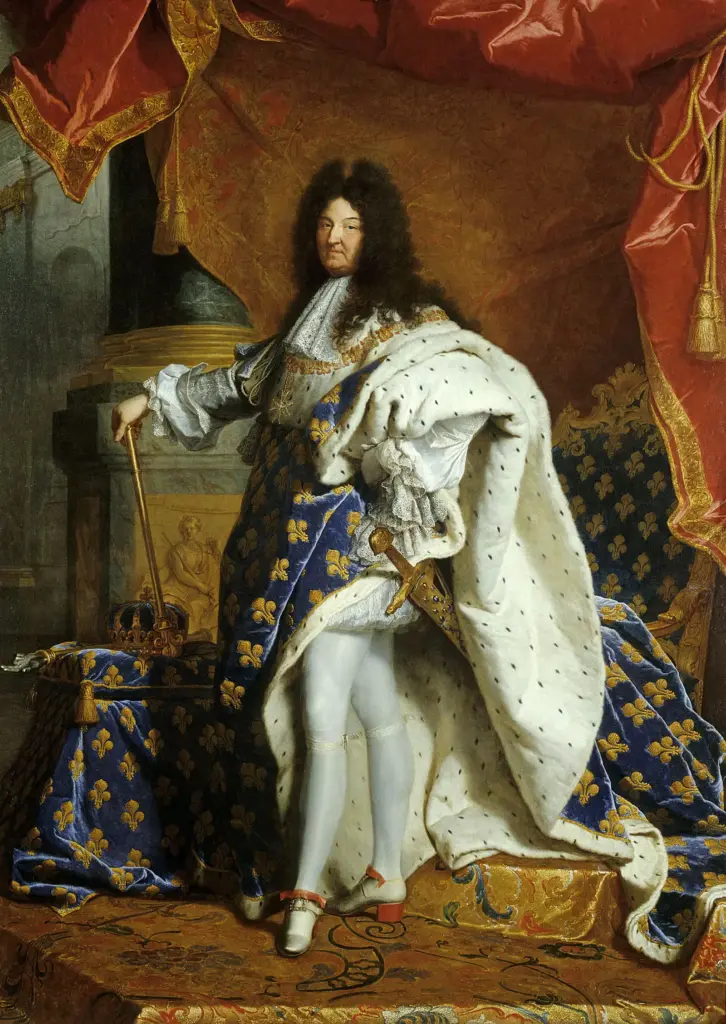
Louis XIV, cousin of Charles II and one of the architects of modern luxury, was also a great user of extravagant wigs. “Having great hair was a status symbol. Since the Sun King did not have much hair, he made wigs fashionable at his court. It is estimated that he amassed a thousand models. He even had his own Wig Cabinet in Versailles, which he placed on classical busts. Each one sported a type of hairstyle life-size: the casual one, the ‘one day is one day’, the sporty, the going out to flirt…”
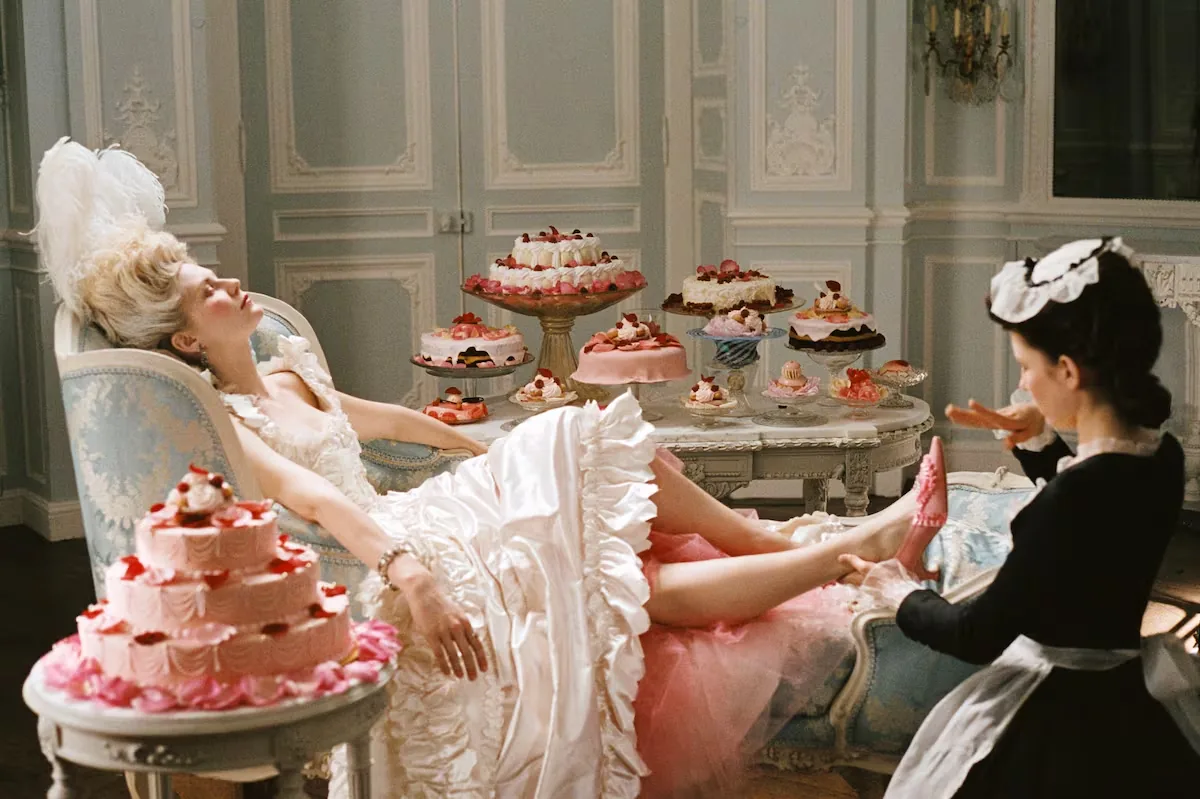
In a book about royal excesses, a section dedicated to Marie Antoinette, consort of Louis XVI, and her OCD about baths could not be missing. “She spent four hours in the bathtub. During that time she had breakfast and even took language lessons. They say the revolution caught her in the bathroom,” says Baciero. “If the queen, a busy woman, could spend four hours in the bathtub, imagine the other women of the court. They might have spent six hours. Long baths were a widespread fashion. Louis XV already took exhaustive baths with water from the Seine and Marseille soap.”
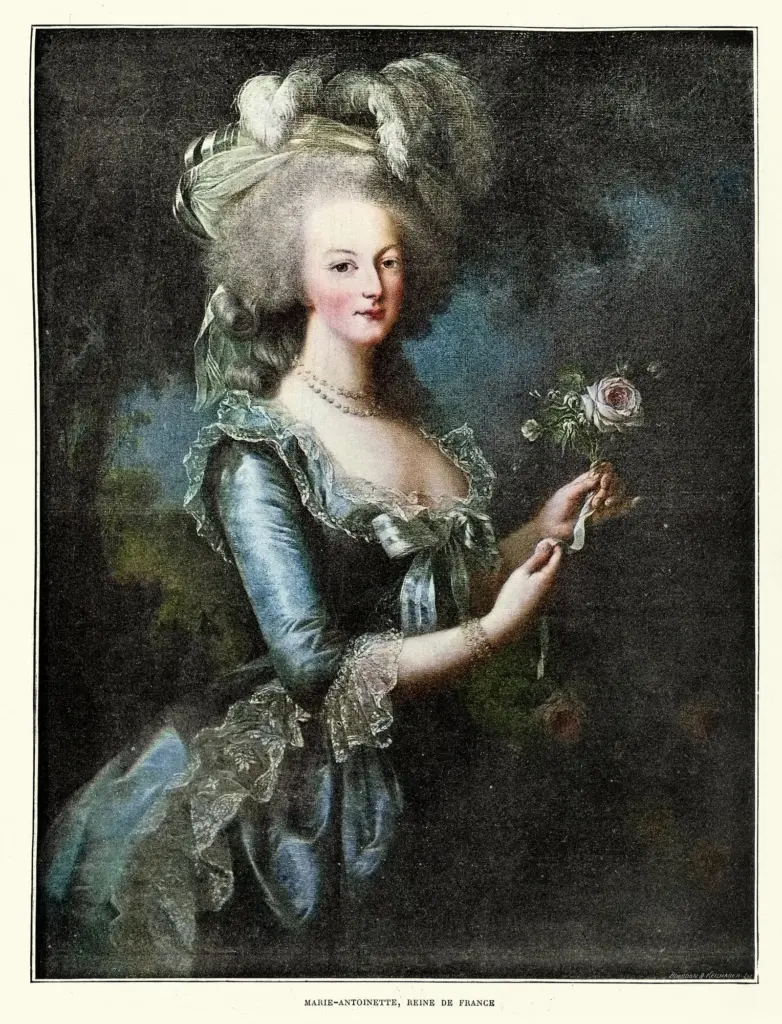
Beyond her fondness for la toilette, Marie Antoinette also became infamously popular for her taste in fashion and perfumes. She even had an official perfumer, Jean-Louis Fargeon, although Catherine de Medici was one of the first fragrance enthusiasts. The wife of Henry II of France liked to perfume even her gloves. The black legend says she soaked a pair of them with poison to kill her mother-in-law, Joan III of Navarre. The queen took this matter so seriously that she traveled to the French court with her personal perfumer, Renato Bianco, raised by the Dominican monks of Santa Maria Novella in Florence, owners of the pharmacy that prides itself on being the oldest in the world — dating back to 1221. In 1533, Bianco invented for his patron Acqua di S.M. Novella or Acqua della regina. “Five centuries later, this fragrance is still sold with notes of native citrus, a base of moss, and a heart of neroli, rosemary, clove, and lavender,” Baciero points out in his book.
For the journalist, these apparently frivolous and inconsequential stories say a lot about how the tastes of royals have evolved and, therefore, the customs and habits of the rest of society. For centuries, kings and queens devoted great efforts and huge amounts of money to their whims for propaganda purposes, to demonstrate their economic, geopolitical, and cultural power. Today, the study of these excesses also serves to understand the most human and grotesque side of sovereigns: their insecurities, weaknesses, and vices.
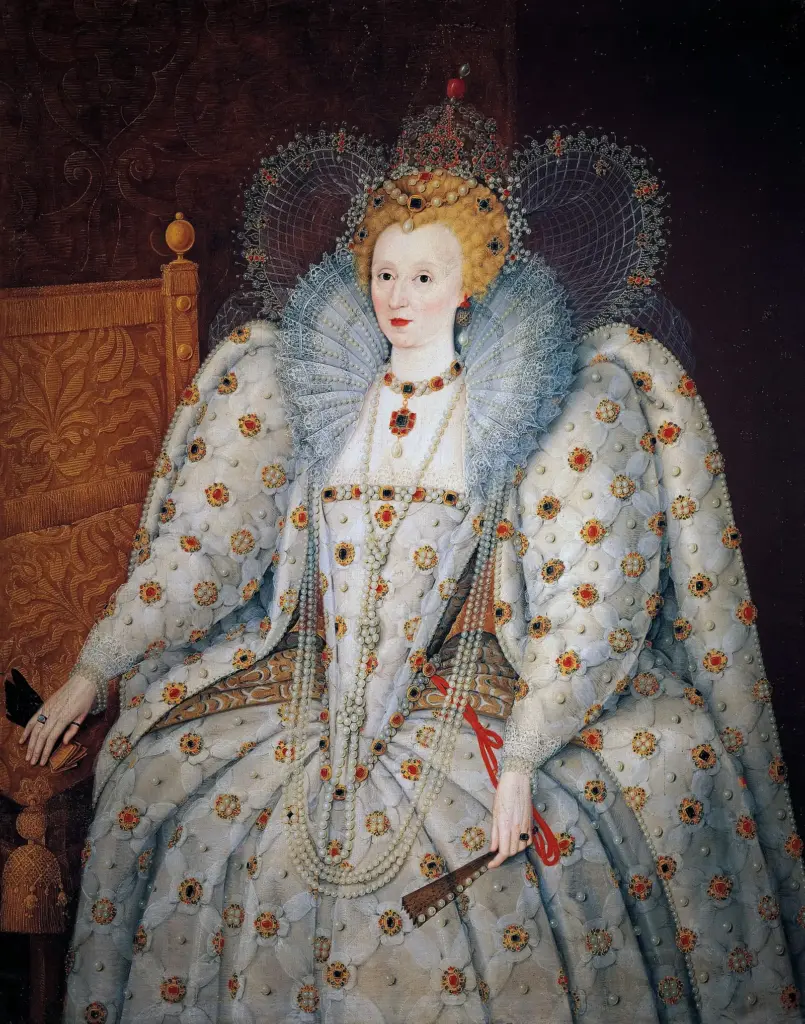
Elizabeth I of England, for example, had a face full of marks and scars due to smallpox contracted in 1562. To hide them, the all-powerful Gloriana used Venetian ceruse or white lead, a thick white paint whose active mineral was cerussite, that is, lead. At the time, soliman, mercuric chloride, was also used against freckles and spots. The Virgin Queen dyed her hair with a concentrate of lead sulfide, quicklime, and water. At the end of her life, Henry VIII and Anne Boleyn’s only daughter showed symptoms typical of poisoning from the use of all these toxic chemicals: memory loss, nausea, fatigue, scaly skin, and hair loss. She was buried without an autopsy, but it is believed that the continued use of layers of Venetian ceruse was one of the possible causes of her death.
Today, modern monarchies are more controlled when satisfying their whims or making their most extravagant fantasies come true. European royal houses almost time the hours of use of tiaras and haute couture dresses and use palaces and golden carriages sparingly. “With the fall of the old regime, the ideal of the bourgeoisie and work was imposed. The monarchy adopted the role of the bourgeoisie. Queen Victoria of England liked to be portrayed as a mother and wife, rather than as a monarch, to fulfill that new bourgeois ideal,” explains Baciero. According to the journalist, austerity became more an aesthetic than an ethical issue and still is: “They present themselves as just another citizen, but that does not mean they have stopped living like kings.”
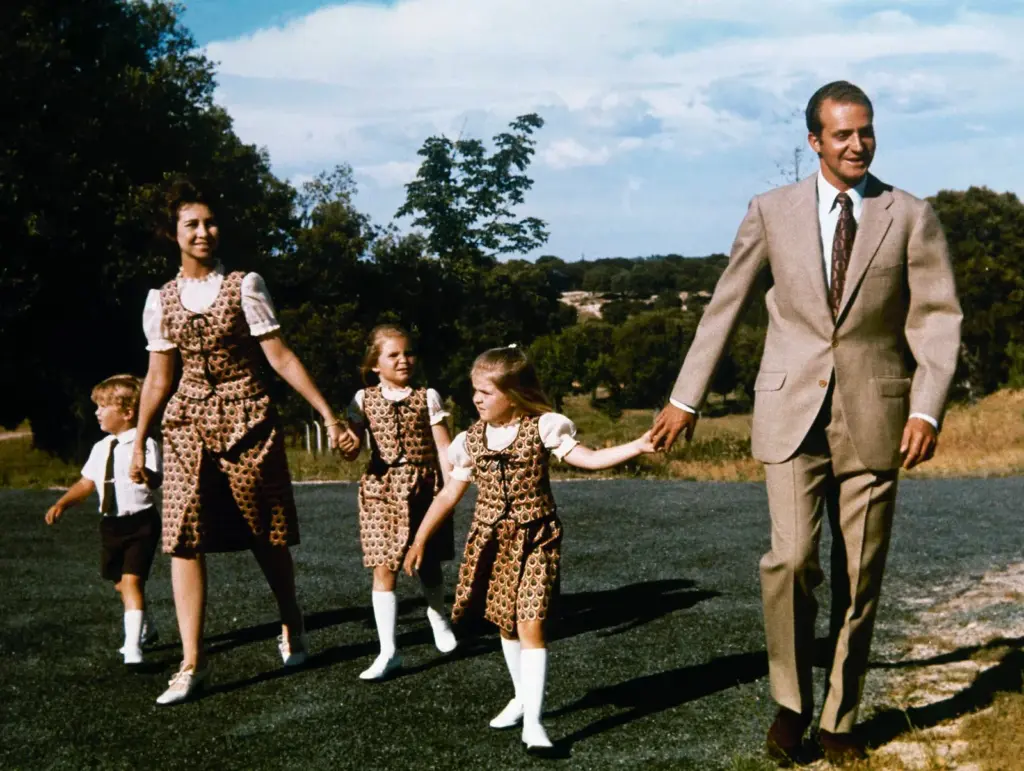
The Bourbons lead this royal race to stage or pretend the normality of a middle-class family. It is said that the Spanish monarchy is considered the cheapest in Europe, with an official annual budget of about 8.4 million euros. “When they came to the throne, Kings Juan Carlos and Sofia decided to present themselves austerely, although we already know what happened later. But then they were in mourning for Franco’s death and it was not the time to bring out the ermine cloaks. Besides, they wanted to emphasize appearing as ordinary Spaniards because, adding the years of the Second Republic and the dictatorship, we had been without a monarchy for more than 40 years.”
Felipe VI follows this same trail of apparent simplicity, although Baciero does not know if the choice is the most correct. “In the end, luxury does not generate as much rejection as we think if we consider that people spend the day on social networks watching how the Kardashians, Georgina Rodríguez, or the footballer of the moment live. I think we are having a certain return to the old regime: there is 1% of the population that has a lot of money and spends and shows it on social media. And then there is the rest of us, watching,” he reflects. “If Charles III of the United Kingdom starred in an equestrian ballet, like those organized by Leopold I of the Holy Roman Empire, maybe people would be happier with the British monarchy. In the end, the people swallow everything.”