









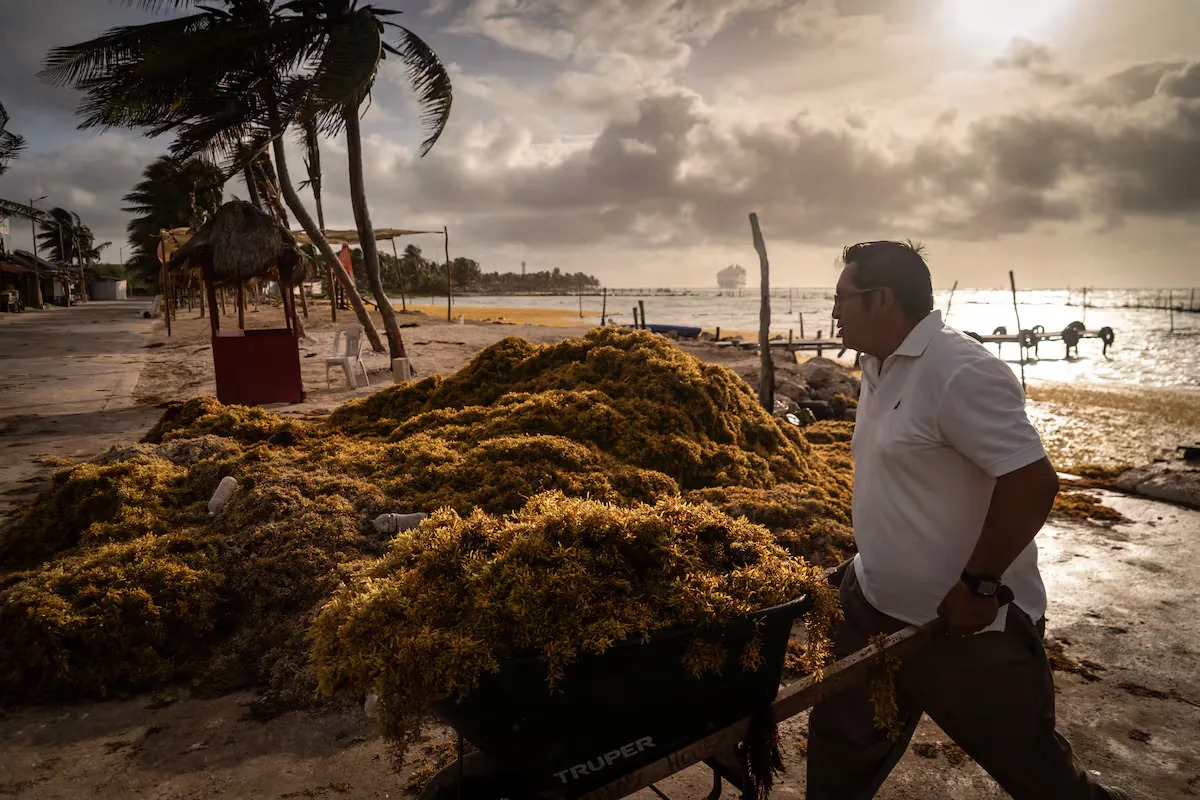
The presence of tons of sargassum on Mexican beaches has become an environmental crisis that has forced the Government to allocate significant resources for its collection and containment, in order to prevent further impacts on tourism in Quintana Roo.
Read more Two rights for a single Government: the cabinet that Abelardo De la Espriella is assembling
During the peak holiday season, historic figures have been recorded. The Secretary of the Environment, Alicia Bárcena, has reported that 2026 has become a “difficult” and “atypical” year, with amounts of sargassum 27 times higher than the historical average. According to the traffic light system of the Secretariat of Ecology and Environment of the State of Quintana Roo, 72 beaches in the state have shown sargassum levels ranging from abundant to excessive in recent days. Additionally, data from Semarnat estimate that during the most critical days, around 9,000 tons of sargassum arrive at the coasts.
Although this macroalga plays an important role in marine ecosystems by serving as shelter and food for various species, its massive proliferation in the Caribbean has environmental implications. When it accumulates on beaches and decomposes, it releases hydrogen sulfide, a gas with a rotten egg smell that can affect air quality, as well as reduce oxygen in the water and put marine fauna at risk. Its presence also deteriorates beaches and causes impacts on tourism, one of the main economic activities of Quintana Roo.
Forecast
It is expected that in the coming days the massive presence of sargassum on the beaches of the Riviera Maya will continue. According to forecasts, the most affected areas will continue to be the eastern coast of Cozumel and the coastline from Tulum, passing through Mahahual, to Bacalar Chico, where excessive levels of sargassum remain. To check beach conditions before traveling, specialized platforms such as Sargassum Monitoring offer updated maps and images shared by other visitors.
Sargassum-free beaches
According to the most recent reports, only a few beaches are completely free of sargassum, including Chiquilá, Isla Contoy, and Isla Blanca. Additionally, the northern coast of the Riviera Maya registers low levels of sargassum, particularly in Holbox, the beaches of Isla Mujeres, and Punta Cancún.
View this post on Instagram
Recommendations
In light of the abundant presence of sargassum on the beaches of the Mexican Caribbean, authorities have recommended that travelers stay informed about the conditions of each beach through official channels and follow the installed signage. They have also emphasized the importance of avoiding direct contact with sargassum, as it can cause skin irritations, as well as refraining from handling it without proper protective equipment. Additionally, special attention is advised for children and pets to avoid their exposure.
Subscribe to the EL PAÍS Mexico newsletter and to the WhatsApp channel and receive all the key news updates about this country.
Read more Who regulates digital content for children? Mexico debates how to moderate platforms