





Never before had we expected so much from school. And yet, never before had we distrusted it so much. Across Europe, education is central to public debate. We discuss reforms, methodologies, screens, artificial intelligence, and school results. Every new proposal promises to solve teaching problems but ends up generating new uncertainties. It’s as if the more school changes, the harder it becomes for us to answer a much simpler question: what do we educate for?
Read more Where are there heat alerts? Check which municipalities have health risks
I have the impression that the educational debate is often framed in the wrong terms. We talk about programs, technologies, or pedagogical methods when the decisive question is not technical, but profoundly political. Not because it depends on one government or another, but because it forces every democracy to answer an essential question: what is considered worthy of being transmitted to the generation that will succeed it? A language, a memory, a way of thinking, an idea of freedom? The Greeks called paideia this ambition to form not just a student, but a human being capable of finding their place in the city. All education contains a certain idea of the human being. In it, we learn to distinguish a fact from an opinion, a demonstration from an assertion, a dialogue from a confrontation. That is why education does not only prepare for a profession; it prepares for life in common.
Perhaps therein lies the great paradox of our time. Never before had we trusted so much in the emancipatory power of education, and at the same time, never before had we distrusted so much the institution responsible for making it possible. The crisis of the school is not, in essence, a school crisis. It is a crisis of political trust. Because a society that stops fully believing in its future also ends up doubting the institution responsible for preparing it.
The poet René Char wrote that “our inheritance is not preceded by any testament.” I believe few phrases better express the challenge of all education. No generation receives instructions about the world it must bequeath to the next. Each must decide what it considers worthy of being transmitted and trust that those who come after will know how to make that legacy their own, transform it, and enrich it. And perhaps that is the question that truly deserves our attention: not what school we want for tomorrow, but what we are willing to transmit to those who will come after us.
For a long time, educating was a shared responsibility. The family transmitted the first words and gestures. Libraries, associations, sports, cultural life, and meeting spaces contributed, each in its own way, to forming a person. The school instructed, but it was not alone. That balance has been weakening. Today we expect the school to reduce social inequalities, integrate populations of diverse origins, teach respect for the environment, equality between men and women, digital citizenship, critical thinking, and at the same time, prepare students for a constantly transforming labor market. None of these expectations are illegitimate. All respond to real needs.
But their accumulation has created a misunderstanding. Little by little, we have ended up asking the school to repair what society can no longer transmit by itself. A society that delegates all transmission to the school ends up asking it to replace society itself. Perhaps that is why we are witnessing today a renewed interest in the so-called new pedagogies. Maria Montessori, Rudolf Steiner, or Célestin Freinet do not return to the center of the debate solely for the techniques they proposed. They remind us of a deeper truth: all pedagogy starts from a certain conception of the human being. Before asking ourselves how to teach, we should ask ourselves what kind of people we hope to help grow. Because transmitting has never meant preserving the past intact. Each generation receives a world it has not chosen, but also the responsibility to understand it, discuss it, and transform it. Education is not about forming obedient individuals or passively adapting them to a changing world. It is about giving them the intellectual and moral tools to exercise their freedom.
That is why I am concerned that the educational debate is too often reduced to a discussion about tools, technologies, or methodologies. No innovation will be enough if we forget the question that precedes them all: what deserves to be transmitted? A school is defined less by the methods it adopts than by the idea of the human being and democracy it decides to place at the center of its project.
The emergence of artificial intelligence does not change this mission; it makes it even more evident. If a machine can answer almost any question in a few seconds, the school’s task is no longer solely to transmit answers. It is, more than ever, to train people capable of formulating the right questions, of distinguishing a fact from an opinion, an argumentation from a simple assertion, information from knowledge.
An answer can be found on a screen. Judgment, however, can only be built slowly, through study, conversation, and experience. The more powerful our technologies, the more profoundly human education must remain.
But educating consists, first and foremost, in learning to look at the world. It is no coincidence that the Greeks used the word logos to designate both word and reason. Learning a language has never consisted solely of acquiring a communication tool. It is learning to order thought, dialogue with others, and share a common world. It is discovering that a book does not only offer answers, but a way of asking questions; that knowledge does not only expand what we know, but also what we are capable of understanding. Each society decides, consciously or unconsciously, what it considers worthy of being preserved, discussed, and bequeathed to those who will come after. Transmitting has never consisted of repeating the past. It consists of giving the next generation the necessary tools to understand it, transform it, and, if necessary, correct it.
Freedom is not born of oblivion, but of a critically assumed inheritance. Only those who have first learned to know the world can transform it. Perhaps that is why education remains the most profoundly democratic act a society can undertake: because it does not only prepare workers or professionals, but citizens capable of exercising their judgment, dialoguing with those who think differently, and assuming responsibility for the world they receive.
We do not know what school will be like in 30 years. Technologies, professions, and ways of learning will change. Methods and programs are also likely to change. But there is one question that will remain the same: what deserves to be transmitted so that a society continues to be free? Perhaps that is the true responsibility of education. Not to prepare children for a world that no one can predict, but to give them the intellectual and moral resources to understand it, inhabit it, and transform it.
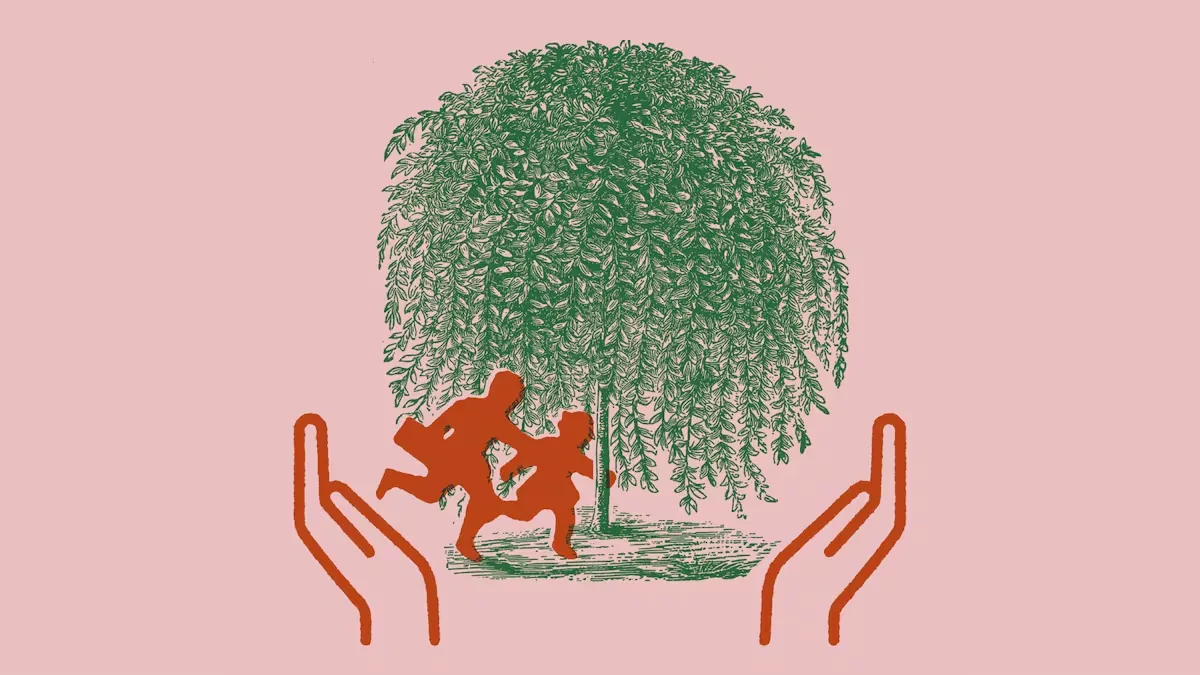
A democracy is not built solely through laws or institutions. It is also built thanks to a shared language, a common memory, and the trust that each generation will be able to receive that legacy and make it its own. That is why educating is, above all, an act of trust. It means accepting that the fruits of our effort will belong, to a large extent, to those who will come after us. No teacher, no father, no mother will ever fully know the scope of what they have transmitted. And yet, all education rests on that silent trust. In Mediterranean countries, we know that whoever plants an olive tree rarely does so for themselves. They do it thinking of those who will one day sit in its shade. Educating consists precisely of that. Because the future is never improvised. The future is inherited.
Read more At least eight injured by a gas explosion in Sants square in Barcelona