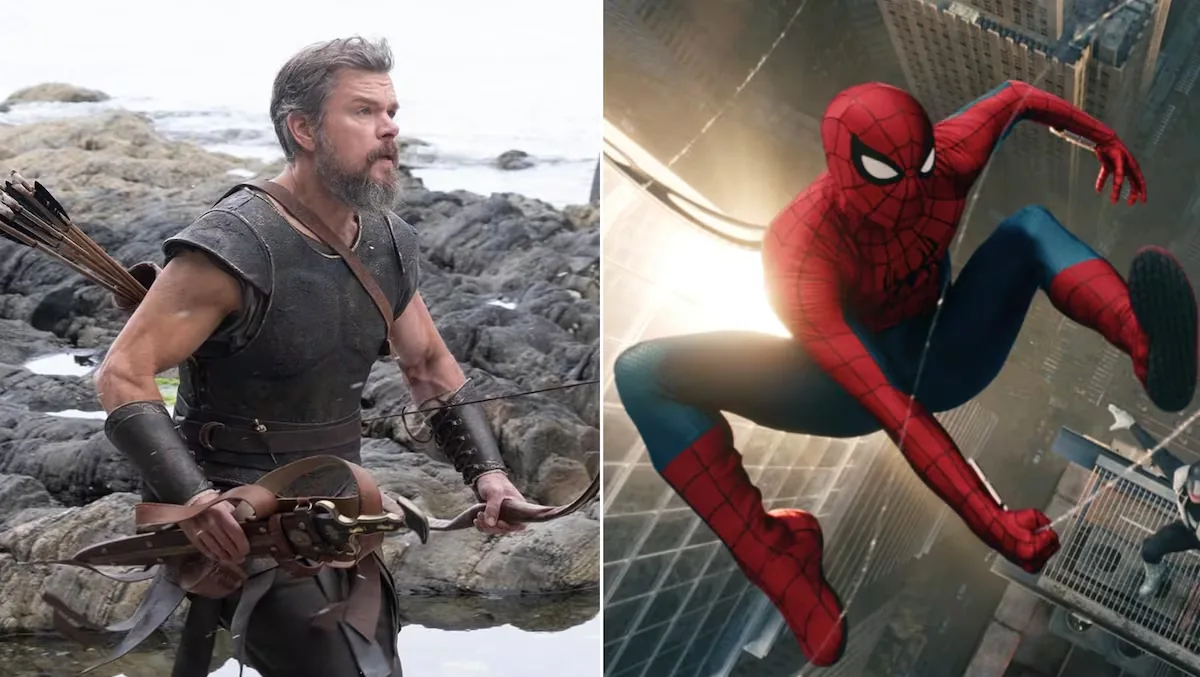
Hollywood was having a pretty decent summer, but now it’s starting to become exuberant. Happy and sweaty —the heatwave has been relentless for several weeks—, the quintessential movie district and its surroundings breathe easy after an achievement that calms its restless waters, at least temporarily: the almost magical box office union of The Odyssey with the latest installment of Spider-Man. Hand in hand, they have managed to supply more than 400 million to the US box offices in just one weekend, especially thanks to the more than 350 million of Spider-Man: Brand New Day, the best opening in US history. A winning combo that, in just three weeks, has grossed about 1.85 billion dollars worldwide (more than 1.6 billion euros). And a few more are expected. So Hollywood can keep breathing, which it badly needs.
Read more Carlos Alcaraz will not compete in the Cincinnati Masters 1000

The union of the two phenomena was expected to be successful, but few foresaw this much, especially after the fatigue that superhero movies or, simply, franchises seemed to show. Hence on Monday, with the hangover of the figures, there wasn’t a single specialized film outlet, from The Wrap to Variety, or film newsletter that didn’t open with the data, the records, the analysis, the madness. Especially at a tough time for the industry, where many shoots are leaving Los Angeles due to high costs, even higher after the pandemic and the writers’ and actors’ strikes. And more so when the city looks with great fear at the possible merger, temporarily halted, of Paramount and Warner, which could leave hundreds, if not thousands, of employees out of work. Although it is true that neither the adventures of Odysseus nor those of Peter Parker were filmed in Hollywood studios, in fact, not even in New York or the United States in general (Nolan’s in Morocco, Greece, Italy, or Iceland; Cretton’s in London, Surrey, Kent, and Glasgow), this is a boost for a city that lives off theaters, premieres, marketing campaigns, impossible parties, tourists who come to see, or to be disappointed by, the stars’ houses.
That’s why the fourth Tom Holland movie playing the beloved Peter Parker —which, if that wasn’t enough, also has good reviews— leaves a good taste in the Angelino city, in all the film companies (one’s success is everyone’s success) and, of course, in Sony, its distributor, which on this occasion was quick and happy to share the data of Spider-Man directed by Destin Daniel Cretton and its nearly one billion global, 932 million, that is, 810 million euros. The reception has been especially good in the United States and Canada: only there, it grossed almost 360 million dollars, surpassing the 300 million barrier that only Avengers: Endgame had achieved in 2019. In Spain, it earned 3.2 million euros just on Friday, its first day, making it the best opening in history.

“It’s the biggest opening weekend in box office history, with 360 million,” Sony told EL PAÍS, breaking down that the movie has been seen in almost 4,500 theaters and that Friday was the strongest day, with almost 170 million in revenue, followed by Saturday with 101 and Sunday with 89. With a “Wow!” started the statement from its CEO, Tom Rothman. “360 million thanks to all the filmmakers, actors, producers, and my colleagues at Sony, who have created such a fantastic movie and an exceptional marketing and distribution campaign,” he said. “Records are meant to be broken, but we will be very proud of this one as long as we keep it.” Rothman also told The Hollywood Reporter, with more sarcasm, that “all those geniuses who said movie theaters were dead didn’t have to be right.” “In fact, the theatrical movie market is booming right now, and that makes me very happy, I’m very optimistic,” he assured.
The Spider-Man phenomenon has been huge even compared to Christopher Nolan’s The Odyssey, which had already been a real boost for the city, where it has been the center of conversation for weeks. Although in regular theaters tickets can now be found (something almost impossible in its first 10 days), in the 70mm IMAX ones it remains very difficult. The true Trojan horse of the shoot presides over the entrance of Universal CityWalk, a famous multiplex north of the city, and welcomes the few lucky ones who can see it in its 70mm IMAX theater, Nolan’s favorite for watching movies. For this week, in the five daily showings, tickets remain, yes… in the terrible front row, where no one is able to watch a colossal 18 by 25 meter screen for three hours. The company knows this and has decided to extend showings until the end of September.
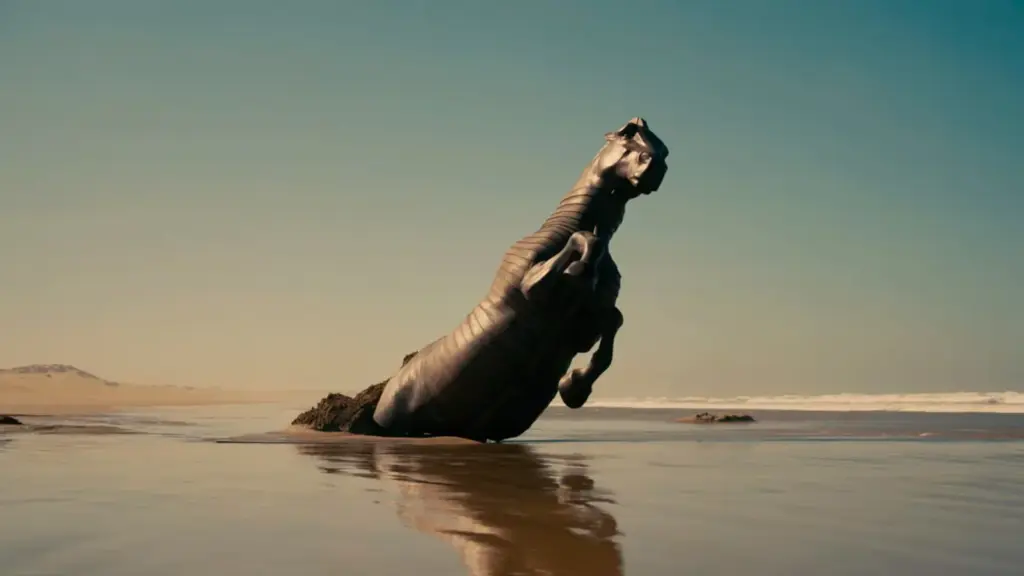
There’s also almost nothing left at the Hollywood Chinese Theatre, the oldest and most beloved in the neighborhood and, right in Hollywood, the best place to see Nolan’s movie, at least as the director wanted it to be seen. It has several theaters but, in a city full of cinephiles, it’s normal that the main one, the only one with 70mm IMAX and almost a thousand seats, is constantly full. Hence there are five daily showings, from six in the morning until almost 10 p.m., even 11 p.m. on Saturdays. In Angelino film culture, where it’s accepted that the movie starts about 20 minutes later than scheduled due to many ads, and where giant tubs of popcorn, nachos with cheese, or onion rings are eaten in the theater, the first viewers arrive loaded with coffee after five in the morning and the last leave after two. In the afternoon shift, the box office clerk Sofía explains that many try their luck right there in case something frees up; so far, nothing for the whole week. For Spider-Man, she says, “there’s a little more availability,” having more theaters. But mostly many people come to print their digital tickets and take the physical ticket as a souvenir.
Julian Franco and his friend Ernesto drop by a couple of hours before the last showing to see when the theater opens. Their eagerness is normal: they come from San Diego, almost three hours away. “Well, two and a half hours,” they smile, embarrassed. They bought their tickets 10 days ago and have driven to Los Angeles just for this. In the United States, only 25 theaters show the movie in all its glory, eight of them in California, but none in their city; this is the closest and the 9:55 p.m. showing, the only one available. “Everything was full and this was the best we could find,” they explain, excited, after paying about 30 dollars each. They don’t mind leaving at two in the morning: they will drive at dawn, reviewing the best anecdotes between the two, still with the aftertaste of popcorn.

The Odyssey and Spider-Man have lifted the summer and the box office in just three weeks, but they are not alone in their task. This is, after all, the children’s season in cinemas, which is why two very anticipated animated movies accompany them. Because the eternal nostalgia of the fifth installment of Toy Story, released at the end of June, still outperforms both in the US, with 462 million, and worldwide, where it has passed the psychological barrier of one billion (it already has 1.065 billion). Other characters accompanying it are the Minions, whose return alongside a handful of monsters has made it surpass 400 million in five weeks. The awards season, starting in September with the Emmys and in January with the Golden Globes —the Oscars will be in March— will put them all in their critical place. They may not take home many statuettes, but they have already taken home lots of dollars. And for this capitalist industry as much in need of recognition as of income, both have the same value.