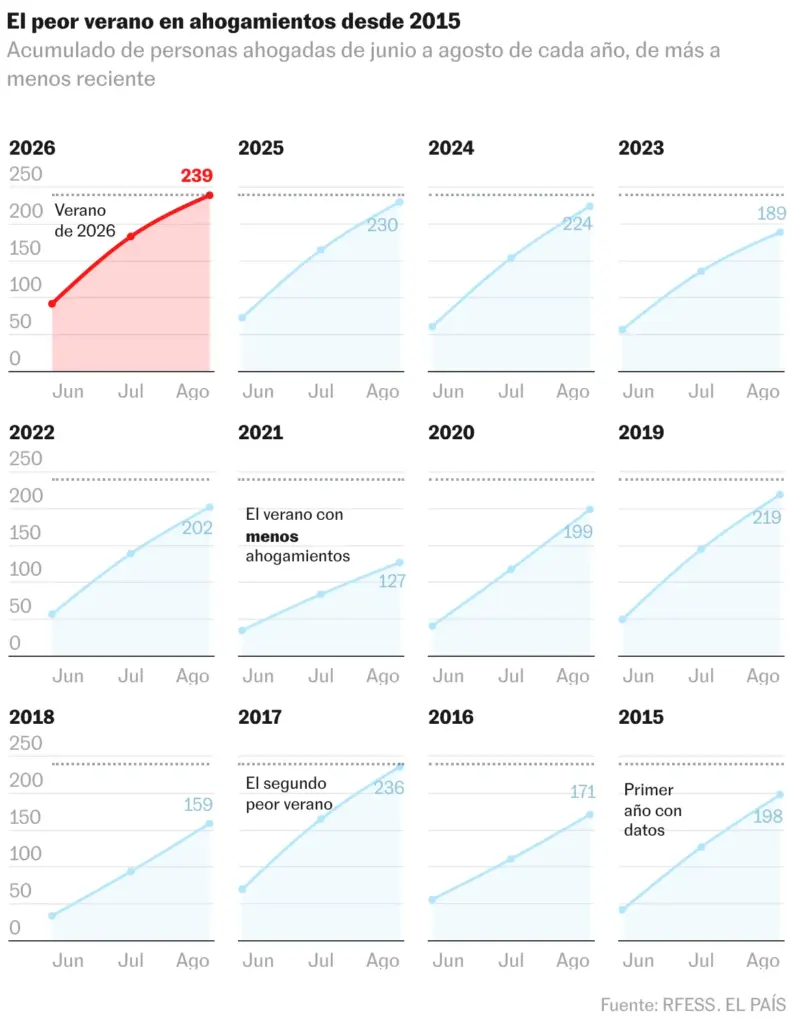
Drownings have claimed 363 lives so far this year in Spain, 239 of them just between June and August. It is the worst summer since 2015, when these data began to be recorded in the National Drowning Report (INA) of the Royal Spanish Federation of Rescue and Lifesaving (RFESS). The summer months were especially deadly: in June, 92 people drowned, the month with the most deaths in 11 years. Another 91 died in July.
Read more The PP of Madrid downplays the failure of Ayuso’s attempt to boycott the regional summit
Why are they increasing? “It’s because of the heat,” summarizes Roberto Jesús Barcala, Professor of Lifesaving at the Faculty of Sports Sciences of Pontevedra. “There is a direct relationship between temperatures, sunny days, and drowning. And the forecast is that in the coming years there will be more heat waves due to climate change, so there will be more drownings.”
During the heat wave that suffocated Europe this summer, a peak in deaths was recorded in several countries on the continent. In Germany, there were 100 deaths in June, the highest number in 20 years. In France, 131 people died from this cause in less than a month due to the same heat wave.
The effect of rising temperatures is undeniable, but demographic change could also affect the figure. Between 2015 and 2026, Spain has added 3.1 million inhabitants, and that larger population translates into more people seeking to cool off at beaches, rivers, and pools every summer. The result is a toll that has only been worse on two occasions: from January 1 to September 2, 363 people have died by drowning, a figure only surpassed in 2017 and 2025.
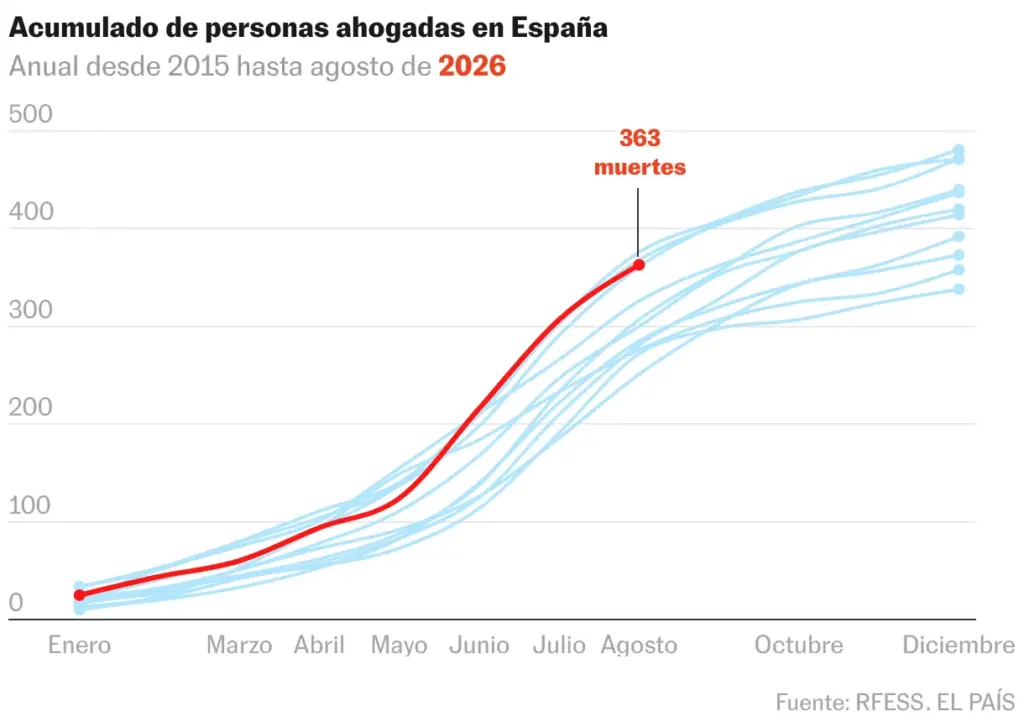
Although most cases occur then, drownings do not only happen during the summer period. “There is a peak in drownings before summer, when there is still no lifeguard service but people are already swimming,” Eduardo Blasco, a professional rescuer and drowning specialist lawyer, explained last June to EL PAÍS. “And there is another, even stronger peak, in September, when lifeguards are withdrawn,” the expert assures.
Sixty percent of people who lose their lives this way are Spanish nationals, although the percentage varies greatly depending on the time of year. In summer, the percentage of locals decreases, and that of other nationalities such as those from Africa, America, or Asia increases.
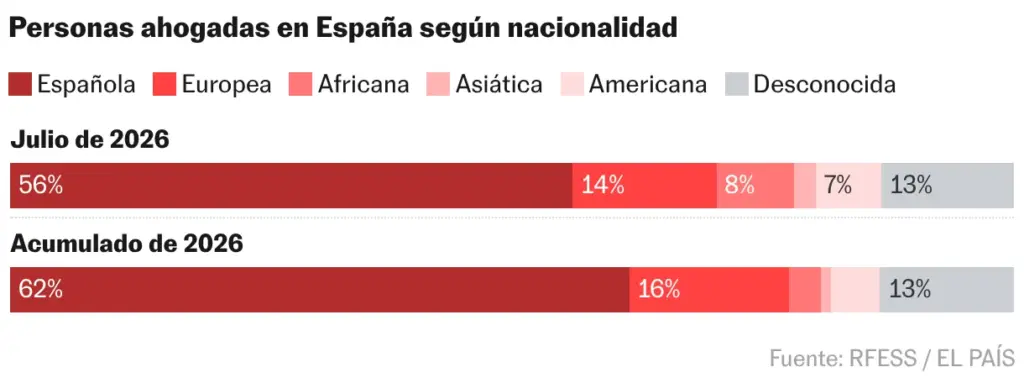
This count does not include people who die trying to reach the Spanish coasts, as inferred from the national drowning report, which is fed by its SIFA system, based on lifeguard, rescue, and press services.
Drownings are the third leading cause of unintentional trauma death worldwide. More than 40 people lose their lives this way every hour, according to a UN report. “In total, they have caused more than 2.5 million deaths in the last decade, but they are a highly preventable cause of death,” explains David Meddings, author of the report.
Nine out of ten drownings worldwide occur in underdeveloped or developing countries. In Europe, although to a lesser extent, it is a public health problem. The EU country with the most deaths from this cause is France (784 deaths in 2022, the most recent year offered by Eurostat), followed by Germany, Poland, Romania, and Spain.
After-meal times, the most dangerous moment
87% of people who drown are men, an overrepresentation that Meddings attributes to “their greater propensity to take risks and, in many countries, their association with alcohol consumption in and around the water.” The fact that fishing is a very male-dominated profession also influences this.
Regarding age, more than half of the victims in 2025 were people aged 50 or older (51%). This is because, often, drowning is the consequence of a prior pathology (a heart attack, fainting, a cramp) that may have more incidence in older people. At the other end of the spectrum, 17 children under six years old died. These data show that drownings happen at any age range, although to a lesser extent among children and those over 85 years old.
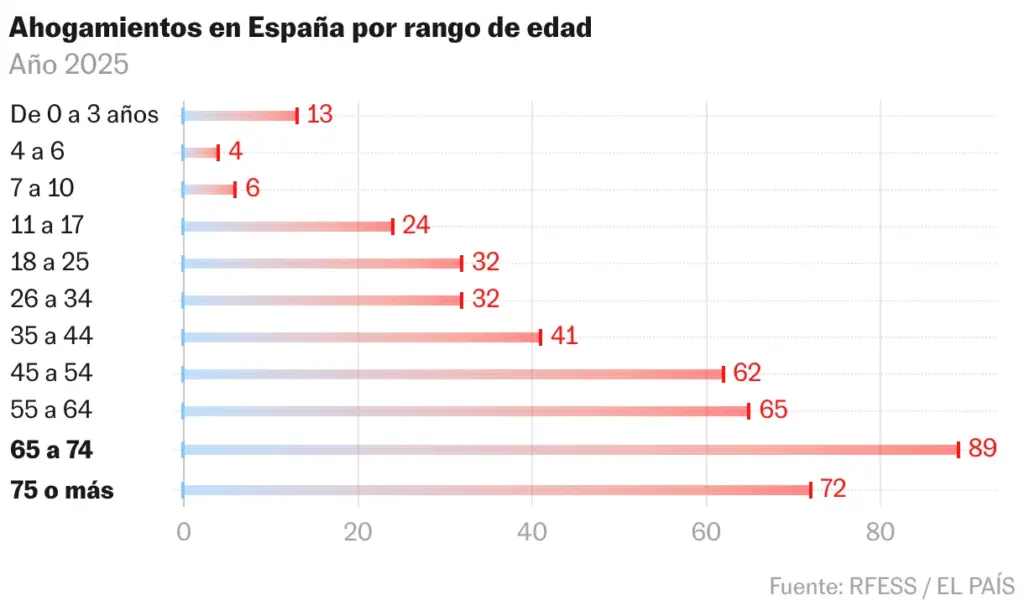
Most drownings occur in the time slot from 12:00 noon to 8:00 p.m., as these are the hottest hours when most people swim. In this case, an age differentiation must be made. “Children under four mostly drown between three and six in the afternoon,” highlights Barcala. “It is due to lack of supervision, coinciding with adults’ after-meal times.” This data explains the importance of constant and active supervision in the case of minors.
Silent drownings
Sometimes, people die fighting against waves or sea currents. Other times, drowning occurs quickly and without screams: these are called “silent” drownings.
In a matter of seconds, a person can drown without anyone barely noticing. When someone is drowning, it does not always look like drowning. The process is quick, discreet, and lethal. In fact, in many cases, the victim drowns surrounded by bathers unaware of the drama unfolding beside them. These are called silent drownings. “The idea that a drowning person screams, waves their arms, and calls for help has become popular,” explains Roberto Jesús Barcala, Professor of Lifesaving at the Faculty of Sports Sciences of Pontevedra. “But this only happens in movies and television.” For this reason, Barcala explains, society’s perception of how drowning develops must change: “People must be educated to look for other signs.”
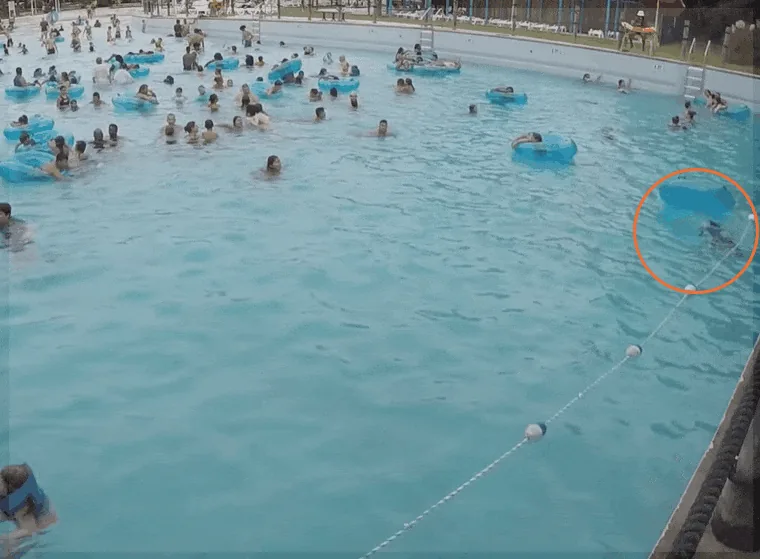
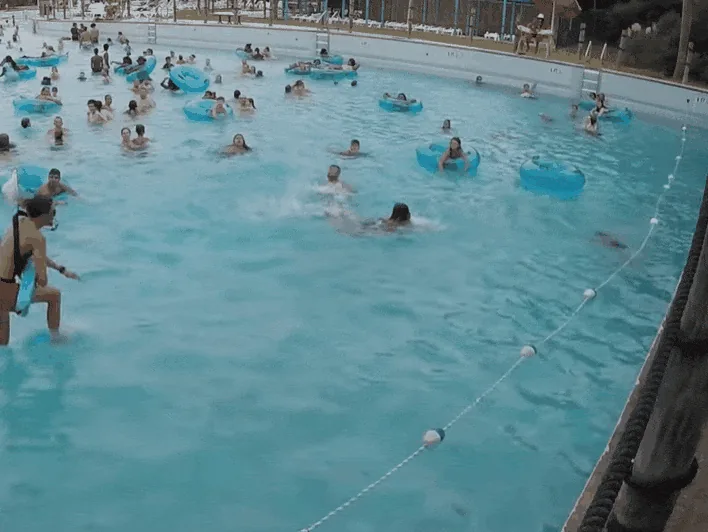
Those who are educated know how to detect it. In many cases, until the lifeguard whistles and jumps to the rescue, no bather perceives the danger, as seen in the following footage at a pool in the United States.
1. A girl falls off the float
While drowning, she presses her arms against the surface but does not scream and can barely keep her head above water.
Source: Lifeguard Rescue (YouTube channel)
2. The lifeguard jumps to save her
Few people notice something is wrong. In seconds, the lifeguard detects she is drowning and jumps toward her.
Source: Lifeguard Rescue (YouTube channel)
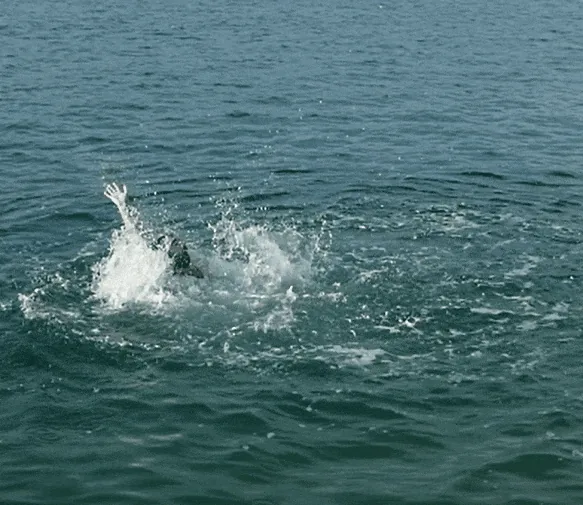
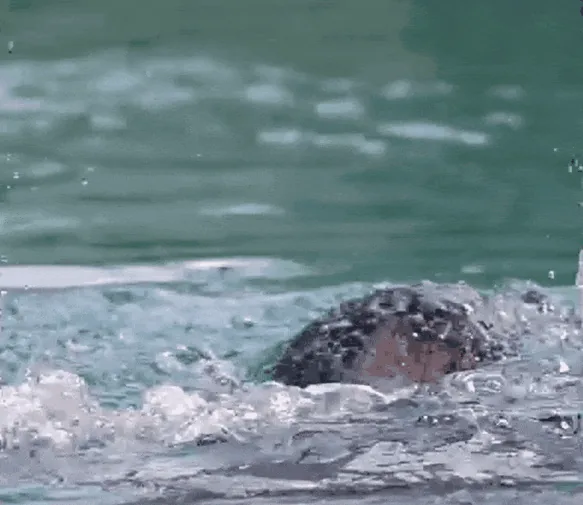
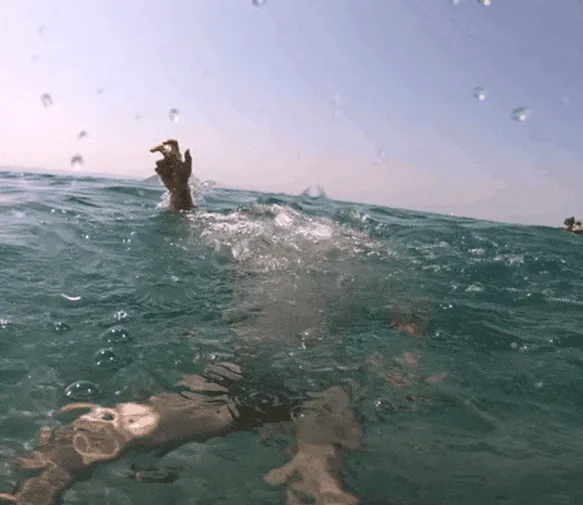
The drowning scenes shown in series and movies do not fit this pattern. They only correspond to a specific type of drowning in a specific phase. “If you are a swimmer who masters the aquatic environment and have a cramp, you can ask for help for a while,” Barcala points out. “But that is not the usual pattern.” However, this more dramatic and spectacular process is what TV and cinema have been portraying since Baywatch.
The following scenes are dramatic representations that do not correspond to real drowning:
Dramatic scenes that are not drownings
Source: Getty
If you see someone shouting for help and waving their arms, as in the previous cases, it is very likely that they are an expert swimmer who has suffered a prior pathology, such as a cramp or a pull, and is in aquatic distress. This indicates they are very close to drowning.
The following scene, however, is closer to the exact moment of drowning:
Dramatic scene that does represent a drowning
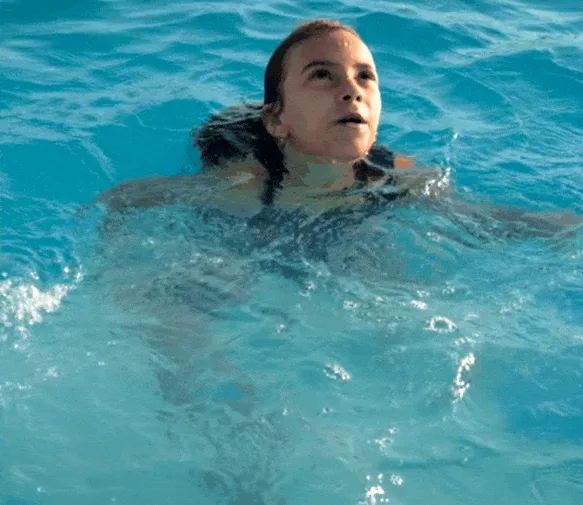
Source: Getty (not a real drowning).
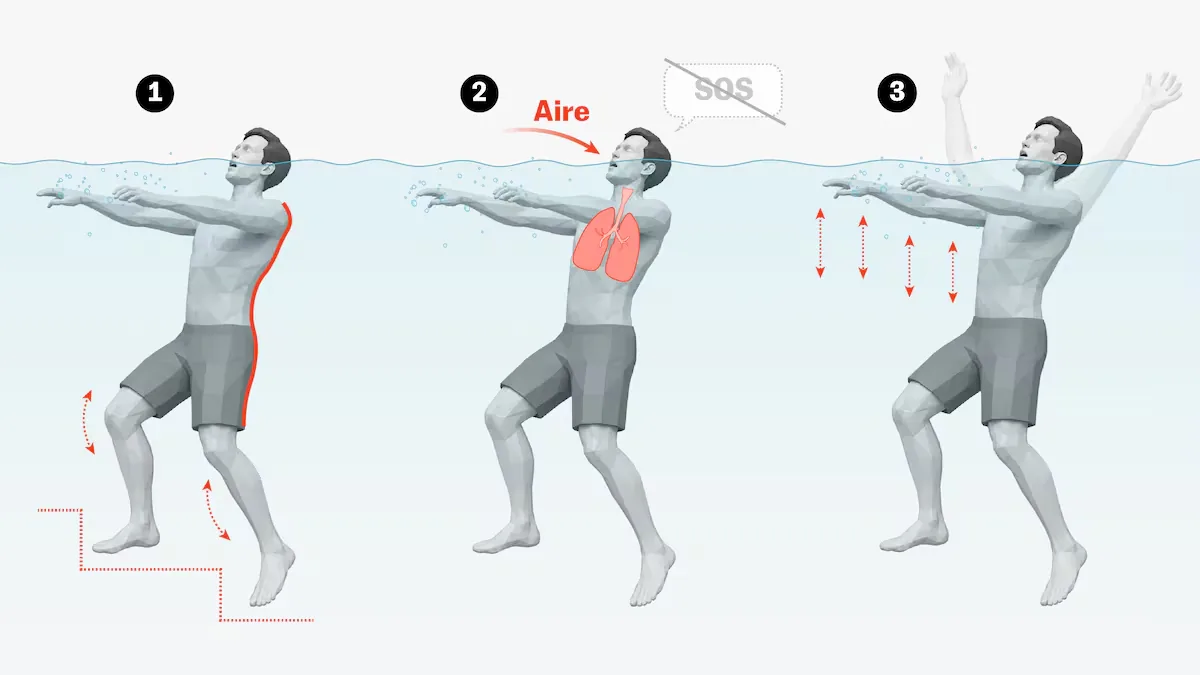
The instinctive drowning response (IDR) is what people do to avoid real or perceived suffocation in water. It is characterized by the following behaviors:
The love death syndrome
Barcala analyzed, along with a group of international experts, dozens of videos to define standard drowning. In all cases, the process lasted less than two minutes. The time it takes to watch six Instagram stories. The time it takes to read a page and a half of a novel. Half the time it takes to smoke a cigarette.
Early detection, therefore, is critical to saving lives. But locating someone who is drowning is not the same as saving them. To do so, it is advisable to follow a series of tips. The first would be to call emergency services before jumping into the water. Secondly, the danger of the situation must be analyzed. “When there are multiple victims in a drowning, it is usually family members who jump in to save the first victim. This is what Australians call the love death syndrome,” the expert points out.
For this reason, it is advised to go to the beach with floating objects that can be worn (such as a vest) or thrown (such as a float or a bottle tied to a rope) to minimize risks and ensure a safe rescue. In any case, it must be remembered that swimming is not the same as trying to rescue someone.
Miguel Ángel Sánchez Arrocha, head of the Red Cross Emergency Unit, points out that “self-protection work is essential.” There is institutional protection, and it is always preferable to go to a beach with a lifeguard, but individual responsibility is equally important. In addition, swimmers are always advised to swim parallel to the coast and not perpendicularly, going out to sea, as this way they will have more margin to get to safety in case of dizziness, a cramp, or any unforeseen event.
Arrocha compares the awareness that exists about road safety with that given at sea. If no one crosses a red light, no one should swim with a red flag either. The “if you drink, don’t drive” can easily be transferred to “if you drink, don’t swim.” The comparison with road safety is no coincidence. It has helped reduce road deaths in recent years. Meanwhile, drownings at beaches and pools show a worryingly stable toll.
Read more In this town, AfD won its first mayor in Germany and has been growing ever since