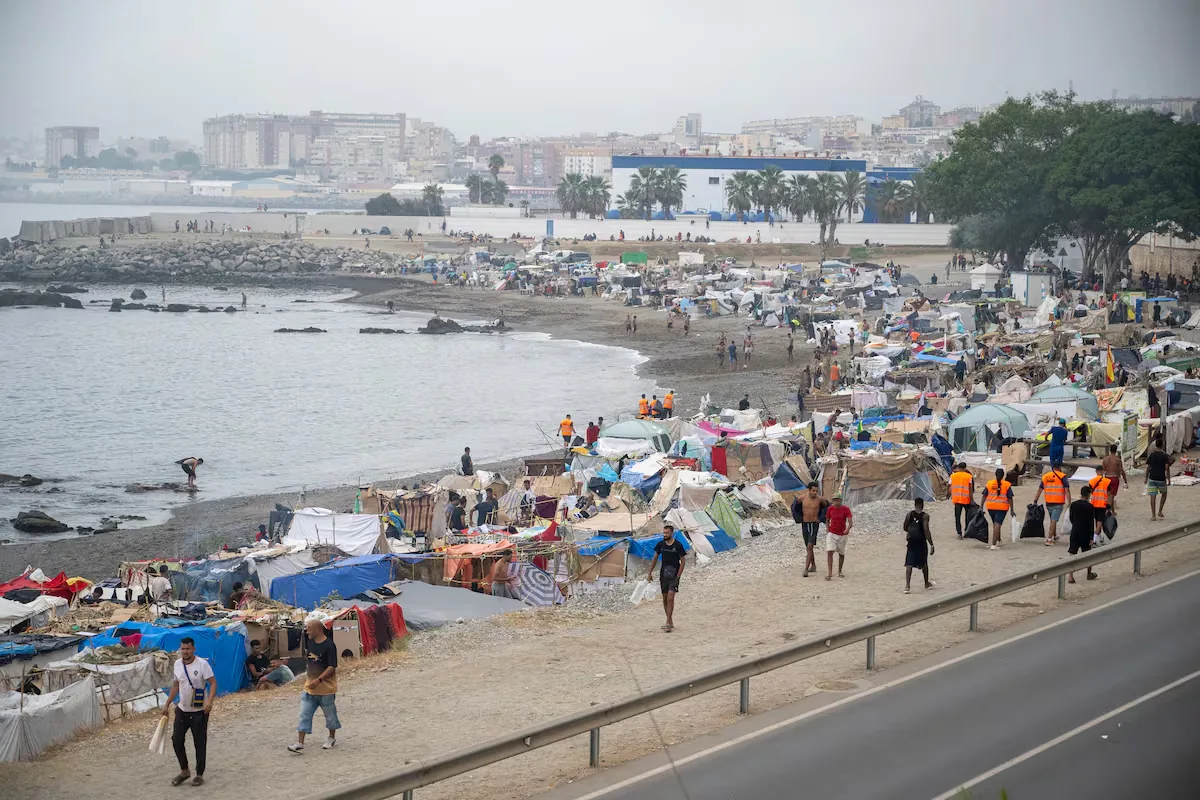





In small clusters, beneath crystal-clear water, the silhouettes of submerged bodies can be seen very close to the El Tarajal border in Ceuta. Two of them are holding hands. They are the submerged tragedy, still unknown, left by this week’s mass crossing of people from Morocco and the numerous swim entries that took place in the second half of July.
Two days after the large entry into the autonomous city, when most of those who entered irregularly through the breakwaters have already returned to Morocco, the most dramatic side of that avalanche continues to intensify. At least 67 people lost their lives in their attempts to reach Spanish territory. “There are more dead at sea,” lamented a police source this Saturday. The autonomous city is preparing a facility with the capacity to store 200 bodies.
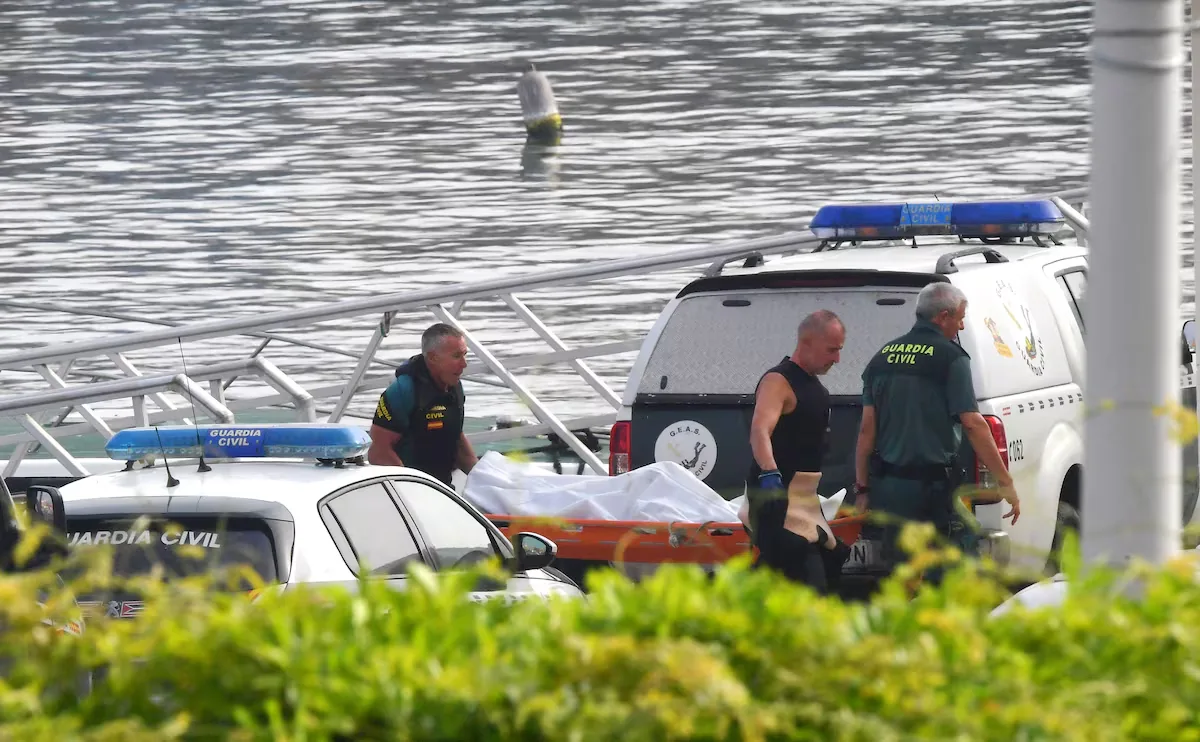
In front of the border, in the morning, the work to place aquatic containment barriers, a row of buoys 500 meters long and an underwater mesh up to one meter deep, is combined with the search for new victims under the sea. Agents of the Maritime Service of the Civil Guard and divers from the Special Group of Underwater Activities (GEAS) were working hard to locate and retrieve the deceased from the bottom. From the beach, numerous journalists, many from international media, were recording the operations and broadcasting live the latest news from the city. In the coming days, Civil Guard agents will mark squares and will go through all the areas. On Saturday morning, they pulled out about ten deceased and continued marking points where there were more bodies. It is common for some of the people who die in swimming crossing attempts to end up on the Moroccan side due to wind and tide. “It is risky to make an estimate of the total victims,” clarified a source familiar with the work. On the other side of the border, Moroccan agents were also recovering mortal victims at sea, the same sources maintain.
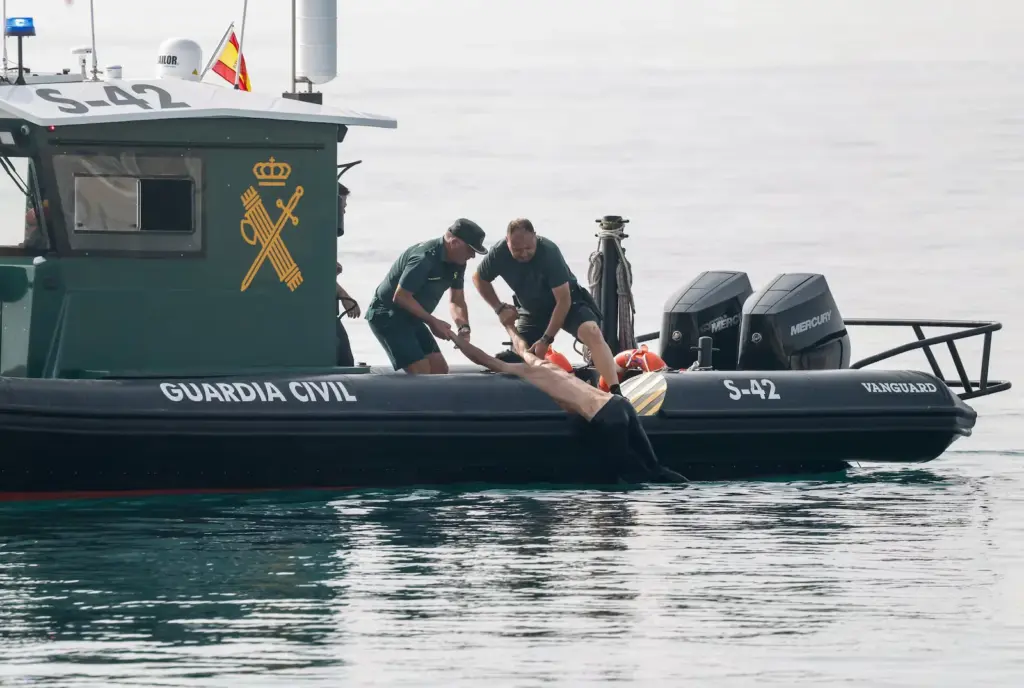
Ceuta has become accustomed in recent years to finding young deceased in the sea who were trying to swim across from Morocco. In 2025 it ended with 46 mortal victims, but what happened this week has broken all records. Lacking infrastructure to support this sudden load of corpses, modular refrigerated chambers, like those used in a fruit or fish shop, have been installed in the old Military Hospital, says a source from the Cuatro Culturas Funeral Home, which is collaborating in these tasks.
The identification of corpses and human remains corresponds to the Legal Medicine and Forensic Sciences services, dependent on the Ministry of Justice, but the autonomous city is providing logistical support. Among other measures, they have made the old hospital available, a municipal facility with multiple uses, but which retains the autopsy room.
Different vehicles driven by military personnel and Civil Guards accessed the building, protected by large black fences. Also, funeral home vans with the bodies of migrants. Around 5:00 p.m., two municipal employees prevented access to people not involved in the operation. Away from the cameras, a team of forensic experts was working at that time with instructions that the facility be tightly closed.
Read more Lorena Wiebes, first leader of the Tour after winning the Lausana climb
Among the bodies recovered from the sea, there are many teenagers, according to the funeral home source who has witnessed the entire process. “There is an age range from 13 to 25 years and another from 25 to 35, more or less,” pending more precise identifications. Until yesterday, all were males except one woman. There are “quite a few kids from 12 to 14 years old,” they add. By appearance, most seem Moroccan, but there are others of sub-Saharan origin, including some children of this origin.
By mid-afternoon this Saturday, about 80 bodies were already in refrigerated chambers, which is exactly the capacity of the cooling modules that had been installed, and work was underway to increase capacity to 200 bodies. The modules are expected to be ready by Sunday morning. “The capacity that Ceuta’s chambers ordinarily have does not exceed 15 corpses,” this source explained.
Agents believe that most of the victims died during the human stampede that occurred from Morocco, either crushed or, in many cases, drowned. “People who did not know how to swim were pushed into the water,” they explain. Some of the corpses show a higher degree of decomposition because entries into the sea have been happening for two weeks.
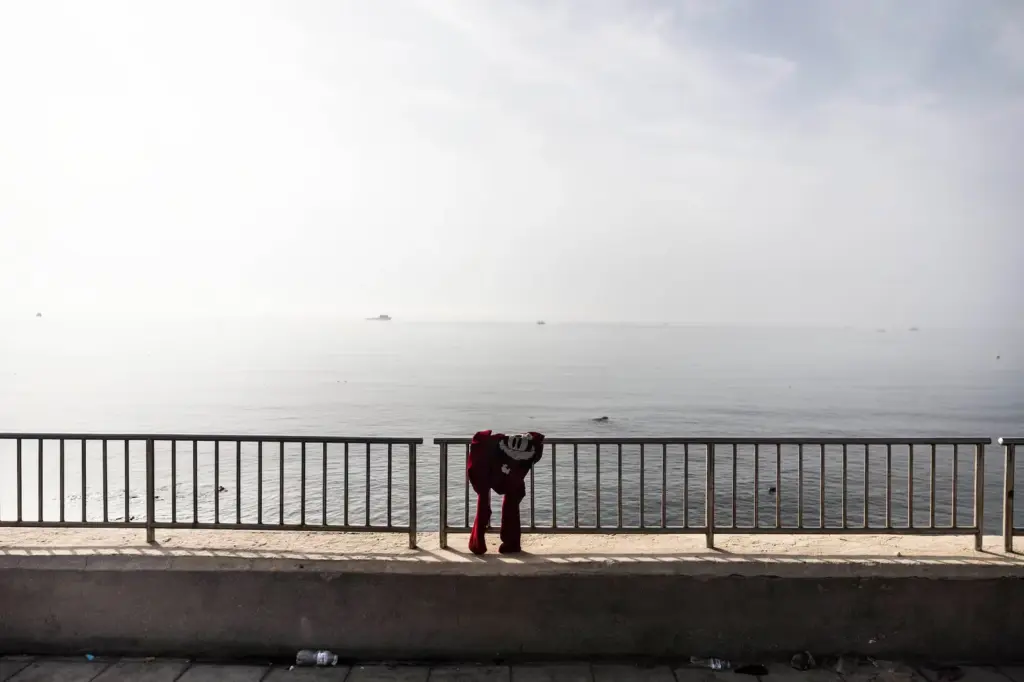
Once they are taken out of the water, the Civil Guard’s Criminalistics Laboratory takes their fingerprints and creates a file with data that may help identify them in the future, such as photographs, the clothes they were wearing, or DNA samples. Many NGOs and the funeral home itself are already receiving calls from people who have no communication with their relatives. Relatives of missing persons also call the local newspaper El Faro de Ceuta to help by publishing their absence. It is not unusual for two people who made the same journey together to have different fates. In that case, they can help identify the friend or companion.
If lucky, and the victim is identified, permission is requested from the judge for repatriation. If they cannot be named, they end up buried with a number.
Read more The White House celebrates Trump’s immigration campaign with songs by Bad Bunny and Drake