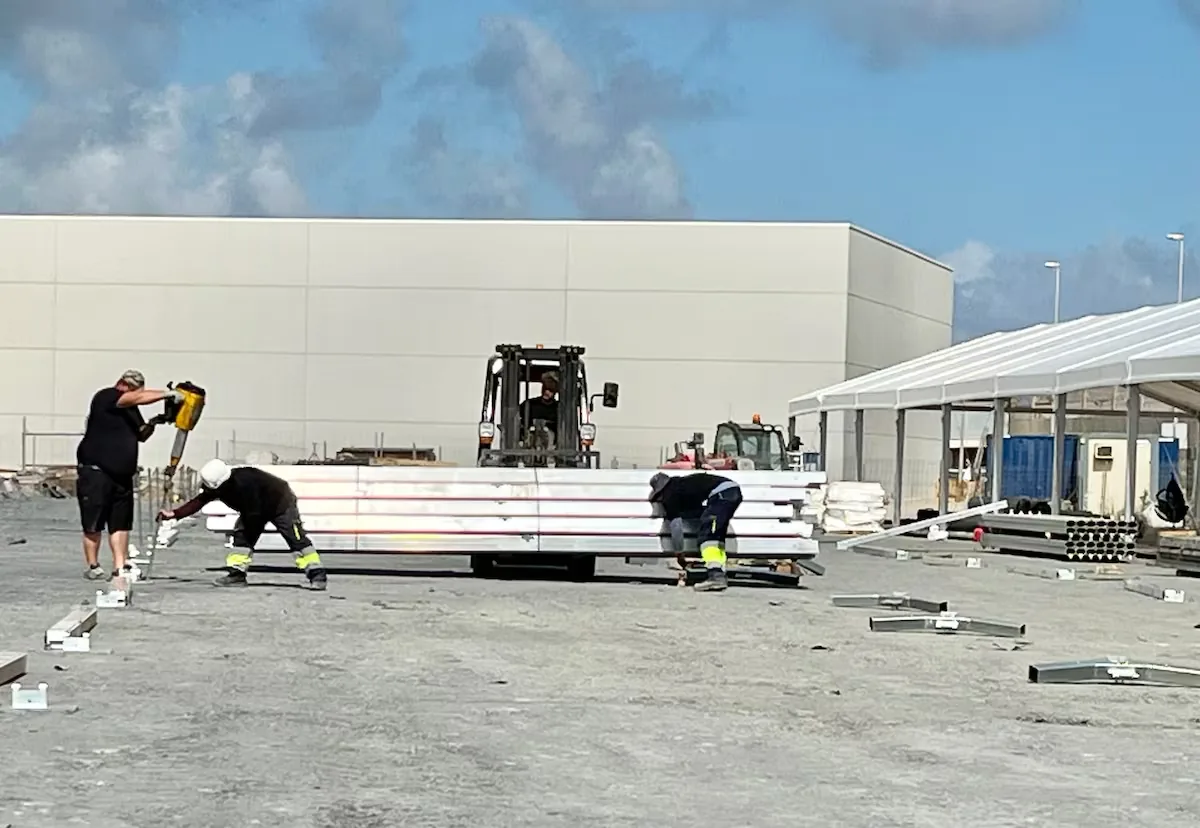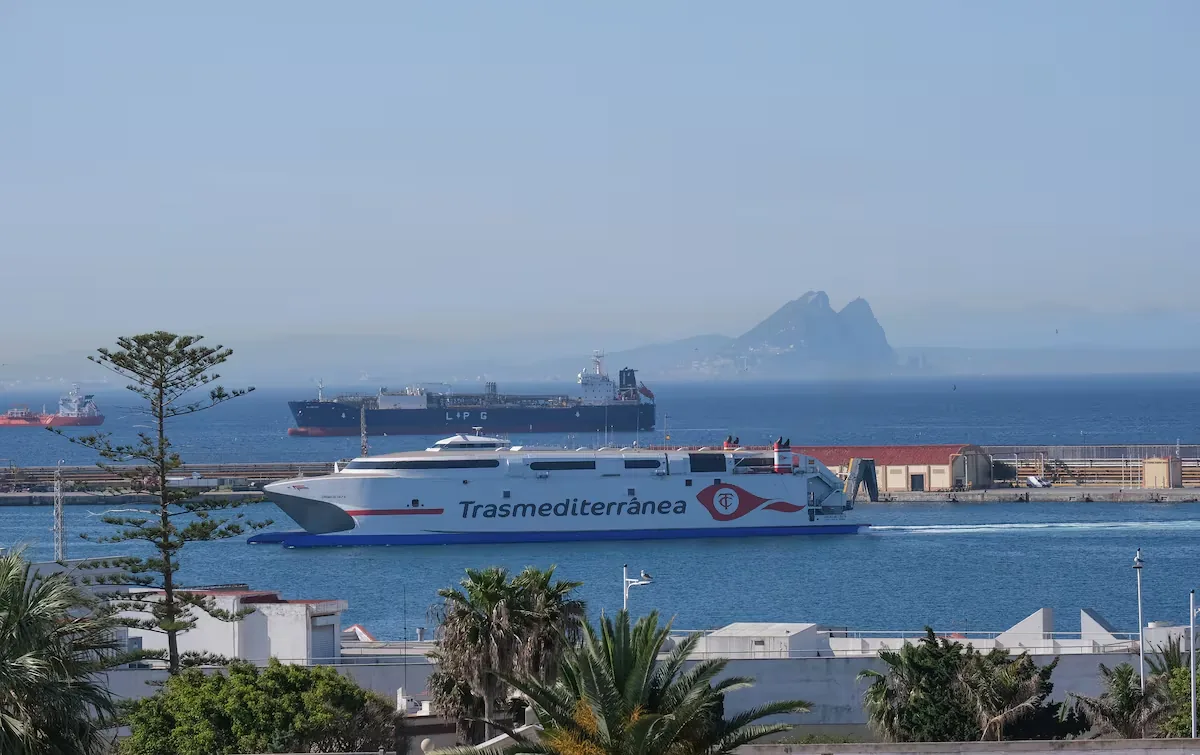
The Government has decided to take control of the port of Ceuta to establish a temporary location with tents for more than 1,000 immigrants in the area farthest from the population. The port is controlled by the city of Ceuta, as an autonomous community, and this Friday its board of directors voted against locating the immigrants there, something that was absolutely agreed upon and is important for the strategy to resolve the Ceuta problem.
Read more José Palma, from the TPS National Alliance: “For many Salvadorans, losing it is a death sentence”
So the Minister of Transport, Óscar Puente, has decided to sign an order under article 73.3 of the port law to take control and authorize the Ministry of Inclusion to install the tents. It is very similar to what was done in the Canary Islands with the hantavirus crisis, where there was also opposition from the autonomous community. With this order, work that had already started and was stopped on Friday by port officials can continue without problems.
Puente’s order overrides all the port of Ceuta’s reservations, controlled by Vivas—presided over by Juan Manuel Doncel, who was his Chief of Staff and later Minister of Development—and states that “Puertos del Estado has issued the corresponding report, concluding that, although the projected temporary occupation may increase certain risks associated with the protection of critical infrastructures, sensitive facilities, and port operations, there are reasons of general interest that justify granting the requested authorization, without prejudice to adopting the necessary measures to ensure its compatibility with the safety, protection, and normal operation of the port.”
The minister thus resolves “to authorize the Secretary of State for Migration the temporary use of an area of 16,000 square meters of public port domain located in the West Expansion, Phase I, of the service area of the port of Ceuta.”
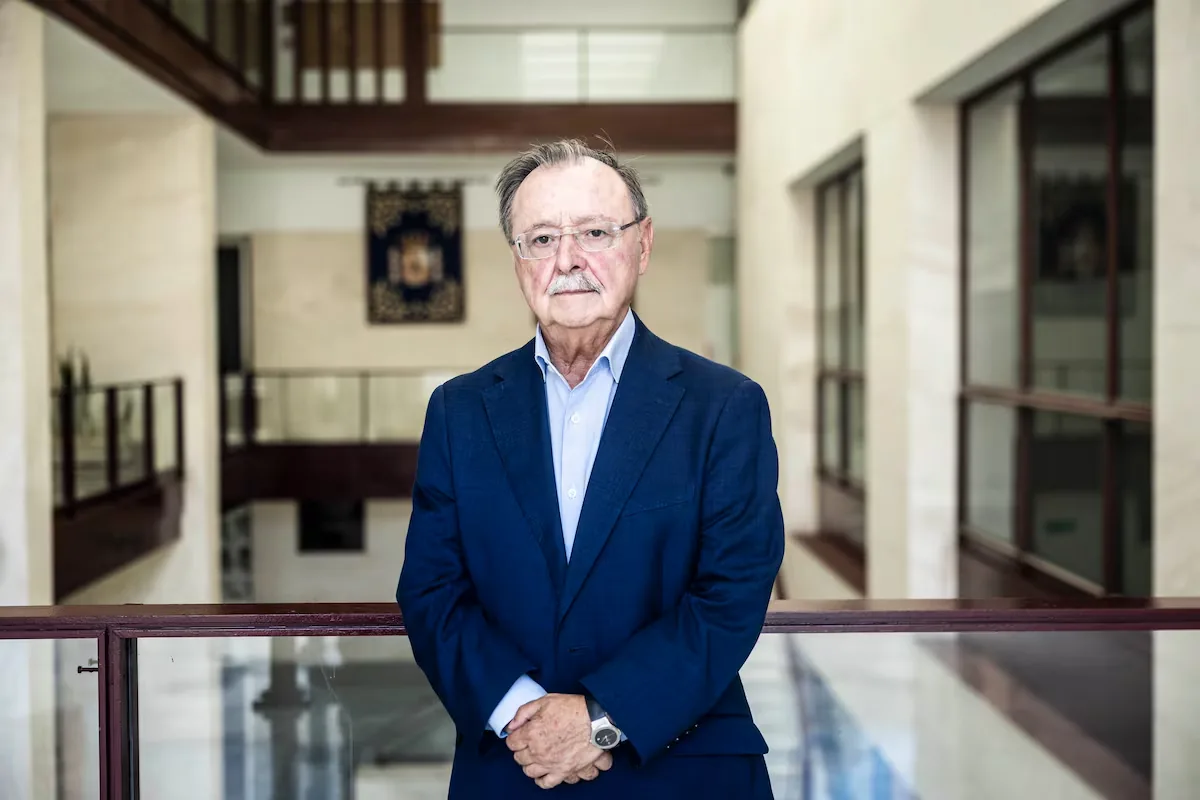
This is an unprecedented decision so far in managing the crisis, which had always been done by consensus, but the Government believes it can no longer accept delays or blockages by the city, led by Juan Jesús Vivas, of the PP, who applauded the Sánchez Government’s management during the 2021 crisis and is now very opposed and speaks daily of “abandonment.”
The temporary location on two unused plots of the port was absolutely agreed with Vivas, the president of Ceuta. So much so that representatives of both governments visited the area before the Council of Ministers’ decree and agreed on the location. Vivas also assumed the decision in two official meetings with the Government, the single command and the National Security Council. The decision to go there was made because the Ceuta president rejected other places proposed by the Government, such as the flour factory and the military hospital, and previously the sports centers.
Vivas said yes to the port, it was agreed in the single command and then finalized in the National Security Council, and he supervised and accepted the decree, but when the time came for the decision, the port’s Board of Directors, dominated by people appointed by Vivas, voted 11 to 4 this Friday to reject the installation authorization, according to both central Government and Ceuta sources. Those 4 were Government representatives, while the 11 are from the city, the majority, and port businessmen, according to Executive sources.
Technically, the legal argument was used that “buildings for residence or habitation” cannot be installed in the port, but the Executive insists this is a temporary tent, not a building. The port of Ceuta’s report rejecting the location also argues that “the two accesses to the plots connect with one of the city’s main commercial centers, and the area is adjacent to a nursery and primary education center and a sports track frequented daily by hundreds of minors,” and that 42,000 tons of fuel are very close and there is a risk of sabotage. But all this was known when Vivas accepted the location, and both governments agreed it could be managed safely, which is why the Executive is now outraged by this backtracking.
Read more The still unexplored political links of the Navy’s fuel smuggling network
The Executive considers this maneuver an absolute disloyalty by Vivas, who in the Government’s view is increasingly complicating management with his backtracking or delay in authorizing the transfer of minors to the peninsula, for example. That is why the Government has decided something it had not done throughout the crisis, not even after establishing a single command: to take direct control of the situation through a ministerial order to advance the work to install the migrants’ temporary location. So far, the single command has actually meant that Vivas could veto whatever he wanted, as he did with the sports centers.
The Government sees a political maneuver behind this because the Executive assumes the main volume of management, the cost of location decisions, provides the means, and has approved up to 309 million for Ceuta, but all criticism goes to the ministers while Vivas’s popularity grows because he is the one rejecting locations like the sports centers.
Technically, the port intervention is a simple decision, which was already taken with the hantavirus crisis in the face of resistance from the president of the Canary Islands, Fernando Clavijo, to move the ship to a port in that community, although another article was used then because there was no written refusal. The Executive chose to take control of the port and everything worked without problems and there was no infection of the local population, despite fears spread by Clavijo even invoking supposed swimming rats.
But this decision is politically more delicate because the population of Ceuta is very much against the Government and disputes almost all new spaces, and the risk of mobilization against the location in the port is significant. Still, the port of Ceuta’s own report rejecting the location opens the door to the minister’s intervention by recalling that article 73.3 of the port law states that, “when the Port Authority considers the request incompatible with the normal operation of the port, it will refer it to Puertos del Estado who, once the corresponding report is issued, will forward it to the Minister of Development, who will decide on granting the authorization, considering the general interest.” That is exactly what happened this Saturday.
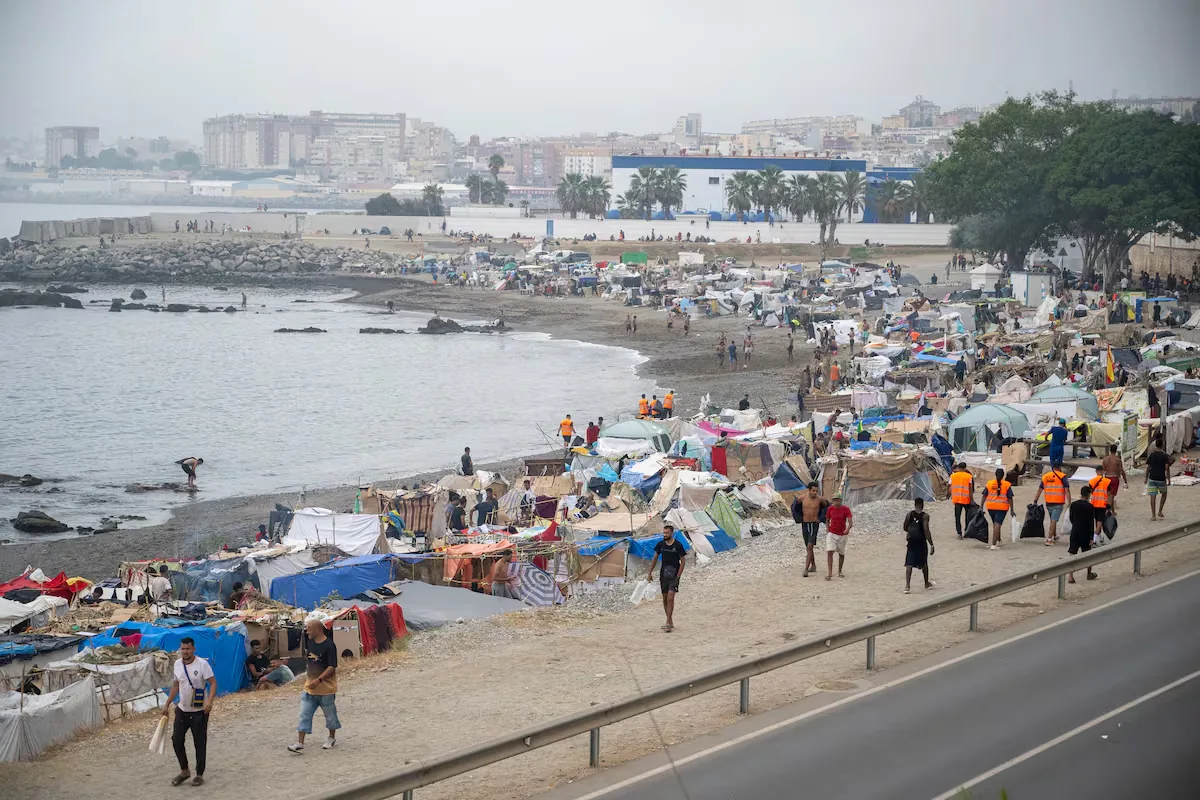
The Government has avoided this drastic decision as much as possible but, faced with persistent difficulties posed by Vivas and his team, has decided to retake control to be able to locate those immigrants, get them off the streets, remove the problem that most affects Ceutans—thousands of people sleeping rough and causing all kinds of disruptions for them and others—and also to comply with what citizens ask for, that is, to start the affiliation and subsequent return procedures, something practically impossible with people sleeping on the street.
This tension between the Government and the city to find spaces, with pressure from neighbors behind, has been constant this month, and although it has not been the media focus, it is decisive for managing the crisis, to get immigrants off the streets—the Executive believes there may still be 3,000 because that is the number of meals being distributed outside the already enabled centers—and to speed up the returns of adults, since their transfer to the peninsula has been ruled out. With minors, the Government pressures Vivas to accept their transfer to the peninsula, but cannot move without his signature because by law custody belongs to the city.
There are not many options to solve the problem: they cannot be expelled without files, because it is illegal—there were two PSOE and PP policies invalidated by the 2021 crisis—they cannot be taken to the peninsula, the only option is to locate them to affiliate them and start the return process. Ángel Víctor Torres, leader of the single command, insists a lot on that idea: the sooner they are all located, the sooner they can be returned, and if neighbors and the city block the process, they are delaying the solution. The crisis takes a new turn now with the decision to take control of the port, and the Government insists there is no turning back: everything in the decree will be done as quickly as possible and neighbors must understand it is done to benefit them.