








This is the story of a small village that at its peak housed about five hundred people. Even when it had fewer inhabitants, its corridors, squares, and homes were a hive of busy people, laundry hanging, and the smell of stews. These people had the same problems as anyone else: money and the desire to set their children up well. What distinguished them all was that they lived in the Royal Palace of Madrid, which they shared with royalty and nobility, but with very different tasks. EL PAÍS has accessed the documents, plans, and letters held by the General Archive of the Palace about what their lives were like in the royal residence, from when it was built in the mid-18th century until the end of General Franco’s dictatorship, when its last residents left.
Read more The head of the UME: “Large forest fires cannot be attacked, we can only defend ourselves”
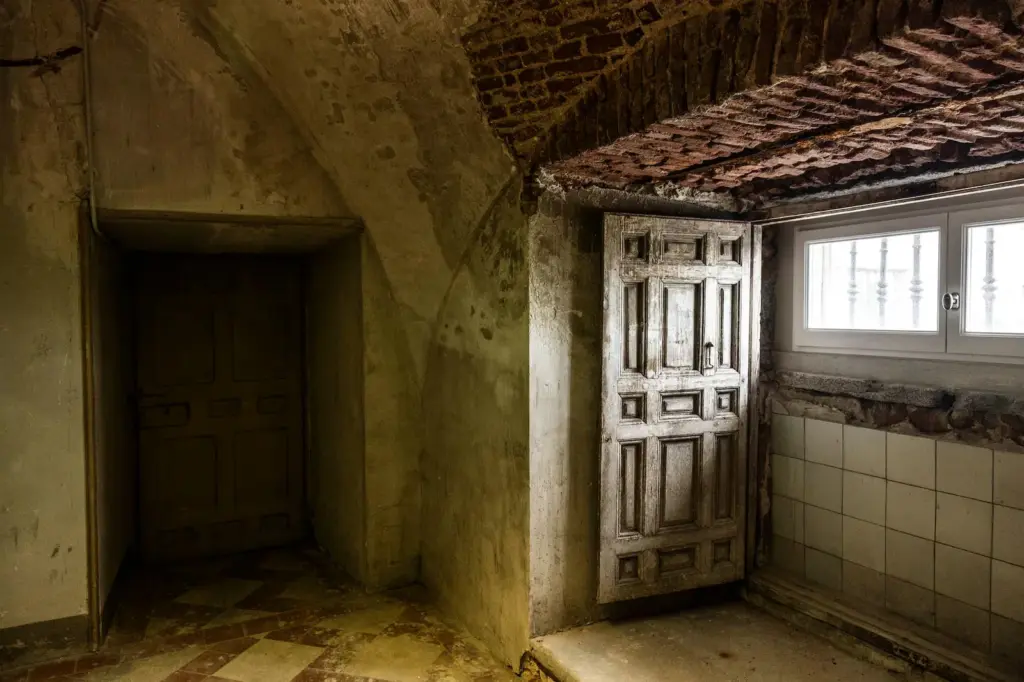
The head of the Historical Research Service of National Heritage, José Luis Sancho, explains how all these people were distributed. “In the two basements were the trades, those related to food and those of furniture and upholstery. The ground floor was for the ministries, the main floor was where the kings lived, and the last two were the servants’ quarters,” adds Sancho, who is preparing a book about the history of life in this palace. They were very different, for example, the residences of the noblewomen who attended to the royal women from the servants’ rooms who took care of cleaning the toilets. However, one can get an idea of the hustle and bustle that must have been in a building with 65 staircases, although each person had their own stairs to go up and down. “There was a main staircase just for the king.”
However, not all employees of the Royal Palace could live in it, due to the lack of rooms, which were highly sought after. Rafael Ruiz, 60 years old, a royal quarters servant in the time of Alfonso XIII, recounted his case by letter. This man, who introduced himself as “an employee at the Royal Palace for forty-one years,” lived in the popular Madrid neighborhood of Prosperidad. Ruiz wrote the following request to the palace’s general inspector on July 8, 1930: “Living in the outskirts, his children far from the education they could receive, frequently deprived of medical assistance. Respectfully requests to be granted the room vacated by the maid Antonia, who was of Her Majesty Queen María Cristina.” As you can see, the housing problem in the capital of Spain is old.
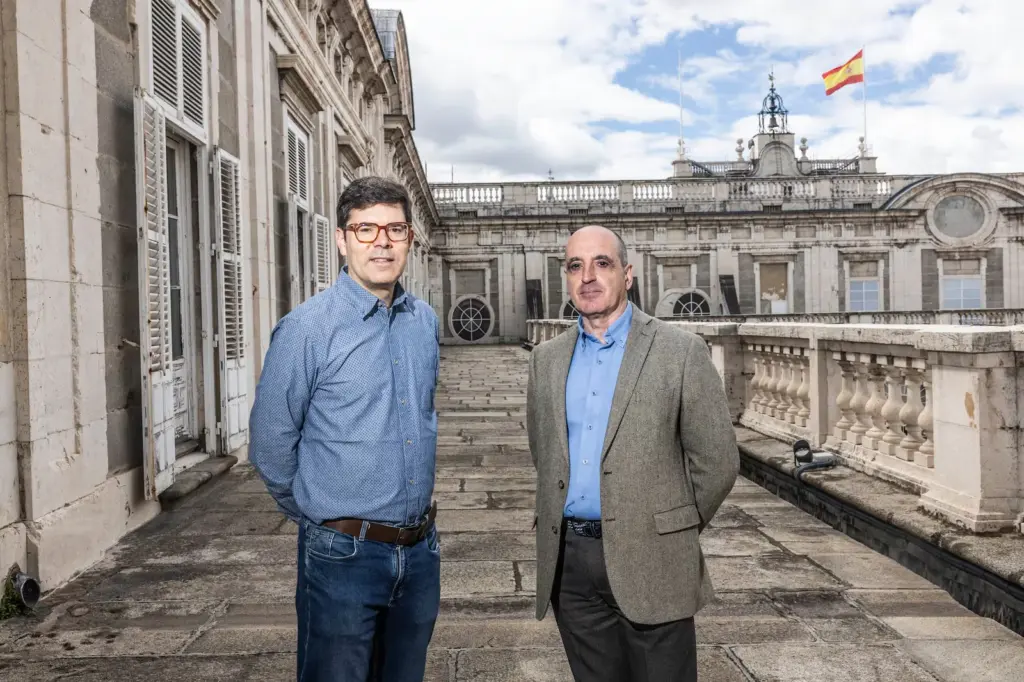
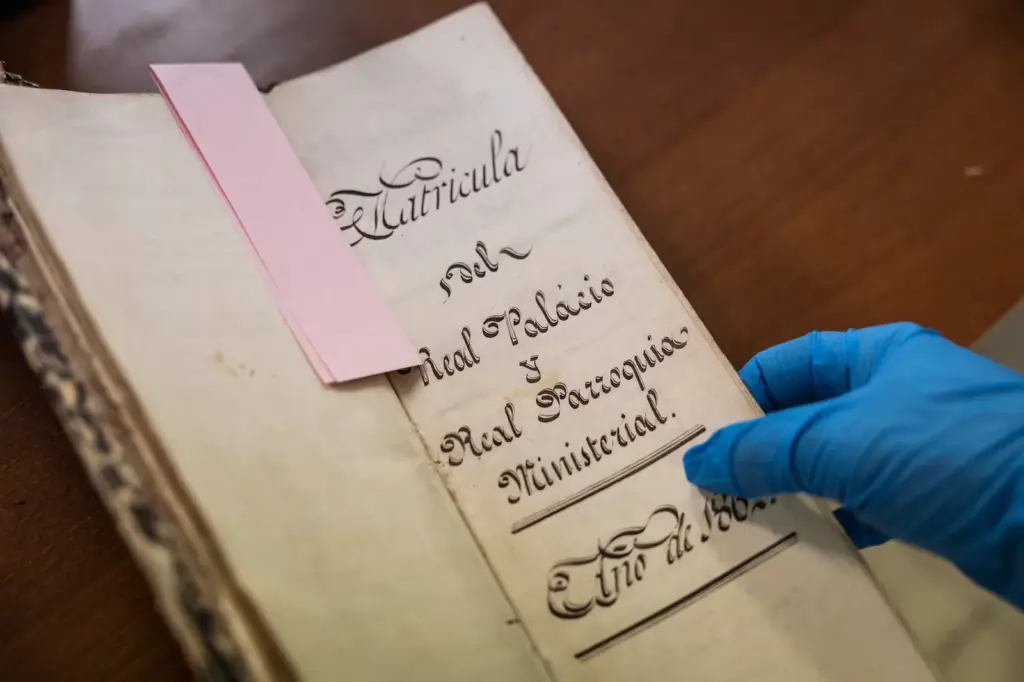
The deputy director of the General Archive of the Palace, Javier Fernández, shows this and other papers that reflect an unknown aspect of the Spanish monarchy that inhabited the Royal Palace. Fernández opens a book, the Register of the Royal Chapel of the Palace, from the reign of Charles III (1759-1788). “This document recorded all the people who lived in the palace, starting with the king. Priests, doctors, the sommelier, the pastry chefs, the nurses…,” says Fernández. Historian José Luis Sancho adds that it was “a register of parishioners.” “The palace parish was its chapel. This census was for ecclesiastical reasons because everyone who lived here had to have their communion certificate.”
The analyzed documents show that employees often complained about being paid late. Palace matters, as is known, move slowly. Something that worsened in times of war. However, at least they had a secure job (unless the monarch’s head rolled). In addition, they were guaranteed the right to a doctor, surgeon, pharmacy, water, and firewood, brought from the El Pardo forest.
However, complaints abound in the Archive’s letters. Lady Asunción Martín de Martínez addressed the Duke of Miranda, to whom she had already explained months earlier “the economic crisis” her family was going through. A situation “today more difficult because my son is in his second year of boarding school.” “Having learned that some rooms intended for employees are vacant […] I trust in your Christian and charitable sentiment, which will favorably dispatch this request.”
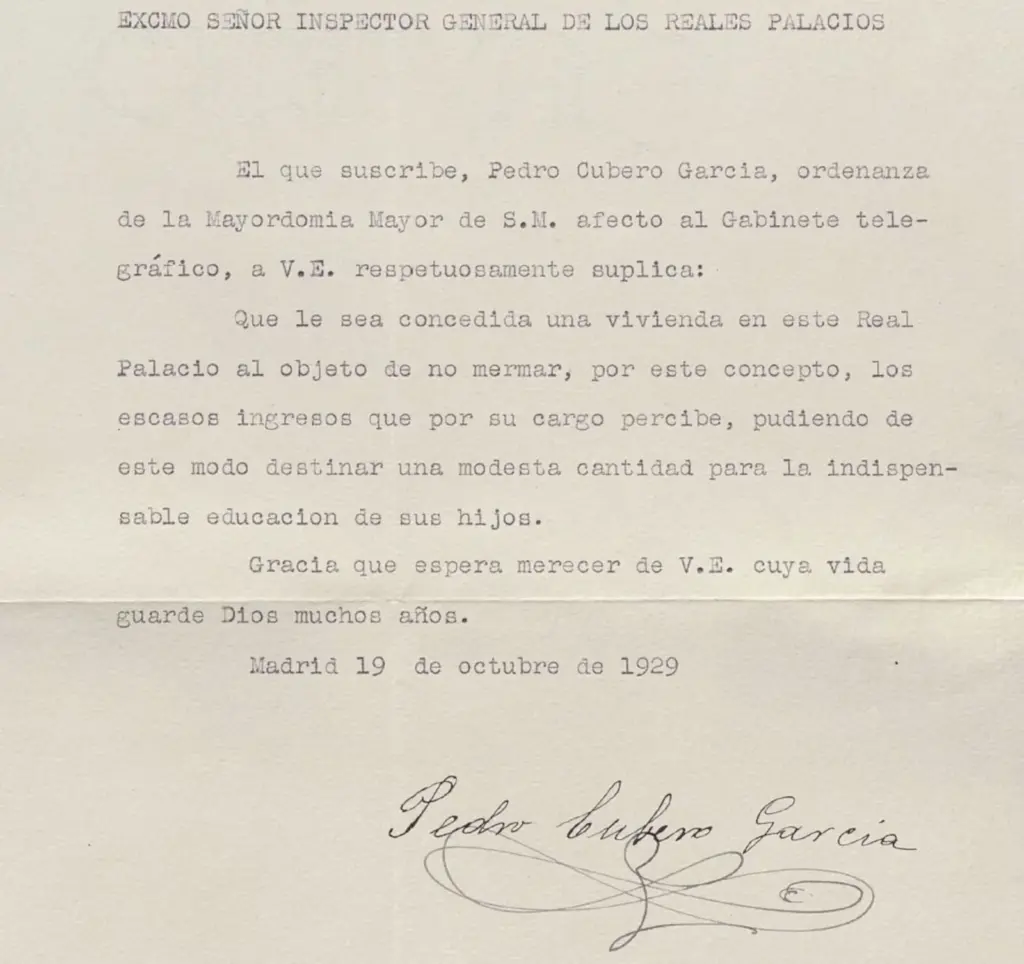
Another similar case was that of the Royal Archive doorman, Luis Alcalá Trigo, in February 1929. However, the response did not offer much hope, with a crushing logic: “Since the list of requests is endless, it will take some time to get your wish.”
A peculiarity of palace working life is that classrooms were set up from the beginning for the children of employees. From the reign of Isabel II (1833-1868) there is a paper with a list of students including the positions their parents held and the grades the children received in each subject: Calligraphy, Orthology (pronunciation), Grammar, Arithmetic, Writing, Embroidery (for girls), Civility, and Doctrine.
Read more Cayetana Álvarez de Toledo: “I still haven’t understood the thing about Ayuso and the penthouse”
When the Second Republic was proclaimed in 1931, “these workers were evicted, except the janitors, who were given new functions,” explains Sancho. This is when those homes were put up for rent to anyone and the palace became a museum. “It is recorded that during the Republic more money was made from those rentals than from museum visits,” he adds.
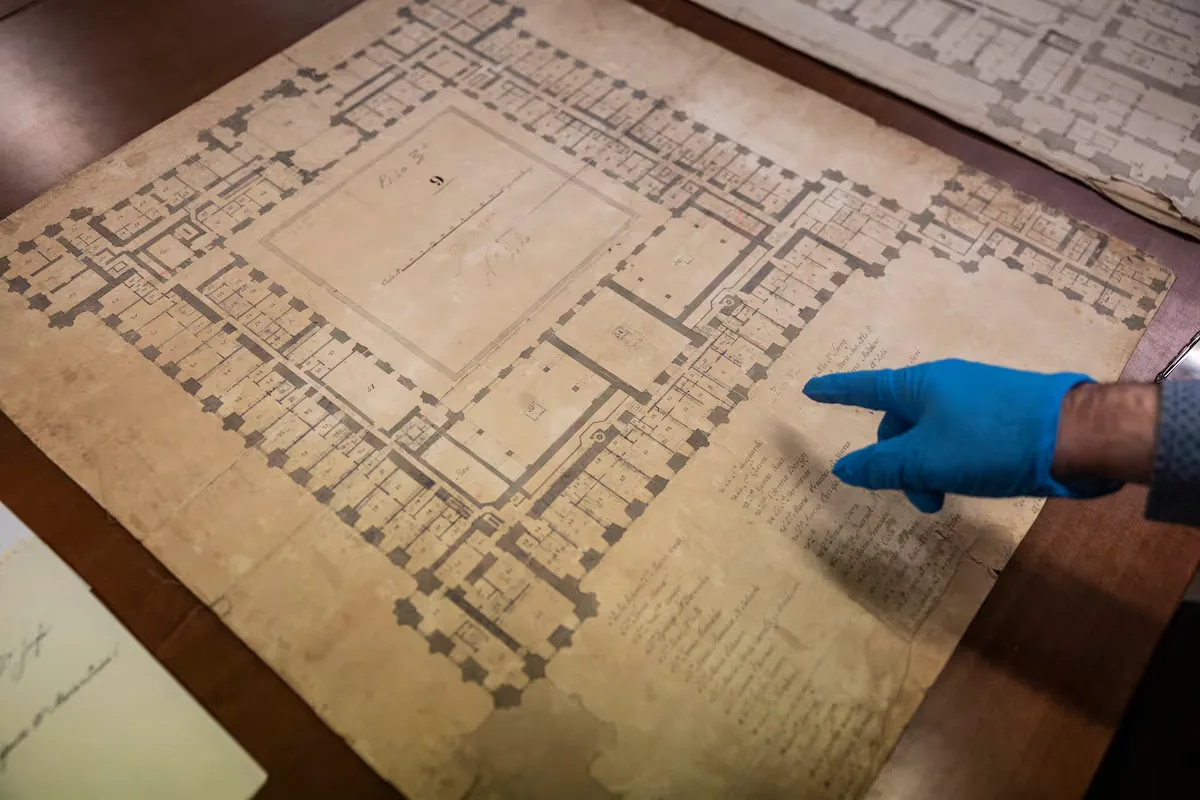
Meanwhile, Javier Fernández unfolds an 18th-century plan of one of the palace floors inhabited by employees. The rooms were distributed according to trades. In the grid marked with the number 11, for example, lived Josefa de Tabares, a lady-in-waiting (noble maid) to one of Charles IV’s daughters, Infanta María Luisa.
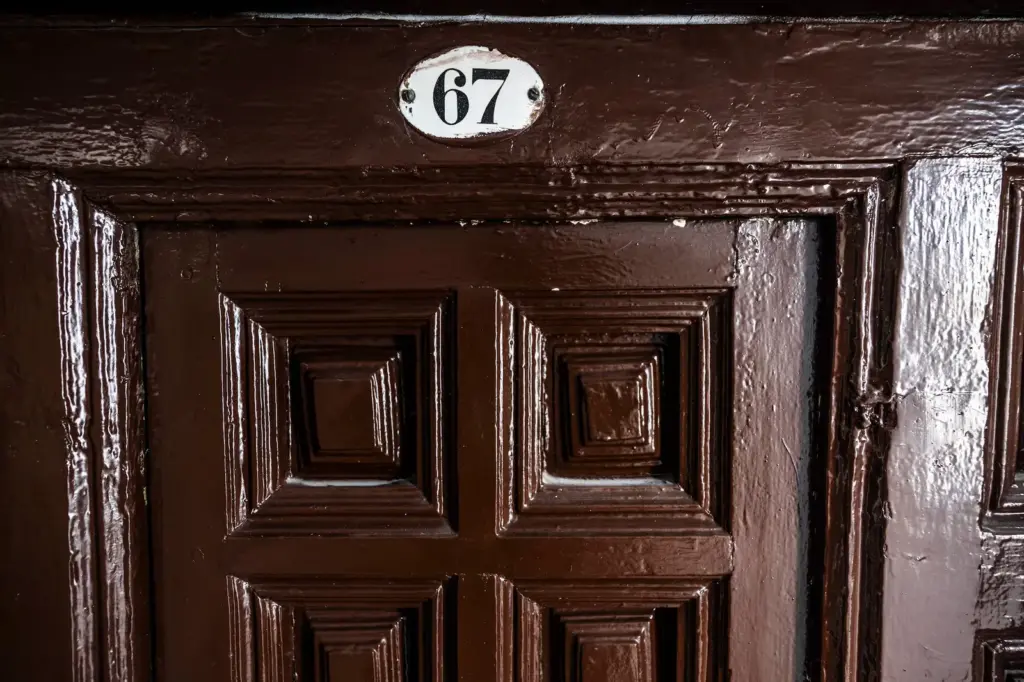
There were constant works in these dwellings. “Those occupied by important officials were subject to continuous changes, walling off or tearing down walls. Also, this depended on how many people lived in them,” notes Sancho. However, this historian emphasizes, as this newspaper was able to verify in a long tour, that there are still houses that preserve their 18th-century structure, although today they are offices or work areas: a vestibule with the kitchen next to it, a room, the study (where visitors were received), and the bedroom.
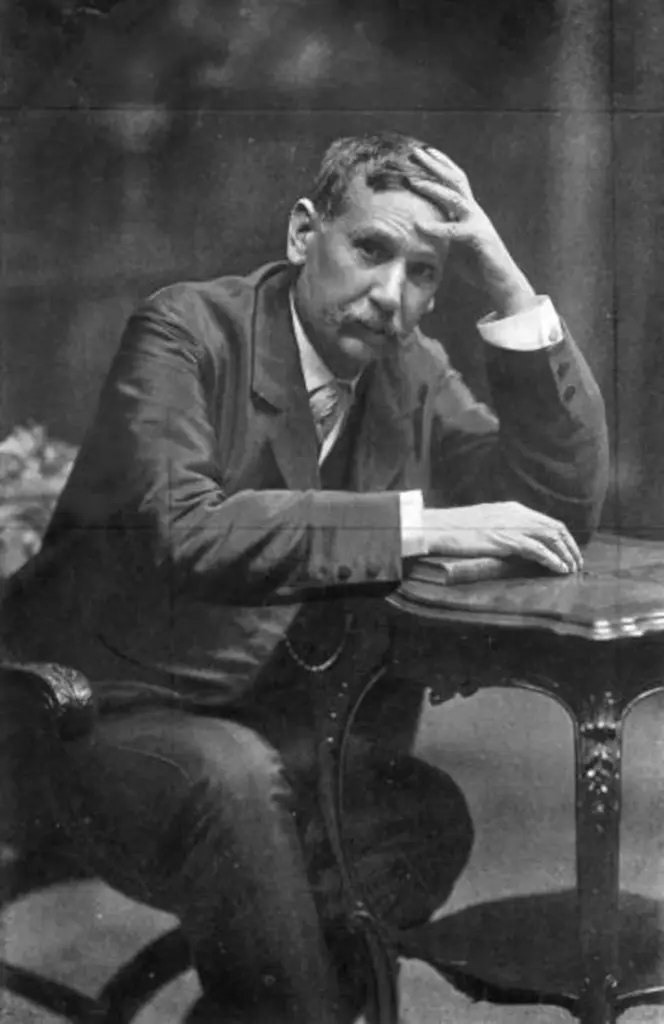
This other life of the Royal Palace has also been told in literature. The novel La de Bringas (1884), by Benito Pérez Galdós, tells the story of a family in which the husband, Francisco, a bureaucrat, is as stingy as The Miser by Molière. While his wife, Rosalía, due to her husband’s stinginess, cannot buy all the dresses she would like to wear to show off to her friends. Therefore, she ends up weaving a web of lies to hide from her husband the money missing from the box he jealously guards. In the General Archive of the Palace, there is a file of an official named Francisco del Campo y Bringas, on whom Galdós seems to have based his character.
The young people who lived in such a place had their own concerns, similar to today’s, such as having to return home earlier than they wished when they were out on the town. A funny typed letter from 1924, from a young man who preferred not to be identified so that “his boldness would not reach” his father, who was a palace servant, detailed to King Alfonso XIII’s private secretary the troubles he and his friends had because the palace access gate closed at one in the morning.
“If you could see how horrible it is to hear our friends going to a theater or a cinema or listening to their stories and not being able to attend or have hope of going,” he noted. “In winter, shows start at ten […] In summer it is even later and it is despairing to watch the clock and have to leave before it ends.” “If the tram does not come or a taxi is not found, one risks being locked out and left outside the house.”
Then, the young man became flattering: “You who are so kind and enjoy His Majesty’s sympathy, we would sincerely thank you with all our hearts if you hinted these considerations to His Majesty, and His Majesty, who does so many good deeds, will take care of our wishes.” To finish with a solution: “That in summer, when the royal people are away, the door closing time be delayed by an hour, or that passwords be given at the command to be able to enter after the official time.” Stories from the palace neighborhood. By the way, a labyrinth for those visiting for the first time, as Galdós described in his novel: “A village made of nooks, deceivers, and surprises, a whim of architecture and a mockery of symmetry.”