







Cauca has not known peace. For years it has been one of the main hotspots of the war that does not end in Colombia. Alerts accumulate, one after another. The troubled department in the southwest of the country was the place where Abelardo de la Espriella wanted to take office as president last August 7, in a military garrison. But the ash from the Puracé volcano forced him to change plans and move the event to Cali, the capital of the neighboring Valle del Cauca. He intended to send a tough message on security, one of his main campaign promises, from that region, one of the most historically affected by the armed conflict, turned into the scene of a bloody confrontation between dissidents of the extinct FARC guerrilla and other armed groups.
Two weeks later, the Ombudsman’s Office issued this weekend its first early warning since De la Espriella became president, number 018 of 2026, to promote a timely state response to the serious risks that armed groups and criminal organizations pose to the population of Popayán, the departmental capital, both in its urban and rural areas. The entity has warned for years about the presence of dissidents in the outskirts of the city.
In the rural area, both a block of dissidents led by Iván Mordisco, grouped in the self-called Central General Staff (EMC), and the ELN guerrilla, face off for control of strategic corridors that connect Cauca with Valle del Cauca, Nariño, and Huila, the early warning explains. In the urban area, it adds, there is a “complex coexistence” between illegal armed groups and criminal organizations that include local gangs, such as ‘Los Comapán’, and transnational emissaries “who use the Cauca capital as a refuge and platform for laundering assets from drug trafficking and illegal mining.”
The manifestations of violence that now even reach the capital, according to the Ombudsman’s Office, include selective homicides and massacres, use of explosive devices (including drones), extortion, kidnapping, recruitment and use of girls, boys, and adolescents, as well as gender-based violence.
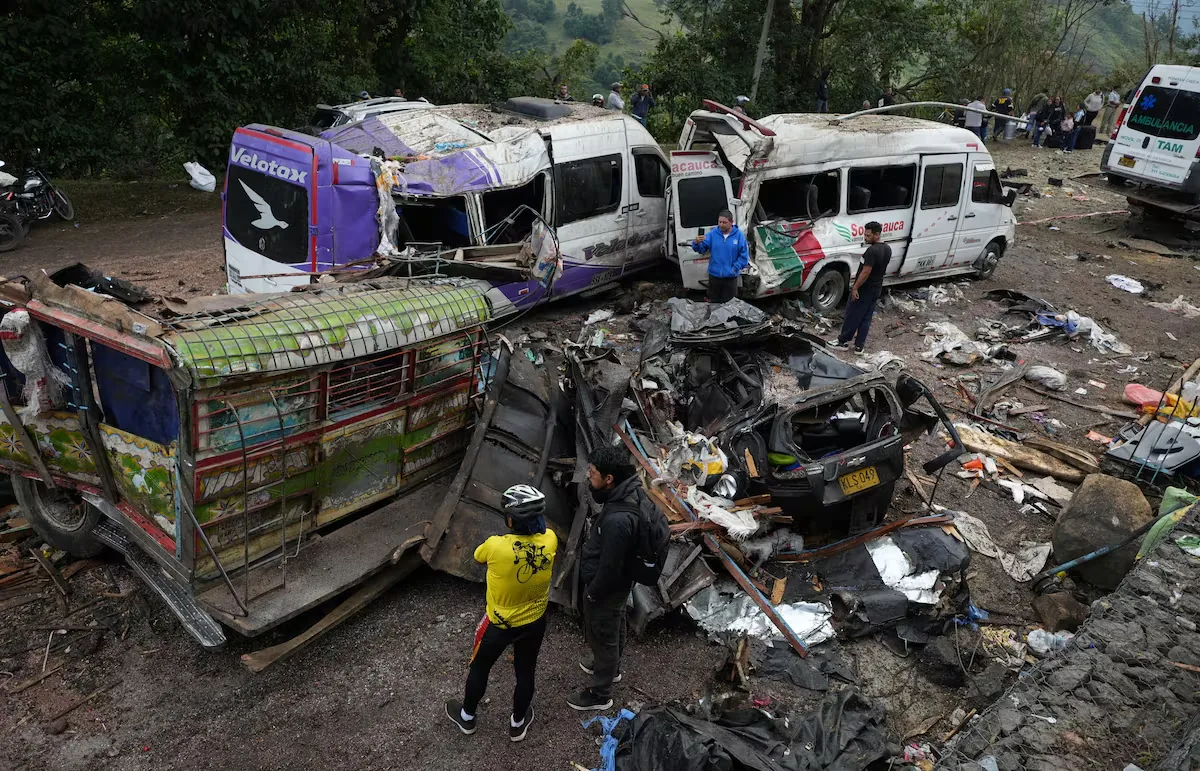
Popayán was one of the most important cities during the colonial period, but since the early 20th century it has experienced a prolonged decline. The armed conflict has been a scourge for decades. Cauca is a strategic place for drug trafficking routes due to its access to the Pacific, where an archipelago of illegal armed groups operates, regularly carrying out attacks, increasingly using drones with explosive charges. On April 25, just one month before the presidential elections, a brutal attack by dissidents on a department road left 22 dead, the terrorist attack with the most civilian victims in Colombia since 2003. It is a constant threat. As in many other places, the new phase of violence is more fragmented and chaotic. And all this amid a broken geography, with two mountain ranges separated by the Cauca River, which makes it costly and difficult for the State to maintain a permanent presence.
Read more The Bluetooth label maker that will save your back-to-school: put a name on everything in seconds
This same weekend, the indigenous communities of the northern department issued their own alert, one more, in the face of the escalation of confrontations and attacks near the civilian population, and even schools. The Regional Indigenous Council of Cauca, the CRIC, warned about the situation in places such as Miranda, Toribío, Corinto, and Tacueyó, where indigenous people and peasants are exposed to confrontations.
Indigenous and peasant communities have also long been denouncing the increase in forced recruitment of minors. This is confirmed by the report presented this week by Human Rights Watch on the increase in child recruitment by armed groups through social networks. Cauca is the region with the most victims, with more than half of the cases in the last five years, and concentrates the five most affected municipalities in the country: Páez, Cauca, Caldono, Argelia, and Toribío.
Since last year, then-president Gustavo Petro had declared a “total” offensive in Cauca against the EMC: “They are killers of the people and traffickers,” he said when Mordisco withdrew from the negotiations that were part of the withered total peace policy. De la Espriella received this month a complex scenario, with almost 29,000 members of organized armed groups and at least 14 active dispute zones between illegal actors, according to estimates from the Public Force collected by the Ideas for Peace Foundation (FIP). Violence is also intensifying in distant places such as Catatumbo, Putumayo, or Guaviare. The president promised during the campaign to deploy a “shock plan” for the entire country within 90 days. Cauca, as the Ombudsman’s Office reminds, must occupy an important place on his priority list.
Read more The best-selling dumbbells on Amazon for home workouts