One should ask whether the relationship between the Government and the media could have been different from this open confrontation into which it has evolved, which for eight years has turned information into propaganda on both sides. The question arises when observing the issue of insecurity. Crime statistics have plummeted surprisingly, but the perception among the majority of Mexicans is the opposite.
It is understandable that the press, radio, and television view with suspicion, and even animosity, a change project that favors popular sectors and reduces privileges for the most prosperous third. The owners, executives, editors, and commentators mostly belong to the segment that would have reasons to distrust a political force centered on the motto: “The poor first.” Many of them are convinced that it is a populism that delays Mexico’s chances of becoming a modern and democratic country. Others simply because it goes against their interests.
The extreme polarization that the debate has reached has come to painful limits for both sides. Not only because of the excess of ideologization considering that, in reality, the change project is much more moderate than the narrative wielded by both sides. But also because the conversation has focused on epithets and disqualifications, increasingly degraded into propaganda for and against.
It seems to me that things should not have reached that point. And if they did with such intensity, it is largely due to the result of a wedding. César Yáñez was destined to be the Social Communication coordinator for Andrés Manuel López Obrador starting in 2018, as he had been in the capital’s Government and during the three presidential campaigns. Not only that: he was literally the closest figure to the Tabasco politician. For years he traveled by his side on endless transfers. On many occasions, he was his only seatmate, assistant, and confidant.
Yáñez’s style, as media coordinator, had been characterized by dialogue, bridge-building, and—why not say it?—by adapting his boss’s peculiar style to the intricacies of the press. It is true that most media were adverse to López Obrador’s rise over the years, largely spurred by the power and budget of the Governments at the time. But Yáñez, and López Obrador himself, maintained spaces and a regular relationship with executives, commentators, and owners.
Yáñez’s wedding, a few months before the inauguration, changed that. He married a prosperous businesswoman from Puebla and left the organization of the celebration to his spouse. As is known, it ended in a media scandal. The irritation of the guest of honor is well known when he saw himself on the pages of Hola magazine, among floral arrangements and sophisticated menus contrary to his proclaimed austerity. During his campaign, the candidate himself had criticized Peña Nieto’s and his own excesses, precisely published in that magazine. A dent in the image that the president-elect could not let pass. The consequence was Yáñez’s exile from the inner circle of the National Palace, weeks before the inauguration. Today he is Undersecretary of the Interior. But he never returned to communication tasks.
Read more Hansi Flick, about the Ballon d’Or: “There is no one like Lamine, he deserves it”
In reality, the consequences were much more serious because that defined the tone and nature of the new regime’s relationship with the media. Jesús Ramírez, who stepped in and became the head of Communication for the six-year term, belonged to a more ideologized and radical current and had no prior contact with the “informers” community. Originally, he had been a reporter for La Jornada, promoted by his closeness to Carlos Monsiváis. Then he took charge of the newspaper Regeneración, the official organ of the movement.
During the presidential campaign, he had the insight to dedicate himself to building favorable social networks for Morena, contacting influencers and sympathetic activists, and developing techniques to defend and counterattack the dirty campaigns the candidate was subjected to. An area unknown to López Obrador despite his long career. The new person responsible for communication with the media had zero relationship with executives, editors, and commentators of traditional media. And it remained so during the six-year term.
The rest is history. The traditional press was assumed as an adversary. Bad, good, and average were considered as a block, when in reality they have not been so due to competition between companies and differences in approach among executives, editors, and commentators in more than one nuance. The confrontation became personal, and mutual reproaches ended in hatred and resentment. Ramírez did not invent López Obrador’s many suspicions about the media, but he injected them with steroids. For six years, he instructed the president in the minutes before the Morning Press Conference about the day’s slanders by the press and filled the space with “knife-tiers” who asked for the president’s opinion on the latest slander he had been subjected to. If it was not complete, he ensured the field was poisoned.
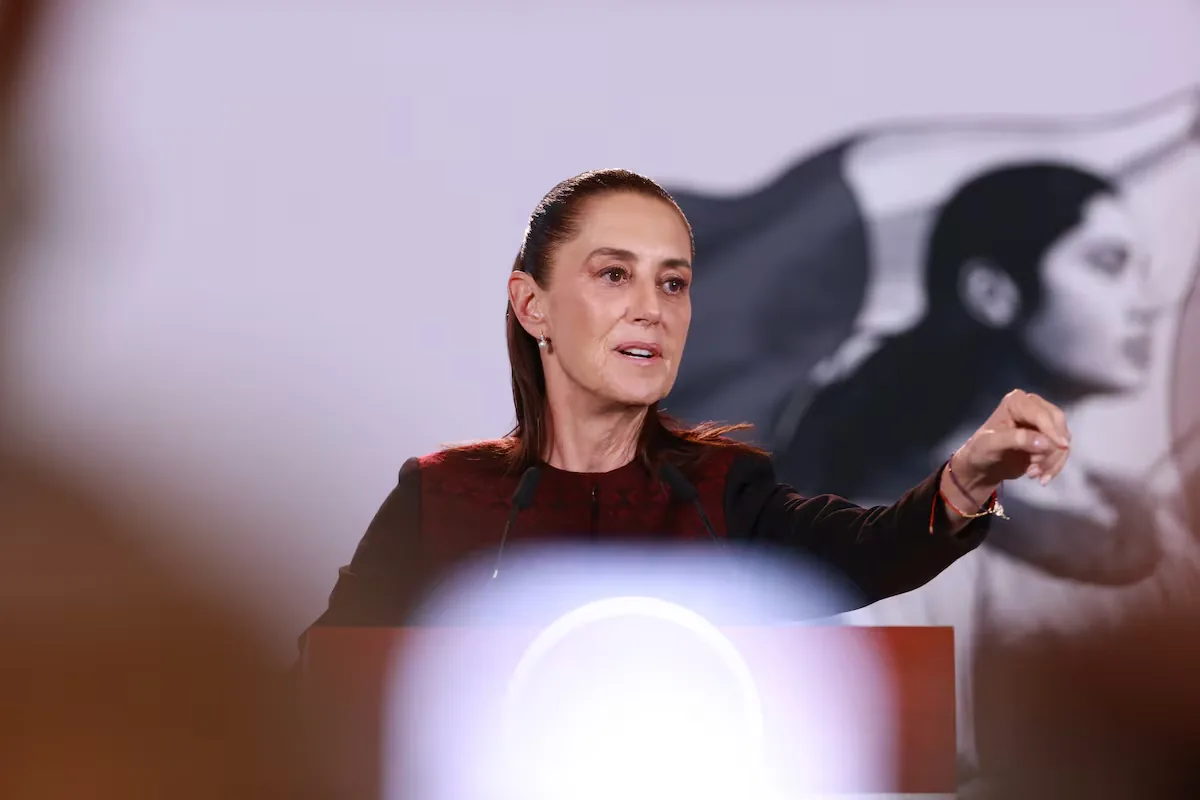
Although less belligerent, Claudia Sheinbaum has not escaped this scheme because it feeds on still-current inertia. Ramírez is today chief of advisors, although he still performs some of the functions he previously held. There has been no strategy to attempt a clean slate, as the candidate sought during her campaign. Her Administration has mistakes, yes, but also significant advances that will reach the public minimized and distorted by the media. The Government of change was surely not going to have good press, but a wedding made it much worse.