




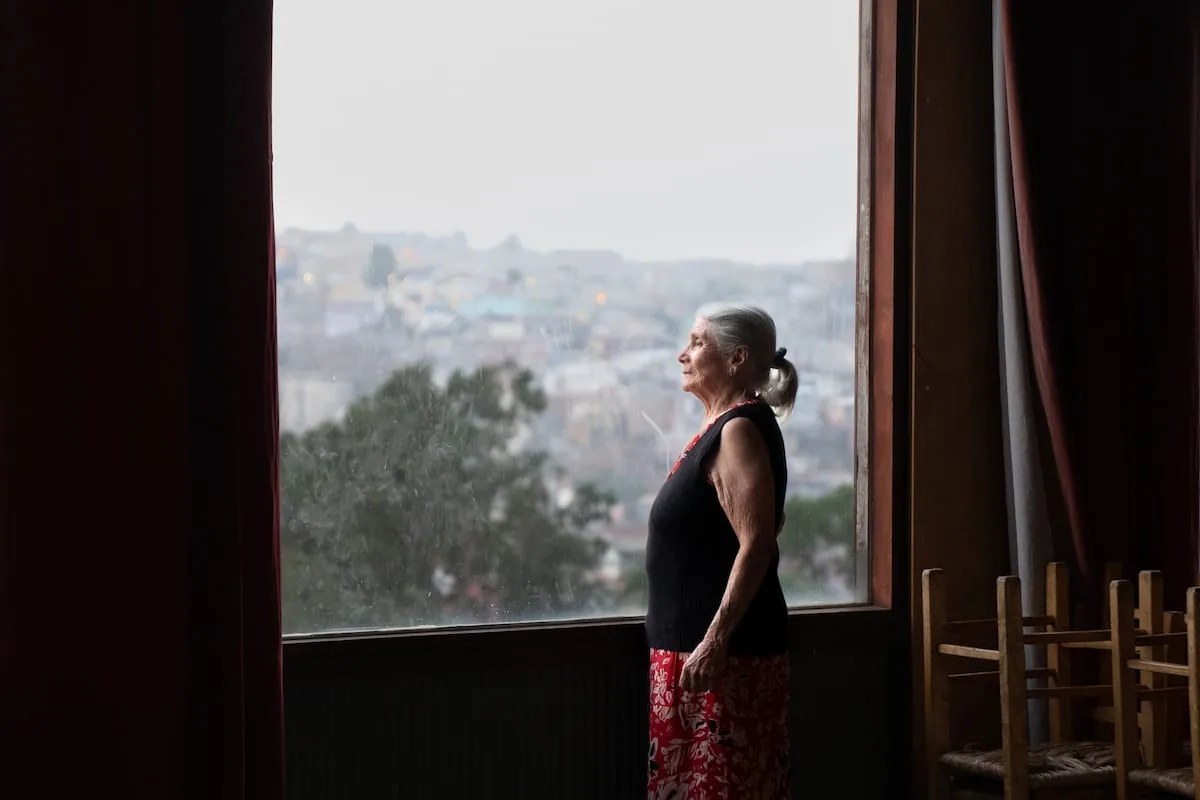
Teresa’s questions began to fade before her memory did. It wasn’t a specific day. It was more like those lights that gradually dim without one noticing, until one afternoon the house no longer feels the same.
For forty years she was a teacher. One of those who order the world with words. Today she lives with her daughter. They take care of her, she lacks nothing. But it has been a long time since anyone asked her anything. Neither at the table. Nor in decisions. Nor in the conversations that pass near her like a river that no longer touches her.
One night, looking out the window, she said softly: “I used to explain the world… and now the world passes by me.” She was not alone. But something in her had ceased to exist for others.
What happens to Teresa is not exceptional. It is, increasingly, a widespread experience. And it is not about age itself, but about how we are understanding old age.
Gerontology has emphasized something key: aging is not only a biological matter, but deeply social and existential. It is not enough to live longer. The question is how that time is lived. And in that experience there are elements that prove decisive: meaning, purpose, interest in life, and above all, recognition.
Older people do not only need material support. They need to continue being part, to continue having something to say, to continue being seen as subjects with history, with opinion, with value.
Without that, life does not end… but it empties. Because the problem is not age, not even frailty. The problem is the loss of place.
Read more The purpose is at stake in our schools
To stop being consulted, to stop being considered, to stop being necessary. To stop being interesting. And there appears one of the most silent forms of exclusion: invisibilization. It is not obvious abandonment. It is not material lack. It is something more subtle: the loss of relevance in the lives of others.
In societies that value productivity, speed, and self-sufficiency, old age is easily displaced. Not because it has no value, but because it does not fit those criteria.
But aging is not disappearing. It is not withdrawing from life. It is inhabiting it in another way.
That is why, perhaps, one of the deepest challenges we have as a society is not only to ensure material conditions, but to sustain meaning.
To keep asking, to keep listening, to keep validating. Because deep down, what is at stake is not only how we age. It is whether we continue to have a place in the world.
And until that is resolved, there will continue to be many Teresas: present people, even cared for, but who, silently, have ceased to be part.
Read more Juan Abarca Cidón, new president of the newspaper ‘Redacción Médica’