







Let us imagine the origin of life as a mixture of ingredients that, 3.8 billion years ago, gave rise to a dish as delicate as it is exceptional. Since the beginning of the last century, prebiotic chemistry (before life) has been identifying the components and the cooking method of that primordial soup. Like any good stew, it seems simple: water, heat, and a few elemental molecules that assembled to form biomolecules first, and primitive living beings much later. However, as in good cooking, the origin of the raw materials makes the difference, and science has long been searching beyond Earth for some of those that made life possible.
When the primordial soup is recreated in the laboratory, insufficient amounts of the sugars that form the chains of nucleic acids (RNA and DNA), the large molecules present in every living being capable of storing information and replicating, are obtained. However, they have been found in asteroids and meteorites like those that massively bombarded our planet about 4 billion years ago. These celestial bodies originate from clouds of gas and dust like those abundant in the center of our galaxy, where a team led by Spanish researchers has just detected for the first time the presence of erythrose, a four-carbon sugar.
“We have estimated that Earth could have received between 0.5 and 50 million tons of erythrose during the last intense bombardment of large asteroids. This is one of the periods when the most organic material could have arrived and is said to be crucial because life emerged shortly after,” says Izaskun Jiménez-Serra, first author of the article published today in Nature Astronomy. Organic molecules, the basic building blocks of life made of carbon, hydrogen, oxygen, and nitrogen atoms, have already been found both in fragments passing through our atmosphere and in samples taken from asteroids like Bennu.
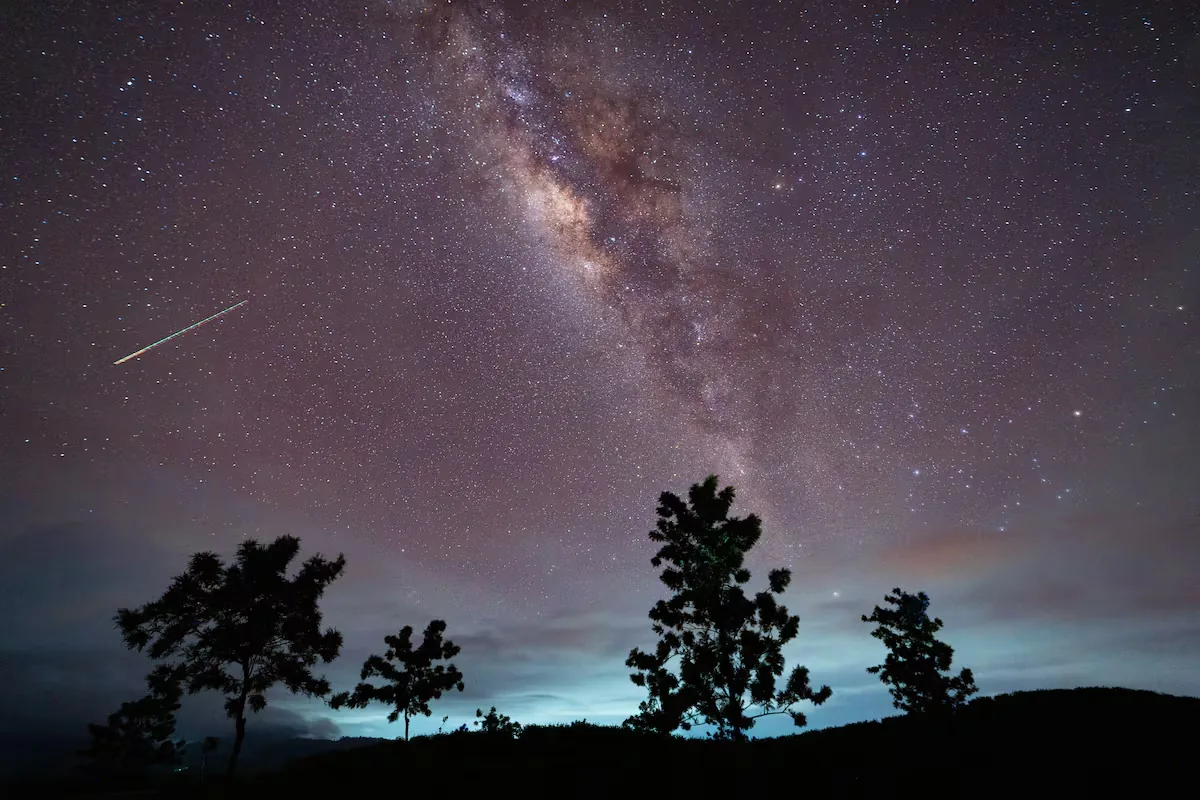
These findings have led astrochemists to look for signs of these molecules where celestial bodies form: in clouds of gas and dust in space. “The source we used is one of the richest molecular clouds we know in the galaxy. To detect very scarce compounds, we need large amounts of material that give us signals strong enough to detect with the sensitivity of current telescopes,” explains the researcher from the CSIC Astrobiology Center about the decision to search in the center of the Milky Way.
Although the first detection was in the heart of our spiral galaxy, they expect to find erythrose in other areas of the galactic plane. “If the conditions that could have existed in the original nebula of our solar system can be seen in similar regions where stars and planets are forming, it is reasonable to expect that the chemistry is very similar. With the detection of this sugar alone, we cannot say that there could be life in other regions of the galaxy, but its chemistry can reach high levels of complexity, similar to those that fostered the conditions in which life began here,” clarifies Jiménez-Serra.
Spanish radiotelescopes of exceptional precision
To find these molecules 26,000 light-years away from the center of the Milky Way, one must look for the light signal they emit in the radio wave spectrum, which is studied beforehand in the laboratory. “We detect them with radiotelescopes prepared to capture very specific frequencies, as if they were unique radio channels for each compound,” illustrates the astrochemist. The erythrose signals were captured from two radiotelescopes of the National Geographic Institute (IGN): the 40-meter one at the Yebes Observatory (Guadalajara) and the 30-meter one at Pico Veleta (Granada), which belongs to the Institute of Millimeter Radio Astronomy (IRAM), an international project with IGN as a member.
Pablo de Vicente, director of the Yebes Observatory, explains that molecules leave clues that only telescopes as precise as these can detect. “Those signals received from space are extraordinarily weak, like whispers that must be rescued from the noise reaching the radiotelescope,” details the astronomer. He emphasizes that the receiver of the Yebes telescope, of which there are barely a dozen similar ones worldwide, is especially sensitive. “We designed and built it with our team of engineers, and I can say without error that it was the best that existed when it was released. I would even say that, in this niche of astrochemistry, we are unbeatable,” he points out.
Read more The PP and José Pablo López clash in Congress over ‘Malas Lenguas’
Proof of this is that the instrument, open to all researchers worldwide after quality review of proposals, holds the record for detecting molecules in interstellar space. “Millions of molecules are known on Earth, but only 350 have been identified in interstellar space from the 1970s until now. We have detected 30% of them since we installed the new receiver six years ago. We are the ones who have detected the most worldwide,” highlights de Vicente.
Closer to understanding the origin of life
The radiotelescopes were searching for erythrose in the vast molecular clouds of the interstellar medium because, as Jiménez-Serra recounts, “we were not finding three-carbon sugars in the interstellar medium, which are usually added in prebiotic chemistry experiments.” “So it was a surprise to find erythrose, with four carbons, when I started looking for it, based on information that Emilio Cocinero, another author of the study, had obtained about it in the laboratory,” she adds.
Erythrose has a linear structure that does not serve as a basis for life, but that changes when it comes into contact with water. “The important thing is that, when it reaches an aqueous medium, it very easily changes its configuration to threose, another four-carbon sugar that is part of nucleic acids.”
Thus, Jiménez-Serra explains how primordial genetic material could have begun to be synthesized in a soup lacking a main ingredient. If it arrived from outer space mounted on asteroids, these could have acted as those concentrated broth cubes that enrich a stew.
In addition to some of the most precise telescopes, Spain also has one of the scientists who has detected the most molecules in the interstellar medium. José Cernichano, Ad honorem professor at CSIC and medalist of the Royal Spanish Society of Physics, does not participate in the study but evaluates it for EL PAÍS explaining that it deals with “one of the most exciting topics of the last 60 years in molecular astrophysics,” the area in which he is considered one of the world pioneers.
“After several decades searching for complex molecules, about 200 molecular species were known in space in 2020. With the new instrumentation installed in Yebes thanks to the Nanocosmos project, the number of known molecules has almost doubled in a few years. The extraordinary quality and sensitivity of these receivers have allowed detecting this important sugar for chemistry in the early phases of the evolution of planets like Earth,” praises Cernichano.