








Adriana Quintana wakes up at half past five in the morning in Ixtapaluca, in the State of Mexico. She washes her face, prepares her backpack, and leaves the house, which she will not return to until 10 at night. She makes four transfers on public transport to get to her 46-hour-a-week job in downtown Mexico City. She is a cook. She spends five hours each day commuting to and from her job. Like her, two million people from the capital and the surrounding municipalities spend more than two hours daily commuting to and from their jobs.
Read more Urdiales, through the Main Gate with the ‘friendly’ bull of Juan Pedro
Within the red walls of her small house, in a neighborhood inside the Ayotla colony, Adriana, 41, explains why she does not live closer to her job at the Hidalgo market, in the Cuauhtémoc borough. “I have lived here all my life,” she details. She separated after becoming a mother of two children who are now 16 and 21 years old. The children stayed with their father. “I choose to stay in the area for my children, to be able to see them and be close to them,” the woman explains.
6.00 Mototaxi
She leaves her home well wrapped up at six in the morning to take a mototaxi that for seven pesos (about 0.40 dollars) drops her off on the main avenue of Ixtapaluca. A short trip that could be done on foot, but Adriana suffers pain due to the poor condition of the cartilage in her knee. The night is thick. The cook reveals the other reason that makes her live here for six years but not look for a job here. The paradox is simple: in downtown Mexico City jobs pay better, but renting an apartment is much more expensive; in Ayotla she only pays 1,500 pesos in rent (90 dollars), but the jobs are more precarious and worse paid.
In the Mexico Valley Metropolitan Area (ZMVM), more than seven million trips are made daily for work reasons. Of these, 3 out of 10 are by employees who spend more than two hours a day commuting to and from their workplace. In total, more than two million people. And work is usually concentrated in a single point. Like Adriana, more than 800,000 people from the ZMVM go every day to a company or their own business in the central neighborhoods of the city. Among the four areas that receive the most employees, the top three (Historic Center, Buenavista-Reforma, Condesa) are in the Cuauhtémoc borough.
Exact data on mobility in Mexico City is limited, only collected on a large scale every decade. The latest available study is the 2017 Origin and Destination survey, in which four public institutions analyzed 66,000 homes in the metropolitan area to understand the travel dynamics between 69 municipalities of the State of Mexico and the capital.
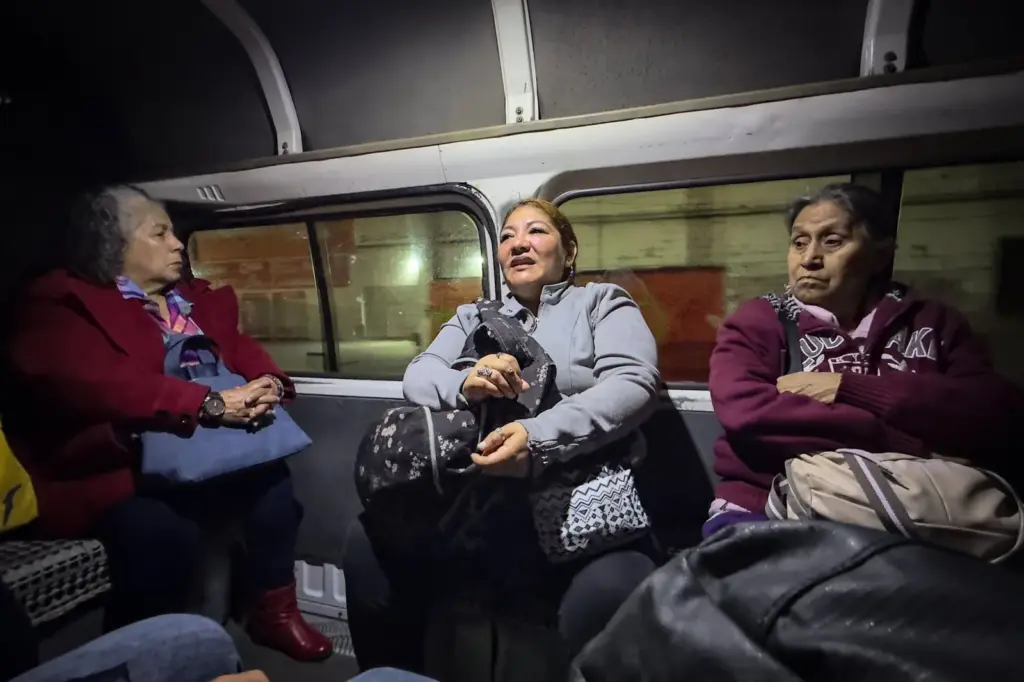
6.06 Microbus
Adriana boards a microbus at 06:06. This is the most used mode of transport, with 11 million daily trips, according to the Origin and Destination survey. The main problem with this vehicle is insecurity. Six out of ten robberies that occur on public transport happen on these small buses, according to the National Public Security System. “It’s the fact of leaving at dawn and that you might encounter someone who wants to rob you,” the woman explains. Her brother was stabbed to take his cell phone. Luckily, nothing has happened to her so far.
After 25 minutes on the microbus, Adriana pays the driver 13 pesos through the window and arrives at Santa Marta. Here she will take the cable car. Previously, her usual route was to go to the Pantitlán metro station, but three stations on Line 9 were closed for works. It is common for people who use public transport to get to work to have to modify their trips due to renovations, track closures, or mechanical problems. An extra that often translates into arriving home even later. On those days, Adriana just wants to go straight to sleep.
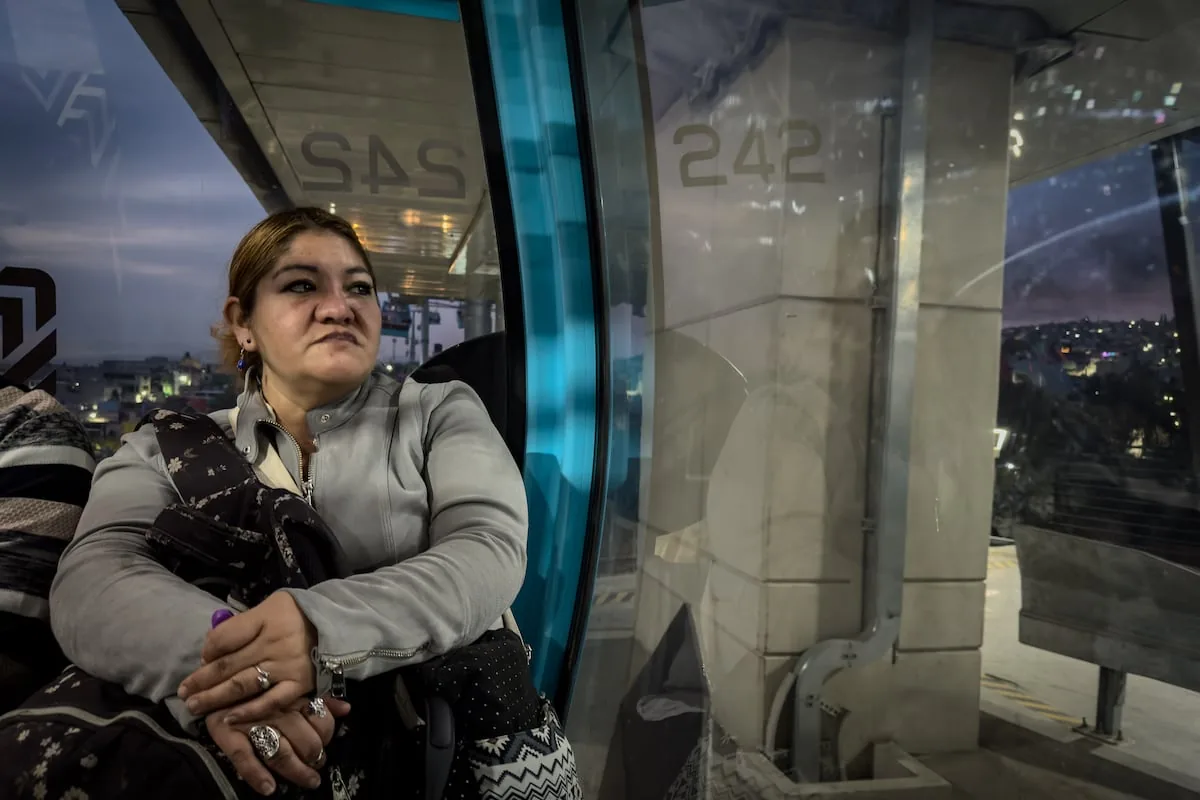
6.40 Cablebús
Adriana takes the cable car for seven pesos. This transport changed the way of moving through the Iztapalapa neighborhood. It is still night. At 6:40 she enters the cable car, sits down, puts on her headphones, and disconnects from the world. “I try to fall asleep. I can’t, but I close my eyes because I’m afraid of heights,” she explains. Despite the vertigo, this is the shortest route.
—What would you do with the time it takes to get to work?
—On Saturdays I take a Mexican bakery course. I would like to take the diploma.
The opportunity for training is currently unfeasible with her schedule. Also simpler things. “I make Huichol crafts, bracelets, and those things, I would like to have more time to make them,” she says with some sadness. A survey by the employment portal Indeed of Mexican office workers showed that 4 out of 10 would use their commuting time to spend time with family and friends, 18% on professional development, and 15% on hobbies. Adriana has distanced herself from friends, but when she gets home she just wants to rest.
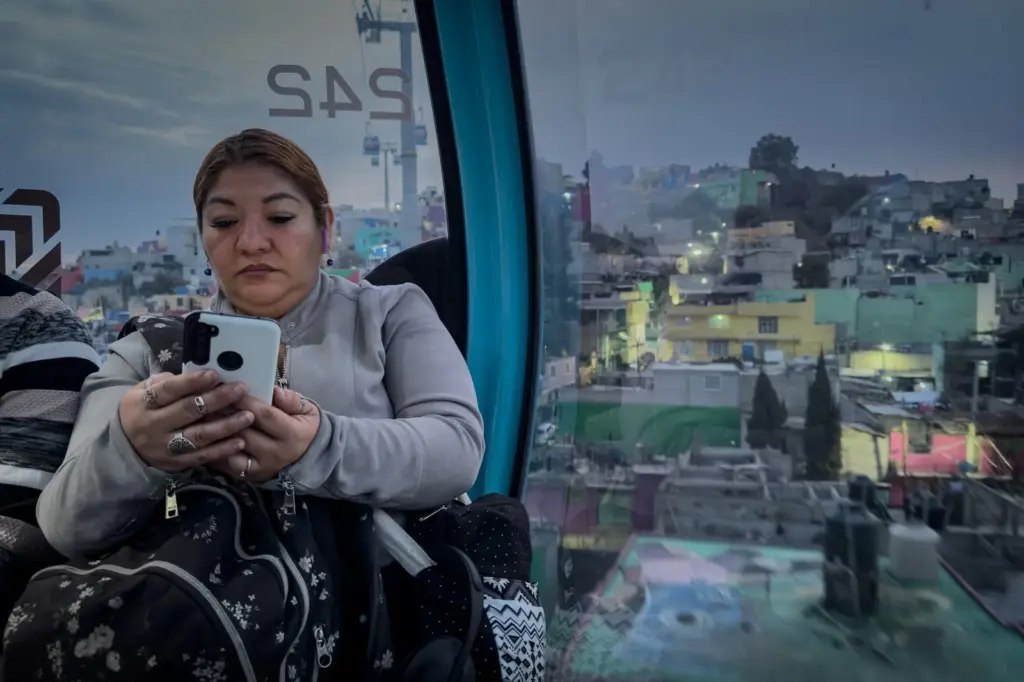
During the almost one-hour trip, dawn breaks and the rooftops painted with colorful graffiti, made especially to be enjoyed from the height of the cable car, can be seen. It stops with a strong jerk. The cable car doors open. And from the sky, she has to come down to earth.
7.38 Metro
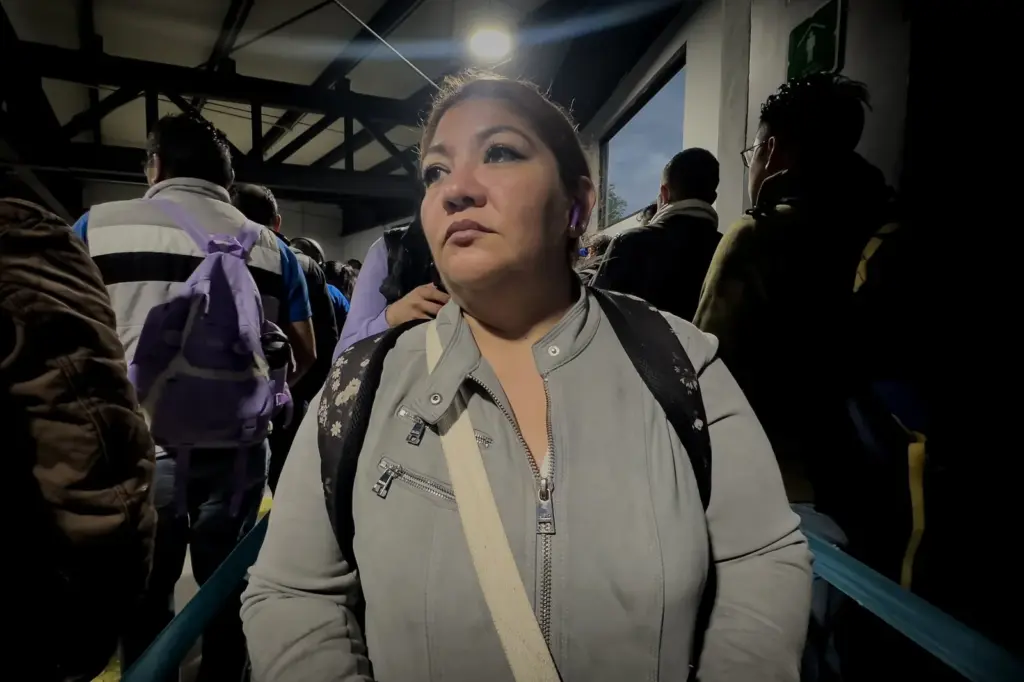
As she walks along the walkways leading to the metro, Cartel de Santa rap comes out of Adriana’s headphones. The group’s harsh lyrics match the atmosphere. At the Constitución de 1917 station on Line 8, long lines wait tightly packed to enter the car. The train arrives and the typical gestures begin: backpacks forward, elbows out, and pushing inside. Adriana decides to go in the car reserved for women and children. She cannot get on the first train and has to wait for the next one.
The metro, at rush hour, is overwhelming even for those who do not have to go to work. A 2022 survey by the National Autonomous University of Mexico (UNAM) estimates that 18% of capital residents feel stressed during their public transport commutes. This figure rises to almost 4 out of 10 people if they are from the State of Mexico and travel to the city center. “It stresses me out that I’m going to be late,” Adriana explains about the days when the train stops for up to 15 minutes at stations.
Among the large crowd of people, there is no room to read a book, listen to a podcast calmly, or look at the phone to make the most of the travel time. Almost not even to breathe. “I arrive at work tired from standing,” the woman says when she gets off at Obrera, the stop that leaves her next to the Hidalgo market.
8.30 Time to cook
Adriana leaves the station and greets an old acquaintance who sells marzipans sitting on the stairs. “Today we took less time than usual,” she says as she arrives at 8:18 at the small economical kitchen where she prepares her recipes. She has taken 2 hours and 18 minutes from her home, a trip she repeats Monday to Friday.
She will still have nine hours — sometimes more, sometimes less — of putting pots with seafood soup, heating pans to prepare steaks, or taking orders from diners, for a salary of 250 pesos (less than 15 dollars a day) — of which she spends 64 on transport. She works 46 hours a week, while Mexican society and politicians still debate whether the work schedule should be reduced to 40 hours a week.

When Adriana finishes working at six, seven, or eight, she will still have two and a half hours to return to Ixtapaluca. She will arrive home between 9 and 11 at night, put on a YouTube video, and finally relax. She goes to bed around midnight to sleep between five and six hours. The problem of long commutes and few hours of sleep is not exclusive to Mexico. Millions of people in many capitals around the world spend their lives on public transport.
On weekends Adriana almost always uses them to sweep, wash clothes, and clean dishes. That’s how the life of a person who spends five hours just commuting to and from work goes by. And also the dreams: “Sometimes I wake up every little while at night thinking I’m going to be late.”
Subscribe here to EL PAÍS Mexico’s newsletter and receive all the key information about the current affairs of this country