A poster with the stern, almost threatening face of Donald Trump has been hanging on the facade of the United States Department of Justice for a few months. The image is accompanied by a slogan: “Make America Safe Again.” Similar banners, with the same defiant face of the president, hang from other federal buildings. But none is as symbolic and politically charged. Although the Department of Justice depends on the White House, it has traditionally been considered the most autonomous Cabinet department to limit interference in judicial matters. Since Watergate, the scandal that ended Richard Nixon’s presidency in the early seventies, presidents have stayed more or less away from that department. But since Trump arrived at the White House, that supposed neutrality has been shattered.
This week he just appointed his former lawyer and friend Todd Blanche as Attorney General, the position that leads the Department of Justice. It is the latest step in a strategy of appointments to key positions to strengthen control over an institution that had become one of the few centers of resistance to his chaotic and arbitrary policies. He already has a favorable majority in the Supreme Court, with six conservatives (three appointed by him) out of nine justices. He has appointed new judges and prosecutors whom he expects to support him, and has placed about twenty of his private lawyers in strategic positions to relaunch the prosecution against his political enemies.
Blanche is not just any lawyer. He represented Trump in the case of bribes to porn actress Stormy Daniels, for which Trump was convicted of 34 crimes due to irregularities in accounting records when trying to hide payments of $130,000 to the woman. He was also on the front line of defense in cases of conspiracy and electoral obstruction for irregularities in the 2020 elections. And he was the president’s defense lawyer in the case of withholding classified official documents at his Mar-a-Lago mansion after his first term ended.
Blanche, who until now served as acting Attorney General, occupies the position left vacant five months ago by Pam Bondi, dismissed for her controversial handling of the declassification of files related to the millionaire pedophile Jeffrey Epstein and her hesitant tactics to prosecute Trump’s political enemies in court. Blanche is even more loyal than Bondi; he was the strategist behind the Supreme Court ruling in 2024 that grants immunity to presidents in the exercise of their duties. Based on this, he believes Trump has the right to do anything.
Blanche also published the latest batch of Epstein’s documents. A process full of irregularities, with multiple files still secret and others that revealed the identities of the victims.
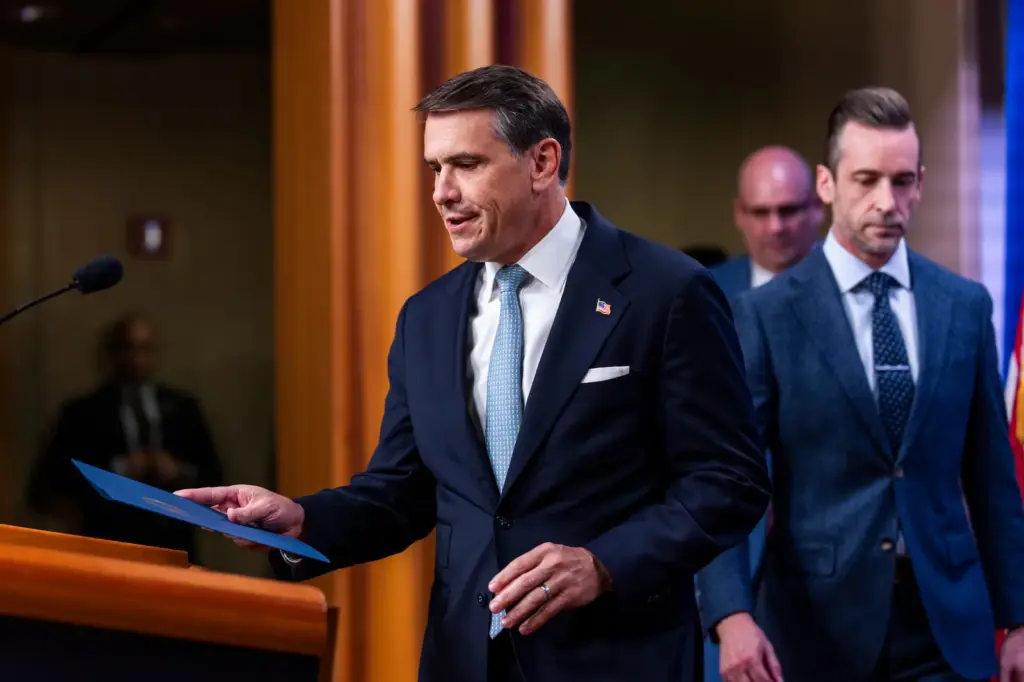
And also, as acting Attorney General, he reached an out-of-court settlement with Trump to dismiss the $10 billion lawsuit against the IRS, the U.S. tax agency, in exchange for creating a $1.8 billion compensation fund for friends and allies who felt persecuted by the previous administration. The fund would supposedly have benefited the mob that, influenced by Trump, stormed the Capitol on January 6, 2021, to try to prevent the certification of Joe Biden’s victory. The agreement contained tax immunity for Trump, his family, and all his businesses. The controversial agreement almost derailed Blanche’s appointment as Attorney General. He had to commit to burying the compensation fund and limiting the president’s tax immunity to convince several Republicans to vote for his appointment.
“Mr. Blanche has taken several actions that have further eroded the independence of the Department of Justice,” Republican Senator Susan Collins said Thursday to explain why she would reject his nomination. “Although I believe Blanche is a capable lawyer, the Department of Justice has become increasingly political,” she argued, while warning: “More than 1,200 former Department of Justice employees have opposed his nomination, arguing that he has undermined the institution.”
Blanche’s appointment is seen as a move by the president to tighten control over justice. The Republican, who has spent half his life in courts—collecting lawsuits for his aggressive way of doing business in late 20th-century New York—seeks to relaunch the political persecution of his enemies and shield his most questionable policies.
Trump has never hidden that he wants revenge. He has been subjected to two impeachments or political trials in the U.S. Congress from which he emerged victorious, but they left him deeply wounded and full of resentment. “We have to win the midterm elections because if we don’t win… they will find an excuse to remove me,” he said early this year at a rally with Republican legislators in Washington about the upcoming November elections to renew the House of Representatives and part of the Senate. He frequently insults and belittles his rivals, whom he threatens to take to court.
After his return to the White House for a second term, Trump launched a campaign of political retaliation against those who investigated and accused him. To this end, he ordered Pam Bondi, the former Attorney General, to sue James Comey, former FBI director, who investigated him for his connection to the Russian interference plot in the 2016 elections. The prosecution sued him over a photo of numbers (8647) made with shells on the beach, which they interpreted as a threat code to the president.
Trump has also asked to take John Bolton, former National Security Advisor during his first government, to court; or against Letitia James, the New York Attorney General, who opened a case against him for bank and financial fraud. He also asked the Attorney General to investigate Democratic Senator Mark Kelly, former astronaut and combat pilot, and five other legislators who published a video urging members of the armed forces to disobey illegal orders following changes introduced by Pentagon chief Pete Hegseth in the Department of Defense. “Each of these traitors to our country should be arrested and tried,” Trump posted on his social media shortly after the senators released the video.
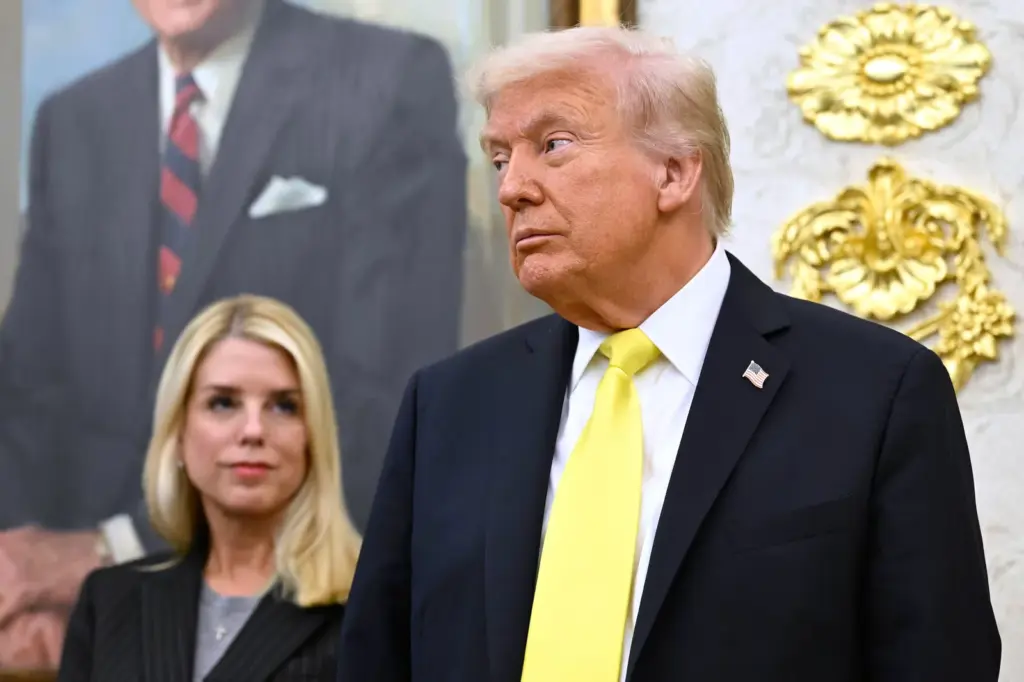
“Sometimes revenge can be justified. I have to be honest,” the Republican leader confessed during the last electoral campaign when asked if he would take revenge on his political rivals.
Read more Murder in the North
There is a chapter in the book Regime Change, written by two The New York Times journalists, that illustrates the president’s and his circle’s thirst for revenge. The authors recount that in the spring of 2025, a few months after regaining power, Trump was in the Oval Office surrounded by his advisors while trying to make a list of “past grievances.” At one point, the president said: “I remember there was a lawyer in the Administration who said the elections were fair and there was no fraud. Who was it?” he asked.
One of his closest advisors recalled it was a public lawyer from the Department of Homeland Security (DHS). “His name was Krebs,” said another advisor. “That’s right, Chris Krebs,” said Trump, according to the book’s account. “What happened to him? He was a bad guy. Look at him,” he told his trusted men. A few days later, the White House issued an order to the Department of Justice to investigate Krebs.
It is another example of how Trump is using pressure on the judicial system for his policy of retaliation against anyone who opposes him, to try to protect his policies and build a line of defense for when the Democrats supposedly come after him, which is what he fears most.
What happened this week with the Washington reflecting pool case, one of his projects, is also a sign of that pressure he exerts on justice. Federal prosecutor Jeanine Pirro, an old friend of the president from the time they both appeared on reality TV shows, withdrew the lawsuit last week against those accused of vandalizing the reflecting pool at the Lincoln Memorial. The decision enraged Trump, who accused Pirro of “folding like an umbrella” and “chickening out.” Since then, he has been pressuring to reopen the case because he cannot accept that the pool’s renovation was defective, as it goes against his image as a great, effective, and decisive builder.
The Republican politician also has the wind at his back in the Supreme Court, with six conservative justices against three progressives. In more than 80% of rulings, they side with him. Still, he has faced disappointments in some relevant cases such as tariffs or birthright citizenship. But he has not cared. He has found ways to circumvent rulings and maintain his policies.
In the 567 days since he returned to the Oval Office for his second term, he has appointed 54 judges and 52 federal prosecutors. Additionally, he has tightened control over the FBI, DEA (Drug Enforcement Agency), and ATF (Bureau of Alcohol, Tobacco, Firearms and Explosives) like no other president, at least in the 21st century.
Last Friday, in a marathon session, Republicans, at the White House’s behest, managed to approve 136 appointments, including dozens of judges at various jurisdictional levels, new prosecutors, and other judicial positions. Biden appointed more federal judges over his four years, but Trump is moving very fast in occupying key positions that control federal investigation and prosecution.
The U.S. president has replaced career officials with decades of experience with his private lawyers in decisive Administration positions. Besides placing Blanche as Attorney General, which is the most notable case, he also appointed Emil Bove as a judge on the Third Circuit Court of Appeals, a critical position for accepting or rejecting appeals. Bove was the lawyer who represented Trump in the case of classified documents found at his Florida mansion and in the accusation against him for electoral obstruction by not recognizing his 2020 defeat. He also placed Will Scharf in the White House, who defended him in the election interference case. Up to about twenty lawyers who defended him in the past now hold high positions in the Administration.
The colonization of key positions to try to control justice and investigation coincides with a weakening of the authority of these agencies. In recent months, complaints from federal judges against the Department of Justice for not complying with court orders or improperly using the system to persecute political opponents have skyrocketed, according to a report published by Reuters, which notes that internal oversight and compliance bodies have weakened in parallel.
The report states that nearly half of the staff of the Office of Professional Responsibility (OPR) has left the institution since Trump returned to the White House. And 17% of the officials from the Office of the Inspector General have also left. This has reduced investigations of internal affairs, complaints of abuse of power, or irregularities committed by the Department of Justice.
“The politicization, even the instrumentalization, of the Department did not begin with this Administration, but it has accelerated with it,” said Republican Senator from Alaska Lisa Murkowski on the Senate floor Friday to explain her rejection of Blanche. “I have issues with the handling of the release of Epstein’s files; the broad immunity protections granted to the president, his family, and his businesses; the statements made to anti-abortion groups; and the repeated persecution of individuals ranging from former Administration staff to sitting U.S. senators,” Murkowski concluded.
Read more The weather for eclipse week: intense heat and afternoon storms in the east