







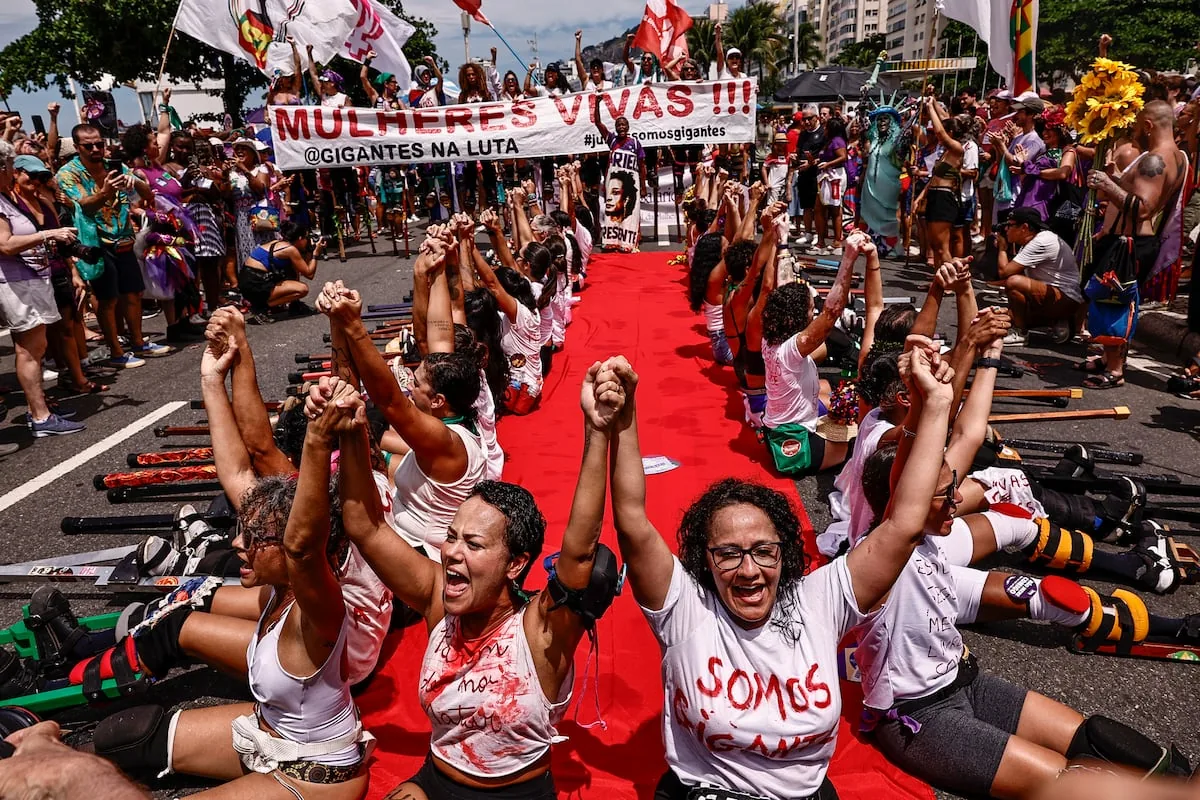
In recent years, the fight against violence against women has ceased to be a sectoral issue to take a central place in political and institutional debate. In Brazil, this movement reflects the political decision to elevate the issue to the highest level of the State and the recognition of its cross-cutting nature in different public policies.
The agenda to combat violence against women is a priority of President Luiz Inácio Lula da Silva, which is reflected in initiatives such as the Brazil Pact against Femicide, which integrates actions among the three branches of government (Executive, Legislative, and Judicial), to face violence against women in a coordinated manner, even together with Brazilian states and municipalities, in an unprecedented initiative for its scope and degree of institutional integration.
Within the Ministry of Women, this priority has translated into actions aimed at strengthening and improving public policies to combat violence against women, always recognizing the importance of the intersectionality between gender and race. In this regard, efforts have been made to: expand protection networks, improve prevention and response mechanisms, and coordinate the different levels of government, taking into account the implementation of the National System of Policies for Women.
This set of initiatives seeks to transform fragmented policies into an integrated state strategy, capable of providing more consistent and sustainable responses to gender and racial violence. This effort indicates a shift in approach, where violence against women is treated as a state issue, not just a government matter.
As these policies advance, violence against women also transforms, ceasing to be expressed only in its traditional forms and taking on more complex dimensions, especially in symbolic, institutional, and digital spheres. In this scenario, gender political violence stands out, which seeks to delegitimize the presence of women in public life, silence their voices, and restrict their participation in decision-making spaces.
Read more Video analysis | Venezuela faces the weight of expectations about its economic future
This phenomenon is not limited to Brazil and directly affects the quality of democracies. In this context, international cooperation is strategic to face this challenge, strengthening public policies and consolidating institutional capacities.
The rapprochement between Brazil and Spain on the gender agenda, through the signing of the Memorandum of Understanding on Gender Equality and the Eradication of Violence against Women, during the I Brazil-Spain Summit held in Barcelona, will play a relevant role in strengthening policies in both countries and in building references capable of inspiring other nations.
On one hand, Spain stands out as an international reference in the fight against violence and the promotion of gender equality, having developed a solid framework of policies and institutions in this area. On the other hand, Brazil has strong public policies and legislation, which serve as inspiration for various nations. The Memorandum will allow the exchange of these experiences, the improvement of policies, and the strengthening of institutional capacities, and will symbolize the firm commitment of Brazil and Spain to the lives of women.
In a global scenario where guaranteeing women’s rights remains one of the main indicators of democratic quality, addressing gender violence is not an agenda restricted to specific areas of government, but a political and ethical demand of contemporary democracies, which must be addressed through collective and coordinated actions. These actions aim not only to advance but also to make the progress achieved irreversible.