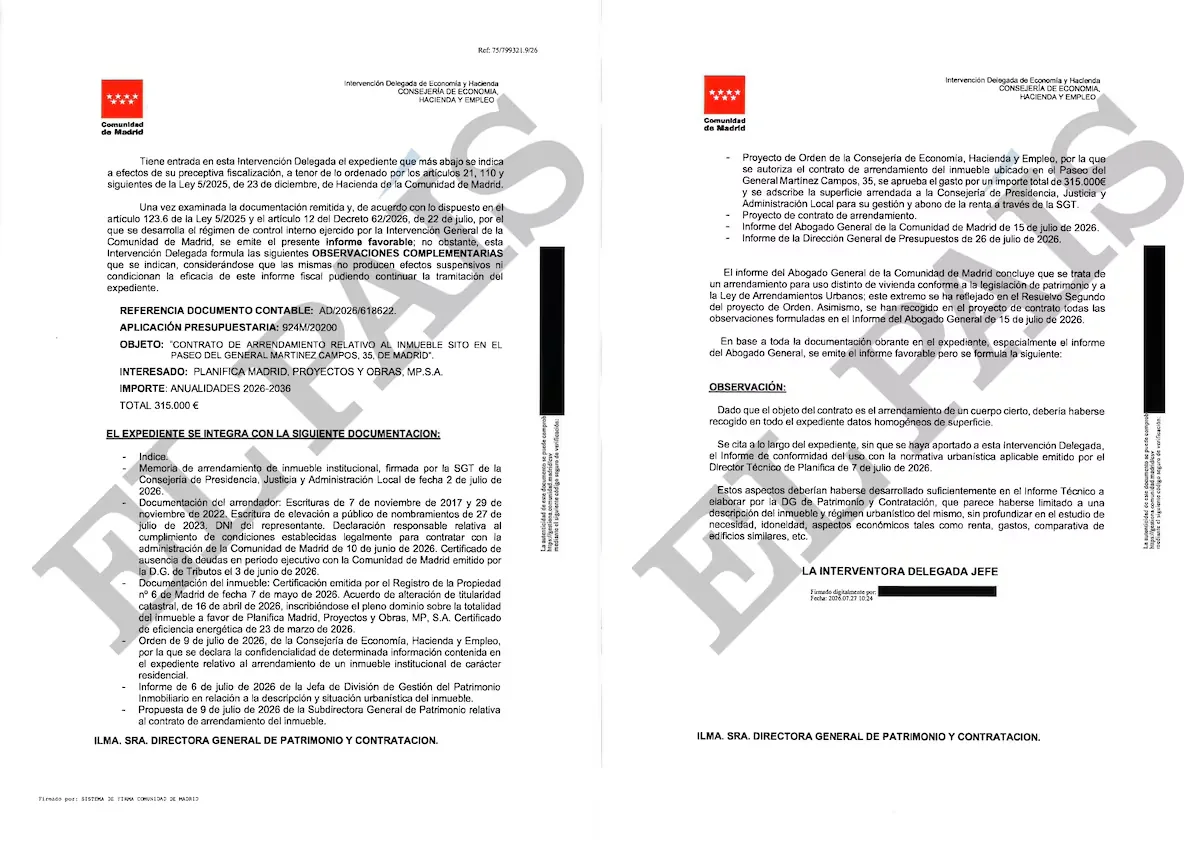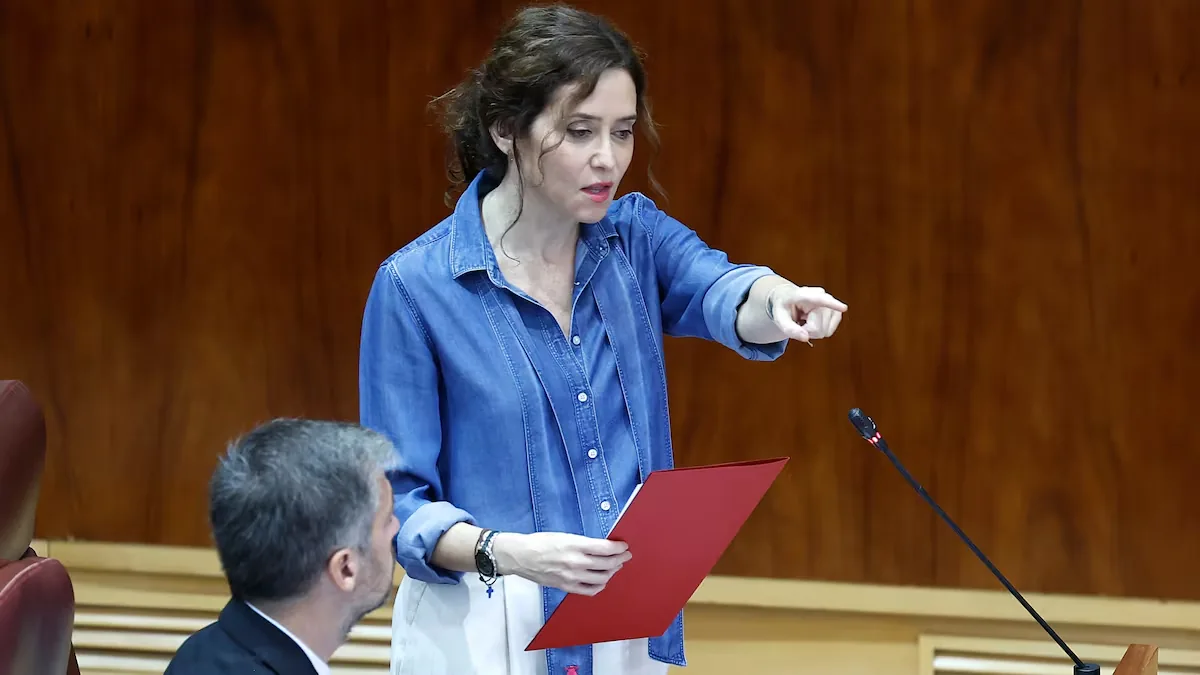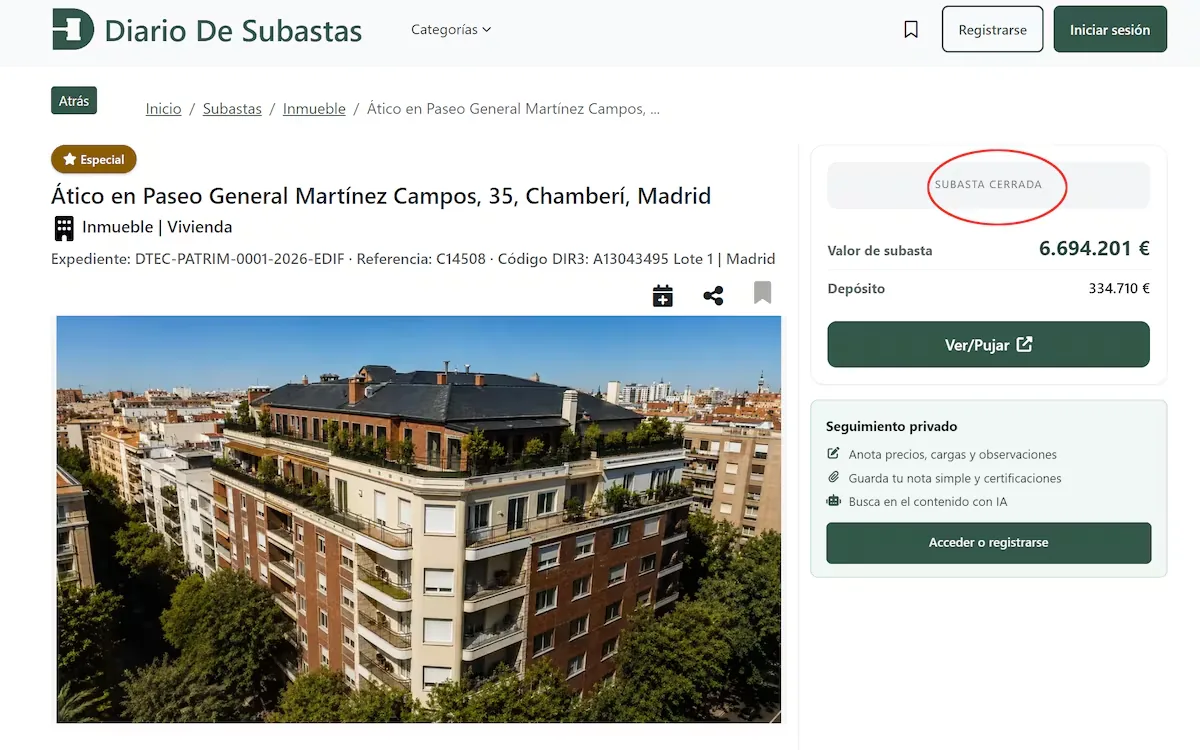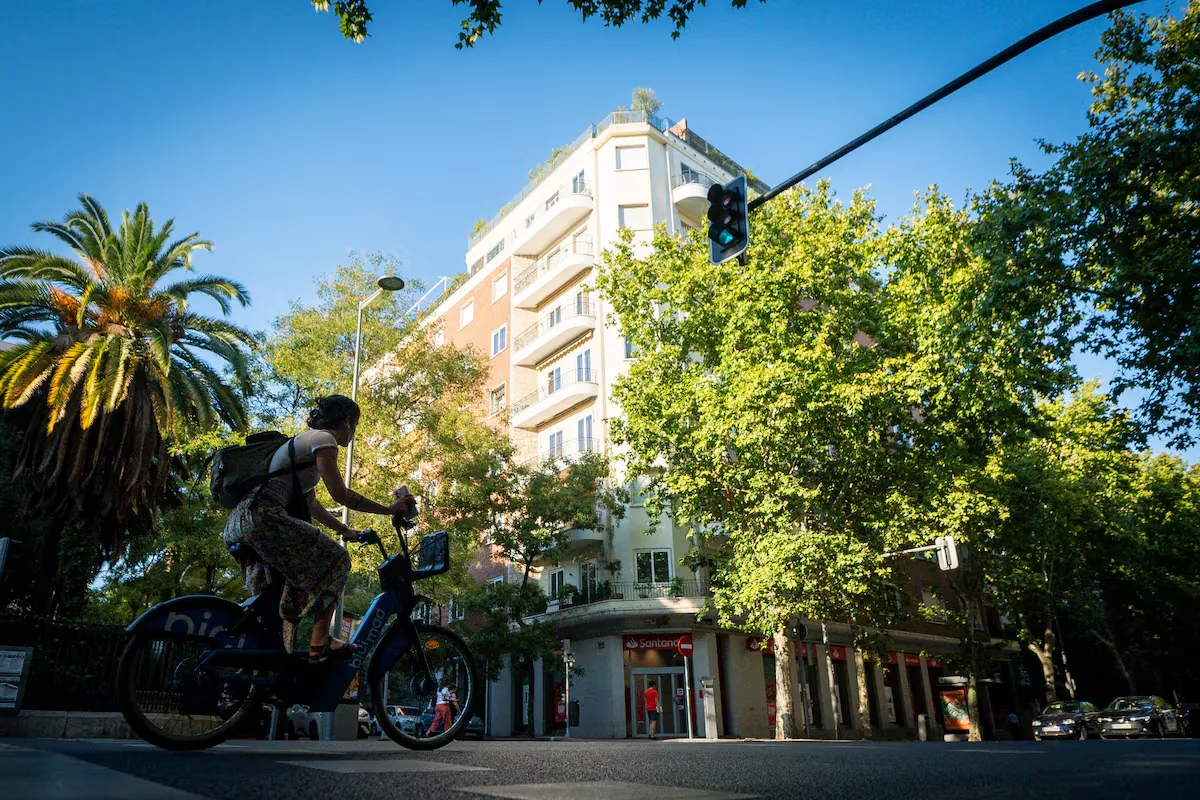
For the past 10 days, walking along General Martínez Campos promenade requires extreme caution. Not because of the works at the Sorolla Museum, temporarily closed, nor because of the Instituto Médico Láser, hidden behind a beautiful garden, but because of the risk of appearing in the background of a news broadcast. At number 35, the sidewalk has become the stage everyone wants to photograph. As if there were a tightrope walker crossing between two buildings without a net, all cameras point to the sky. Specifically, towards 9th B: the penthouse that the Government of Isabel Díaz Ayuso (PP) bought for 6.3 million three and a half months ago. It has 485 square meters, 199 of terrace, five bedrooms, and an uncertain future: the Community of Madrid has put it up for sale in record time.
Read more A Government in Permanent Emergency
The mystery surrounds the controversial penthouse, which, according to the regional government’s initial statement, was acquired as a temporary office while works ―unknown until this Friday― were carried out at the presidency headquarters, despite municipal regulations prohibiting it. In a new version, the regional government has reminded these days that the regional president lacks an official residence, but the aforementioned property, which they announced they would sell 33 hours after EL PAÍS revealed the unusual purchase, could not have been one either. With each twist, more intrigue, more interest, and more cameras, to the point that those passing in front of the penthouse cannot help but look up. On Friday, between 11:00 and 11:20, six different people did so, as if it were a new tourist spot.
The first stop for many is the building entrance. There works the man who knows the most and speaks the least about this case: the doorman. He is Romanian and in recent weeks has gotten used to offering a kind gesture for hours while managing not to answer the curious. Journalists ask, he smiles and continues cleaning the long golden railings at the entrance. Many residents learned from the media that the penthouse had been sold. Some came down to ask why their building suddenly appeared in all the news broadcasts. He kept working. “I don’t want trouble,” he says, overwhelmed.
Real estate agents come almost every day, flirt with him, and leave gifts hoping he will notify them when a unit becomes available. On Thursday afternoon, for instance, agents from Red Piso came by and left two fans and three inflatable pool balls. According to neighbors, currently there are no tenants in the 18-floor building: all are owners. Through the service door this Friday, workers were coming and going. All clarify they are not working on the penthouse. Cleaning staff in uniform also pass by, going out to buy bread or walk dogs. It is August and few residents remain. Almost all windows are closed and shutters down.
Until very recently, however, a couple lived in the now-famous penthouse. Some neighbors say they went on vacation for a few days and, upon returning, discovered the property had been sold to Planifica Madrid. The owner was Astrid Gil-Casares, writer and ex-wife of Rafael del Pino, president of Ferrovial. Gil-Casares entrusted the operation to Promora, her usual real estate agency, which listed the penthouse for 6.6 million euros on its social media. One can go on vacation and expect to find a dry floor, a leak, or several bills. They encountered Ayuso explaining at a press conference that the penthouse in their building would be a place to receive guests and hold press meetings while works at the Royal House of Post Office last.
When the president said she might use it as an office, neighbors warned of a small obstacle: the community statutes and urban regulations do not allow it. For Ayuso, however, they would be willing to consider a change. It would not be the first time. Years ago, they already modified the building’s rules to prevent tourist apartments. Now they might change them again to allow a presidential office. “I’m sure she has many voters here,” says another neighbor who prefers not to give her name. The building, in any case, enjoys some social life. On the first floor, according to neighbors, more than 50 people gather on Tuesdays and Thursdays to celebrate masses linked to Opus Dei, with a priest included.
On the same street is the bar El Yate, where you don’t need to look up to know what’s happening in the penthouse. Customers follow the news from the bar and comment on it over beers and tortilla bites.
—They could just leave her alone.
—She was going to be the poorest in that building.
Chamberí is Ayuso’s lifelong neighborhood and, like in small towns, maybe no one has seen anything, but almost everyone knows something. “Today, when my boyfriend asked me where I wanted to go for dinner, I looked for a place in the area because what I really want to see is Ayuso’s penthouse,” says a tourist who has followed the story in the press.
On the corner are the restaurant Sushita, the burger joint Vicio, and the nightclub Bonded. These days, passersby cross the area under the watchful eyes of cameras. Just stopping for a few seconds, as they usually do, or looking up ends up making you part of the scenery. “The first night there were spotlights pointing at the building. I don’t know what they thought would come out of the penthouse terrace,” says a resident.
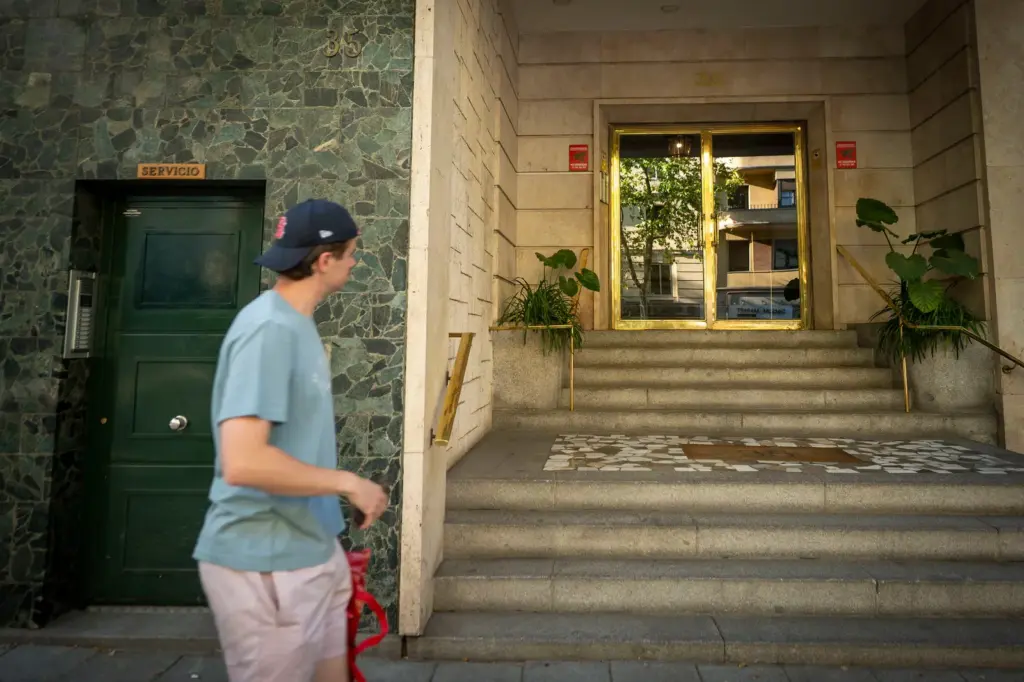
The new tourist route continues at number 40, right across. “Since the property was bought with public money and Ayuso herself said it would be used to receive visitors, we have tried to enter to do a house tour,” says, half joking and half serious, a neighbor of the building. So far, their attempts have been unsuccessful. There, the one who lives in a penthouse is the doorman. This is told by the president of the homeowners’ association, who also does not understand the regional government’s investment. “Penthouses and terraces in Madrid cannot be used well. It’s very cold in winter and too hot in summer,” he states.
Two doors down, at number 42, is El Puertito, an establishment specializing in oysters. But the exclusivity of the promenade is also measured in small cups. Specifically, those used to serve coffee, which costs 3.50 euros at the cheapest establishment. For many street workers, the only alternative is the prepared dishes from the Mercadona at number 39.
Chamberí is not just any neighborhood for Ayuso. The president was born at La Milagrosa hospital, a few streets from the penthouse, grew up in the district, studied at the nearby religious school Blanca de Castilla, and has a home on that same promenade. In a 2021 interview with Vanity Fair, she said one of her favorite plans was to walk around her neighborhood and “have a beer on some terrace.” Her government has added one more tourist activity to the area: taking a walk near the penthouse everyone talks about.