









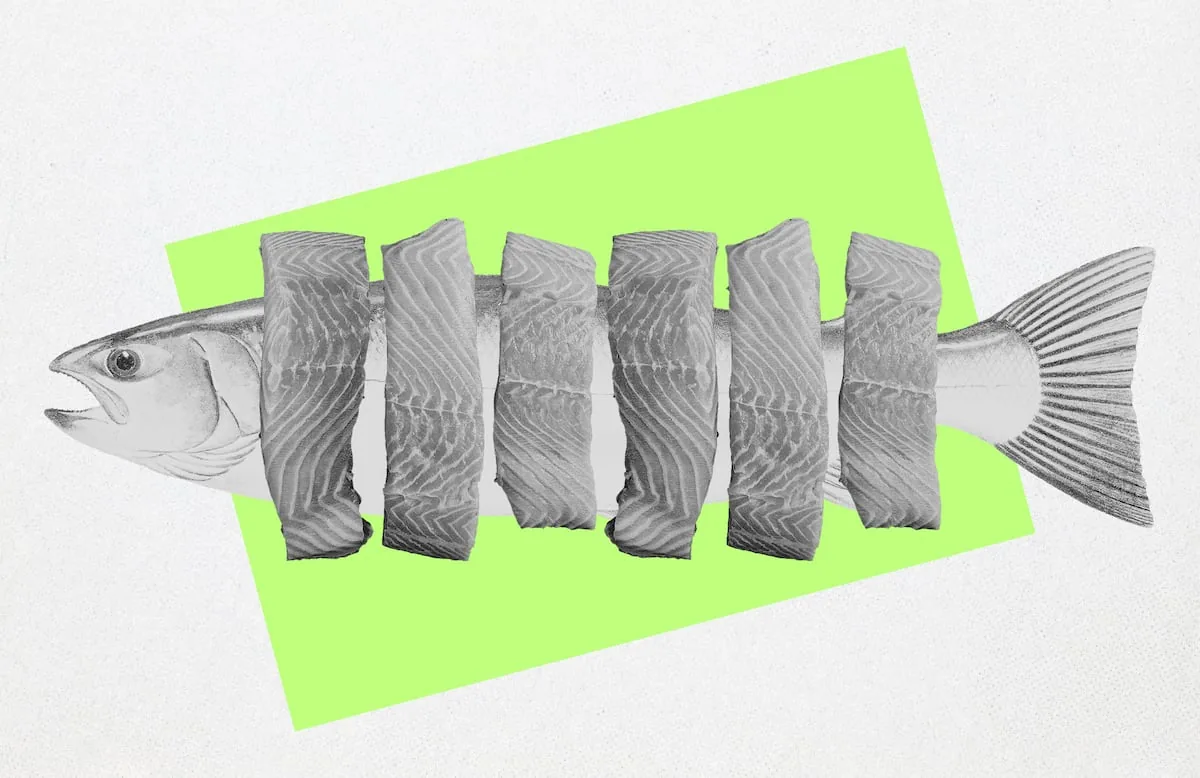
Buying good fish is an activity of the same kind as being struck by lightning. Just as one never knows they are going to receive an electric shock until it already smells like something is burning, coming across a basket of well-bought fish in your arms is something that happens by surprise, and that befalls those who approach the fish market with the spirit of a child who rushes out in pajamas on the morning of January sixth to see what the Three Wise Men have left under the tree.
Read more Quevedo: “I love being rich, but at the same time it is a curse”
Will there be enough for a spicy potato stew with small-spotted catshark? Will there be whiting to flour? Maybe snappers, or wreckfish. Or spider crabs, or rats. What secrets will the box of mixed fish hold? The enthusiastic fish buyer never knows if that day will be the one to serve a tray of fried shiny and pink ribbons like princess tiaras or a casserole of pickled mackerel. What they are sure of is that in their life there will never be a day like the previous one, nor a dinner that cannot be solved in five minutes with a quick flouring and a bath in boiling oil, with fish priced under ten euros per kilo.
This will no longer be possible at Mercadona. The giant has announced a new model of fish sales in its stores, which involves removing the traditional counters attended by fishmongers and replacing them with illuminated shelves with trays of fillets, slices, and loins in plastic packaging.
Heads, bones, skins, fins, livers, milts, ink sacs, tails, and barbels will disappear from sight. Thus, the possibility of making, from a single medium monkfish, fritters from its meat, with good mayonnaise and salad, for a Saturday table; a rice dish made with its liver and a good stock from its head and wings, for Sunday; and a soup with the remaining broth, enriched with paprika, chopped fennel, grated hard-boiled egg, and toasted hazelnuts, for Monday, will also vanish.
Mercadona’s decision has sparked criticism from many, who observe how packaged fish in trays will suddenly cost twice as much per kilo as the same whole fish. But this has always been the case. This change in the label does not come from the need to cover the cost of cleaning, portioning, and packaging, but from the fact that, nowadays, it is impossible to take slices or supremes directly from the sea. The animals are caught whole. When buying ready-to-grill mackerel fillets, one inevitably pays for the whole mackerel. Whether they decide to use the bones and heads flamed with sherry to make a casserole of noodles or not.
The supermarket chain does not deceive anyone. Cooking is intelligence; the engineering of turning potential waste into value and wealth. With this strategic move, Mercadona decides to put this intelligence to work in its favor, in an act of extreme consistency with Juan Roig’s statements last year, in which he predicted the disappearance of kitchens in homes by 2050.
Through this change in fish sales, which is not simply a matter of firing fishmongers, but involves an industrial reorganization that even affects the operation of its suppliers, Mercadona captures a value that previously circulated through the home kitchen, monetizing ingredients that the consumer pays for but does not use.
It is not that the supermarket is recruiting a large army of Conchitas and Franciscos armed with ladles and strainers to cook fideuás and stews for its ready-made food offer. No. All the heads, bones, and skins that will disappear from the counter, a raw material rich in nutrients, full of collagen, fatty acids, and omega-3, will be sold to manufacturers of fishmeal and fish oils, and invested in the production of feed for fish farms, supplements for farm animals, collagen pills and bars, and treats for Timi.
When the consumer arrives with the cart three aisles down, the bones they already paid for when buying slices will be waiting for them in the form of little croquettes for the cat. Ready for someone to pay for them again, for the third time.
Of course, Mercadona will continue to offer some type of whole fish. But I venture to think that it is highly unlikely that anyone will ever be surprised in their refrigerators by the discovery of a conger eel, a starry ray, or a basket of sea bream. The future at Mercadona in five years’ time is trays of salmon, sea bass, gilthead bream, hake, and cod. Trays of salmon, sea bass, gilthead bream, hake, and cod. And trays of salmon, sea bass, gilthead bream, hake, and cod.