The Director-General of the World Health Organization (WHO), Tedros Adhanom Ghebreyesus, criticized this Wednesday the new health policies of the United States which, among other points, reduce the recommended childhood vaccines, something that “is not in line with decades of scientific evidence.”
Read more La UC y el milagro que no buscó
“Vaccination policy must be guided by a rigorous, independent, and transparent review of the best available scientific evidence, and not by political influence,” Tedros posted on his official X account.
Every parent wants to keep their children safe, and vaccines are among the most powerful tools for doing that, making deadly diseases preventable. @WHO is concerned that recent changes to US immunization policy are not aligned with decades of evidence that show when children… pic.twitter.com/vCfgJFrFGK
— Tedros Adhanom Ghebreyesus (@DrTedros) August 12, 2026
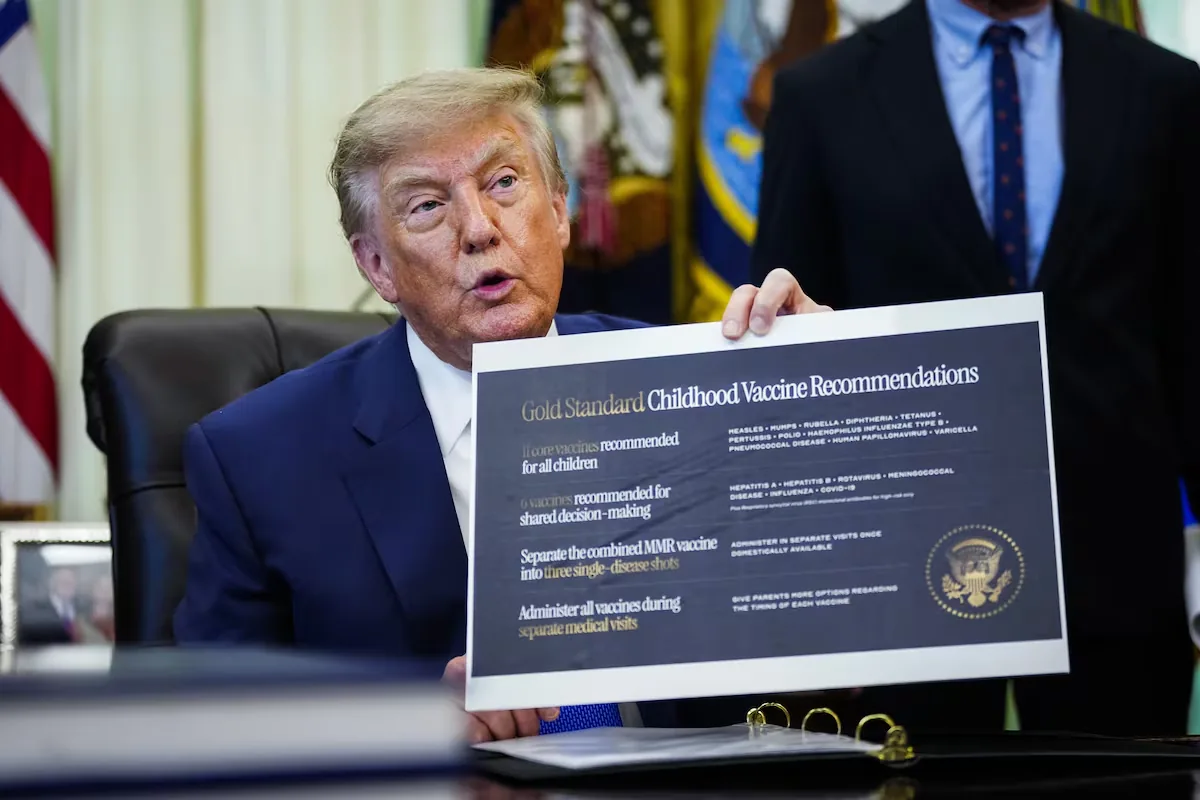
This comes after the President of the United States, Donald Trump, signed an executive order on Monday that reduces from 18 to 11 the diseases against which the federal government recommends vaccinating all children and established new categories for other immunizations.
The measure, promoted together with the Secretary of Health, Robert F. Kennedy Jr., leaves vaccines against flu, COVID, hepatitis A and B, rotavirus, and meningitis under risk criteria or shared decision-making between parents and doctors, while ordering a review of the federal childhood vaccination schedule.
According to the WHO chief, these changes do not take into account scientific evidence “that shows when children are most vulnerable to diseases, when vaccines provide the greatest protection, how many doses are necessary, and which vaccines can be safely administered together.” “Delaying vaccines or unnecessarily spacing doses does not make vaccination safer, and can leave children unprotected,” Tedros warned.
“Every parent wants to keep their children safe, and vaccines are among the most effective tools for doing so, as they prevent deadly diseases,” said the head of the United Nations health agency, which the United States government left this year.
Trump has linked his decision to the increase in autism in the country and has questioned the safety of the MMR vaccine, despite decades of research showing no causal relationship between vaccines and autism.
Public health experts have warned of a possible resurgence of vaccine-preventable diseases in a year in which the United States has already recorded its highest number of measles cases in decades.