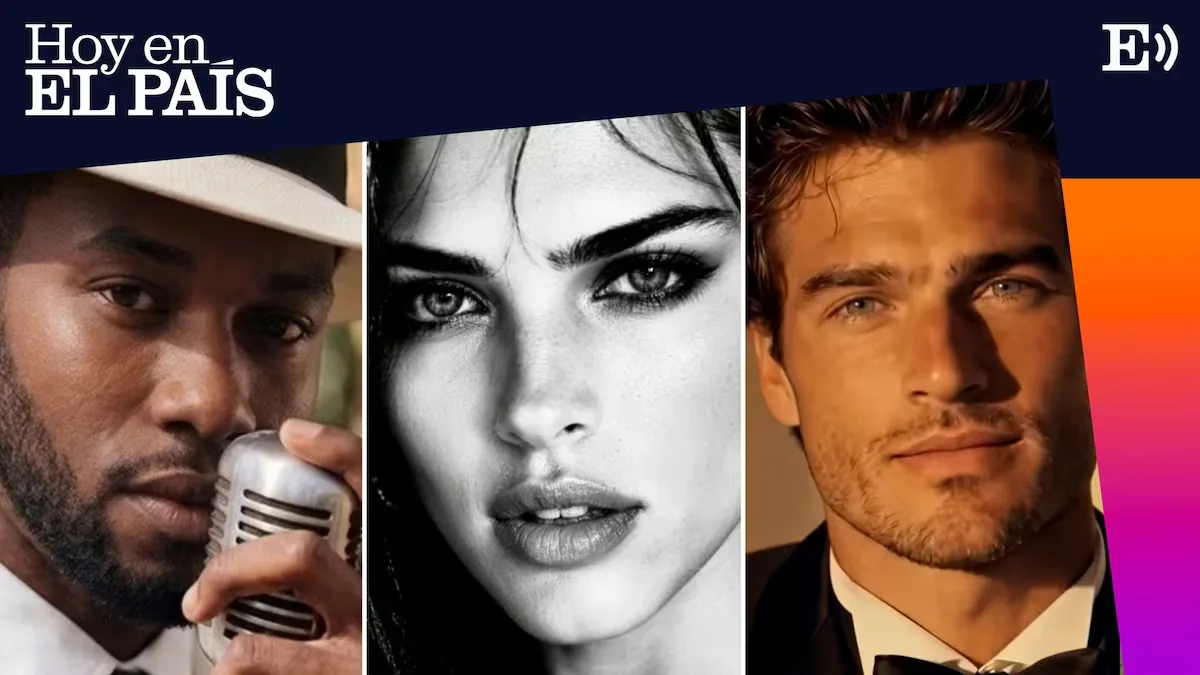
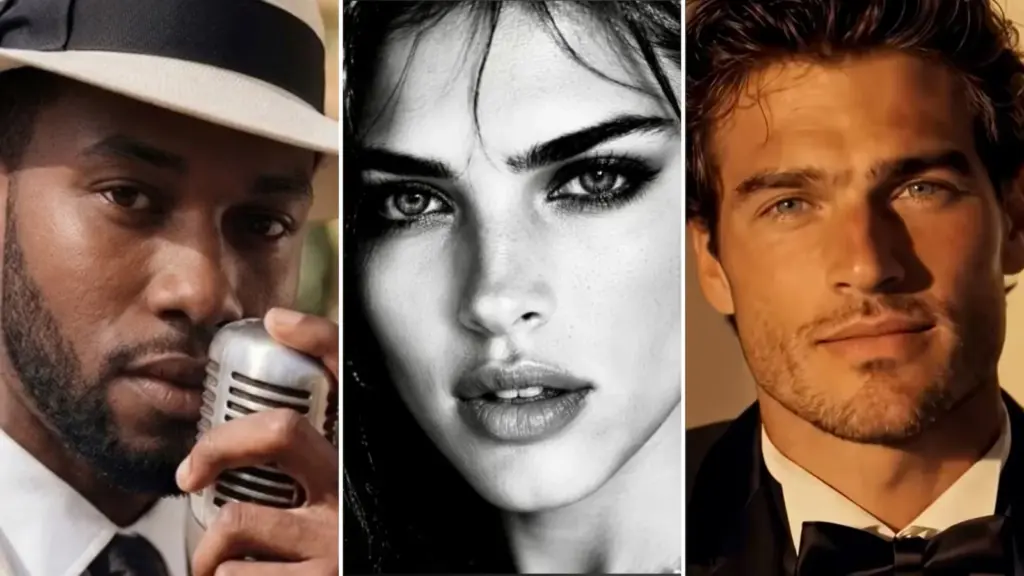
Surely you have seen them on social media: beautiful faces singing with an impressive powerful voice effortlessly. They seem real but they are not. They are artists made with Artificial Intelligence. “It’s not that I’m a bad person, it’s just that I can’t take it anymore,” sings Nyla Stone, one of those who went viral this year. But she is not the only one. In fact, there are so many that Spotify, the Swedish streaming platform, has announced that starting this month it will identify those artist profiles that are not real with the label “AI person” and will stop recommending their songs in its playlists. Another platform, Deezer, says that up to 50% of the songs uploaded are made with AI and has placed a filter in its system to avoid them. A response to those who criticize that these artists are taking the place of real musicians, who take years to produce what AI imitates in seconds.
“It’s music made with an instruction, a prompt given to an AI. You ask for a song, several songs, or even a whole album. With minimal effort you can make music, upload it to Spotify, and make money,” says journalist Pablo G. Bejerano in this episode of Hoy en EL PAÍS.
That also means that the same person can produce songs under the umbrella of several different artists, as is the case with Manuel Valencia, creative director of Anymal Media, a Colombian firm that designs marketing strategies for real artists, such as Aitana or Sebastián Yatra. He has now founded Críptica, a record label that only manages artists created with AI: “By removing the human obstacle we can be a bit more daring when making artistic, cultural, or market proposals,” he explains. They currently manage about 18 different creations.
“Our characters represent attractive archetypes, as is the case with our most successful artist Saúl del Río,” Valencia comments regarding the profile that has more than 500,000 monthly listeners on Spotify. “Having music that talks about a devoted and infinite romantic paradigm, and also seeing it packaged as an absolutely handsome man, it becomes a very aspirational female fantasy,” he admits.
About this type of artists, the singer from Málaga Anni B Sweet, who will release a new album in October, says: “What worries me most is that we are calling ‘artist’ something that is not a person. It has no history, has lived nothing, has nothing to tell, has no need to express itself. For me, music is not just the sound coming out of the speakers. I also care about what is behind it.”
Read more Have all students worsened equally? Nine charts about PISA data
She, who has also used some technological tools in her composition process, believes it is important for musicians to organize in associations like the AIE (Performing Artists and Musicians Society of Spain), of which she has been a member for a year. “If we only focus on the manufactured product to get plays, we are turning music into a content factory,” she warns.
And for artists like her, the competition from AI is fierce. According to a study by CISAC (International Confederation of Societies of Authors and Composers) and PMP Strategy, AI will put at risk around 25% of creators’ income, which could mean a loss of up to 4 billion euros in earnings by 2028.
In this podcast episode, Cristina Perpiñá-Robert, general director of SGAE (General Society of Authors and Publishers), also explains how copyright works in these songs and her plans to defend musicians’ rights against the new competition.
Read more Trump’s electoral check sets off alarms with the red-hot debt market
How to listen to Hoy en EL PAÍS?
- You can listen to it every morning on the EL PAÍS website:
Hoy en EL PAÍS
- On your favorite podcast platform:
Spotify | Apple Podcasts | Youtube | iVoox |Podimo
- You can also ask your smart speaker:
Alexa