








There is a number that neuroscientists have been looking at for decades with fascination and perplexity: 90. It is the percentage of humans who, in any culture, studied era, and corner of the planet, preferably use their right hand. That 90% is such a stable, universal, round, and strange figure that the question is not even why left-handers exist. It is why there are so few, and so consistently, over time and space.
Manual laterality, that is, having a good hand and a clumsy hand, as we colloquially say, is not exclusive to our species. Cats have a favorite paw and parrots always hold food with the same one. Almost all animals with brains have some bias that directs their activity to one side or the other. What is truly strange about humans is that almost the entire species leans toward the same side from our very origins. “We call it population preference,” explains Miquel Llorente, a researcher at the University of Girona specialized in comparative ethology and language evolution. “It’s not that each individual has their favorite hand, that always happens, but almost all individuals of the species share the same one. In chimpanzees, for every left-hander there are two right-handers; in us, for every left-hander there are eight or nine. It is that leap that demands explanation and there is still no clear answer,” he says.
Scientists have been searching for that explanation for years, which does not have a single cause. It is a blend of several, intertwined over millions of years.
Manual laterality is, above all, a story of brains. Although the two hemispheres seem like twins at first glance, they actually divide the work very unevenly: the left is mainly responsible for language; the right, for tasks like recognizing faces or orienting in space. In more than 95% of right-handers, language resides in the left hemisphere. Hand and speech, in the human brain, travel together.
That connection is the most interesting clue so far about why that stable figure of human right-handers exists. “The hypothesis with the most strength today is that language was not born speaking, but gesturing,” says Llorente. “Manual signs would have been the first form of complex communication among our ancestors, and only later did they move to voice.” Since gestures are preferably made with the right hand, governed by the left hemisphere, that same hemisphere would have specialized in moving the skilled hand and speaking at the same time, adds the expert. The brain areas for language and those controlling the right hand are not only related: they are literally adjacent, sharing circuits.
Parrots, which are also very vocal and communicative animals, are almost the only non-human species where something similar to that population asymmetry is observed. The coincidence does not seem casual.
The snowball
How do we know that this laterality has been maintained for millions of years in our ancestors? The brains of our ancestors are not preserved, but the skull does leave an internal imprint (the endocranium, a kind of mold of the brain imprinted in the bone) that allows reconstructing its shape and asymmetries. Already in australopithecines, three or four million years ago, the brain was not symmetrical. When the first worked stone tools appear, about two and a half million years ago, those asymmetries become more pronounced. And from the way the oldest flakes are carved, archaeologists can deduce that most of those hominids struck with the right hand.
Making tools requires very precise coordination: one hand holds, the other strikes at a certain angle, force, and sequence. And that is learned by watching others, which adds a cultural layer. Tools, gestures, language, teaching between generations… “The image that works best is not that of a single cause, but that of a snowball,” says Llorente. “We start with a mild right-hand bias, similar to that of today’s great apes,” he adds. Bipedal walking, tools, communicative gestures, language, and culture added layers one on top of another over millions of years, explains the researcher. And at the end of the process: nine out of ten people right-handed, in any corner of the world.
And the genes?
All this happened because something in our biology allowed and favored it. So one of science’s ideas has been to try to identify exactly which genes are behind laterality. But the research has turned out to be much more complicated than scientists expected.
“When I started working on this, we thought we might find perhaps 10 genes that explained everything,” says Silvia Paracchini, a geneticist at the University of St. Andrews (Scotland) who has been studying laterality and its relationship with language and dyslexia for years. Years ago her team identified the PCSK6 gene as a promising candidate. Then came studies with more than a million people, and the picture got complicated: 42 genes surpassed the statistical significance threshold, and yet, they do not explain everything. “Biology is complicated,” says Paracchini. “And the more we know, the more we appreciate that complexity.”
What is beginning to emerge is what kind of biology is involved in laterality. Several of those genes are related to cilia, small cellular organelles involved in establishing the left-right asymmetry of the body from the earliest stages of embryonic development. Genes related to neurodevelopment also appear, and a striking relationship with variants associated with conditions such as dyslexia, autism, or schizophrenia. The effect is small — being left-handed does not significantly increase the risk of anything — but the signal is consistent: the same biological circuits that establish which side is left and which side is right in the body seem connected with how the brain is organized for language.
Why aren’t we all right-handed?
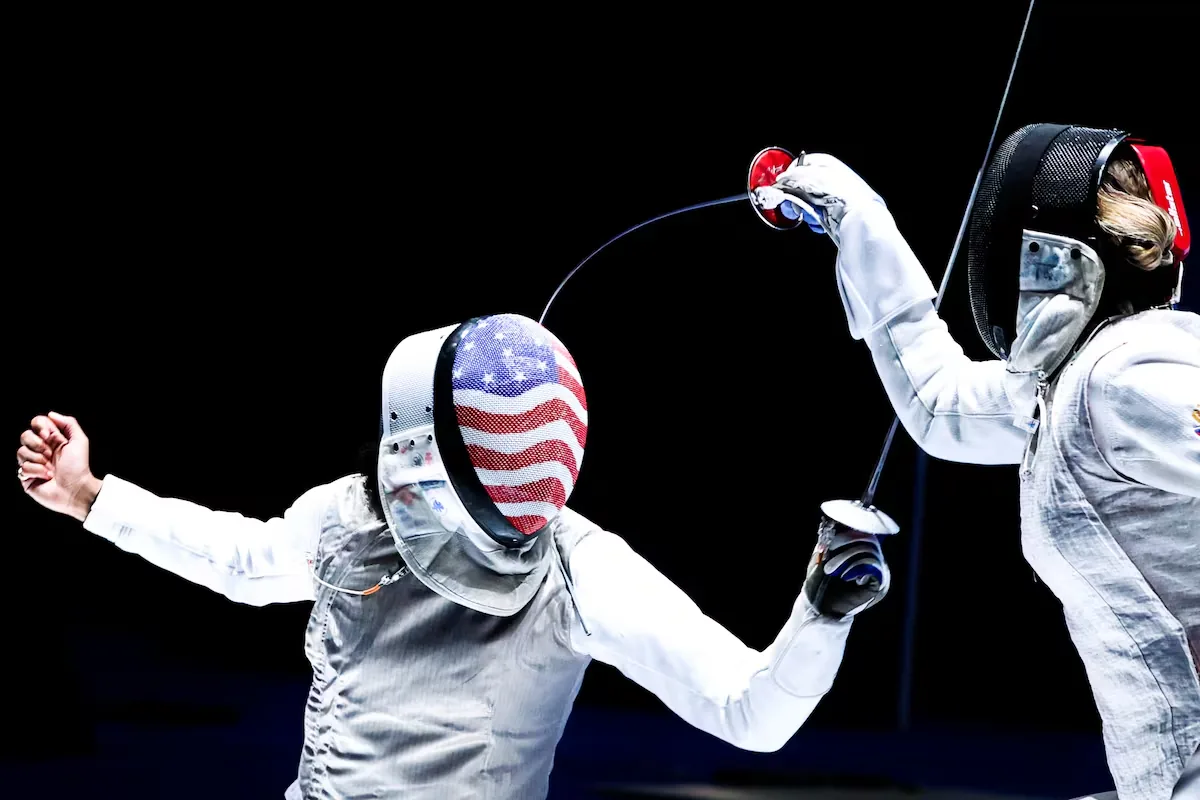
The most counterintuitive question remains: if being right-handed is so advantageous, why didn’t left-handers disappear millions of years ago? One of the most ingenious hypotheses comes from game theory: being left-handed has a tactical advantage in hand-to-hand combat precisely because it is unexpected. A right-hander trained to fight other right-handers gets disoriented facing a left-hander, as fans of The Princess Bride well know, where a duel between two legendary left-handed swordsmen becomes even more interesting when both confess to using their off-hand. But that advantage only works while left-handers are a minority: if everyone were left-handed, the surprise would disappear. So evolution would have found a stable equilibrium around 10%. That left-handers are overrepresented in contact sports like boxing or fencing (between 13% and 20%, according to studies) gives some empirical support to the hypothesis. Although it remains just that: a hypothesis.
Almost everything in this field remains, in fact, a matter of debate. “Manual laterality seems simple because it is binary: either left or right,” reflects Paracchini. “That makes everyone think it should be easy to explain. But it turns out to be one of the most complex and fascinating windows we have to understand how the human brain evolved.” A clumsy hand, a good hand, and two million years of questions that still have no definitive answer.
Read more The head of the UME: “Large forest fires cannot be attacked, we can only defend ourselves”