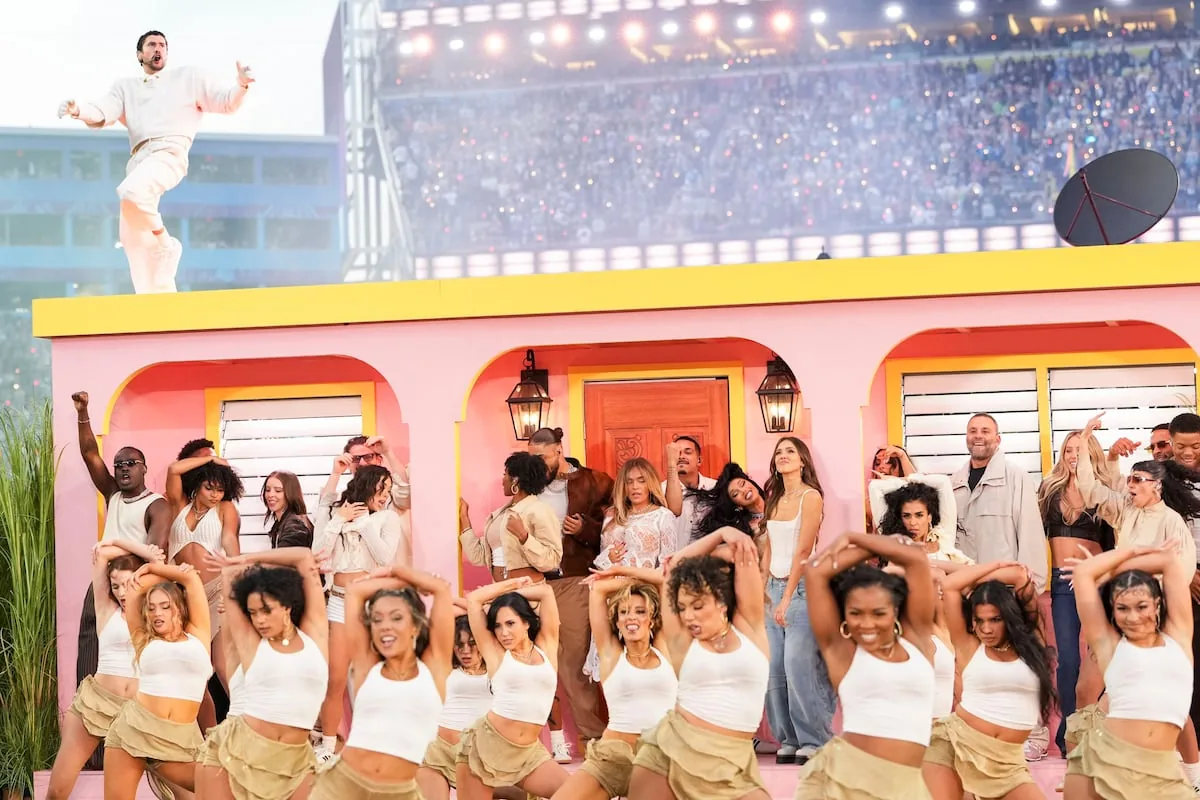









Everyone is talking about Bad Bunny’s Little House but I have the feeling that almost no one knows its story and genealogy, which is a bit perverse because the story of the Little House is as intricate as a psychological horror movie.
The thing —and the house— has a beginning, which is in Long Island in 1947. There a guy named William Levitt looked at a potato field and saw, instead of potatoes, the future of the American middle class, which for him took the form of seventeen thousand identical houses. Literally identical. Levitt had learned in the Navy to build barracks at full speed and applied the same idea to the postwar baby boom: he divided the construction of a house into twenty-seven steps, put a man to do only step nine for the rest of his natural life, and started spitting out houses at a rate of one every sixteen minutes. The one who installed the faucets didn’t know how to hammer a nail and the one who hammered hadn’t seen a faucet, and together, without any of them understanding the whole house, they built a suburb the size of a province. It was called Levittown.
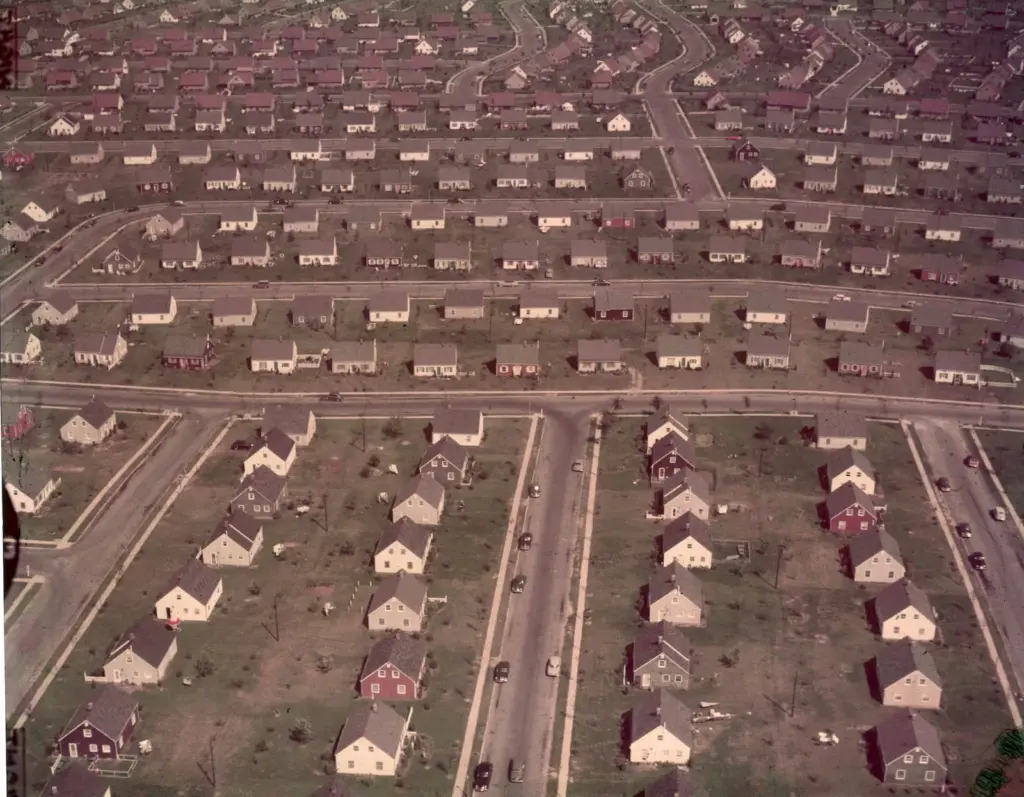
You might say very well, cheap and fast housing. And yes, it was that. And racist too, because the contract for those identical houses included a clause that prohibited selling them to anyone who was not white. It was written. In print. That is, the middle-class utopia but don’t put blacks or Hispanics nearby.
So both Levittown and all the developments built on the outskirts, even those without the explicit clause, filled up with whites fleeing the cities —this has a technical name, White Flight, which sounds like a military maneuver and deep down it was— leaving the urban centers to those who couldn’t buy a little house. The result was a sinister paradise of identical lawns where everyone was exactly the same because by contract it couldn’t be otherwise.
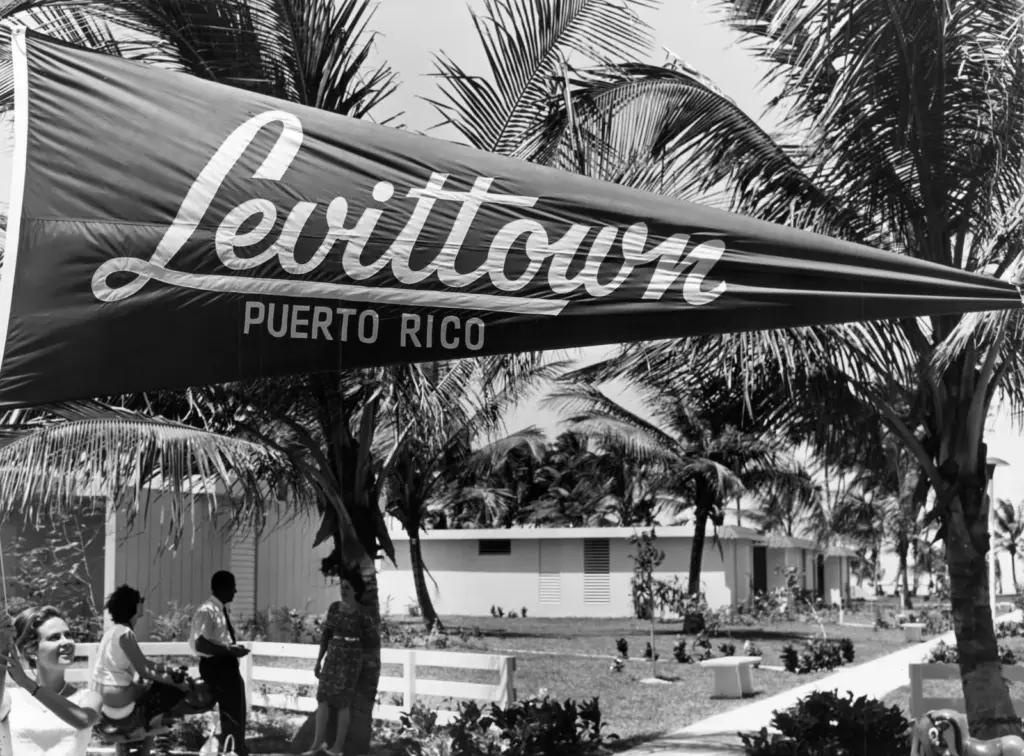
About fifteen years later, an official from Puerto Rico went to Toa Baja, in the north of the island, and laid out the same plans on a table. Another Levittown. The promise of the middle class stamped in concrete, and all within something called Operation Hands to Work, where the hands were those of the Boricuas and the work of the gringos. Here there was no racial clause because it would be absurd in a place as mixed as Puerto Rico and, of course, also because on the island exclusion worked through economic channels, not skin color. Or not only. The fact is that the Levitt module entered and inside each identical little house a Puerto Rican settled to desire exactly what a man from Long Island had decided an American should desire.
Sixty years pass. Architect Mayna Magruder Ortiz looks at a real house in Humacao, now on the east of the island, looks at the Levittown plans, and does what architects do, which is copy. According to some architecture magazines, Mayna Magruder combines 19th-century heritage with postwar urbanization, but the result is a house that is all over Puerto Rico. Pastel pink. Yellow cornices. Monobloc plastic chairs, the ones that weigh eight hundred grams and can hold a bishop, the ones your uncle stacks six at a time at the end of the party, the zero degree of civilization with a benign climate. It also has the same flat roof, except here it is not a roof but a place to dance, because someone decided in a meeting that that roof which throughout the history of Caribbean architecture served to not die under the rain, would now be a stage with capacity.
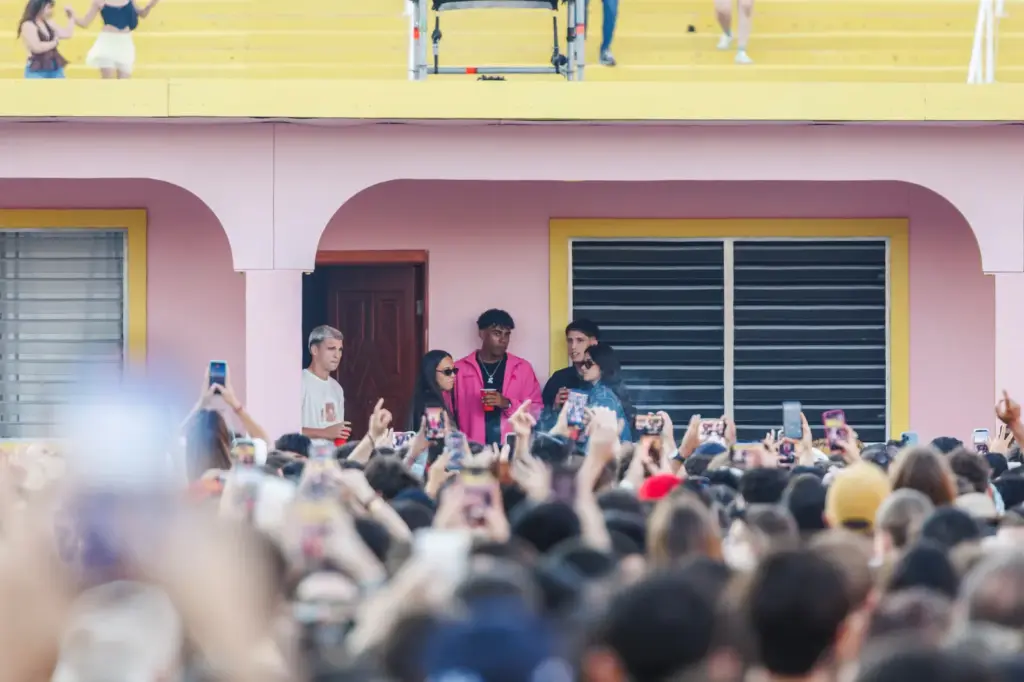
But what we all know best is the balcony with a canopy. The balcony of the Puerto Rican working-class house was the social organ of the home, the place where the beer was chilled, the neighbor was watched, and conspiracies against the landlord were made, the only place where the working class did the truly subversive thing, which is to be together without paying admission. At Bad Bunny’s Little House the balcony also has a capacity. Fifteen people. And all fifteen are Ester Expósito, Los Javis, Lamine Yamal, a singer named Judeline whose name evaporates halfway through pronunciation, influencers whose influence is also in a constant process of evaporation, as well as a few unknown girls, white and European but disguised as Caribbean whom a scout —and the word is exact— has chosen so they can compete among themselves for who appears more seconds on the giant screens, five, thirteen, twenty-one. Oh, and Marta Ortega, president of Inditex, who dances inside the replica of a working-class house while a song about the gentrification of the island, about forced relocation, about the light blue flag of the independents plays through the speakers, and no one in the stadium detects the short circuit because there is no short circuit, the device was designed so that the criticism of the device circulates through its own pipes without ever touching a wall.
And so, the canopy where the great-grandfather had nowhere to fall dead is today the most expensive place in the universe where you cannot buy a ticket, because it is not sold, only granted, which is the final form of luxury, the luxury that doesn’t even leave you the dignity to pay for it.
In 1967 —shortly after Operation Hands to Work— Guy Debord said that contemporary society was not a society based on the image, but that it was a society that is image. The Little House is that cliché of pink concrete. The society of the spectacle has located something uncommodified —the nostalgia of the neighborhood, the plastic chair— and has commodified it so thoroughly that it has built it at 1:1 scale, parades it through four continents and charges you a hundred euros to see it from afar and you don’t even realize what it is that you see from afar.
The spectacle has swallowed the story of the Little House, digested it, metabolized it and regurgitated it turned into what the spectacle always returns after eating, which is more spectacle.