









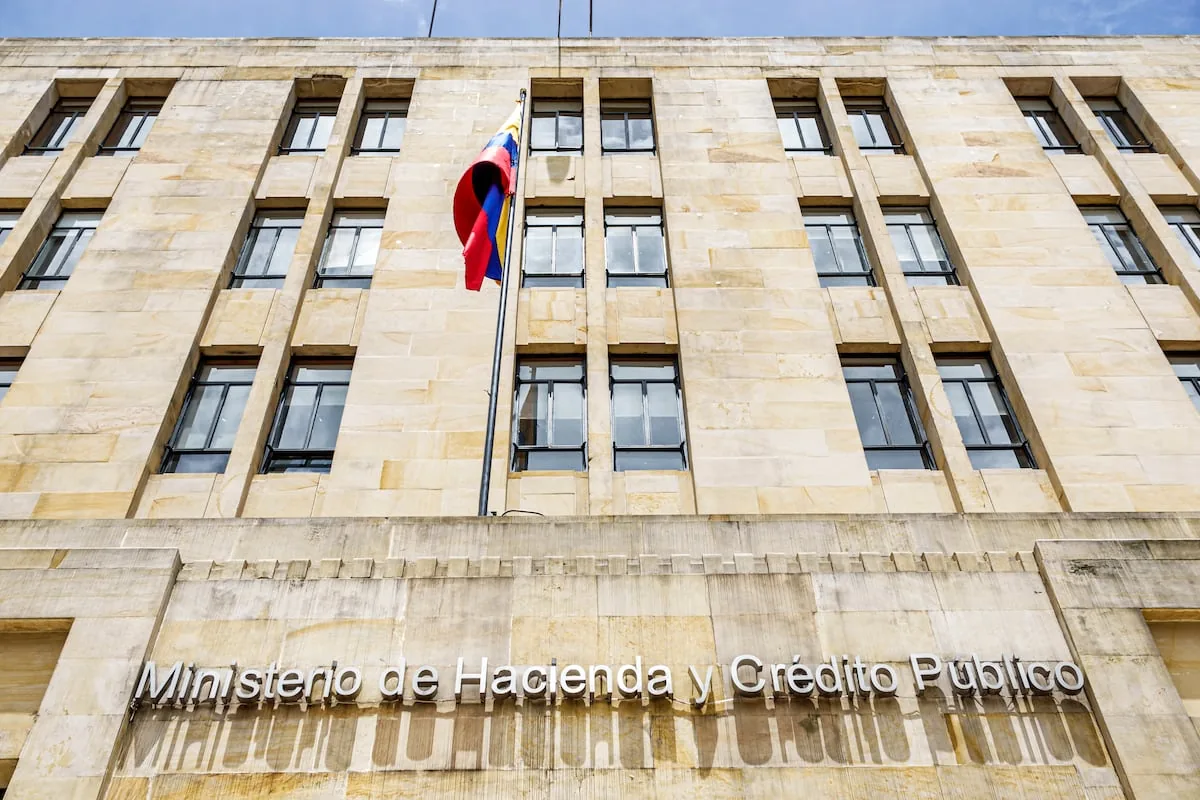
“You have to put more meat on the grill!”: this was José Roberto Acosta’s favorite metaphor, the first director of Public Credit under Gustavo Petro’s government, when urging members of the Superior Council of Fiscal Policy (CONFIS), especially the budget directorate of the Ministry of Finance and the DIAN, to increase the projections of balance resources and tax collection, respectively.
Read more Recycling is not always as it seems
We were closing 2023, the year with the highest tax collection in Colombian history from the Muiscas to the present, and starting 2024, which would end up being the second highest, so the suggestion to raise projections was out of place. “José Roberto,” I said when the persistent repetition had exhausted the charm of the grilling metaphor, “you may think that tax collection increases by pushing and willpower, but that’s not how things work. The projections for this year are what they are, and going beyond that would be inflating the targets without any basis.”
“It doesn’t matter,” Acosta replied. “Those targets can be set, and during the year we’ll make corrections.”
“What you are suggesting is very serious, and it’s in your interest not to insist and that this doesn’t leave here. What you’re asking us is to keep double accounting, showing the public something we know is not true,” I responded.
If Acosta didn’t like being called out for deliberately trying to deceive the public, he also didn’t like a comment that I would have liked to make but was made by another attendee, summarizing the situation better than anyone: “Yes, José Roberto. We’re not on Ecomoda’s board; this is CONFIS.”
At that time, it was common for the Minister of Finance, Ricardo Bonilla, to leave halfway through these meetings where the 2024 financial plan was discussed. Projecting the year’s income and expenses is one of the ministry’s most important tasks, and it was hard to understand what could be more important for Bonilla. In hindsight, the scandal of the diversion of public funds from the UNGRD, for which Bonilla was arrested in 2025, was about to break. Today, despite his release due to statute of limitations – a result of the Prosecutor’s Office’s delay in filing the indictment – he is still under investigation for his alleged involvement in buying congressional votes with public funds to push the government’s legislative projects.
Read more Read to Grow: CAF’s Commitment to Culture and the Word
So maybe it was true that Bonilla had more important matters to attend to than the financial plan. In any case, given the sometimes physical and sometimes mental absence of the Minister of Finance, Acosta’s views prevailed. The DIAN consistently opposed the 2024 financial plan, but it was approved in a rushed CONFIS meeting called and held overnight during one of my trips.
Over time, new DIAN directors and new Ministers of Finance arrived. Acosta himself left the Public Credit directorate and was appointed Colombia’s ambassador to Argentina, where he will be enjoying excellent barbecues, but the truth is that his recipe persisted. It was especially attractive because inflating revenue targets and underestimating budget execution allowed creating on paper billions of pesos of income for the state, making the gap between income and expenses look artificially low. This also allowed, on paper, compliance with the fiscal rule that legally limits that difference between income and expenses.
Despite the suspension of the fiscal rule, the Ministry of Finance continues to dress up the figures hoping to look better to Colombian debt buyers. To date, the projected deficit in the official 2026 financial plan is 5.1% of GDP, but according to external estimates it will be close to 7%. The underestimation of the deficit is due to budget “over-execution” and tax revenues lower than projected.
But the dressing up is having the opposite effect to what is desired, since TES bond buyers know exactly what lies behind those outdated projections with which they try to sell the state’s promissory notes. There is not only a Ministry of Finance willing to make implausible projections, but one that does not understand that deceiving investors is difficult, contributing to Colombian debt today being placed at an interest rate that has just surpassed 14% annually. If you are looking for a mortgage loan, it’s worth checking the interest rate you are charged. You will probably find that they are willing to lend you money at a more convenient rate than what the Colombian state manages to obtain in the market.
The next government will have the task of making the accounts honest. Investors already know them, and what they most want to see is a plausible adjustment plan. This must include a transparent programmatic budget that allows eliminating duplicated, triplicated, and sometimes quintuplicated state expenses without reducing social services, under penalty of social unrest. It is also necessary to remove criminal hands from tax and customs administration to start a credible path to reducing evasion, which is not achieved in a couple of years, but international experience shows that in about 10 to 20 years it could increase collection by up to 6% of GDP without creating new taxes. And above all, it is essential to reassure a market that increasingly sees something previously unthinkable in Colombia as near: a default, a politically impossible to avoid cessation of debt payment.
Read more Do not think about public education