









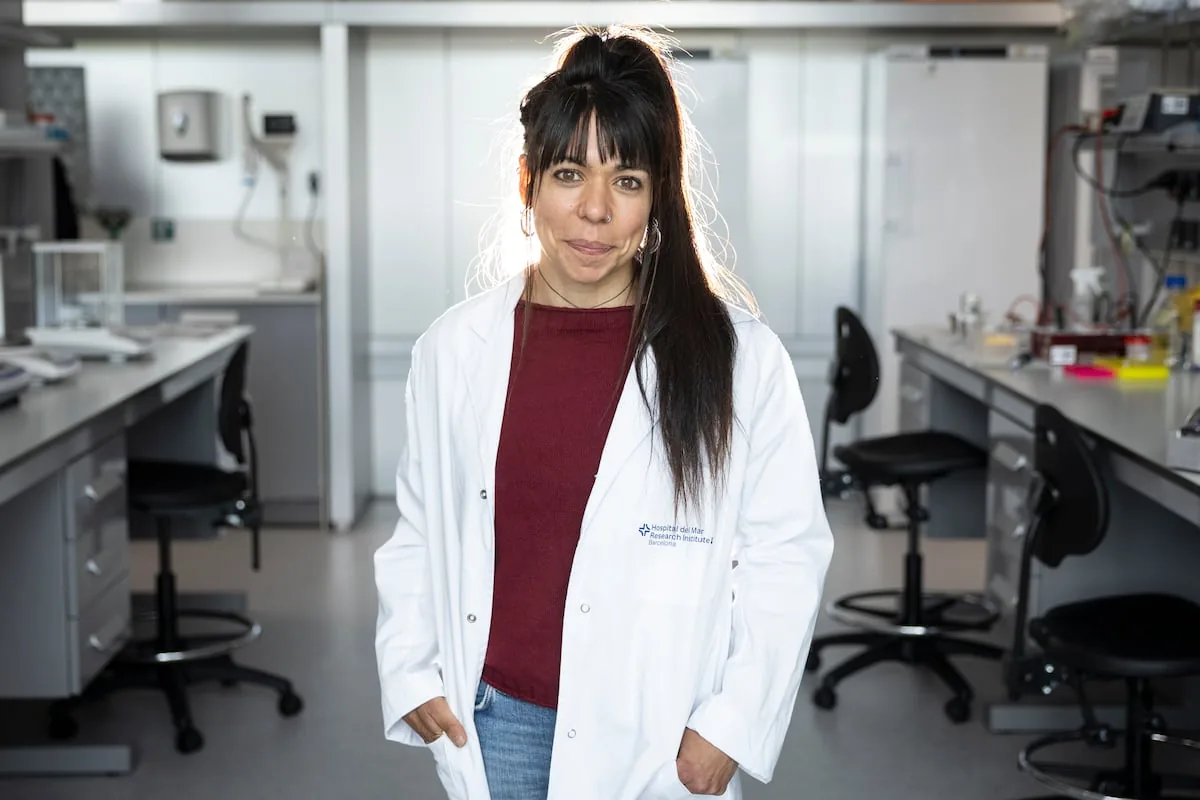
Sara Mederos (Madrid, 36 years old) arrives early at her laboratory. At 7:30 in the morning, she is already at the Hospital del Mar Research Institute in Barcelona, certain that understanding how the brain works is an essential task. The neuroscientist studies what happens inside our heads when we make decisions, but under specific scenarios. Mederos tries to decipher how this organ integrates experience, context, and mood to push us forward or hold us back. And how, after an accident, for example, fear can remain longer than necessary. “Normally, the brain learns that the danger is no longer there,” she explains.
The Madrid scientist is the one who leads the group in charge of this research, initially made up of three people, but which could expand to another ten. Her work seeks to understand what fails in brain circuits when disorders such as anxiety or post-traumatic stress appear. Identifying patterns, mapping connections, understanding how something as complex as the brain is capable of generating behaviors, emotions, and identities.
“The cortical areas, which are the most evolved part of the brain, carry a lot of information about context and learning,” she details. At the same time, she explains, there are “subcortical structures that regulate how we react to aversive stimuli,” that is, those automatic alert or flight responses that the brain activates in the face of a threat.
The researcher describes the brain as a system in constant negotiation between experience and survival. The information we obtain from the environment is integrated “plastically” into those circuits, responsible for translating fear into behavior. The problem arises when that mechanism stops readjusting properly. “We believe that in situations of anxiety or post-traumatic stress these areas remain activated and cannot return to their normal levels,” she details.
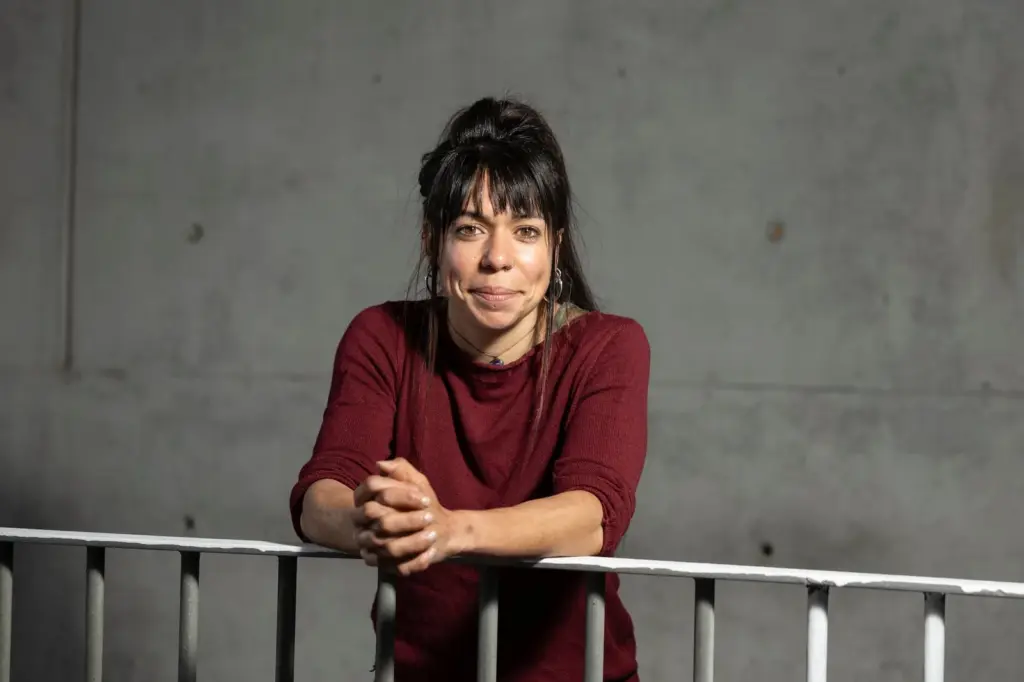
Before neurons and brain circuits, there were galaxies. “I really liked the stars when I was a child,” she recalls. Also marine biology. There was something about the vastness that pushed her to ask questions. At that time, she did not know that she would later find that same vertigo inside the human head. “In neuroscience, we still have many unknowns. It’s like looking at the sky and seeing all that immensity,” says Mederos, who has just been awarded the For Women in Science, a program by L’Oréal and UNESCO to recognize female scientific talent. Six of the awardees since its foundation in 1998 were later distinguished with the Nobel Prize in Sciences.
Studying the brain to treat mental health
A third of the Spanish population reports suffering from anxiety, according to the International Study by the AXA Group on Health and Mental Well-being conducted in 2025, which collects data from 16 countries. The report identifies a particularly worrying panorama among young people, who concentrate the worst indicators. The group aged 18 to 24 is the most affected, with 9% stating they suffer from anxiety, the same proportion as in the 24 to 35 age range. Meanwhile, the study also notes that 64% of Spaniards consider themselves susceptible to suffering anxiety, stress, or depression.
Mederos’s research has its sights set on clinical application. The idea, the scientist points out, is that her work can contribute to treatments based on drugs or non-invasive techniques, such as the use of focused ultrasounds, a technique that would allow targeting a specific area of the brain to try to regulate the levels of activity that should be present in those areas. “Understanding would give us the possibility to generate therapeutic treatments for neurodegenerative diseases or mental health,” Mederos states. “Society needs the focus to be put on this situation,” she emphasizes.
Although the presence of women has increased in the early stages of the scientific career, Mederos claims that inequality reappears when advancing to leadership positions. “At the beginning of the research career, this gap has been broken, but in more consolidated positions or when seeking funding as a leader or head of a research group, I think it becomes more evident again,” she denounces.
Read more The end of the Orbán era reduces institutional paralysis in the EU
For the neuroscientist, the problem has several layers. One of them is work-family balance, especially in a profession marked by long hours, competitiveness, and constant demand. “It seems that if you are not a mother, society interprets it as if you have missed out on something. And I also think it is important that it be an option, that motherhood is not the only option,” she maintains.
Advancing in the scientific career, she points out, usually involves marked differences between men and women. “When I talk with friends, who are brilliant scientists, they usually do not identify the impostor syndrome or have not experienced it,” she says. However, she assures that this feeling appears recurrently in conversations with other young female researchers: “Many of us have felt this way at some point.”
Mederos also points out the lack of female role models as one of the obstacles that still persist. “When you think of a scientist, normally the image that appears is not that of a woman,” she notes. That is why she believes it is important to make other trajectories visible, to have close role models, women who lead projects, direct laboratories, or open new lines of research. “When you see someone you can relate to, it also becomes possible for you,” she emphasizes.
Curiosity “has a lot of magic”
Doing science, she says, is also a way of asking questions in a world that is constantly evolving. “It is a super exciting time to dedicate yourself to neuroscience,” she states. New technologies, computational models, and tools capable of analyzing massive amounts of data are changing the way of addressing questions that previously seemed impossible.
“It is very hard for me to imagine not being a scientist,” she comments. When you understand the world around you, she says, “you have many more possibilities to choose what you want for yourself” and that “has a lot of magic.”
Although her fascination is no longer in the sky, the feeling she has about our mind is similar. That of observing something immense that we still do not fully understand, but we are on the way to discovering it: “It is incredible to see all the flexibility the brain is capable of. How brain circuits are able to integrate so much information and understand what the code is among all these cells seems fascinating to me.”