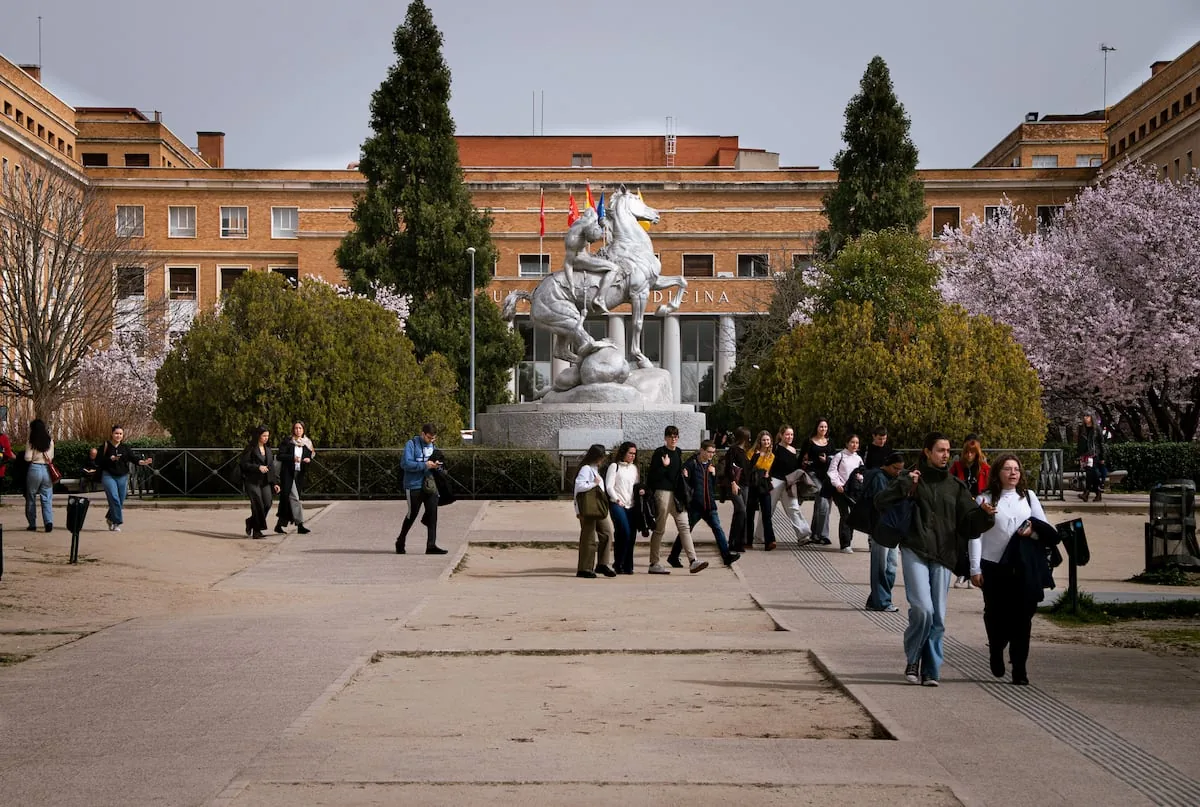







The university bill draft from the Government of Isabel Díaz Ayuso in October reduced the penalty from one million to 300,000 euros for “impeding or hindering, by action or omission, the electoral processes regulated by law on the university campus; as well as allowing the holding of illegal referendums.” The preliminary draft from the Madrid Community team known as Los Pocholos, who no longer manage Madrid’s education, has been halted, but with that idea in mind, the UCM Platform for Public Education ―made up of workers and students― is simulating a referendum this Thursday to stage before public opinion that they are still in intensive care.
The rectorate notified that there will be three more years of cuts, to repay Ayuso the loan of 34.5 million (plus four in interest) with which the salaries for the end of 2025 were paid. And by 2030 the current rector will be able to breathe. And, if the next multi-year plan allows it, they will try to launch new projects. For now, the scissors are in effect. The rector, Joaquín Goyache, admitted this at the Government Council held on March 9.
“We have conducted this public consultation so that people can express their dissatisfaction with the approved cuts. Obviously, the result is not binding, but it is an action that brings people closer to the ballot box and tells them what the cuts mean,” explains Alba Lirón, a predoctoral researcher in the Faculty of Mathematics and member of the CGT union. “You explain to the students that groups will be closed, which is already happening, that not all those leaving will be replaced ―so the teachers will have to take on those teaching hours―, that the licenses for the software they use will not be renewed, that it affects collaboration scholarships and study aid…”
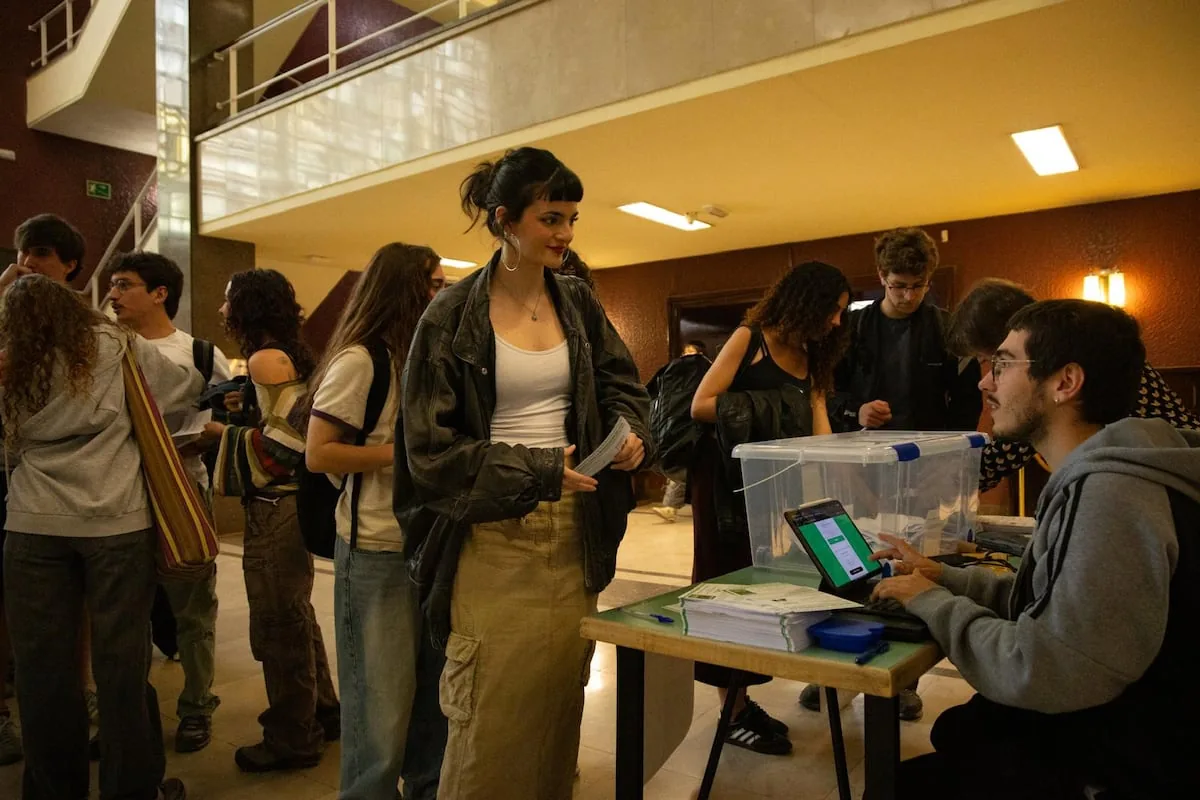
At one o’clock, coinciding with the time change, about twenty students crowd around the ballot box to vote in Philosophy. Most, however, have chosen to do so with a QR code from their mobile phones. The counting of ballots is live, as it is checked that the voter on the register has not already used the application. By that time, more than 4,000 of the total had voted, and by 4:00 p.m. more than 6,000.
Rita Sánchez, a second-year Physics student, thinks about her future: “The underfunding of master’s, doctorates, postdocs may mean that those positions are not renewed to start research jobs. And that creates great uncertainty. I would like to get my doctorate publicly. If not, I will have to look outside, in the private sector. That is a brain drain!”
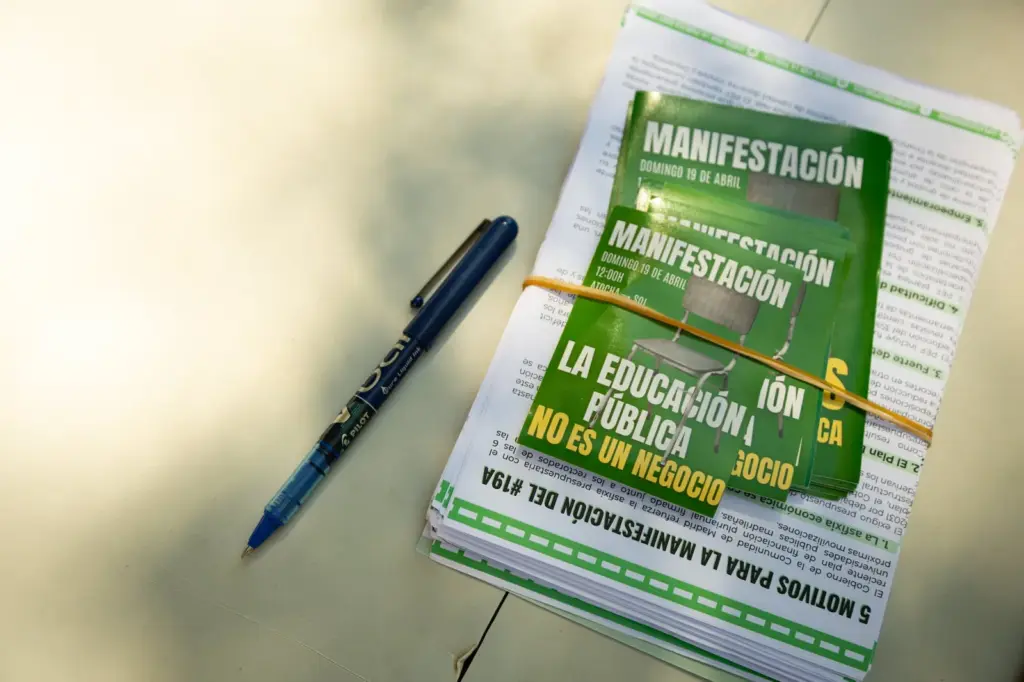
The organizers are happy with the level of participation, but it is not comparable to the strike that paralyzed the faculties. That is why they explain with leaflets and a content-rich website made at the Polytechnic that, despite the applause from the rectors, Madrid is not leading in university funding with the pact with Ayuso. “In a global context of uncertainty and inflation, the real value of the agreement [1.64 billion to be distributed among six universities] can lose any effect if inflation remains around 3%,” they conclude.
Unexpected visit from Rufián
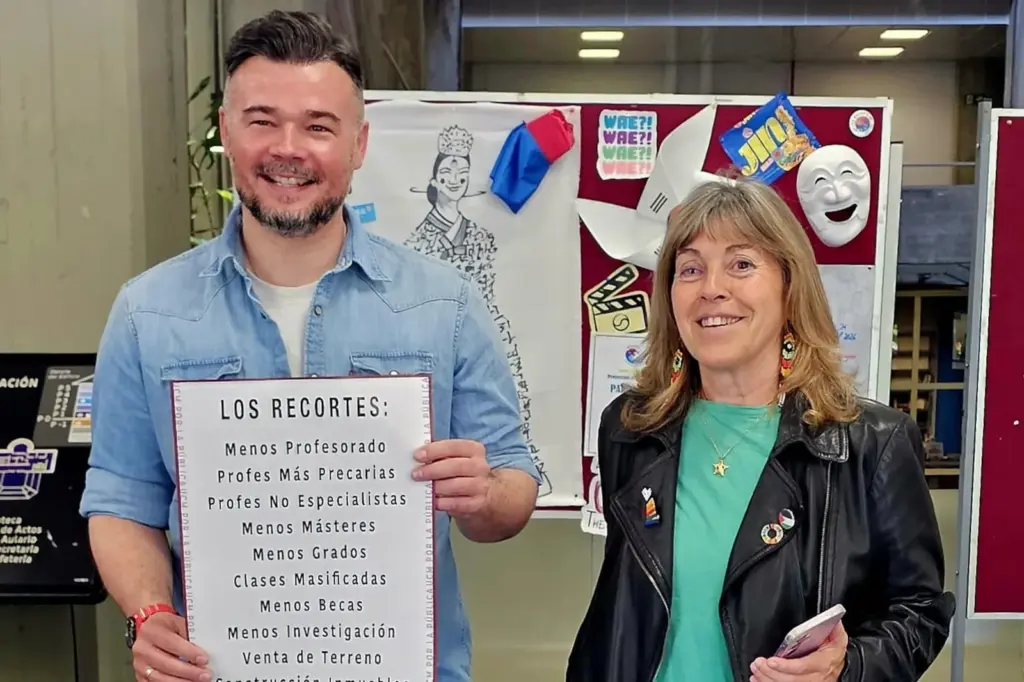
In front of the ballot box at the Faculty of Information Sciences, the leader of Esquerra in Congress, Gabriel Rufián, was seen. He was coming from participating in a political communication class and the organizers intercepted him as he left the classroom. “He congratulated us, told us he is with us, and left,” says Eva Aladro, spokesperson for the platform and professor at that faculty.
UCM has many reasons to be proud. Among others, its position in the global rankings ―no Spanish university will be in the top while the budget is not multiplied―, its employability rates, its attraction pole (a third of its students are not from Madrid), or its huge capacity to train researchers (more theses are defended than in all private campuses combined). But it also has to face major infrastructure problems ―according to Goyache, they would need 700 million euros just to keep the buildings in good condition―, a precarious staff like in all public universities in Spain, and a forecast of savings in elective subjects or even closure of degrees and master’s programs.
In the days leading up to this fictitious consultation, there were some tensions with the rectorate. The news spread that Goyache had ordered the removal of the 11 polling stations, but this was not the case. Although in Psychology, Economics, and Philosophy/Philology the posters calling for mobilization were indeed removed. The rector questioned the legality of the consultation, although the result is not the goal, but a way to visualize the protest.
The platform responded by recalling in a manifesto that the protests are carried out “in exercise of the rights of assembly and demonstration and freedom of expression of the university community” enshrined in the Constitution and the European Convention on Human Rights.
Finally, calm prevailed. Goyache sent a letter to the deans prohibiting the use of UCM furniture in the consultation. So the organizers say they have used borrowed folding tables and chairs and transparent plastic ballot boxes that the teachers bought out of their own pockets for some practical exercises. They have therefore not used anything from the inventory.
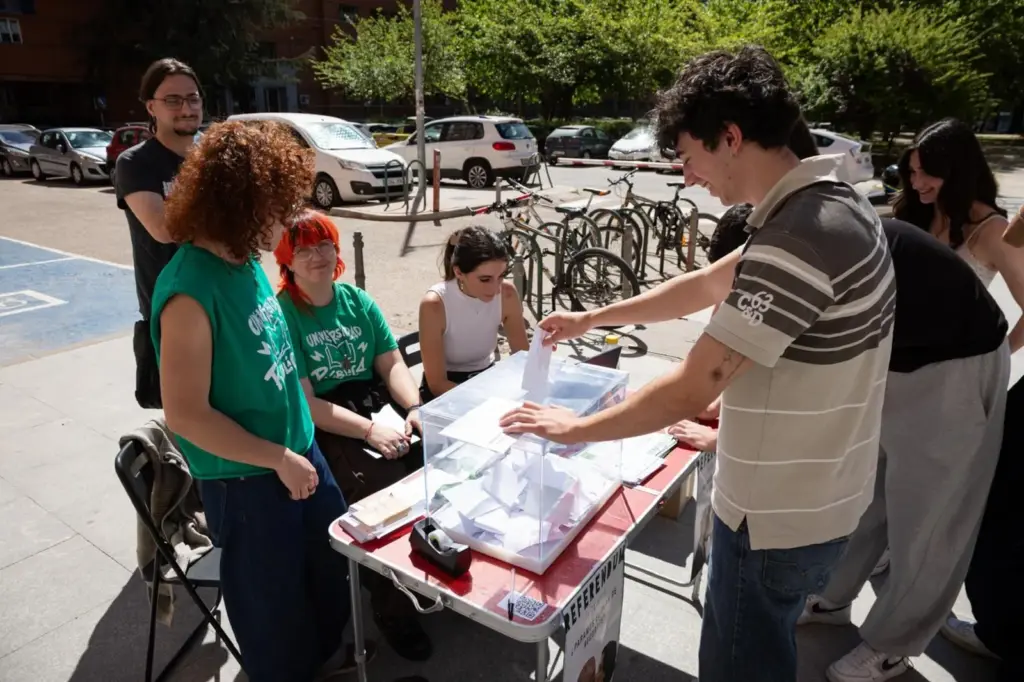
The Law table is outside, the dean did not allow it to be set up inside. Hardly any students vote, it is a traditionally conservative faculty. Even more professors approach. Although the dean is well aware of the cuts. He denounced them in his inauguration in January 2025: “The austericide that unjustly affects the present and future of public university education, materialized in a 35% cut in faculty expenses, plunges me into deep concern.” That cut remains in effect.
Víctor, a third-year Law student, is at the table. He is clear: “We have mostly gotten involved from the faculty because of the master’s issue. The places have not increased and the price per credit has doubled since 2020.”
The referendum is the prelude to the demonstration called for this Sunday in Madrid to protest the state of all educational stages, with preschool teachers leading in this case due to their precarious working conditions. The results will be announced on Friday.
Read more Carolina Tohá: “Kast’s economic agenda is from the 1980s”