








The particular David versus Goliath story that Vanuatu is starring in within the United Nations has added a new chapter this Wednesday in New York. A total of 141 countries have supported an ambitious resolution at the UN General Assembly that, among other things, urges leaving behind fossil fuels and opens a window — although uncertain and non-binding — for States that fail to meet their climate change obligations to offer reparations to the nations most affected by warming. The resolution promoted by Vanuatu has managed to pass despite pressures against it exerted by the Donald Trump Administration and a group of petro-states led by Saudi Arabia.
Read more Malú premieres ‘Quince’: “It is the first time in my life that I really enjoy what I do”
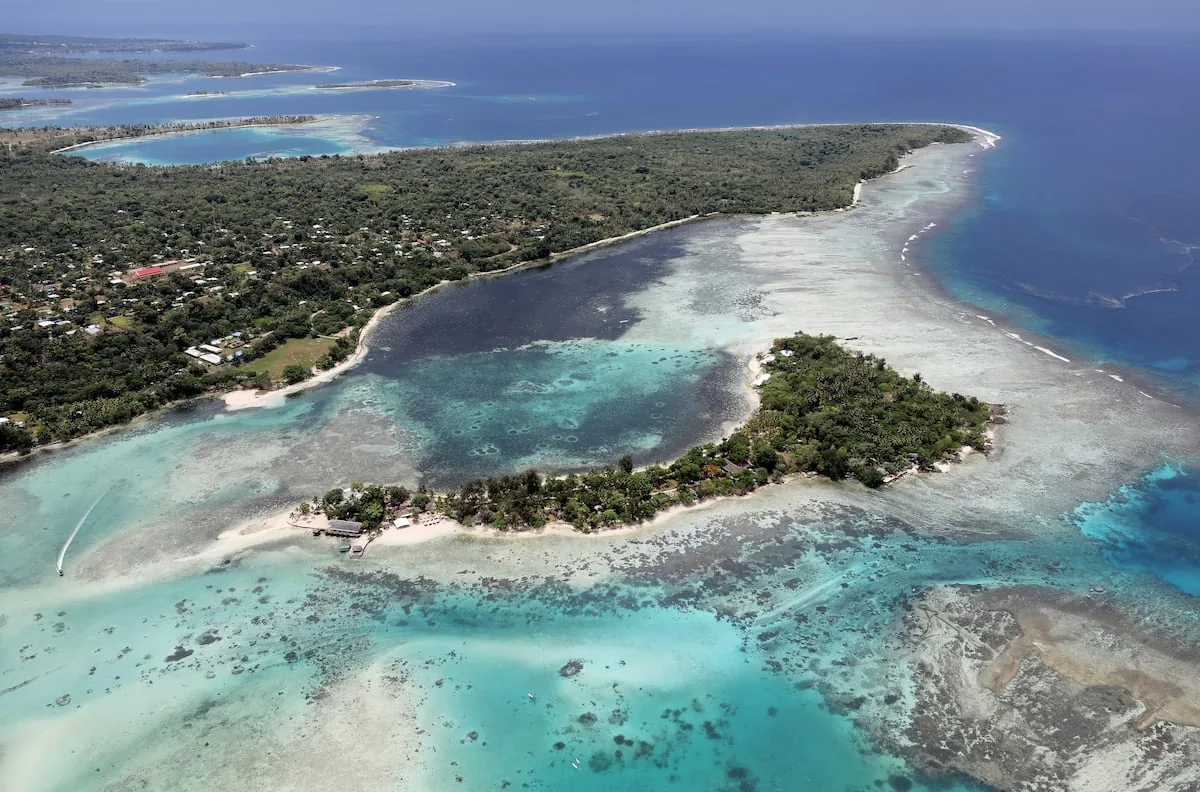
Vanuatu, a small island republic in the Pacific with barely 320,000 inhabitants, is one of those countries that risk everything when it comes to fighting climate change. Because the rising sea level simply threatens its existence. Besides being part of the group of island States that historically push hardest at climate summits to increase the ambition of treaties, at the beginning of this decade it decided to embark on a case before the United Nations International Court of Justice (ICJ) to clarify the responsibility of countries in curbing warming. And in July of last year its 15 judges, unanimously, concluded that not fighting warming constituted a violation of international law.
That ruling was not binding but, in the opinion of many climate litigation experts, it paves the way for other courts to hold countries and companies that contribute most to climate change accountable. After that ruling, Vanuatu continued the process to the UN Assembly, where representatives of 193 countries sit. And it prepared a resolution so that that ruling would be officially noted — the formula used in UN diplomacy to officially acknowledge the existence of a text — the ICJ ruling.
Threats from Washington
The first text prepared by Vanuatu along with other countries was very ambitious and included the creation of an international registry of damages attributable to climate change and a reparations mechanism. The United States, as it has done in other matters related to climate change, set its diplomatic machinery in motion to prevent that text from passing. The current Trump Government has not hesitated on other occasions to threaten sanctions and tariffs on nations that approve measures to curb emissions such as those from international shipping. The US has again expressed its strong opposition both to the resolution and to last year’s UN court ruling.
References to the creation of the registry ended up being removed from a resolution that reached the assembly with “75 co-sponsors,” as Lee-Anne Sackett, Vanuatu’s special envoy for climate justice, explained to EL PAÍS. Among those co-sponsoring countries are Spain, Germany, France, the Netherlands, Colombia, and Mexico. At the last moment, according to this lawyer, the “like-minded group led by Saudi Arabia” included some amendments that tried to further weaken the resolution and which did not pass. Cyprus, on behalf of the European Union during the Assembly session that approved the text this Wednesday, recalled that the resolution had been negotiated for five months, thus criticizing the last-minute amendments pushed by Saudi Arabia.
Among these tweaks was one that requested removing the point establishing monitoring of the implementation of the ICJ ruling from July last year. But, in the end, the resolution passed as planned and without removing the clear references to the need for countries to abandon fossil fuels and eliminate the hundreds of billions of dollars in annual subsidies they give to coal, gas, and oil.
Mentioning fossil fuels, which are the main culprits of climate change, has become an impossible task at UN climate summits due mainly to pressure from petro-states. In that case, the problem lies in the way agreements are adopted, by consensus, which allows any State to veto a text. However, the resolution at this Wednesday’s Assembly only required a simple majority, 51% of the countries. Saudi Arabia reiterated this Wednesday at the UN headquarters in New York the need for climate policies to “always be adopted by consensus.” The resolution passed with 141 votes in favor, along with 28 abstentions and 8 votes against. In this last group were Israel, Russia, the United States, Saudi Arabia, and Iran.
Besides directly mentioning the main culprits of this climate crisis, the resolution also points out that countries’ inaction on climate change may have “legal consequences” such as “the granting of full reparations to injured States in the form of restitution, compensation, and satisfaction.” Although it adds that to activate such compensation it must be “demonstrated a sufficiently direct and certain causal link between the unlawful act and the damage.”
Read more Aina Clotet wins the Best Newcomer Award at the Critics’ Week in Cannes
This resolution, like the ICJ ruling, is not binding. But the text states that the UN Secretary-General — a position held until December 31 of this year by Portuguese António Guterres, after which five candidates are competing — must present in 2027 “a report outlining ways to promote compliance with all obligations related to the conclusions” of that court. Additionally, experts point out that it is another stepping stone on the path being opened for climate justice, that is, for countries and companies that emit the most to compensate those who suffer the most from warming despite being less responsible.
Beyond its possible practical effects, the approval of this resolution carries significant symbolic weight at a time of multilateralism crisis. And at a time of harsh attacks by Trump against climate science. The US president has recently taken advantage of the review scientists are conducting of working scenarios on climate change evolution to support his well-known denialist theses. The same leader who in 2017, during his first term, withdrew the United States from the Paris Agreement, a decision he took again last year after returning to the White House, has repeatedly sown doubts about some truths that scientists consider proven.
“After 15 years in which dumocrats [translatable as foolocrats] promised us that climate change was going to destroy the planet, the main UN climate committee has just admitted that their own forecasts were wrong, wrong, wrong,” he wrote on his social network, Truth, last week.
What Trump was actually referring to was the update being undertaken by a group of scientists of a series of scenarios on warming evolution based on greenhouse gas emissions. Those scenarios date from 2011 and these experts now consider that the most pessimistic one, known by the acronym RCP8.5 and which contemplated a temperature increase of up to 5 degrees Celsius by the end of the century, is now unlikely. But not because climate change does not exist, but because that scenario from 15 years ago assumed emissions would continue increasing at the same rate as in the first decade of this century, something that has not happened.
It has been precisely the advance of renewables, the main weapon against climate change, that has prevented it. However, the president of the world’s greatest power continues to encourage the use of fossil fuels — “drill, baby, drill” was one of the most chanted slogans at his campaign rallies — over renewables.
“Overwhelming” support
The organization Greenpeace highlighted this Wednesday the “overwhelming support” that the United Nations Assembly has given to the “historic resolution led by Vanuatu.” Rebecca Newsom, global policy lead at Greenpeace International, recalled that “the world’s highest court made clear that climate action is an irrefutable legal obligation.” And with this vote “governments are increasingly committed to act to reflect that reality.” Newsom added in a statement: “Voted by the vast majority of the world’s governments, this resolution calls for a just transition away from fossil fuels less than a month after a coalition of 57 countries met in Santa Marta, Colombia, to reiterate their commitment to end dependence on coal, oil, and gas.”
“At a time when fragmentation among nations seems more visible than ever, the UN resolution backing the ICJ climate ruling offers a new path for international cooperation,” added Camile Cortez of Amnesty International.
Read more Olmedo López pleads guilty to participating in the UNGRD corruption scheme