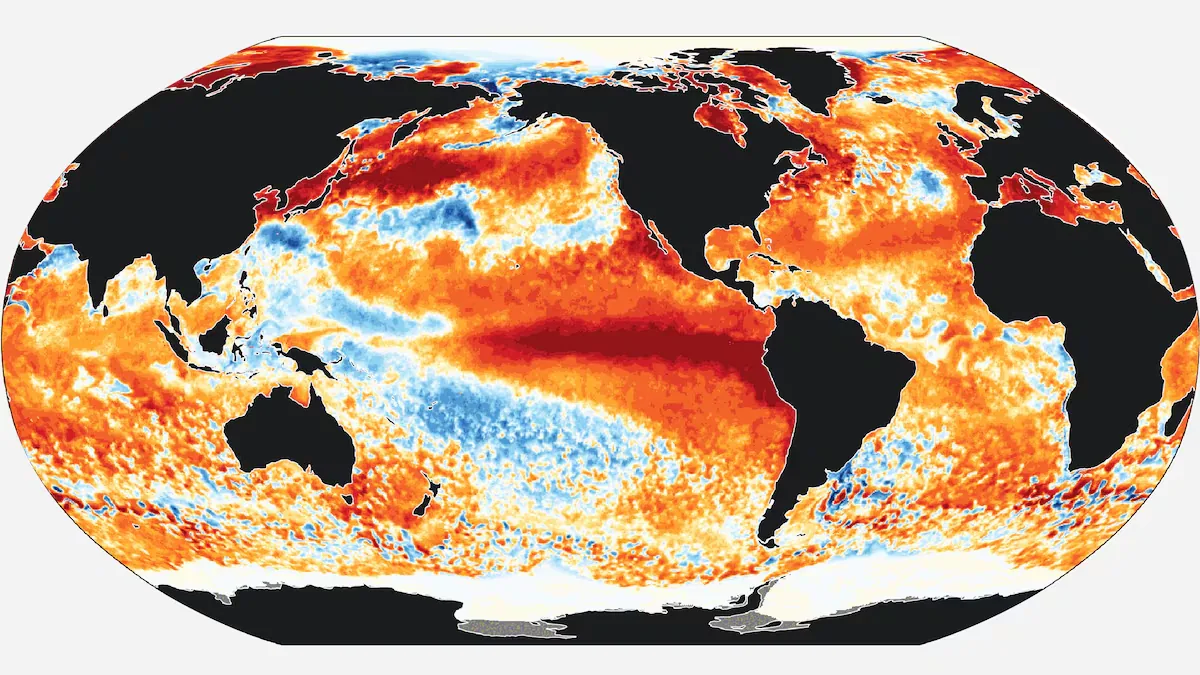
The oceans have entered unknown territory for several years as a consequence of climate change, but this 2026 is leaving scientists stunned as the effects of an extreme El Niño are added. After several months of extraordinary records, on August 22 the highest daily temperature record on the ocean surface since records began was broken: 21.1 degrees. Never before has such a hot average sea water temperature been measured and this, besides having disastrous consequences for underwater life, turns the seas into a climate bomb. “We increasingly have more chances for something serious to happen again in Spain like in 2024,” emphasizes Juan Jesús González Alemán, meteorologist at Aemet and researcher who has studied how warming intensified the catastrophic DANA in which more than 230 people died. “It is worrying that more is not done in adaptation to these extreme events,” he states.
Read more ‘The Black Ball’, ‘Resident Evil’, ‘Oasis’ and other anticipated movie releases of September 2026
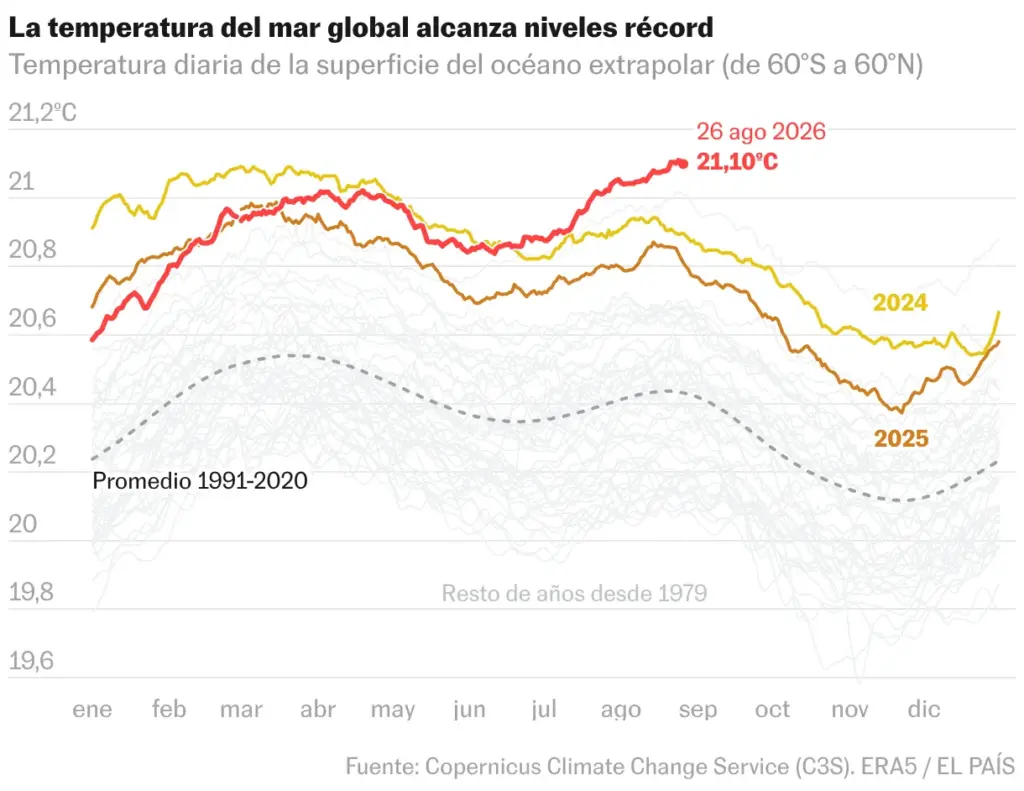
In 2023, the Earth began to reach a warming of 1.5 ºC compared to the pre-industrial era, which translates to nearly one degree more in the oceans. It seems little, but as oceanographer Carlos Duarte explains, the difference is “brutal.” “One degree of warming in the surface ocean (in the first 100 meters of depth) equals 1.5 times 10 to the 23 joules of energy, which is around 250-300 times the annual energy consumption of humanity. That is, it corresponds to three centuries of humanity’s energy use, three centuries at current consumption,” he specifies.
This extra energy has multiple effects underwater: coral bleaching, proliferation of harmful algae, species mortality, habitat alteration, changes in fishing. A study from the King Abdullah University of Science and Technology in Saudi Arabia, published this summer in One Earth, analyzed what happens during a whole year in the oceans with this extra degree and found widespread ecological disruption that extends far beyond the summer months. In fact, the research suggests that current monitoring efforts might be overlooking significant risks occurring outside the conventional marine heatwave seasons.
“We are the meteorites”
In this inventory of damage, one of the most widespread impacts is coral mortality, which has much more serious consequences than normally thought. “One third of all ocean biodiversity depends on coral reefs at some point in their life cycle, and approximately one billion people depend on them in some way, whether as food, protection against extreme events, or even as a source of income through tourism,” highlights Duarte, one of the study’s authors. “To see the collapse of an ecosystem of this global relevance, we would possibly have to go back almost 40 million years; we are talking about an irreversible trend that affects many human generations who may live on a planet where coral ecosystems are a memory similar to dinosaurs, but in this case, we are the meteorites.”
Apart from impacting marine life, heat also greatly influences the complex ocean mechanisms that determine climate. As González Alemán details, it has been proven that rising temperatures are causing storms to have the potential to be more virulent, due to higher humidity in the atmosphere. “That warm sea means more or better quality fuel when a storm forms,” he emphasizes. However, the changes go much further. Just a few days ago, a storm over the Atlantic, in the western peninsula, began to show behavior typical of tropical cyclone formation. It remained only an attempt, but with the progressive tropicalization of the climate at these latitudes, “it is increasingly less dismissible that a tropical cyclone could form near Spain,” highlights the meteorologist.
On this scenario, in 2026 a new protagonist has come into play that further increases the risks: El Niño. This is a natural phenomenon that, when it appears, raises the surface water temperature in the tropical Pacific and can have significant impacts on climate and agriculture. It has happened before, but the climate crisis changes the known rules. Scientists are warning that this is a much more powerful super Niño than usual. “There are studies that already pointed out that climate change would cause monstrous Niños, it is very worrying,” comments González Alemán.
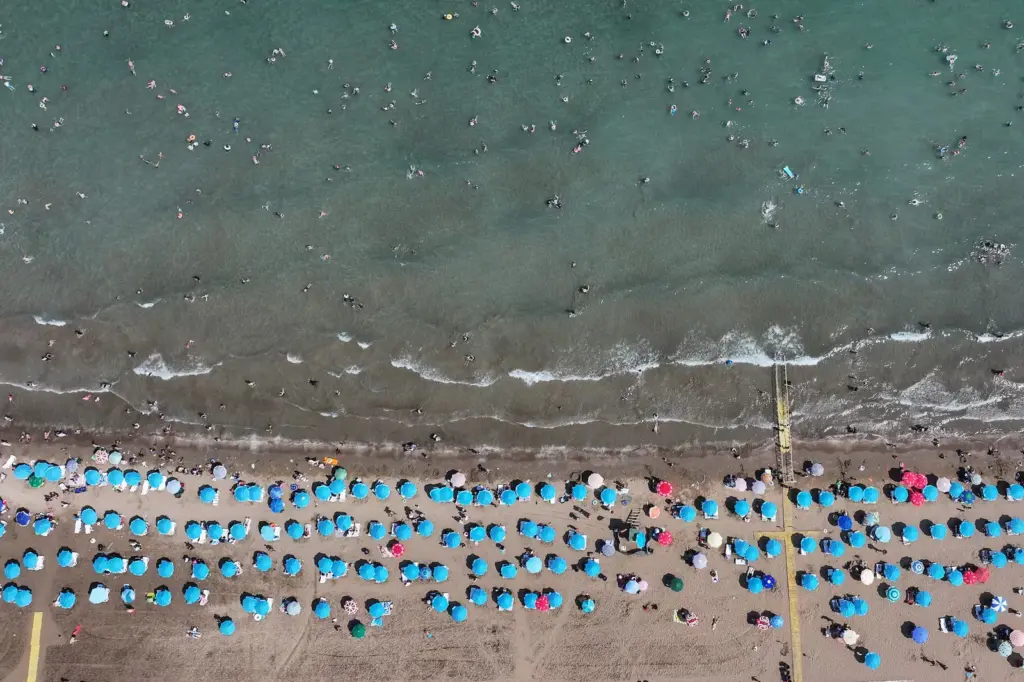
This summer, a buoy west of Mallorca also measured a record in the Mediterranean Sea: 33.2°. “A real outrage,” assures Duarte. This can translate into more dangerous storms in autumn. Moreover, the effect of the super Niño has only just begun and this phenomenon is expected to gain intensity in the coming months. Still, anything can happen. “Having a very warm sea in August does not mean it will continue to be that way in October,” details González Alemán, who assures that El Niño itself can generate troughs and rains that cool the Mediterranean. “But if we reach October and heat anomalies remain high, there could be much more virulent storms,” he warns.
One of the most complex effects of global warming is the alteration of ocean currents. With or without El Niño, climatologists are concerned about the slowdown of the so-called Atlantic Meridional Overturning Circulation (or AMOC), a current that transports warm water from the tropics northward, thus helping to maintain a relatively mild climate in Western Europe. Although there is scientific debate, there are studies warning that this engine of heat is slowing down due to increased precipitation in some parts of the North Atlantic and melting in Greenland and the Arctic (by reducing the salinity and density of the water), and that it could reach a point of no return.
A study from the Institute for Marine and Atmospheric Research Utrecht (Netherlands) published this August in Nature Climate Change indicates that the risk of AMOC collapse depends on the speed of climate change. In their simulations with slow warming, this Atlantic current remains stable even with a 5 °C increase, but when the pace accelerates, it stops functioning with a 2 °C increase. The key lies in the ocean’s ability to adapt: “With slow warming, the entire ocean, from the surface to its deepest layers, has time to gradually reorganize and adapt to changing conditions,” emphasizes Henk Dijkstra, professor of Dynamic Oceanography and one of the study’s authors. “With faster warming, the ocean simply cannot keep up.”
In the study’s simulations, the Utrecht researchers consider the critical warming point to be an increase of about 0.3 degrees per decade, a speed the world is already approaching. René van Westen, lead author of the study, explains the situation by comparing it to driving a car: “If you are heading toward a wall, the logical thing is to avoid it. To do that, you need to brake; otherwise, you go off the road. Regarding global warming, the world keeps flooring the accelerator.”
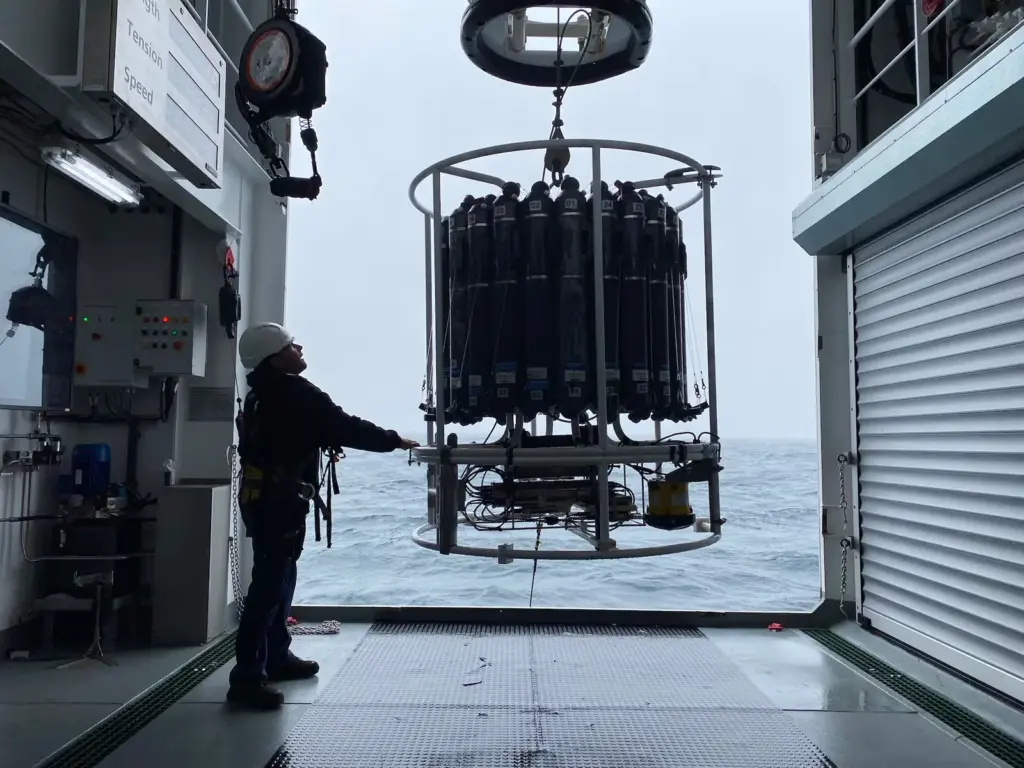
A sample of the complexity of the ocean mechanisms that are being altered is the MORIA 2 oceanographic expedition, led by the University of Barcelona and carried out this summer. The Odón de Buen ship set sail on June 22 from the port of Vigo to Reykjavik (Iceland) to follow the path of the water current leaving the Mediterranean Sea and study its impact on the AMOC itself. “The water that leaves through the Strait of Gibraltar, which has very high salinity, does not stay on the surface but sinks about a thousand meters and there is a very important branch that is transported toward the North Atlantic, almost to Iceland,” details Leopoldo Pena, researcher at the University of Barcelona, who assures that this Mediterranean water can be tracked through the Atlantic using a series of chemical tracers.
This scientist considers it key to study the journey of Mediterranean water due to its possible relation to a stronger AMOC. “In the geological past, tens or hundreds of thousands of years ago, there were periods on the planet where the AMOC circulation was more intense, coinciding with greater export of Mediterranean salt,” notes Pena. However, as he emphasizes, many of the studies being published about the AMOC are based on models that do not take this effect into account.
According to María José Sanz, scientific director of the Basque Centre for Climate Change (BC3), uncertainties will always exist, but that does not prevent measures from being taken when risks are high. This researcher considers both mitigation to reduce the use of fossil fuels that cause the problem, and adaptation to anticipate extreme situations, essential. “In Spain, adaptation has always been somewhat more of a priority than in other European countries, because we are in a climate transition zone and the Mediterranean has always been like an advanced laboratory,” she defends.