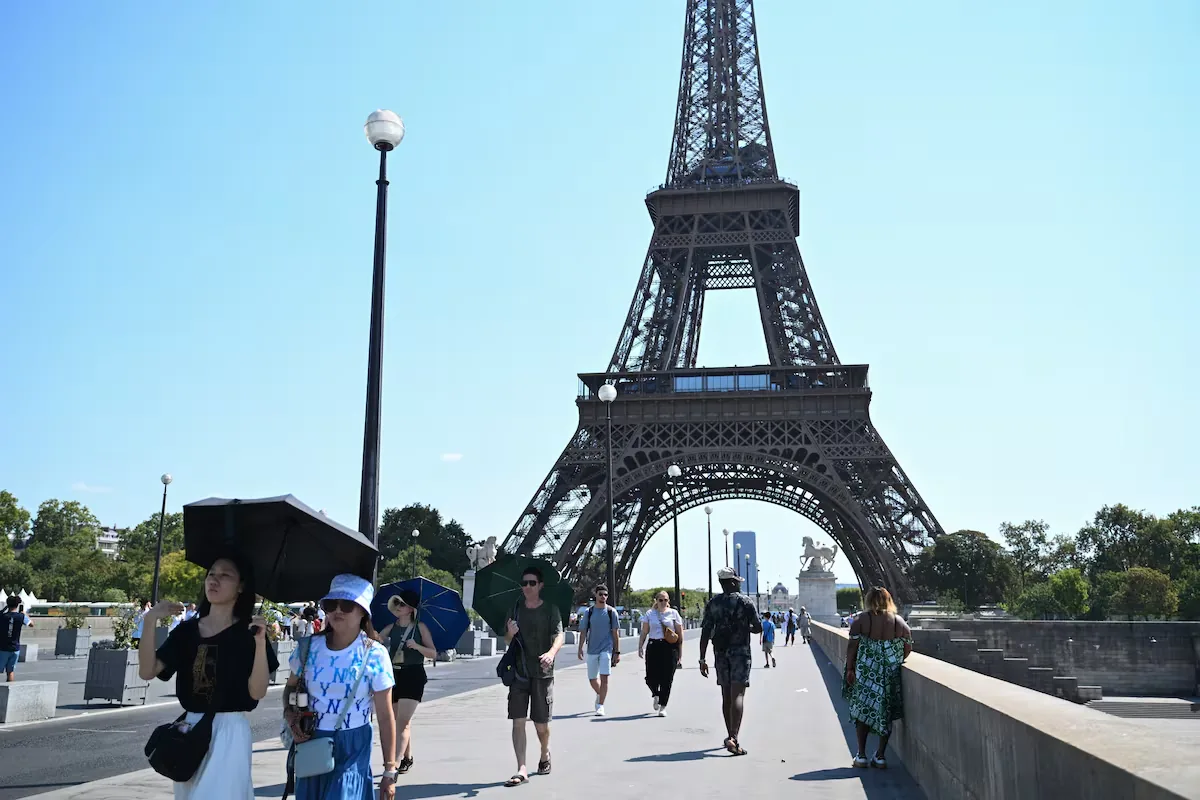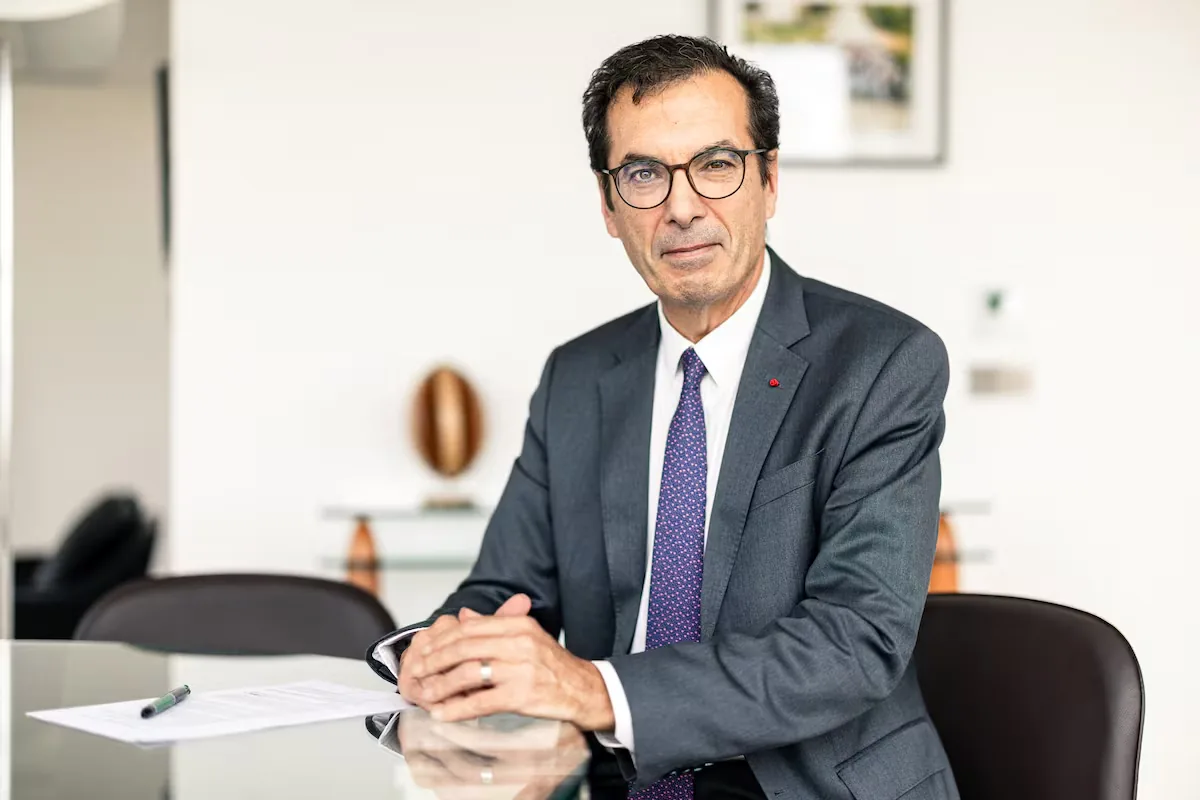
France has experienced the hottest summer in its history. Since May, it has endured heat waves that have raised temperatures to nearly 43 degrees in a country that is not prepared for extreme heat, especially in the northern part. “France is becoming Spain,” said the Minister of Labor, Jean-Pierre Farandou (Bordeaux, 69 years old), last June. “But in Madrid, with 40 degrees, society keeps functioning,” he emphasizes three months later in his office, during an interview with EL PAÍS.
Read more United States claims to have destroyed five Iranian oil tankers
The Minister of Labor and Solidarity is traveling to Madrid this Wednesday to meet with his counterpart, Yolanda Díaz, accompanied by union representatives and the French employers’ association to study new measures that will allow French workers and companies to face next summer without the suffering of the current one.
Question. You said this summer that France was becoming Spain. What did you mean?
Answer. France has experienced strong heat waves since May, but they have lasted until September. Five months with temperatures never before reached in this period and in an area, the north, that was not at all accustomed or prepared. And it resembles what Spain has known for a long time and is used to: it is cultural. So if France increasingly resembles Spain in that sense, the best thing is to go to Spain to see how the world of work is organized.
Q. What do you expect from this trip?
A. To understand how they manage and combine temperatures and work to protect workers’ health while continuing work activity. When I called the minister in Spain, it was 42 degrees and she herself told me that activity did not stop. I want to learn from that balance. I am interested in the issue of time slots in which it is better to work. Today it is done by decree, but I believe it should be done through social dialogue. I want to see how the major sectors, industrial and public construction, can apply it. With this trip, we can promote changes in France. We must learn from Spain, a dynamic country that has adapted a lot and modernized. I greatly admire what they have done. Spain is very advanced in this matter and we are going with social agents and the employers’ organization. It must go through social dialogue. And the minister agreed and organized the best possible trip.
Q. Do you believe in the climate leave implemented in Spain?
A. On that matter, I have my reservations, but I want to listen. I am not closed off. But it was established with the Valencia DANA, when many workers could not go to their jobs. It has nothing to do with heat waves. Also, there are times of the day when work can be done and the country must not stop. Think of hospitals, trains, police… the key is prevention. If there are five days of heat wave, it is complicated to have five days of leave. I don’t think we can transfer exactly the same.
Q. Unions were asking to set a temperature threshold from which it is advisable not to work.
A. We have debated it. But, what is it? How is it set? There are many regions and different temperatures. Working at 42 degrees outside is impossible. But there is no answer to a single temperature, but rather establishing a series of criteria for stopping certain jobs. This summer I granted by decree to government delegates the power to stop public works under certain temperatures. But it depends on the sector, the region… That is social dialogue.
Q. In France, there is no intensive workday.
A. No, and I think it’s a great idea. Starting earlier, at seven, at six. And then leaving people alone. I am in favor of deploying it.
Q. Who should pay for this effort?
A. The finances of the French state are not at their best moment… But I don’t think it costs much money. If you look at it trade by trade, companies will be able to bear it even if it has to be reflected in the final price of the product.
Q. It is also surprising that the country is so polarized that even on the issue of air conditioning there is an ideological debate. Now it turns out that being in favor is right-wing, and against, left-wing…
A. Ideology does not solve problems. France is poorly equipped in air conditioning, we were not Spain, we could afford it. There were less heavy solutions to combat the heat, but today everything has changed and air conditioning must be accelerated in schools, hospitals, nursing homes… places populated by vulnerable people.
Q. The left argues that this harms the general rise in temperature more.
A. Air conditioning does not prevent the outside temperature from rising, of course. The underlying debate is clear. But in France we are lucky to have a decarbonized energy production: 97%. But more investment is needed, of course. We have already decided on an emergency plan for hospitals, as we had done in some nursing homes.
Q. After the pandemic, we thought teleworking would be imposed forever. But in many sectors it has disappeared. Do you think it can be a tool to combat this phenomenon?
A. It depends. Many people preferred to go to their office because it was cooler than at home. We are not against teleworking. But one or two days a week, because the social link between the worker and the company must not be cut.
Q. France is in a crucial election year. The far right is approaching the Élysée Palace. Are you afraid that all these measures will be eliminated?
A. These are apolitical issues, it is not left or right. Climate change is a scientific reality and France is one of the most exposed places.
Q. France has two problems that converge in the world of work: immigration and low birth rate. Are you in favor of measures like the one Spain took to massively regularize immigrants to alleviate the labor shortage?
A. We have obvious demographic problems. And many companies need immigrants to work. I don’t do ideology with this either. France has always needed immigration, also in the future. But it has to be oriented to the labor world so that the country functions. The word “massive” perhaps requires caution. But we work with the Ministry of the Interior to regularize immigrants directed to professions in tension, those that need workers. But it must be very well organized.
Q. What are those professions?
A. Public construction, for example. There there can be a more open approach in terms of regularization.
Q. You believe the workday will change a lot in the future.
A. Yes, it has already started. But that idea of 6 to 14 is a good idea. Work is done in the cooler hours. And society will have to adapt to those new dynamics that climate change will push us towards.
Q. The problem is that in April there are presidential elections and before there could be a vote of no confidence. Are you afraid that everything we have talked about will fall on deaf ears?
A. We will not be able to make laws, that is clear. But social dialogue can move quickly, and if the sector branches take ownership of this issue, measures can be established through negotiation. We will go to Spain, come back, give ourselves a month for everyone to reflect and start negotiating between employers and unions. And I hope that at the beginning of the year we will have elements that will have changed to face the heat of the coming summer. That is what matters.
Read more The five fatalities of the plane crash in Miami were in a van for cleaning staff