








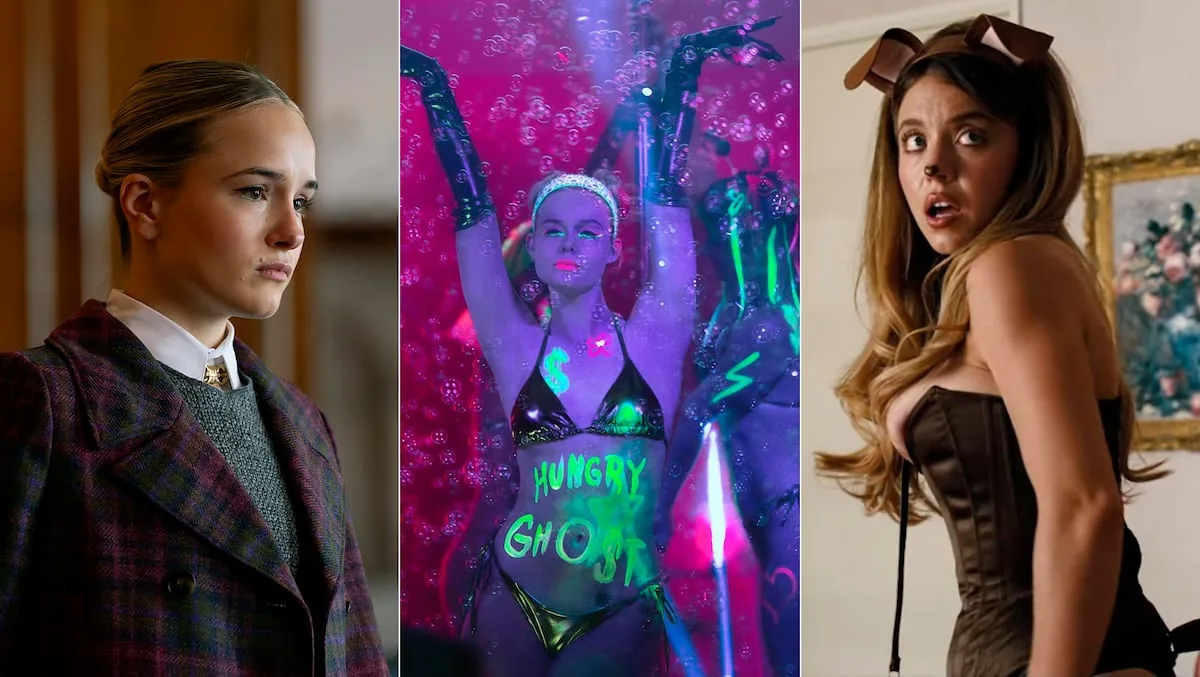
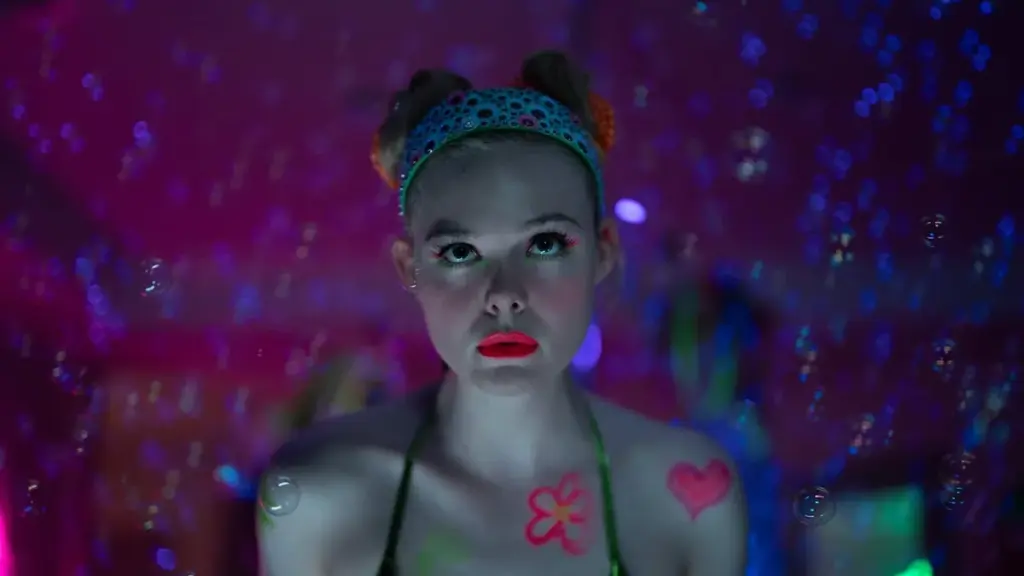
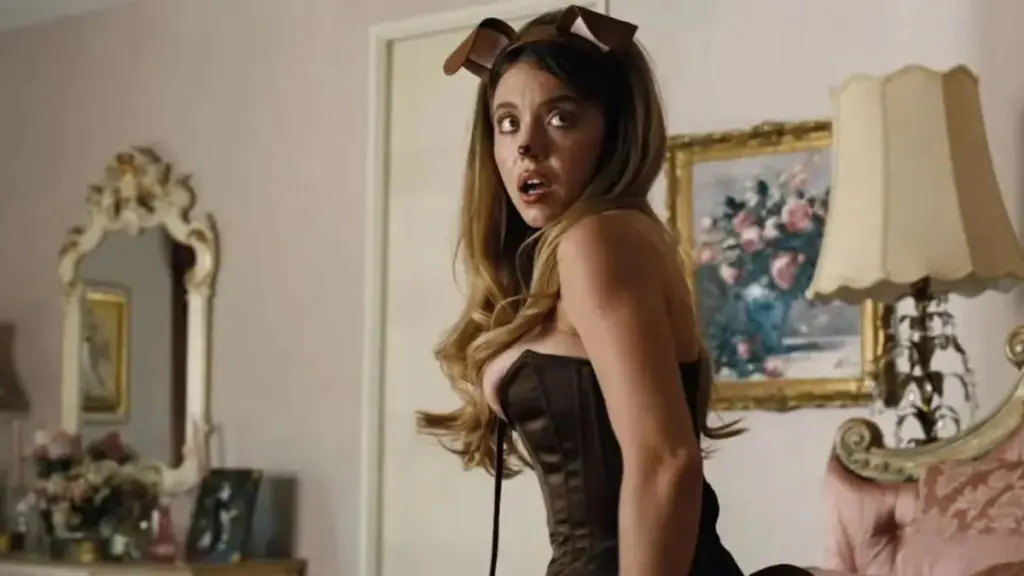
Cassie is desperate because her future husband Nate doesn’t want to spend $50,000 on flowers for their dream wedding. So the character played by Sydney Sweeney in the latest season of Euphoria decides to switch from Instagram to OnlyFans to afford the indulgence. She is so convinced that what she posts is just social media material —content, in current jargon— that she casually shows some of her photos dressed as a baby or a puppy on all fours to one of her friends. “Isn’t that porn?” her friend replies. “I thought the same, but I’ve read about it and there’s a big misunderstanding. The platform is used to communicate… and I’ll be the one in charge,” Cassie counters. She will be her own boss, as the character Sweetpea Golightly believes herself to be in the third season of Industry, a Gen Z cliché who uses this system to buy expensive clothes while interning at an investment bank. The same supposedly empowering argument is used by actress Elle Fanning in her role in Margo Has Money Problems when her university career is cut short after getting pregnant by a professor. “It’s not just porn,” a classmate tells her to reinforce her conviction that given these circumstances —early and unplanned motherhood— there is no alternative to OnlyFans.
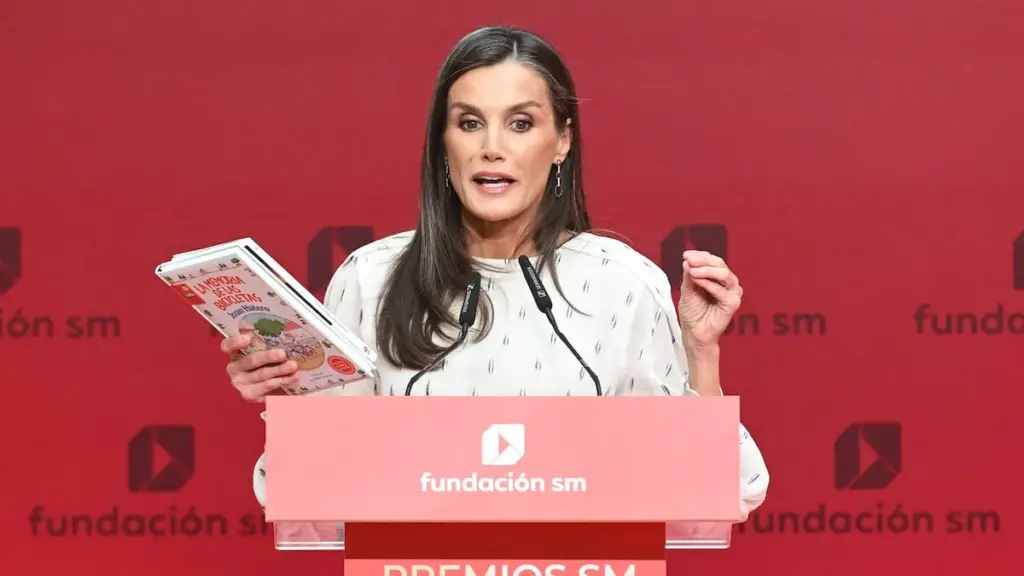
These three female characters are the most recent example of how the subscription-based sexual content payment system, created 10 years ago, has returned to popular culture through the most effective transmission chain: streaming platforms. The Fourth Life of Blanca Cuervo, by author Alba Quintas, the latest SM award winner for children’s and young adult literature, imagines an OnlyFans-like place called La Trastienda, a place the protagonist arrives at driven by precariousness where, as Queen Letizia explained at the award ceremony, the boundaries of consent blur.
In the coming months, Alauda Ruiz de Azua will premiere her new series on Movistar Plus, which addresses the topic. With the little progress made by the filmmaker and the platform, it is expected to have a completely different approach. The topic has also caught the attention of Pedro Almodóvar who, as he has explained in several interviews, believes it could be a good way to connect characters in one of his future stories.
Previously, OnlyFans had appeared in songs, movies, and books in a circular time pattern where trends and traumas always return. The platform reached its peak recognition during the lockdown. Locked at home, it seemed that faced with the prospect of furloughs and layoffs (and their labor versions in other parts of the world), it became an option amid the pandemic crisis. This idea was boosted by global stars like Beyoncé and Megan Thee Stallion, who in 2020 released Savage, which referenced this site. Traffic to the platform increased by 15%, which meant about 200,000 new users, according to the company’s CEO at the time, who also invited the singer to open her own channel. “Beyoncé, and any artist, are welcome to join OnlyFans at any time to foster a deeper connection with their fans,” the platform said in a statement.
Cardi B took them up on the offer and that same pandemic year released WAP and opened a channel on OnlyFans which, on her Instagram account, she defined as a space for her and her fans, where, she said, she would share content from her “day to day,” but would not show “tits, ass, or pussy [sic].”
View this post on Instagram
“Big companies spend millions of dollars producing narratives and legitimizing representations of what they want to sell and this happens with OnlyFans,” says Rosa Cobo, Sociology professor at the University of A Coruña and expert on pornography. “There is an attempt to build an almost romantic story about this service and it is channeled through popular culture,” she adds. Jorge Dioni, journalist and author of books like Pornocracy (Arpa, 2025), recalls the success of the film Anora. “An Oscar-winning film that also romanticized prostitution a bit,” he explains, “it’s quite hard to get out of that, maybe men are very afraid to be on equal footing with women. So all possible resources will be used to prevent that from happening and to perpetuate power dynamics.”
Content Creators
The romanticization is articulated through language: these women call themselves content creators, as happens in the three series mentioned. That is, the terms prostitution and sexual exploitation are forbidden in OnlyFans semantics. “Being an influencer is very popular among young women and through that the patriarchy has found a good gap to insert its misogynistic content,” explains Laura Barrios Oliver, president of the Federation of Young Women who delivered a devastating study on OnlyFans in 2024. “It resembles the fiction of youtubers, filming yourself doing something and becoming an influencer, like a kind of patriarchal American dream,” adds Andrea García Santesmases, anthropologist, current professor at UNED, who has just published A New Sexual Contract (Ariel, 2026). Although there are men who upload their videos to the platform, the overwhelming majority of the content created comes from women.
Cobo belongs to that part of the feminist movement that has concluded this is a new form of whitewashing prostitution and therefore has nothing liberating for women. “In reality, OnlyFans is made up of a group of young women who work all day in apartments uploading sexual content, directed by a so-called manager, something closer to a pimp than anything else, who directs those products previously demanded by consumers. They have the final say because they pay,” she summarizes about the operation of this platform with more than 300 million users, or fans, according to 2025 data provided by the company.
On the other side are those experts who find in this new payment modality what they call “a revolution in sex work”; which translates, in their opinion, into the greatest agency for women to have control over their bodies as they please. Cassie clings to this argument, for example, when her account explodes in popularity and her fame is cemented through appearances on podcasts where she defends that if a man did that work, he wouldn’t be questioned.
Immunization
The polarization has so deeply crossed this debate that OnlyFans, a decade later, seems immune to criticism and the cultural industry has taken advantage of that prophylaxis to continue exploiting this phenomenon in its plots. “The sector presents it as a group of women acting as small freelancers who also do something empowering for them. The question is whether extreme sexualization and turning women’s bodies into commodities is a liberating process or more of the same, that is, servitude,” adds Cobo.
Barrios Oliver identifies what for her is another problem: the audience these productions target. “They are series mostly watched by young women, who are the ones with the most potential within the service,” she says. In recent years, viewers aged 18 to 34, especially women, are the ones who subscribe the most to streaming platforms, which have found a goldmine in young adult (a genre for young people experiencing a renaissance).
They are the ones who watch, read, and listen the most to this type of content where forbidden love, luxury, mystery prevail and where these types of characters and perfectly crafted fantasies sneak in. And they are also the ones who make up the legion of more than three million people who register to upload this type of content to OnlyFans. “In those plots, it is often not explained that the content those women upload stays there, that the money they can make per month is, at most, enough to survive because only a few become millionaires, while they enslave their bodies with the idea of ‘you are your own boss,’” continues Barrios, who assumes many of these young women do not find documentaries that have denounced the platform very appealing.
OnlyFans has also caused a paradox by bringing together at the same digital intersection the so-called trad wives (traditional women with conservative values) and a part of feminism. The convergence occurs in the criticism of this platform, but with nuances. “The trad wives are managing to channel a discontent with a message that tells these women that, as they have defended for years, work was not going to liberate them, to thus recover the dream of going back home,” suggests García Santesmases. And she adds: “Not only that, they resort, for example, to the protagonists of Euphoria to instill the idea of how badly those women representing the woke have ended up. They have identified a disappointment, a lack of role models, and they are going to exploit it.”
Read more The Oresund Strait, the new frontier in Russia’s hybrid war against NATO