





The Islamic Revolutionary Guard Corps of Iran stated this Tuesday that it reserves the “legitimate and unequivocal” right to retaliate against the United States, after the U.S. military attacked Iranian military targets in the south of the Asian country on Monday. Sources from the Donald Trump Administration announced almost immediately afterwards to the conservative Fox network that these attacks do not represent the end of the ceasefire and that they were in “legitimate defense.”
Without declaring the truce broken either, the Iranian Revolutionary Guard accused Washington of violating it, in a statement released by the country’s state media. A message from the Iranian Supreme Leader, Mojtaba Khamenei, supported hours later the defiant tone of that military force by warning the United States that its military bases in the Middle East will no longer serve as a “shield” in a region that will no longer be “its refuge,” as he said.
The U.S. attack and this Iranian response raise tensions amid negotiations expected to establish a general framework for resolving the war, even if discussions on some of the most thorny issues of the conflict, such as the Iranian nuclear program, are postponed to a later negotiation that could last up to 60 days, according to what has emerged from the draft that Iran and the United States are negotiating.
However, the announcement of that understanding is being delayed, after the U.S. president himself, Donald Trump, announced it over the weekend as almost imminent. The U.S. attack on Iranian targets could now delay the signing of the memorandum, given that it confirms the distrust shown by the Iranian security and military apparatus about Washington’s real intentions to end the war that began on February 28 hand in hand with Israel.
This is suggested by the Revolutionary Guard’s statement this Tuesday, the main actor of that security apparatus. With the defiant tone that usually characterizes its public communications, the text of the Iranian parallel army assures that its air force shot down a U.S. MQ-9 drone and fired on a U.S. combat aircraft Monday night. Washington, for its part, claims to have sunk two Revolutionary Guard boats that were trying to place mines and struck missile launch sites near the southern city of Bandar Abbas, near which is the main naval base of the Iranian Navy.
U.S. Secretary of State Marco Rubio tried this Tuesday to clear doubts about the dialogue with Iran, stating that negotiations continue, although it will take “a few days” to resolve the discrepancies in the initial draft.
Those discrepancies are not minor. The details of that pact that have become known are the specific conditions for reopening the Strait of Hormuz — Iran wants to obtain benefits from maritime transit, one way or another, something Washington refuses — which sanctions will be lifted, if any, for Tehran to agree to lift its blockade of that maritime artery, and the amount of Iranian assets frozen abroad that Iran could recover, an issue considered one of the main obstacles to an agreement.
The Tasnim agency, linked to the Iranian Revolutionary Guard, stated this Tuesday that Tehran conditions the signing of the draft on being allowed access to 24 billion dollars (more than 20 billion euros) of the total between 100 and 120 billion dollars (between 86 and 103 billion euros) of Iranian funds held abroad due to sanctions against the Asian country.
Message from the leader
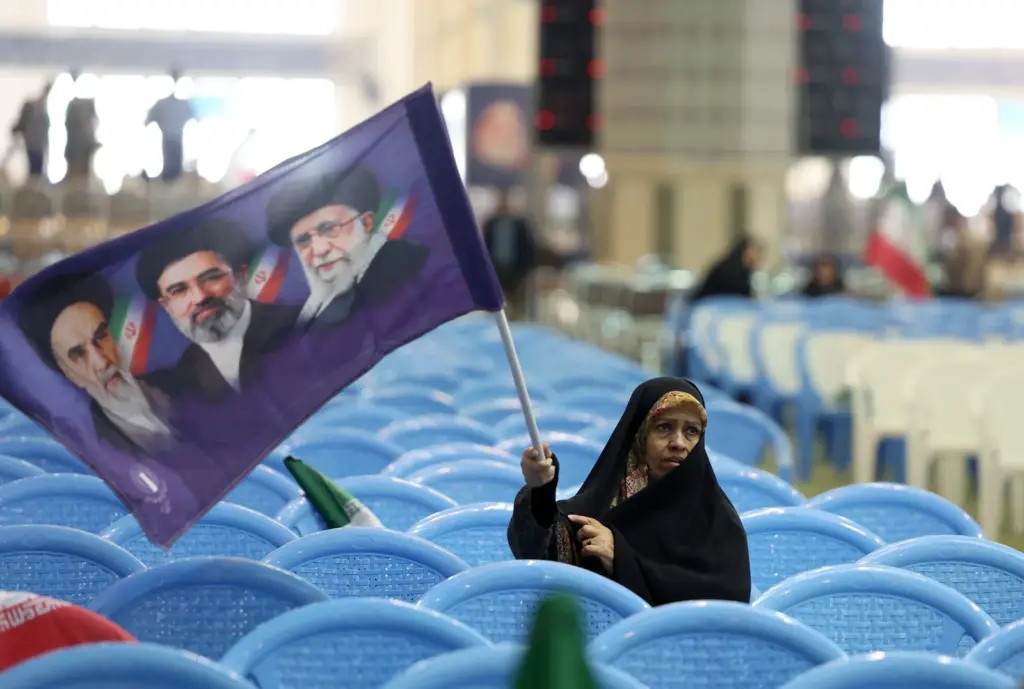
At the same time that the U.S. attack and the Revolutionary Guard’s threat to respond raise the tension surrounding a possible agreement, Iran released a new message from Khamenei this Tuesday. As has been the case since his appointment on March 9, this time too Iranians could neither see his image nor hear his voice, although this time the reading of the message was done by a cleric from his office, not by state television announcers.
The Iranian Supreme Leader, whose whereabouts have been unknown since the bombing that killed his father on the first day of the war, delivered this speech on the occasion of a major event for Muslims: Eid al-Adha or the Feast of Sacrifice, the main religious festival of Islam, which also marks the end of the Hajj, the pilgrimage to Mecca.
With his words at such a momentous time for the faithful of Islam, Khamenei outlined what in his eyes will be a new regional and even global order, in which the Islamic Republic assumes leadership. With the triumphant tone of a country that sees itself as the victor of a conflict it started at a disadvantage, he assured that its neighbors in the Persian Gulf will no longer serve as a “shield” for the United States through Washington’s military bases in the region. His American enemy will also no longer have “a safe refuge” in the Middle East.
This background is the same as the Revolutionary Guard’s statement after Monday’s attack: having already broken the taboo of attacking its neighbors for hosting U.S. military installations during the war, Iran reserves the right to respond to any military assault.
Although this type of speech is mainly directed at the Iranian population, especially the support base that the Islamic Republic maintains, the message to the outside world is clear. Khamenei implicitly mentioned several of the conditions established by his country to sign the memorandum of understanding with Washington, under the mediation of Pakistan, but also Qatar, over which he has the final word.
The Supreme Leader referred, for example, to the victory of the “axis of resistance,” the network of militias allied with Iran in the region, including in Lebanon. The draft expected to be signed by the United States and Iran establishes a ceasefire throughout the region — including in that Arab country invaded by Israel where the Shiite militia Hezbollah operates. Khamenei then assured that Iran and its “allied forces” have taught a lesson to the Americans and the “Zionist entity” (Israel) and that the United States has also suffered “a hard blow.”
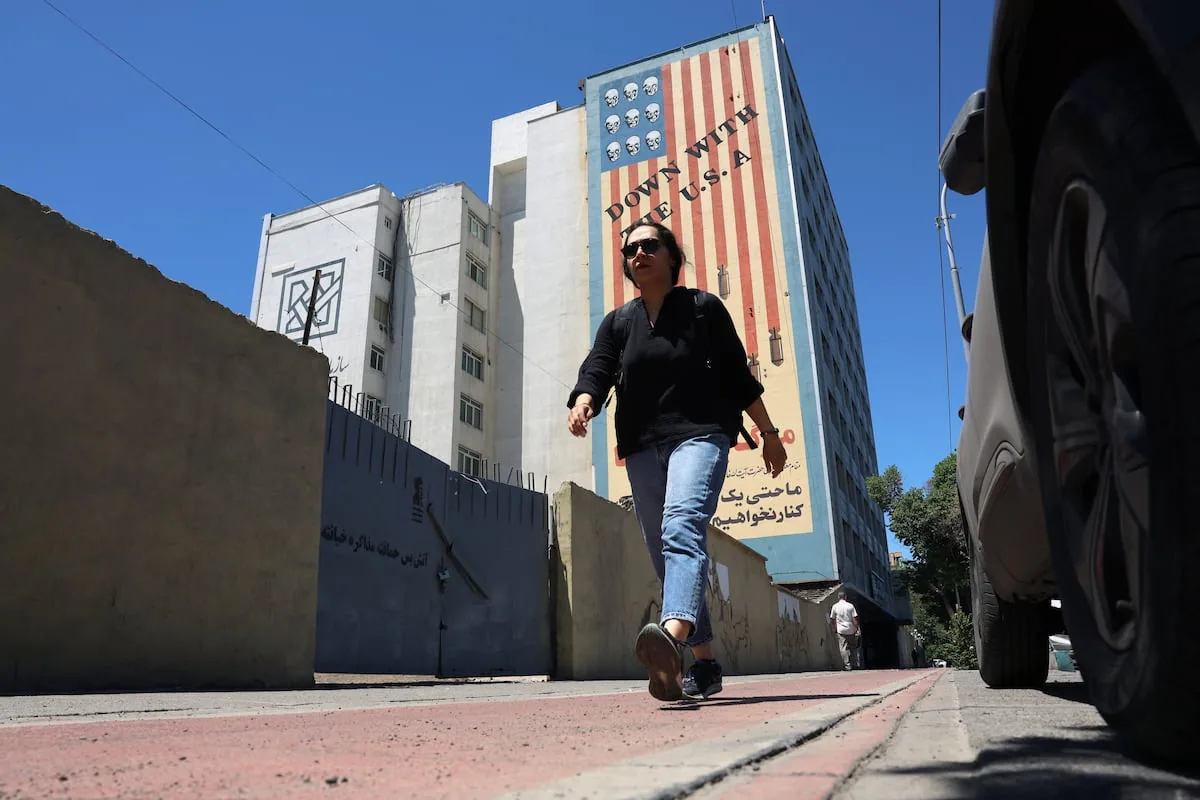
The leader then called for the unity of the Islamic community (the Ummah) in the world “and other countries” to share “common interests” that shape a new world order. From now on, he said, the phrases “Death to the United States” and “Death to Israel” — which are chanted at all regime events in Iran — will be common slogans “of the Islamic Ummah and the oppressed peoples of the world, especially the youth.” Israel is, Khamenei continued, “a dangerous and deadly cancerous tumor for this region,” which “undoubtedly must be eradicated and so it will be.”
Read more Zapatero asks the judge to postpone his summons of June 2nd