




EL PAÍS launched an investigation into pedophilia in the Spanish Church in 2018 and has an updated database with all known cases. If you know of any case that has not come to light, you can write to us at: abusos@elpais.es. If it is a case in Latin America, the address is: abusosamerica@elpais.es.
───────────
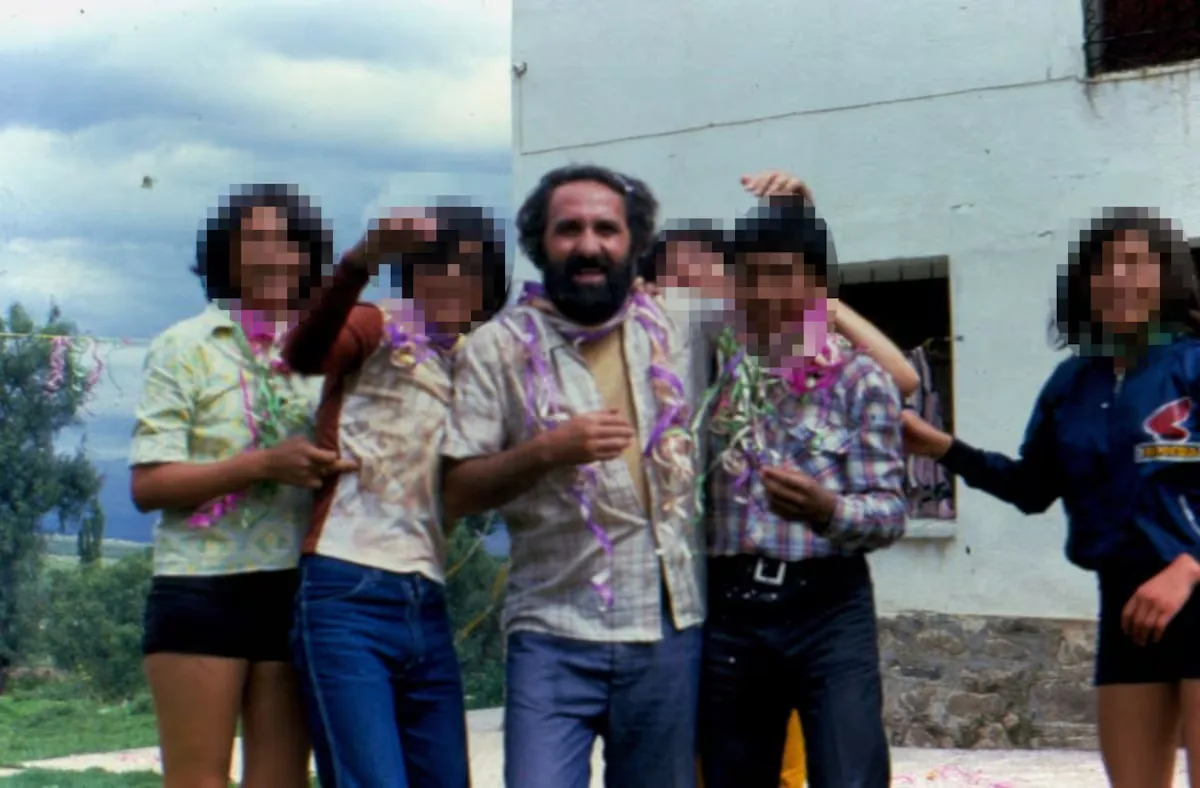
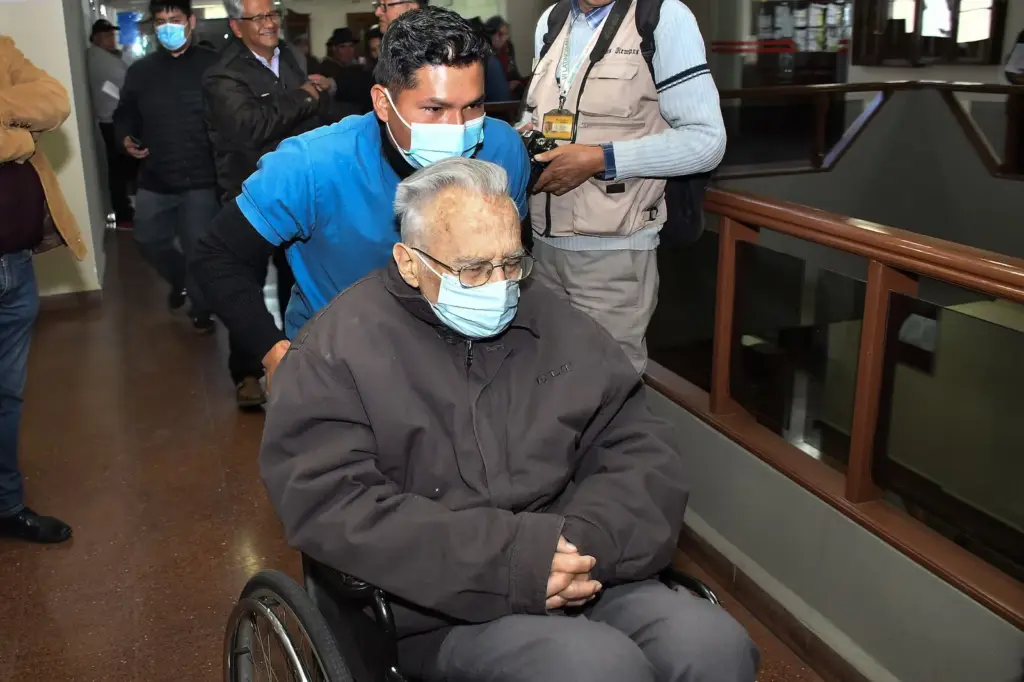
The victims knew they were facing a giant when they filed their complaints in the Bolivian courts of Cochabamba. The Society of Jesus is one of the most powerful institutions in the Latin American country and has enough resources to pay for the best lawyers. The truth, Edwin Alvarado thought when he first stepped into the courts in May 2023, was on his side. A few weeks earlier, EL PAÍS had published an investigative report revealing that the late Spanish missionary Alfonso Pedrajas had left a diary admitting to having abused at least 85 children in Cochabamba and how his superiors had protected him. Pedrajas, known as Father Pica, was the pedophile who assaulted Alvarado in 1984, when he was studying at the Juan XXIII boarding school. His complaint was added to more than a dozen others affected and several files of evidence they provided, including this newspaper’s investigation. The procedure lasted two years, with ups and downs due to the victims’ difficulties in paying a lawyer, but with a happy outcome: the court sentenced two senior officials who protected Pedrajas, the octogenarians Marcos Recolons and Ramón Alaix, to one year in prison. The enthusiasm was short-lived, as the Society appealed and the affected feared that a delay in the procedure would be impossible to afford. Fortunately for them, the appeal review lasted seven months and the judges upheld the sentence emphatically: “These crimes are crimes against humanity.”
The document, signed this Thursday by the president and the members of the criminal chamber of the Departmental Court of Justice of Cochabamba, states that “the accused covered up acts of rape and sexual abuse, concluding that the Juan XXIII School and the Society of Jesus of Bolivia did not act within their guaranteeing position and obligations to protect the rights of children. On the contrary, they violated them by not having taken the necessary measures to prevent violence, to investigate it, to repair it, and to sanction the victims.”
In addition to the prison sentence, this same court confirms that the Society must pay “civil damage compensation to the victims.” Likewise, it endorses that a dozen other cases of clerical pedophilia that have emerged during the process, in which there are also indications of cover-up, be referred to the Bolivian Prosecutor’s Office for investigation and “to determine whether or not to open a case against them.” The ruling is historic, as it is the first time a court has convicted two senior church officials for covering up a case in which the pedophile died before being tried and when the abuse crimes are time-barred.
Diary of a Pedophile Priest
The two convicted (Recolons, 81 years old, and Alaix, 83) held the position of provincial in Bolivia (the highest position of the Society of Jesus within a country and whose term usually lasts several years) during the periods when most complaints against Pedrajas reached the order. Recolons from 1993 to 1999, and Alaix between 1999 and 2007. The former also became the number two of the order in Rome, in the general curia, between 2004 and 2012.
Alvarado’s voice sounds happy over the phone receiver. In recent months, he had been bracing for possible defeat and the helplessness to which Pedrajas’ victims would be headed. Because, although the order has always publicly admitted the abuses, it has refused to compensate them as canon law requires. Now, with the ratification, they see Jesuits paying compensation, the amount of which has not yet been established, closer. “The fear of the Church’s power is over. Now begins a new period of dignity of justice, which will allow fair sentences. Hopefully, this will be the case from now on,” says Alvarado, spokesperson for the Bolivian Survivors Community, the national association that groups a large number of victims of abuse in clerical environments.
The affected organization believes that the quick resolution is a consequence of the publication of several reports that call, among other things, for the Parliament of Catalonia to investigate the Catalan Society (where most of the pedophiles came from) for cover-up. The ratification by the Departmental Court, however, can be appealed by the parties within five days.
The case of Alfonso Pedrajas came to light thanks to an investigation by EL PAÍS, a fact that the chamber judges have emphasized throughout the document. This case had its first advances in May 2023, weeks after this newspaper published the initial information. The State Attorney General, the General Prosecutor’s Office, the Ministry of Justice, and the then President of the Government, Luis Arce, announced a major investigation. The police raided the Jesuits’ headquarters and seized numerous documents that demonstrated not only the cover-up of Pedrajas’ case but also of other pedophiles.
The defense of the Jesuit cover-ups, among whom is the current Bolivian Minister of Defense, Marcelo Salinas (who did not hold that position at the time of the trial), has attacked the journalistic work, claiming it cannot be part of the evidence proving that both Alaix and Recolons protected Pedrajas. But the judges not only defend its consistency in the document but also state that it supports “the testimony of the victims.”
Besides downplaying the information published by the media, the Society has relied on the statute of limitations for the cover-up crime to have the case dismissed. The judges justify their decision with Bolivian child law and constitutional jurisprudence, “which recognizes the imprescriptibility of sexual crimes against minors.” Some of the rulings they list establish as proven fact that “institutional silence in the face of sexual crimes constitutes a form of systematic cover-up” and that the cover-up “by religious authorities violates the victims’ right to truth and justice.”
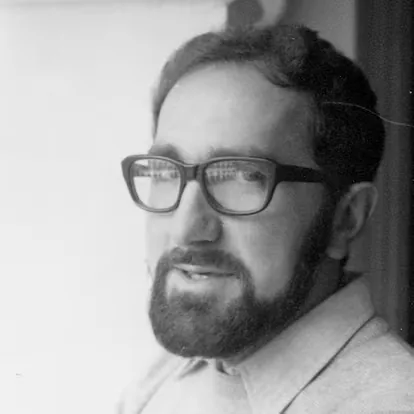
Part of the 76-page text is a journey to hell. It includes the accounts of some of Pedrajas’ victims, who describe how the Jesuit came to their beds at night, after turning off the lights in the common dormitories, to abuse them. In his diary, he narrates that he assaulted at least 85. “I hurt too many,” he wrote a year before dying, in 2009. But the affected believe the number may far exceed one hundred. Pedrajas arrived in Bolivia in the sixties (in 1964 he notes his first assault, which he later confessed years later) and in 1971 reopened the Juan XXIII boarding school in Cochabamba, where he stayed ―even serving as director― until the late 80s. He was transferred several times to other centers, always in contact with minors and novices, although he always returned to Juan XXIII for visits and continued abusing minors.
In the early 2000s, he notes in his diary how Alaix covered up the first complaints. He described the fear he felt that “the secret would be discovered” and the guilt he felt for his “greatest personal failure: pedophilia.” The content of his diary, which the judges have endorsed as evidence, matches the documents seized from the order, such as investigations confirming that since the seventies they had complaints against Pedrajas. The latest complaints they received were dated 2022, when the Jesuit had been dead for 11 years. But they never did anything.
These documents have been published by EL PAÍS along with others pointing to more Jesuits accused of pedophilia, some Spanish and whose crimes had already been uncovered by this newspaper. One example is Luis Tó, convicted in 1992 in Barcelona for abusing a minor. This newspaper revealed in 2019 that he was later transferred to Bolivia, but the order always maintained then that he was never in contact with minors. But they lied. Recolons (one of the convicted) transferred him to several schools. “There are children everywhere,” he wrote as responsible in a letter to Tó from that time. All this under the approval of the order’s superior general in Rome, Peter Hans Kovenback.
A cover-up structure
The names of pedophiles in Bolivia uncovered by this newspaper number a dozen, such as Chesco Peris, the Spanish archbishop in Bolivia Alejandro Mestre, or Lucho Roma. The latter, like Pedrajas, wrote a diary (known as The Charagua Manuscripts) where he recounted how he sexually abused and photographed more than 70 Guaraní girls in the town of Charagua in the late 90s. In this case, the Jesuits investigated the case ―the Jesuit, still alive, confessed everything― but ended up putting the report in a drawer to cover up the scandal.
The judges have insisted on this in the ruling: “Marcos Recolons and Ramón Alaix Busquets, as part of the Society of Jesus, not only covered up the pedophile’s acts but also other acts of sexual abuse, which they only reported to their highest authority, who was the Father General in Rome, Peter Hans Kovenbach. Thus demonstrating a cover-up structure that Alfonso Pedrajas indeed describes in his diary.”
The Bolivian Survivors Community has lawsuits against three other provincials (including the current one, Bernardo Mercado), already charged with covering up other pedophilia cases. In addition, two new victims have recently reported Lucho Roma, and the association expects more to do so soon and against Chesco Peris. These different threads intertwine and form that giant wicker structure that the victims of clerical pedophilia in the Latin American country continue to face.