




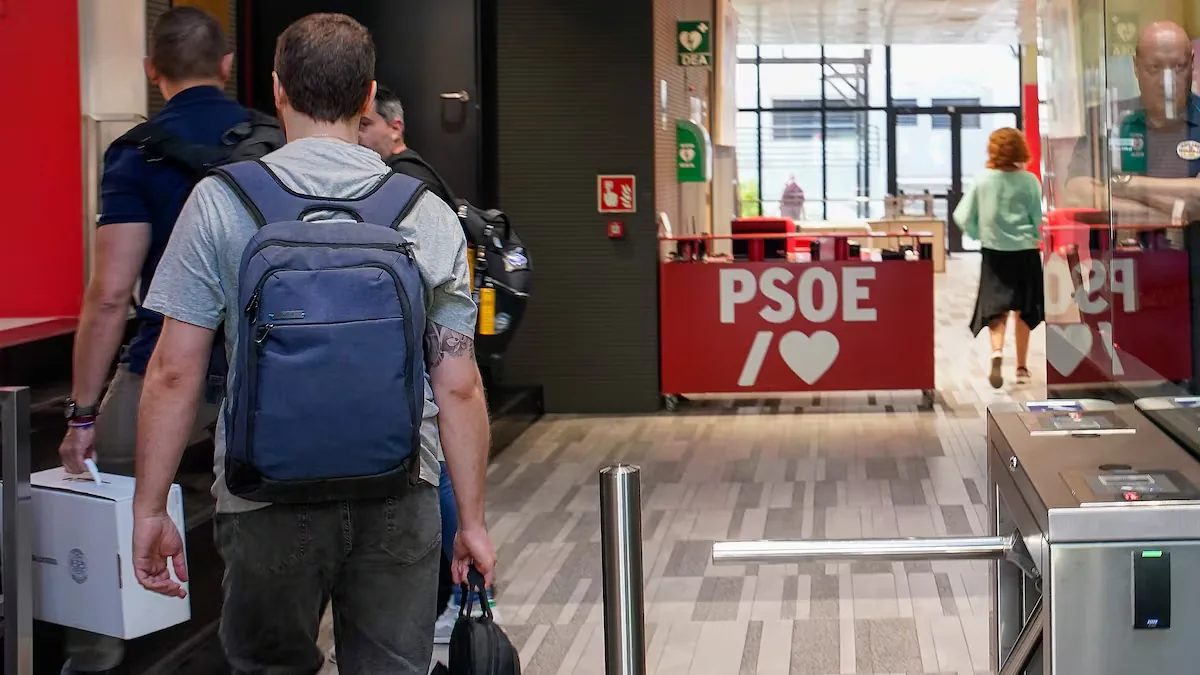
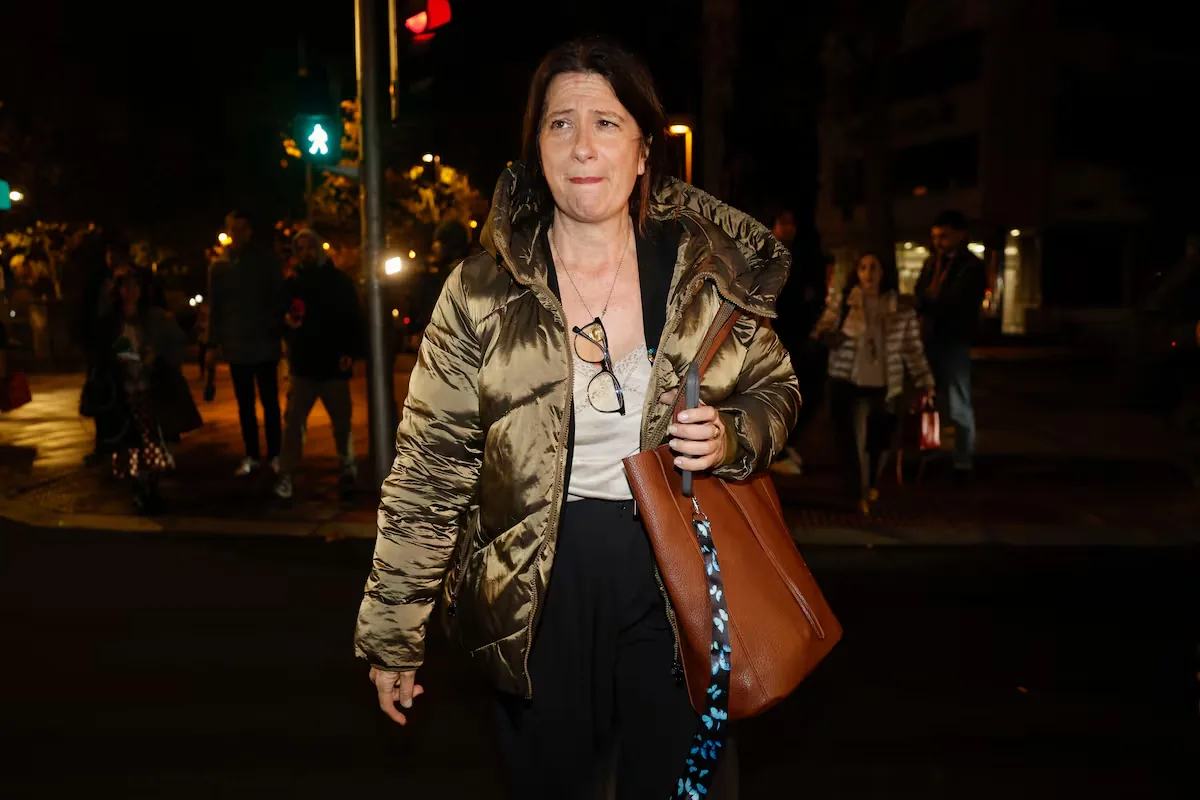
The Central Operative Unit (UCO) of the Civil Guard points out that the “ultimate goal” of the operation deployed by the former PSOE member Leire Díez between 2024 and 2025 under the orders, supposedly, of the party’s former Secretary of Organization Santos Cerdán was “to protect the interests that directly or indirectly affect the Government or its president.” This is literally stated in the case — to whose file EL PAÍS has had access — led by the judge of the National Court Santiago Pedraz, which keeps both Díez and Cerdán, businessman Javier Pérez-Dolset, former senator Gaspar Zarrías, PSOE manager Ana Fuentes, as well as two lawyers accused of carrying out an illegal operation to hinder the action of officials fighting corruption, charged. The investigation also includes an alleged operation within the Civil Guard itself, through which internal files were opened against agents investigating corruption.
The statements of 16 witnesses in the armed institute’s premises between May 27 and 29, 2025, and the chain of WhatsApp messages and other encrypted applications of Leire Díez feed the file and point to the former socialist member presenting herself as a person very close to the director of the Civil Guard, Mercedes González, with contacts within the State Attorney General’s Office and with a sort of assignment from the Socialist Party to “clean up” what was related to the sewers that could affect the Executive president, Pedro Sánchez. Executive sources deny meetings of the former PSOE member in the director’s office of the armed institute and assure that no complaint from the investigated has led to the opening of files against any agent.
The documentation incorporated into this case reveals that the UCO is investigating whether Leire Díez, with the help of the former chief of staff of Sánchez before coming to the Government, Juan Manuel Serrano, sought work for the complainant of the anti-corruption prosecutor José Grinda in exchange for her continuing to insist on her lawsuits; or that the former socialist member exchanged messages with commissioner José Manuel Villarejo to try to solve some of his judicial problems in exchange for information about PP corruption.
The agents took statements from Civil Guard Rubén Villalba (currently charged in the Koldo case), several businessmen in the hydrocarbons sector, including Carmen Pano (who has assured in court that she delivered 90,000 euros in Ferraz), José Manuel Villarejo’s lawyer, the administrator of the digital Crónica Libre (which the agents believe was used to distribute news benefiting the PSOE in exchange for an advertising campaign), and three generals of the Civil Guard who detailed some interferences in their work over the last year against corruption, for example, a request from the Chief of Staff to list nominatively all the guards who were investigating matters related to the president of the Government.
Civil Guard Villalba, currently suspended from employment and pay, admitted having had two meetings with Leire Díez in which she supposedly stated that the director of the armed institute was “waiting for the feedback from said meeting.” According to him, she even said that the next Deputy Operational Director (DAO) of the corps “was going to be appointed by her.” Villalba described that while in the first meeting, in which she wanted information about the UCO agents, she only mentioned having access to “those at the top in the Government,” in the second she described being able to access the “one of the party” or the “one of the Government.”
One of the attendees at this meeting, Francisco Ortega (who was a bodyguard between 2003 and 2011 in Navarra and the Basque Country and who is a friend of Koldo García from those years), explained to the UCO that Díez spoke of her relationship with Serrano as “close” and added that she had a “very good personal relationship” with the director of the armed institute, “even stating that she had meetings with her.” According to Ortega’s statement, he cut all ties with the former member when the famous video came out in which she met with the businessman under investigation in hydrocarbons Alejandro Hamlyn in which she said “I want Balas,” referring to UCO Lieutenant Colonel Antonio Balas.
The agents also heard as a witness Joaquín Parra, a hydrocarbons businessman between 2017 and 2019 and president of C.D. Badajazo between 2019 and 2021. Parra explained that businessman Javier Pérez-Dolset contacted him for having also been a “victim of the Villarejo case” and had a first meeting in summer 2024 at the businessman’s house. According to this witness, Leire Díez presented herself as a person who could help him and literally said “when you suffer injustices firsthand, when they charge your wife and your brother, then you realize that you have to clean up.” From that moment they created a WhatsApp group called “vacations and trips” that included Leire, Dolset, Parra, and a former judge who now practices law named Luis José Sénz de Tejada. “Leire expressed that they were going to contact a third party, the declarant [Parra] understands that with the president of the government to agree that Sáenz de Tejada would take on the legal assistance of his brother, but the latter would have rejected it and decided to continue with the lawyer his brother had at that time,” the UCO transcribes.
According to this statement, one of the meetings took place in an apartment on Diego de León street, 36, which was “a PSOE safe house for holding meetings.” Parra explained that both the former member and Dolset were interested in removing the Chief Anti-Corruption Prosecutor, Alejandro Luzón, from his position because he supposedly disobeyed “orders” from his superior [who was then the State Attorney General Álvaro García Ortiz] by releasing Víctor de Aldama in 2024. “Leire referred to the fact that the Prosecutor’s Office depended on the Government and that prosecutors had to follow orders from their superiors. In this regard, Leire expressed that she could help the declarant [Parra] by withdrawing the accusation in the cases affecting him,” also related to hydrocarbons matters.
Members of the UCO took a statement from M. S., the complainant of the former Anti-Corruption prosecutor José Grinda, and asked her how she had obtained her job at the company Residuos Urbanos de Jaén. She answered that she did so by sending her resume, although later they showed her some messages in the file in which Leire Díez directly asks her: “Hello darling, how are you? Hey, did they call you to work?” The UCO also seized messages from Díez with Juan Francisco Serrano: “Hello Juanfran! Hey, haven’t they called the girl from Alcaudete, victim of the prosecutor’s abuses, to work? Do you insist that they hire her?” To this, the current deputy replies: “hello, I say it again.” According to the woman’s statement, the civil procedure she initiated against the prosecutor, which finally ended in an acquittal for him, was not paid by her but by two other people she names.
The investigators have also collected messages from the former socialist member with Villarejo in which he tells her in November 2025: “I fulfilled what you asked me…stay alert…tomorrow or the day after…the focus may now also go towards me.” The UCO has seized a sheet headed with the word “agreement” supposedly addressed to Villarejo that begins saying: “You will be notified to go to an office where you will meet a person from the State Attorney General’s Office and Leire (the one in charge). You must be prepared for the meeting.” The “pillar of the collaboration,” as read in the document, was to provide information about the Executive president Mariano Rajoy, the former PP secretary general María Dolores de Cospedal, her ex-husband Ignacio López del Hierro, as well as the former Interior Minister Jorge Fernández Díaz, and other right-wing personalities, from the BBVA bank or the Planeta group.
Carmen Pano and Leticia de la Hoz
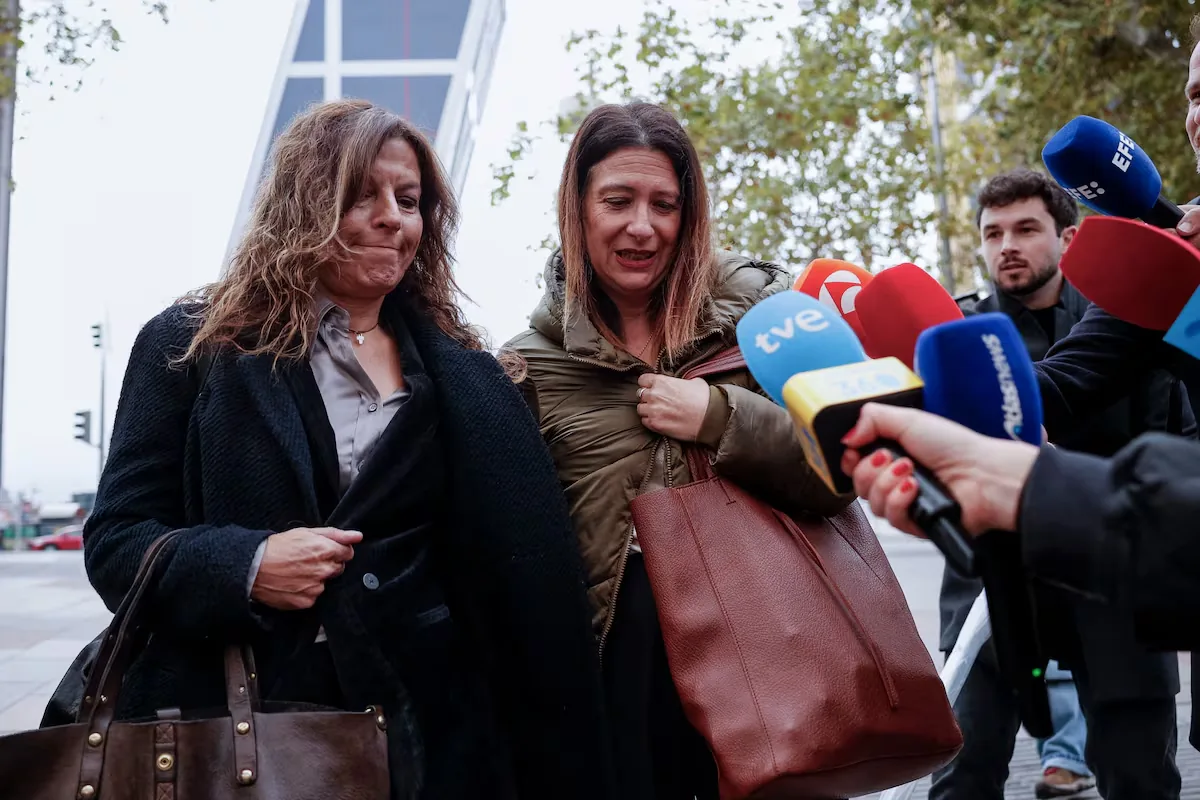
The investigated in the hydrocarbons case Carmen Pano explained before the Civil Guard that she spent days negotiating with lawyer Leticia de la Hoz, in charge of Koldo García’s defense, a possible financial agreement so that she would change her version in court and deny the delivery of 90,000 euros in Ferraz.
According to her explanation, and also told by her former driver Álvaro Gallego before the agents, lawyer De la Hoz summoned them several times to the office and asked what they wanted in return, to which they asked for 25,000 euros for Pano’s daughter’s wedding, the payment of rent for a house (between 2,500 and 2,800 euros monthly) for “between five and seven years” and another 15,000 euros for Gallego to buy a car. In total, it would be about 250,000 euros that, according to Pano, the lawyer who spoke on the phone with someone she never knew who it was, was willing to provide.
For her part, lawyer De la Hoz has submitted a statement to the UCO flatly denying this version and asserting that the only thing negotiated was the purchase of some companies in the hydrocarbons sector, which never came to fruition.
An operation within the Civil Guard
One of the reports also known with the file points to direct contact between the director of the Civil Guard Mercedes González and Leire Díez herself, who supposedly met on three occasions. Executive sources assure that González did not hold any meeting as director of the armed institute with the former member, but the police document sets the start of communications between both “at least” on May 9, 2025. The agents have detected “compatible” indications that a previous conversation between them has been deleted.
The Minister of the Interior, Fernando Grande-Marlaska, flatly denied on May 28 that Díez and González had met. In response to a journalist’s direct question, the minister replied that “the director of the Civil Guard has not had any meeting with any person, the one you indicated, Leire or anyone else, in any terms.”
The agents took statements from three generals of the corps. The former head of the UCO, General Rafael Yuste, related that González’s predecessor, former director Leonardo Marcos dismissed in October 2024, ordered that the content of a report that harmed Daniel Sánchez, the president’s brother, be changed. According to the statement, Marcos summoned Yuste’s superior and told him in his office that “he was angry and upset about the report issued by the UCO related to the investigation, among whose defendants was the brother of the president of the Government.” He supposedly said that the case was “prospective and malicious” and that the UCO’s credibility was “in the basement.”
Likewise, Yuste declared that in September 2025 they received at the UCO an official letter from the Chief General of the Staff requesting the submission of an organizational chart of the Anti-Corruption unit showing the structure of the unit that had “direct relation with investigations linked to the President of the Government” identifying nominatively “its members.”
![The audios of the ‘Leire Díez case’: “My next conversation will be with the director of the Civil Guard [...] she is someone I trust”](https://worldpressa.com/wp-content/uploads/2026/06/145c4fa71d5fb4bf00cd0ec28971be44.webp "The audios of the ‘Leire Díez case’: “My next conversation will be with the director of the Civil Guard [...] she is someone I trust”")