
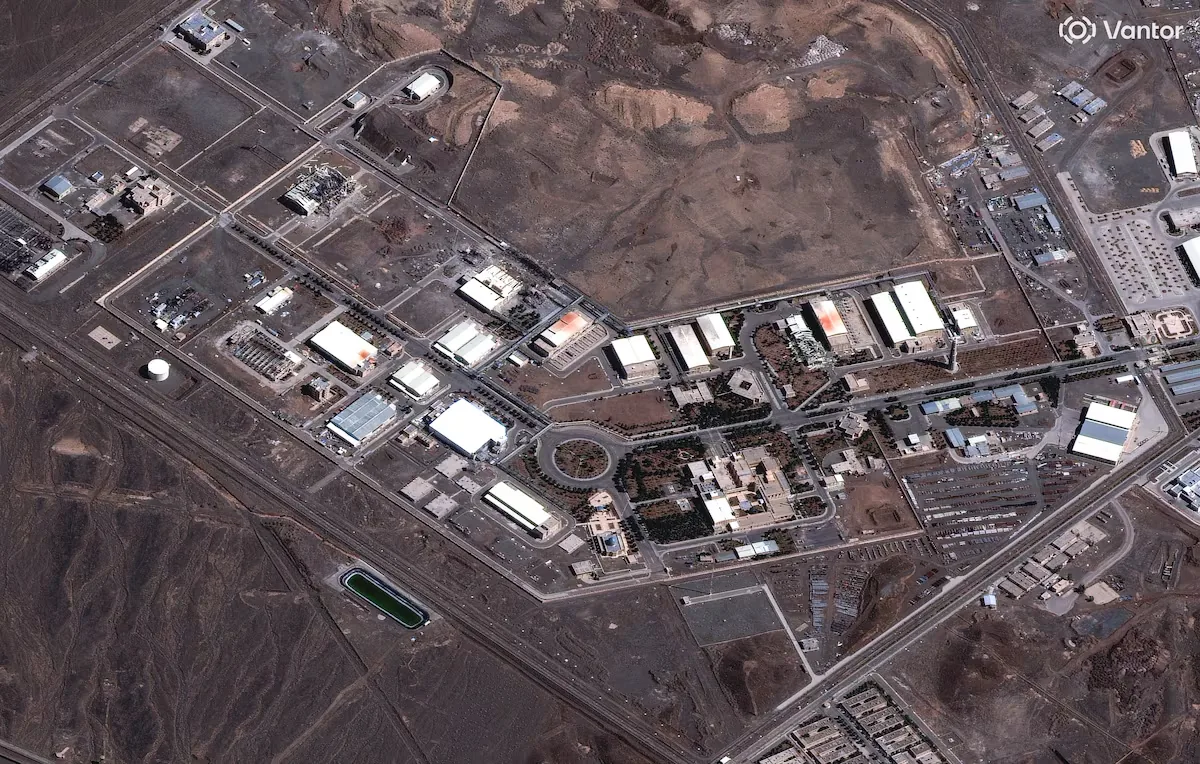
The risk that Iran is attempting to covertly develop nuclear weapons is greater today than before the United States and Israel launched their first military strikes against the Islamic Republic a year ago, according to several Western officials citing new data distributed by the United Nations nuclear watchdog. Burying Iran’s nuclear ambitions has been a key goal of Donald Trump and one of the reasons cited for launching his bombing campaign, which has now lasted over three months.
Read more Plastic containers recovered from waste for recycling have hazardous contaminants for health
The International Atomic Energy Agency (IAEA) has warned member states about new nuclear proliferation dangers posed by Iran’s large uranium stockpile, which is close to the level needed to make a bomb, according to a restricted document seen by Bloomberg. Before the June 2025 airstrike that started a 12-day war, that material was subject to weekly IAEA inspections to ensure it was not used for weapons purposes. That is no longer the case.
The IAEA report highlights how the war between the United States and Israel against Iran has created new nuclear dilemmas that did not exist before, according to two senior diplomats familiar with the report who asked to remain anonymous. The longer the material remains off the IAEA’s radar, they emphasize, the greater the risks that it could be diverted for non-peaceful uses.
Now, the Agency “cannot draw any conclusions regarding this nuclear material,” according to the 119-page restricted document distributed last month in Vienna. “This raises great proliferation concerns, as this nuclear material, which the agency could not verify, includes a large amount of highly enriched uranium.”
According to the text, even if a prolonged ceasefire is consolidated between the parties, the path to a lasting nuclear agreement will remain long, complex, and vulnerable, tempering hopes that diplomacy will quickly stabilize energy flows through the Strait of Hormuz, through which one-fifth of the world’s oil and gas consumption passes.

Inspections have sharply declined since June last year, following restrictions imposed by Iran after the so-called 12-day war. Inspectors have not yet returned to the damaged sites at Fordow, Isfahan, and Natanz, where Iran’s material was last seen: 441 kilograms of highly enriched uranium and 8,600 kilograms of material at an earlier enrichment stage.
Although the White House maintains that Iran’s nuclear program has been destroyed, it has simultaneously tried to negotiate access to that uranium. Trump has alternatively suggested that the material could be exported out of Iran or left inactive within the country under IAEA supervision.
Officials from the agency, however, are increasingly concerned that the U.S. administration has not involved the UN agency in recent talks to try to end the war. “We are not part of this negotiation. We participated until the last round, which ended in February,” said IAEA Director General Rafael Mariano Grossi on Tuesday in an interview with the Qatari channel Al Jazeera. “Anything that is not verifiable will lead to a bad deal,” added the candidate for UN Secretary-General. The IAEA’s highest governing body is scheduled to meet next Monday in Vienna.
With an important meeting of the UN agency’s board scheduled for June 8 in the Austrian capital, markets are closely watching any new information about Iran’s nuclear program. The U.S. and Israel attacked the Islamic Republic less than 24 hours after an IAEA report was published on February 27, suggesting activity near bombed nuclear facilities. Last June’s attacks occurred one day after the agency’s board censured Iran for obstructing its inspectors’ work.
Read more Aldama or ‘Ravalejar’