




Among the tour guides of Córdoba, and even Andalusia, there is a contained joy. Even some disbelief. From January 1, 2027, they will be able to explain the mosque-cathedral to their visitor groups from inside the monument, as established by the Andalusian Tourism Law of 2011 and Decree 8/2015 that regulates their activity in the community. They are guides accredited by this regulation who have faced an insurmountable barrier for decades: the tests of the Cathedral Chapter of Córdoba to access as guides and interpreters to this monument, a World Heritage Site.
The law establishes in its article 54 that any official guide authorized by the community has the right to practice their profession in the assets included in the General Catalog of Andalusian Historical Heritage, in which the mosque-cathedral is included. However, their work has been limited for decades.
Inguíate has been the professional association that in the last three years has pushed claims against this closure by the Church, responsible for the asset. The collective was established in 2023 after the exams called by the Chapter that same year to be able to work in the mosque-cathedral. Before, they had only been held in 2004 and 2017 due to the need to increase the small number of professionals with exclusive authorization from the bishopric to attend tourists requesting a guided visit. In 2025, the mosque reached 2.19 million visits. It is one of the most visited monuments in Spain, after the Sagrada Familia, the Alhambra of Granada, or the cathedral of Seville.
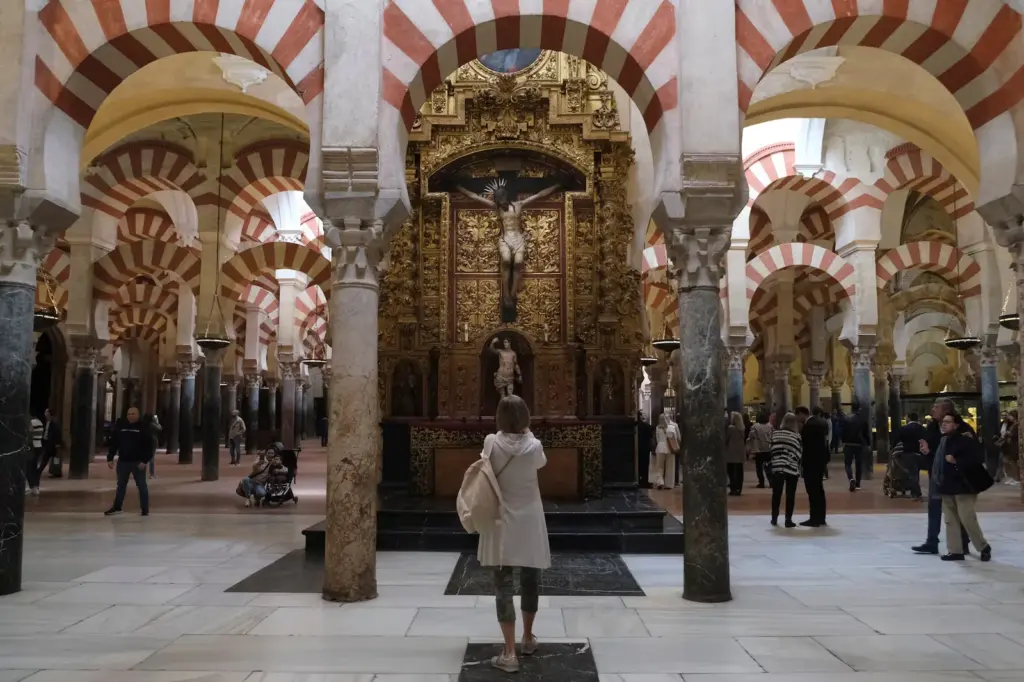
The decision to definitively open to guides accredited by the regional regulation, explain from the Chapter, is due to the need to implement a “own” service of official guides to respond “to the demand for a quality visit guaranteed by the managers of the asset.” They deny that the decision to allow free access for authorized professionals is due to resolutions from public bodies they have received in recent years.
Regarding the application of this announcement, January 2027, the Chapter argues that it is a sufficient period “to give time to the organization of the guides themselves and tour operators.” Over the years, the bishopric has defended the legality of its tests as it is a monument “of private ownership.” Now, they will offer the new official service at the visitor reception center Patio de San Eulogio, located opposite the mosque-cathedral, in premises of the Episcopal Palace.
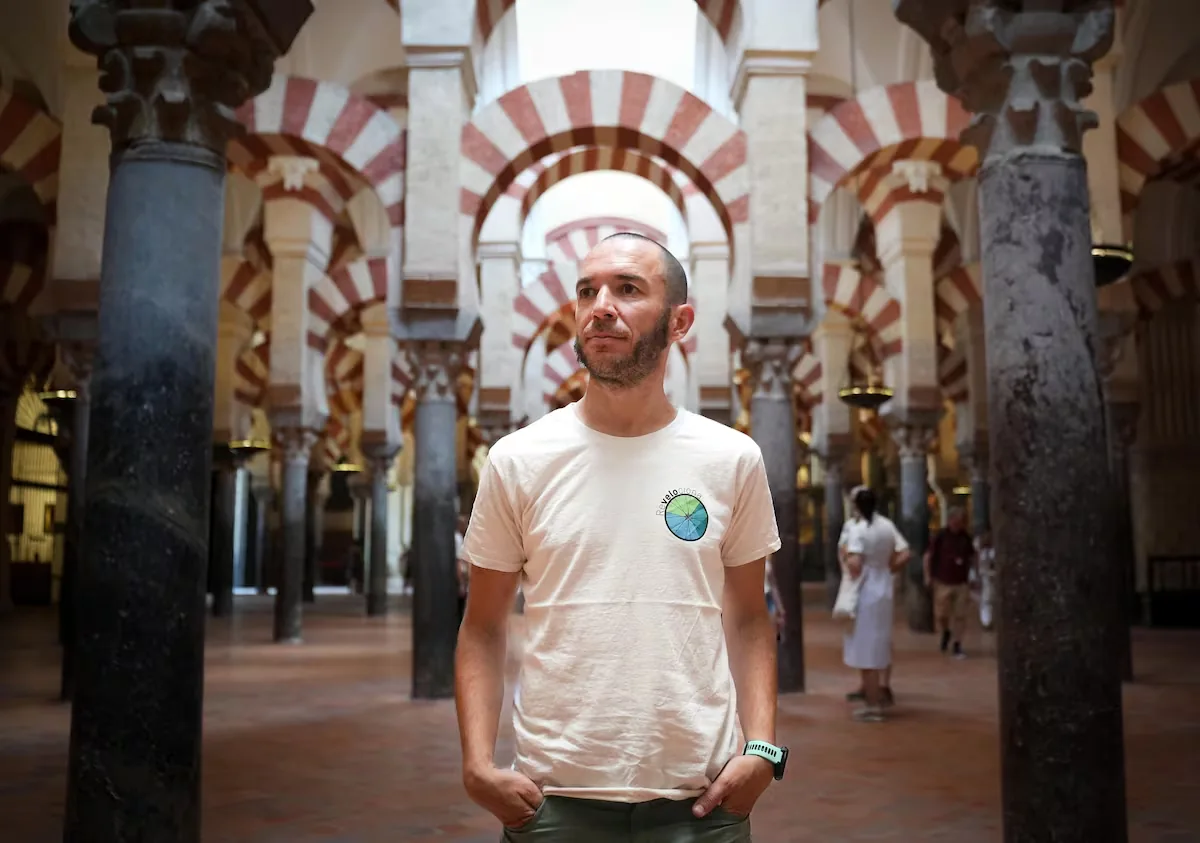
“They take credit for generously opening the door, a quite interesting image move,” says Julio Díaz, vice president of the professional association Inguíate, ironically. “We have been celebrating since then, because there are people whose lives will change,” he assures. “How can you be a tour guide in Córdoba and not be able to show the mosque-cathedral?” he wonders.
The last straw was the call for exams by the Chapter in June 2023. It consisted of a written test of 100 questions and a second oral phase in which candidates had to analyze elements of the temple and demonstrate their communication skills. The syllabus was based on various “reference manuals.” Among them, the work The Cathedral of Córdoba, by Manuel Nieto Cumplido, historian and archivist canon of the mosque-cathedral for over 40 years. Also books by Antonio Fernández Puertas, who was director of the Alhambra Museum for more than a decade, art historian María de los Ángeles Raya, or architect Rafael Moneo.
“People left very upset because they felt the cards were stacked,” explains Díaz. The most incomprehensible condition for candidates was the impossibility of appealing their grade and reviewing the test results. As the Chapter explained in the call, the final result was “unappealable.”
Thus, a new generation of professionals joined others who had been suffering this situation for decades. They formed the association Inguíate and began claims, letters to administrations, and protests “to generate public debate” about their situation. An exclusion well known by guides from other Andalusian and Spanish provinces. The Chapter only has 105 accredited guides, “barely 1% of the professionals in the territory,” Díaz emphasizes.
An “endless” administrative struggle
Thanks to their persistence, the Andalusian Ombudsman opened an ex officio complaint in April this year to learn about the actions of the different bodies of the Junta de Andalucía regarding the persistence of the Chapter’s “restrictive practices” on the professional exercise of guides and interpreters authorized by regional regulations. This followed a first resolution in 2025 recommending the Territorial Delegation of Tourism, Culture, and Sport to carry out the “necessary actions” to guarantee the free performance of guides in the temple. Also decisive was the resolution of the Andalusian Agency for Competition and Economic Regulation (ACREA), which almost a year ago urged the competent entities to “promote the necessary actions to ensure that access and the exercise of the activity of tour guide and interpreter in the mosque-cathedral premises comply with the principle of single authorization,” according to the text dated August 2025.
The professionals of Inguíate have met several times with the until now delegate of Tourism of the Junta de Andalucía in Córdoba, Eduardo Lucena, who in his written response to the Ombudsman’s complaint limited himself to listing those meetings and forwarding the Ombudsman’s letter and the ACREA resolution to the Chapter. Besides denying his capacity to establish “other coercive measures” to enforce tourism regulations.
“We hold the delegate responsible for this whole situation,” says Díaz, who does not understand that his role is that of a “mere mediator with the Chapter.” They reproach him for “turning a blind eye” and not enforcing the law despite all the official bodies’ rulings. EL PAÍS has tried unsuccessfully to get an explanation from the delegate, who leaves his responsibility to the formation of the new Andalusian Government. He has not been the only regional body to hasten to tell them it is not competent to enforce the law, the association laments.
After this “slam door,” they have decided to send letters to the Ministries of Tourism, Presidency, and Culture, to the Spanish Ombudsman, and to the National Commission on Markets and Competition (CNMC). “We hoped this opening would happen overnight,” Díaz admits. The Chapter’s decision caught them studying the possibility of filing a complaint, which would have entailed a great economic and personal cost. Finally, the announcement has come before this new collective effort.
A “professional” demand
From Inguíate they have always tried to separate their professional activity from their opinion or assessment of how the monument is managed. They do not enter the debate on whether the Chapter’s tests seek to exercise strict control to impose the Catholic vision of the monument over its undeniable Muslim and Andalusian heritage. “The Chapter is not our battlefield, the administration that must ensure compliance with the regulations is,” insists Díaz after the long administrative journey.
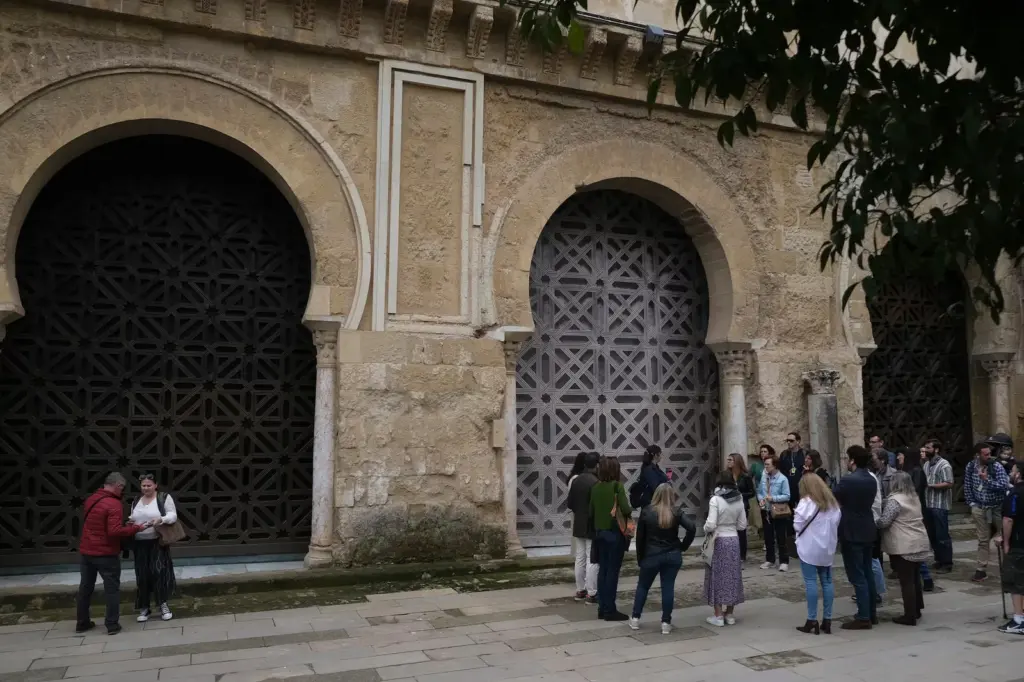
To be a guide accredited by the Junta de Andalucía, one must have a university degree, a C1 level in a second language, and at least B2 in a third. “There are guides who have retired and have never been able to work here,” laments the vice president of Inguíate, sitting next to the Perdón door of the monument, the entry point for thousands of tourists every day. He himself has had difficulties with security in the Patio de los Naranjos while explaining the monument to the group from outside.
In addition to the economic harm of all these years, the association adds the difficulty of explaining to their clients why they cannot enter the city’s main monument with them. In fact, possible claims would have motivated, in their opinion, the change announced by the Chapter. Although they do not understand why the opening is not applied immediately.
These requests have been joined by the platform Mezquita-Catedral de Córdoba, Patrimonio de todos, which has been denouncing for years “the ideological control of the Church in the management of the asset.” In a statement, it harshly criticizes the Junta de Andalucía’s management in this conflict and demands “the immediate compliance with the law.” They appeal to the “incalculable” heritage damage inflicted on authorized guides over time.
“I have a group from Barcelona of 55 people coming in October to see Almodóvar del Río, Medina Azahara, the Jewish Quarter, and the Mosque… How do I explain all this to them?” Díaz says. That is why he asks himself: “How much money have guides lost all these years?” A harm that lasts “a lifetime,” so there are professionals who have left the activity without being able to carry out their work “in the jewel of their city.”
Now they have to wait until this long-awaited change materializes after what seemed “an endless struggle.” Until they see it, they will not believe it.