







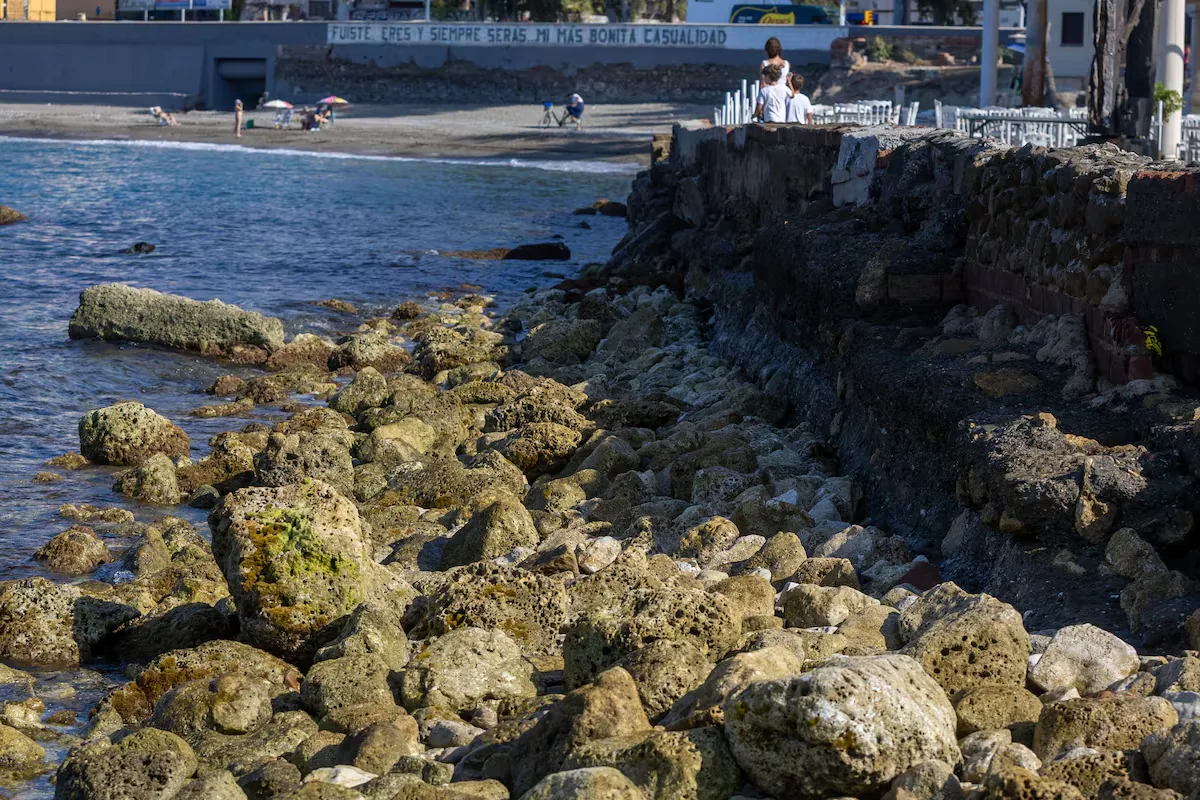
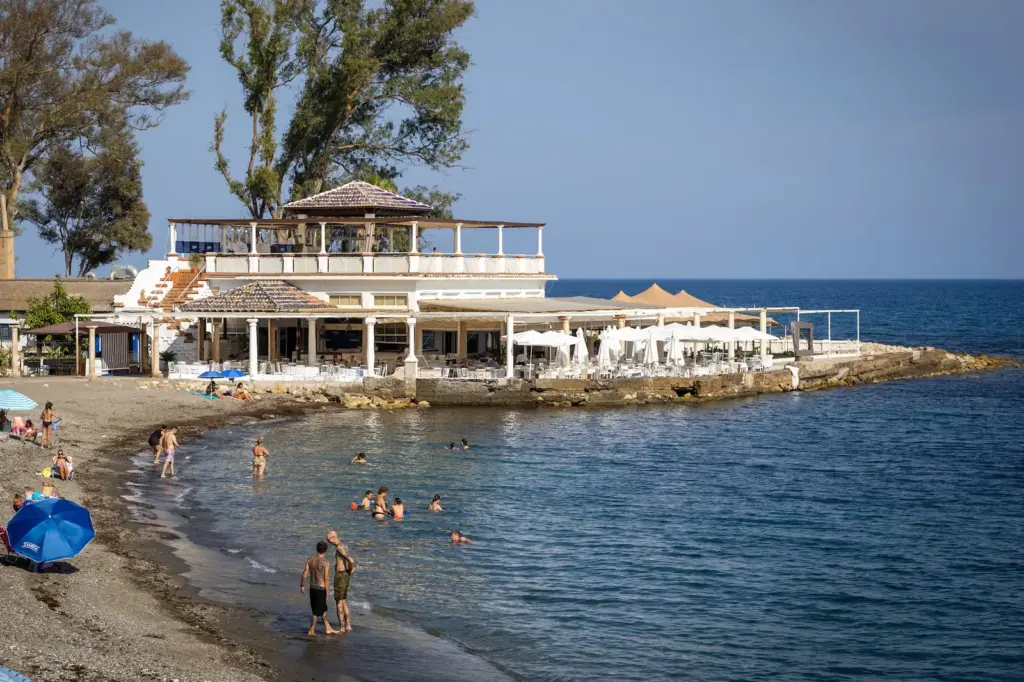
It frequently reaches 10 centimeters in diameter, becoming one of the largest of its species. It has waves on its shell and lives on rocks exposed to the surf. When it becomes an adult, it clings to them and rarely moves more than a meter before always returning to its place of residence. The rusty limpets (Patella ferrugínea) are a unique animal. So much so that it is in danger of extinction. Endemic to the Mediterranean, its presence is scarce. And the Coastal Demarcation of Málaga has been forced to relocate 40 specimens before undertaking the expansion of one of the city’s best-known beaches, Los Baños del Carmen, in the eastern area. It was an essential requirement, although environmentalists and specialists have expressed their reluctance because they are convinced that relocations are bad for these mollusks and most individuals will die. The Junta de Andalucía has given its approval.
Read more Three femicides and six orphans due to gender violence in 24 hours
The rusty limpet was one of the most numerous on the Mediterranean coasts. The great presence of its shells in settlements from the Paleolithic to the Neolithic stands out, but also its subsequent disappearance in large areas “due to human pressure”. That is why today its population is very fragmented and is distributed between the Strait of Gibraltar and the coast of Morocco and Tunisia, although there are also small colonies in Sardinia and Sicily (Italy). Ceuta, Melilla, and the Andalusian coasts are its few refuges in Spain.
It is in danger of extinction according to the List of Wild Species under Special Protection Regime and the Spanish Catalogue of Threatened Species. Therefore, its conservation was a key point for the Junta de Andalucía to give the green light to the expansion of Los Baños del Carmen beach, a project that has been in the making since 2005 amidst political swings. One of the issues to be resolved was the limpet population and the final decision, its relocation to nearby areas.
At the end of last month, several technicians marked about 40 specimens detected on the rocks. Then they began the relocation, which lasted barely a couple of days. Personnel from a specialized company moved each specimen one by one a few meters further to its new residence, taking advantage of the fact that when the sea rises and wets their residential area, they move to feed. The change will allow them to be far from the beach expansion works that will extend over the next nine months. Also from the changes in wave dynamics or turbidity promised by the construction of a nearly 200-meter long breakwater and the arrival of almost 70,000 cubic meters of sand. “Finding them has been good news because, as bioindicators, it means that these waters are in good health. It’s a joy that they are there and can continue to live in the environment,” emphasizes the sub-delegate of the Government in Málaga, Javier Salas, who celebrates that, if deadlines are met, the city will have the renovated beach next summer. “It is a historical demand of the citizenry,” he points out.
Environmentalist doubts
No one offers certainties, however, that the relocation guarantees the survival of these mollusks. Carmen Salas, from the Department of Animal Biology at the University of Málaga, is clear about the opposite. She maintains that when the limpets are moved from their place, “they are going to die.” The specialist says that the conservation of the species should be inspired by that of the lynx. “And no one would think of taking a lynx to the highest point of Sierra Nevada,” she argues.
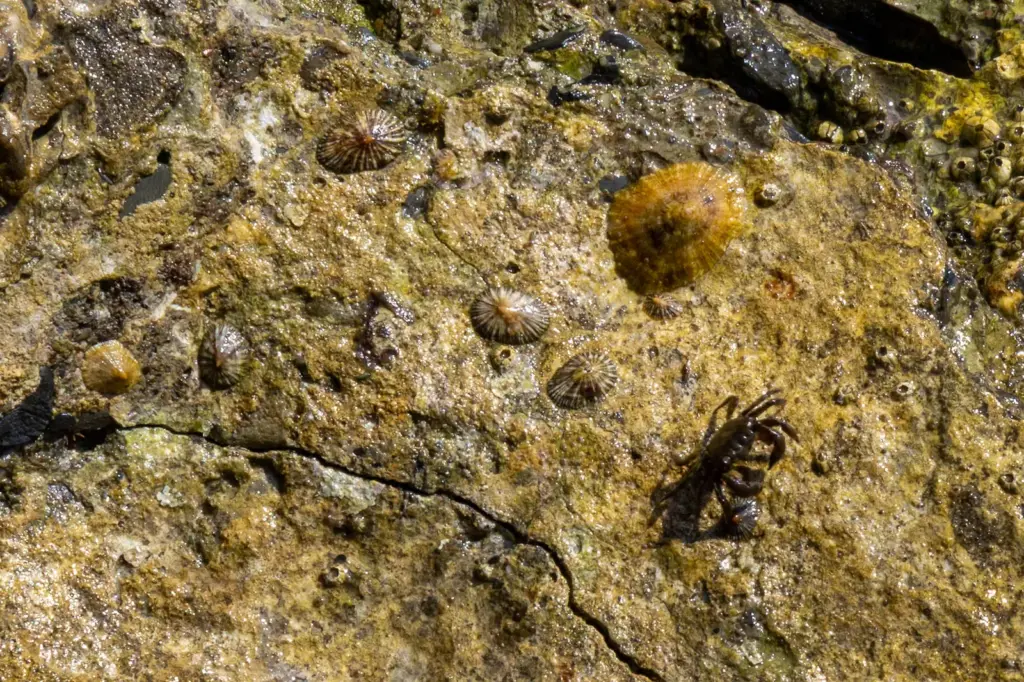
The expert recalls that the Strategy for the Conservation of the Rusty Limpet from the Ministry for Ecological Transition recommends not relocating these populations. The document was prepared in 2008 and, at that time, it was warned that these processes had never been successful. The text was updated in 2023 and states that this type of action “almost always registers very high mortalities.” It emphasizes that if they are moved “a short distance” along with their original substrate, there are possibilities that everything will go well, although in Málaga the idea is to move the individuals and only exceptionally do so along with small pieces of rock on which they settle.
Read more The Guadalajara fire shoots up the burned area in Spain after a disastrous start to July
“It will mean the destruction of the species in that area,” Rafael Yus, spokesperson for Ecologistas en Acción, believes along the same lines, considering that adults will not adapt to the new space and the juveniles will die because they are difficult to locate and their new habitat, after the works, will be “impossible” for their life because it will be altered with sand. “It’s absurd,” he adds.
The environmental organization also criticizes the beach expansion project because it boasts the largest marine ecosystem on the coast of the city of Málaga. And beyond environmental defense, they believe there is no ecological or social need to increase the size of the beach and that it all forms part of a city model “associated with the urban planning sector and hyper-tourism.” “Once the work is completed, the artificial beach will, at best, need to be replenished with sand every few years, an indecent public expense,” the organization states in a press release.
The project involves an investment of 6.1 million euros and foresees the beach expanding from 17 to 37 meters wide. It will grow thanks to the contribution of more than 70,000 cubic meters of sand and the construction of a 193-meter long breakwater, with an initial section above the sea surface and another submerged section of two levels that “will also be an ideal horizontal platform for species colonization,” according to the Government. The works will be completed, on land and promoted by the Málaga City Council, with a car park with 135 spaces —with four electric charging points— and a bicycle rental station, in addition to connections to urban buses and a public use area.
Paralysis of the Melilla Port works
The same limpet species involved in the relocation in Málaga has, for the moment, halted the expansion of the Port of Melilla. A few weeks ago, the Ministry for Ecological Transition issued an “unfavorable environmental impact” statement for the urban development project, valued at 300 million euros, due to “the identification of the possibility of significant negative impacts on the environment” and because the corrective measures “do not provide sufficient guarantee for their adequate prevention, correction, or compensation.” One of the keys is precisely the Patella ferrugínea, as just over 22,000 specimens live on the breakwater of the northwest dike of the port area, representing 20% of the species’ total population on the Spanish coast. And, according to the Government, the works in the port would eliminate between 85% and 99% of the colony. As reported by Melilla hoy, the Minister of Environment and Nature, Daniel Ventura (PP) of the Autonomous City, assured that there the species “is not in danger of extinction” and that there is a “surplus” of limpets.