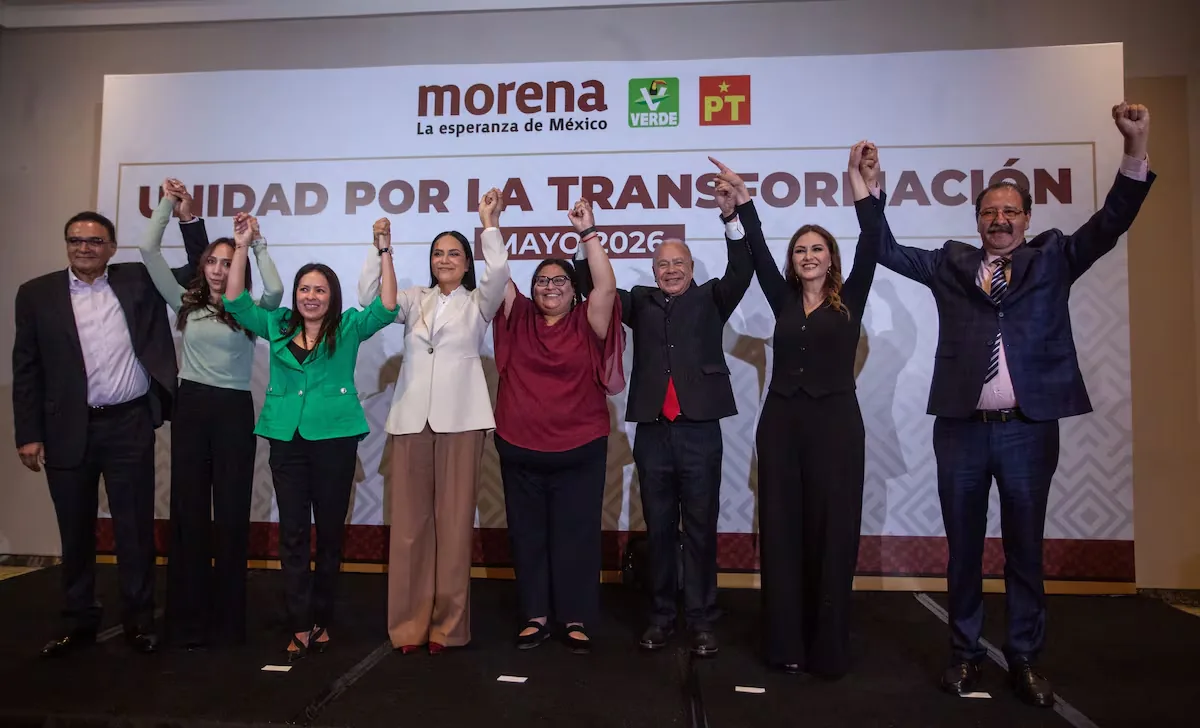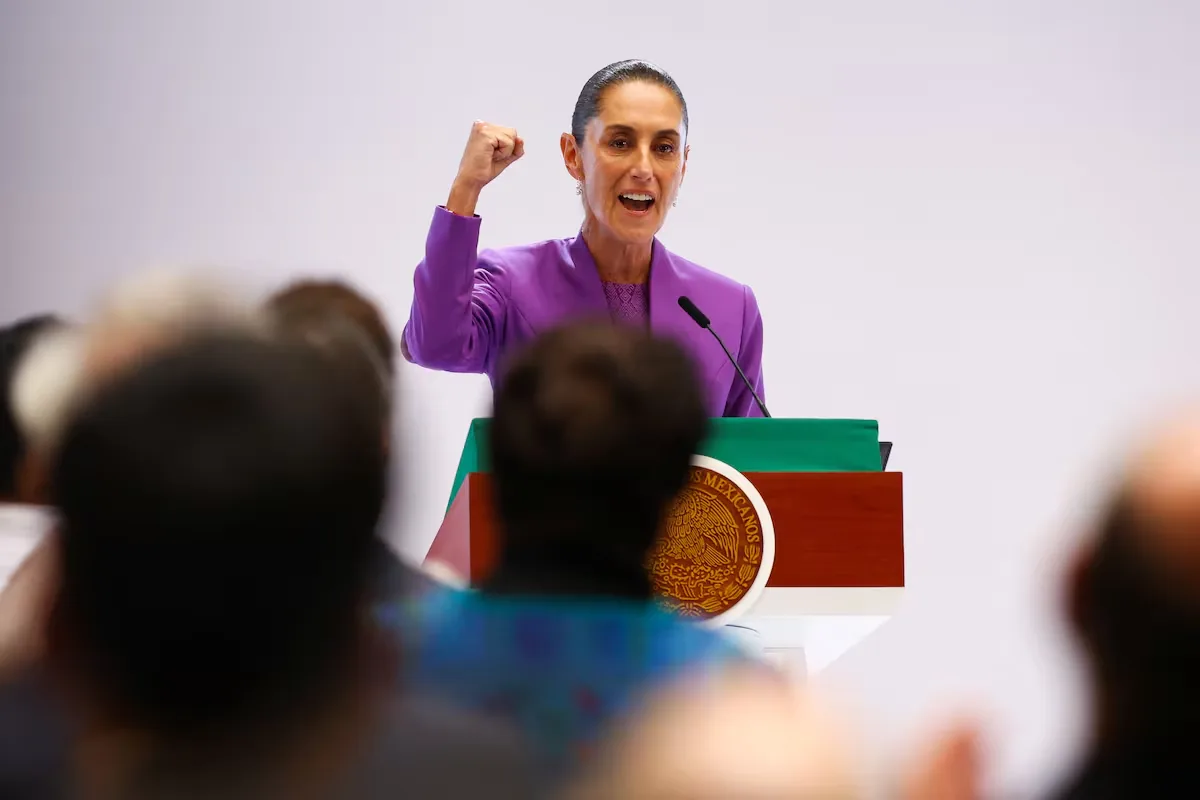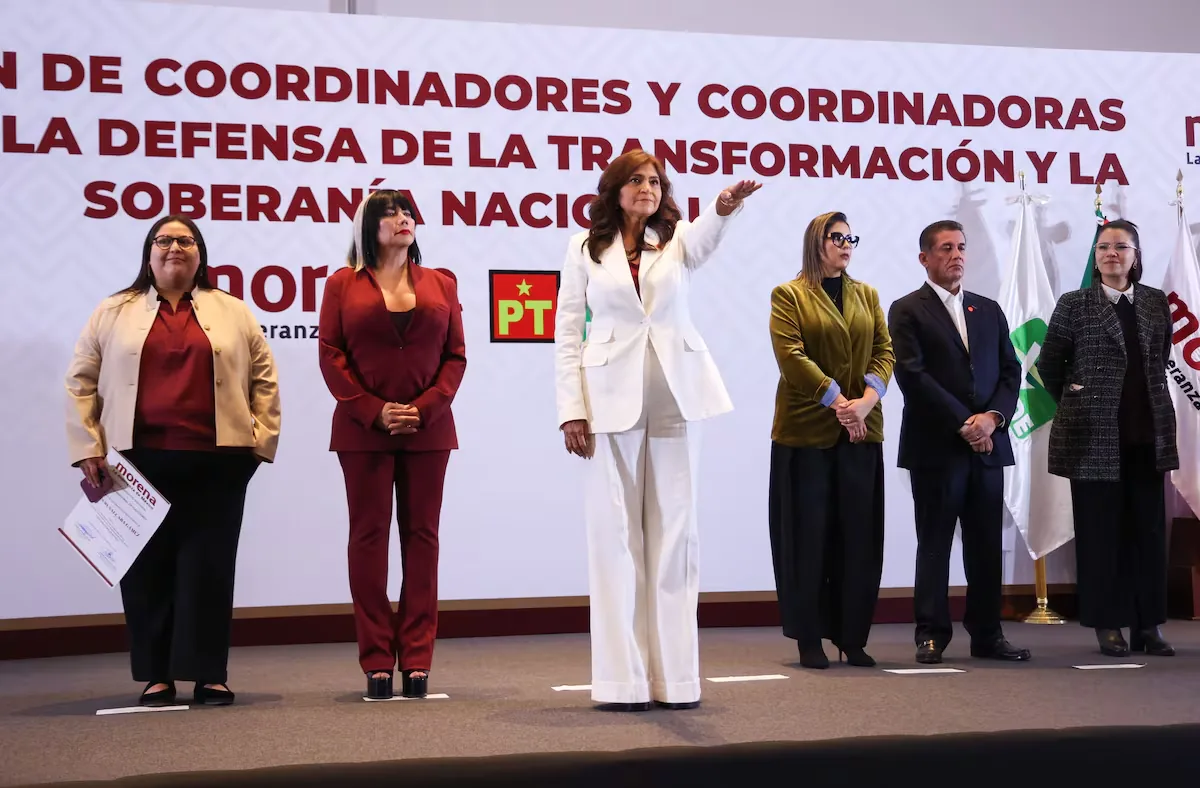









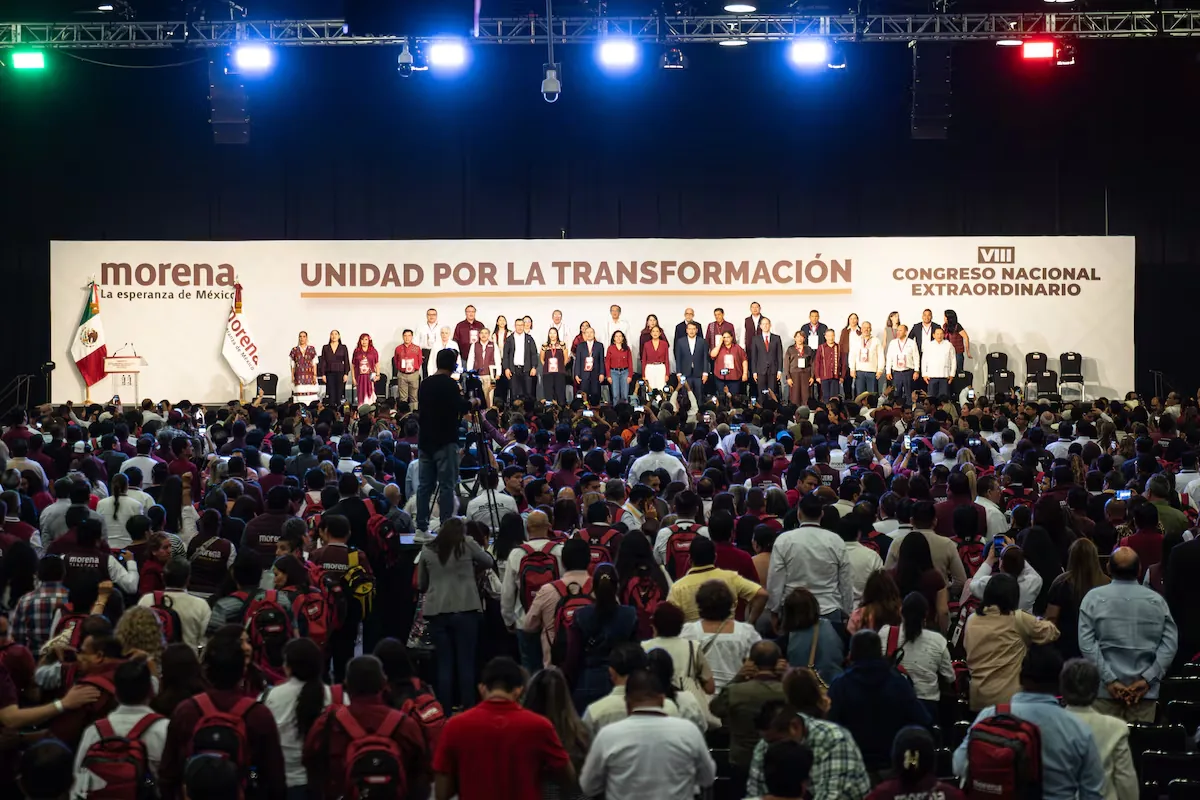
The recent meeting between an Obradorista wearing a Labor Party jacket and the top figure of Movimiento Ciudadano is just the latest in a series of events reflecting the lack of order and discipline within the movement founded by former president Andrés Manuel López Obrador, which aims to consolidate itself in the 2027 midterms.
Read more Seven journalists murdered in seven months in Mexico: “They kill them because they can”
Jaime Bonilla, former governor of Baja California and leader of the PT in that state, met this week with Dante Delgado, the moral leader of MC, an opposition party that holds governorships and has been repeatedly dismissed by President Claudia Sheinbaum.
The meeting is another warning that the control panel of Morena’s leadership, headed by Ariadna Montiel and Citlalli Hernández, is short-circuiting. Next year’s electoral process is crucial for the party, which needs not only to reaffirm its place in the 17 governorships at stake but also to repeat, along with its partners—the PT and the Green Party—the constitutional majority in the lower house.
Bonilla is a complicated figure, capable of such rebellion as to have attempted an illegal extension in Baja California. The man who claims to be a friend of López Obrador was elected governor in that state in 2019 for only two years, as some governments in Mexico were shortened to coincide with elections. As soon as he took office, Bonilla tried to get the Court to extend his term.
Bonilla’s attempt was very poorly received in the country. Various critics always warned of the former president’s alleged intentions to perpetuate himself in the presidency. That one of his own demanded his term be extended was seen as a trial run.
The failed attempt did not bury Bonilla’s career; he very quickly became a staunch opponent of his successor and fellow Obradorista, Marina del Pilar Ávila, whose government ends next year.
Looking ahead to 2027, Bonilla has increased his anti-Marina del Pilar Ávila activism. As leader of the PT, a party historically allied with López Obrador, the businessman also has his own candidate for the governorship. This is the former mayor of Tijuana, Montserrat Caballero, who left office in conflict with the governor. If Morena was looking for a unity candidate, Baja California has already become complicated.
If only that state were the problem for the Morenista leadership, the situation would be annoying but not risky. The reality is far from it. The northwestern border state is just one very noisy case among other processes with more or less fuss, but similar animosities.
Also along the border with the United States is the heated struggle for Chihuahua, a state in the hands of the National Action Party but which Obradorism feels is within reach after a regular administration by Governor Maru Campos.
Chihuahua, the largest state and one with a tradition of struggle in the alternations between PRI and PAN, is a coveted prize for several Obradorista factions. In the short time of Morena’s current leadership, it has only seen a stronghold become entangled, a place that, paradoxically, Ariadna Montiel knows quite well, to the point that her name was mentioned as a possible candidate.
A couple of weeks ago, the Green Party (PVEM) made a bold move there by adopting Cruz Pérez Cuéllar, the popular mayor of the mythical Ciudad Juárez, as its candidate. The move was an affront not only to Montiel and Citlalli Hernández, responsible for crafting each candidacy by hand, even if it meant resolving each case with the precise mix of poll position, gender, and mobilization capacity.
Pérez Cuéllar is the great adversary of Andrea Chávez, the young senator who has been campaigning for years towards the 2027 election. This aspiration is as undeniable due to her media visibility as it is risky because it would mean rewarding an Obradorista faction that has played against President Sheinbaum: the Tabasco senator Adán Augusto López is considered her promoter.
The PVEM’s move on Chihuahua soil was promptly answered by Chávez, who managed to get the PT at the state level to back her. Thus, Morena has its allies on both sides, each wanting to impose a candidate. Obradorism, with real weight in the state, faces blackmailing threats from those who, even together, do not add up to two digits of the vote in Chihuahua. What allies.
Read more The promise of total war and post-Petrism
In the south of the country, there is another state where the game has become convoluted. Since 2021, Guerrero has had a governor who came to power because her father was disqualified after a sanction from the electoral arbiter for a technicality regarding pre-campaign expenses, which occurred amidst questions about Félix Salgado Macedonio’s suitability due to accusations of sexual assault against women.
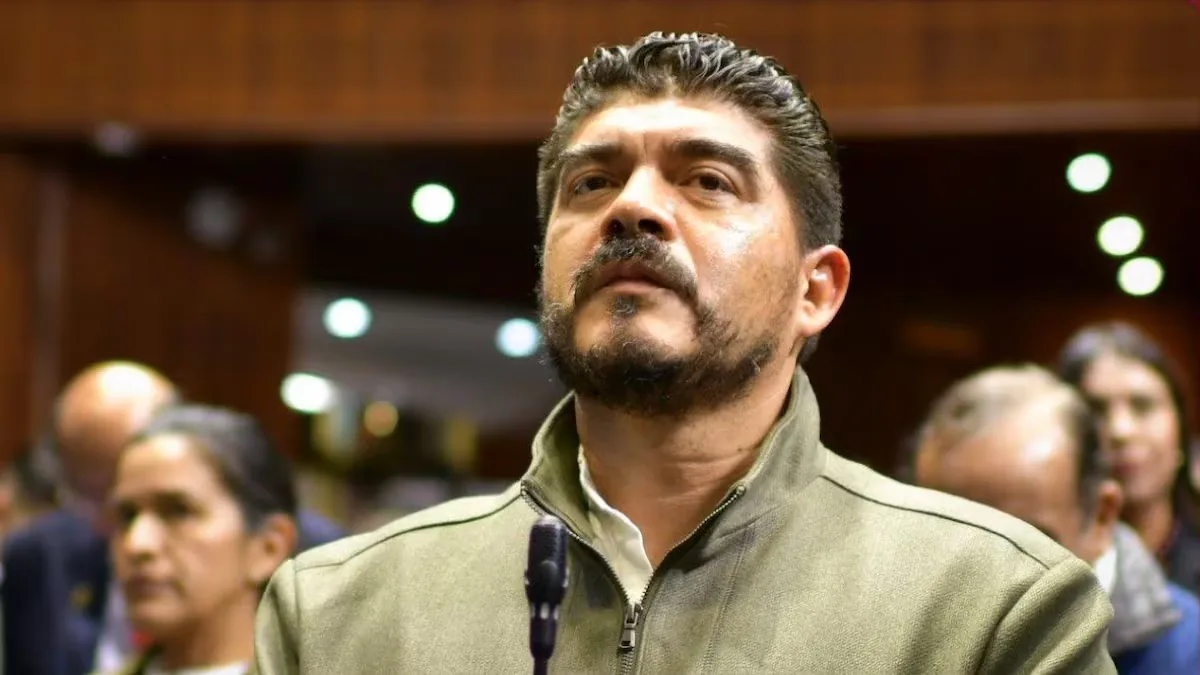
Salgado Macedonio, a figure since 1988 in the group that would migrate from the PRD to Morena, has now been prevented from being a candidate after President Sheinbaum managed to get her party to adopt anti-nepotism policies immediately. For months, the senator openly resisted the limitation that curtails his aspiration to succeed his daughter Evelyn Salgado in office.
When the Morenista leadership changed, it seemed poised to subdue the governor’s father. But with Salgado Macedonio, you never know. His cunning is as classic as his deep roots among the electorate of his state, which he has represented several times in the Union Congress and as mayor of Acapulco, the most important municipality. He might not be on the ballot, but he is certainly in the succession game.
Montiel and Hernández have had to accept that he conducts his own tour of Guerrero to clearly establish that he is the only one who can mobilize the majority of Guerrero’s Obradoristas. The Morenista leadership has already blessed this Salgadista proselytism, aware that even though the pre-candidates in the state are making their own efforts, everything could become complicated if Salgado rebels.
These three examples of Morenismo’s state primaries illustrate how complex it will be for the regime to process candidacies that seem destined, in each case, for a victory, if not certain, then with ample possibilities on paper.
And it is that Morena faces internal conflicts that are bombs to defuse. There are common elements in these primaries: they start from the advantage that the Morena brand enjoys in practically every poll against an opposition that currently does not threaten to tighten; for this very reason, ambitions among Morenistas and their partners are stirred up; and neither side sees the national leadership as an authority that inhibits them.
Citlalli Hernández resigned from the Ministry of Women in April, and although Ariadna Montiel’s arrival was in May, both are completing their first 100 days as leaders. They arrived to heal the wounds that their predecessors Luisa María Alcalde and Andrés Manuel López Beltrán had inflicted on their partners PT and PVEM, disagreements that cost Sheinbaum even legal reforms.
Hernández and Montiel’s honeymoon has ended, and not on the best terms. They are dealing with fires on many fronts: for example, the PVEM is not resigned to only receiving San Luis Potosí, a state it governs with a controversial figure who challenges Sheinbaum by promoting his wife, and the PT complains that it is taken for granted, that its strength in certain enclaves and its contributions in general over these years are not acknowledged.
Morena brought forward the succession processes to manage various ambitions that threatened to get out of hand. It did little good. In these first elections without López Obrador’s leadership—at least publicly—the noisy dispute over the 17 governorships is a prelude to what may come when Obradorista standard-bearers are chosen for local and federal mayoralties and deputyships.
Salgado’s antics with his own tour in Guerrero, the early unveilings of PT and Green Party candidates in Chihuahua, and the defiant interview between Bonilla and Dante Delgado, whose party President Sheinbaum has equated with PRI and PAN by generically calling them “McPRIAN,” are all signs of how loose the movement is.
Family clans like the Monreals who intend to entrench themselves in Zacatecas, or runaway appetites like that of the Green Party to take over Quintana Roo, to continue with examples, dispute the authority not only of Hernández and Montiel, who are outmatched as leaders, but also of Claudia Sheinbaum herself, who has not managed to transform the moniker of ‘comrade’ into that of Morena’s undisputed leader. Until that happens, the movement will remain very loose.
Read more Competing with a 40°C feel: the climate challenge of the Central American and Caribbean Games