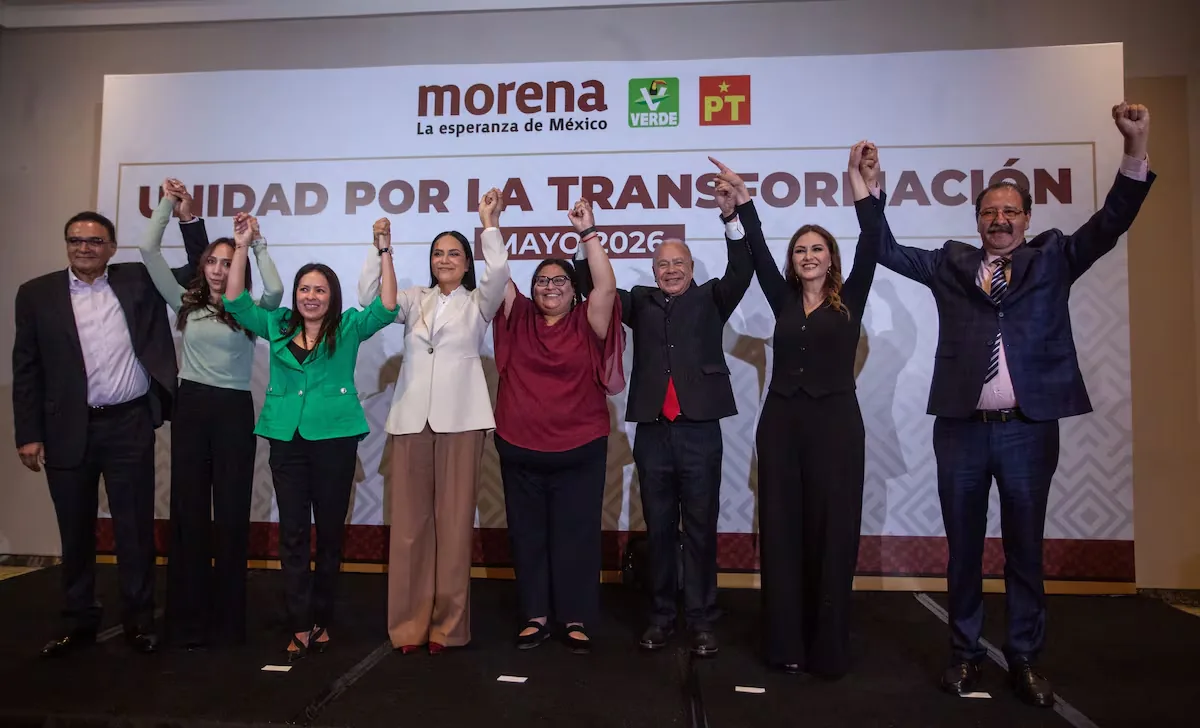
In the final stretch of their internal processes to define the state coordinations of “defense of the transformation,” secrecy is gaining ground in Morena. The leadership of Ariadna Montiel and the Election Commission, headed by Citlalli Hernández, decided to keep the polls with which they are defining the candidacies of the 17 States where governor elections will be held confidential and to prioritize internal agreements to avoid fractures. In the latest appointments of candidates, according to party sources, the review of their backgrounds has also been key.
Read more An internal war in Brazil’s Supreme Court puts the presidential elections on edge
They have been exhausting days that are not yet over, as the contest for the nomination keeps the party divided in several States. Guerrero, Chihuahua, Baja California, Michoacán, and Quintana Roo stand out among the most contested. Therefore, it is likely that the names for the state coordinations will not be announced this week as planned, and that the call for the appointment of coordinations in the 300 federal districts will remain on hold.
In 2023, then party president Mario Delgado gave a touch of certainty to the internal process by making the polls transparent, which by statute are the main method to define candidacies. This year, however, Ariadna Montiel began announcing the coordinations without showing the opinion poll results to the press, although—according to participants in the process—she did show them to the candidates who were discarded. Pressured by the attempted rebellion led by Rubén Rocha in Sinaloa, the leader anticipated the announcement of the coordination in that State, which fell to Senator Imelda Castro, and decided to back that “reveal” with the coordinators of four other States: Santiago Nieto in Querétaro, Rosi Bayardo in Colima, Pablo Gutiérrez Lázarus in Campeche, and Nora Ruvalcaba in Aguascalientes.
Montiel and Hernández announced the five States that were already defined and managed to get all participants to close ranks around the winner. But the situation is not so smooth in the remaining 12 States: Baja California, Baja California Sur, Chihuahua, Guerrero, Michoacán, Nayarit, Nuevo León, Quintana Roo, San Luis Potosí, Sonora, Tlaxcala, and Zacatecas.
On August 26, after announcing the first group of coordinators, Montiel decided to suspend the appointments during the week of President Claudia Sheinbaum’s second report. Faced with the version that the coordinations would be announced before September 10—the formal start date of the electoral process—the leader preferred to remain cautious and avoid the question. “We notify them one day before, we also notify our colleagues one day before. We are well on time. Remember that our call says we have until December,” she has stated in her press conferences.
Read more Mexico aims to join the semiconductor ‘boom’ in Arizona
With the same lightness, Montiel has denied that hiding the poll results goes against the party rules or the call issued in May, to which 277 candidates responded, an unprecedented number of those interested in the ruling party’s candidacies.
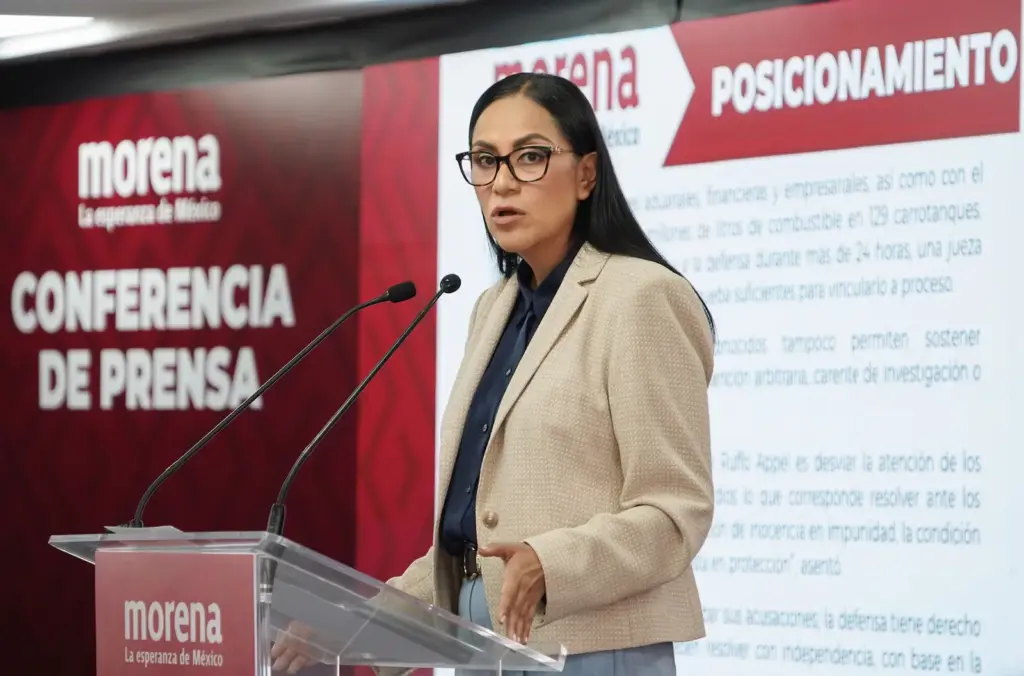
The truth is that the call established that the poll is the selection method and that participants commit, through a handwritten signed document, to respect its result. The process rules also state that the party commissions will review the profiles of all candidates, signatories of a document in which they accept that the National Election Commission may request information from the Security Cabinet to review their backgrounds. The leader herself warned last week, at the Morena deputies’ plenary meeting, that winning a poll is not enough to be a candidate, but meeting criteria of honesty and commitment to Morena’s principles is required. “We will not allow ourselves to be represented by people with unspeakable ties,” she warned.
The party leadership also reserved the right to prioritize the gender criterion in some States—as happened in Mexico City in the contest between Omar García Harfuch and Clara Brugada—to comply with the parity requirement, which obliges parties and coalitions to nominate women in at least nine of the 17 entities with elections.
The application of these filters, in addition to close contests and pressure from groups, candidates, and governors, has complicated the appointment. And yet, Montiel has shown confidence that there will be no fractures. “I recognize in all our colleagues that they have a clear understanding of the project and the moment we are in, and that unity is fundamental to move forward against the attacks of the right. We will come out well,” she has defended.
Read more Claudio Lomnitz: “Sheinbaum shares quite a few strategies of the war against drug trafficking”