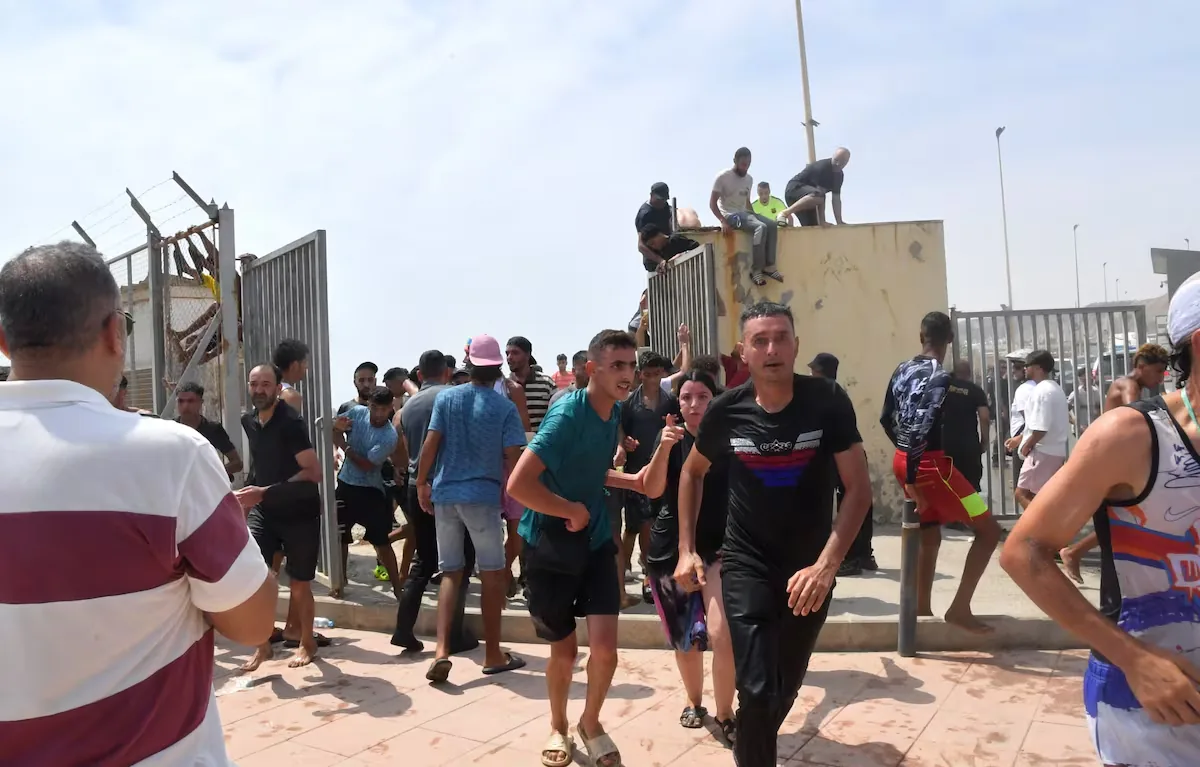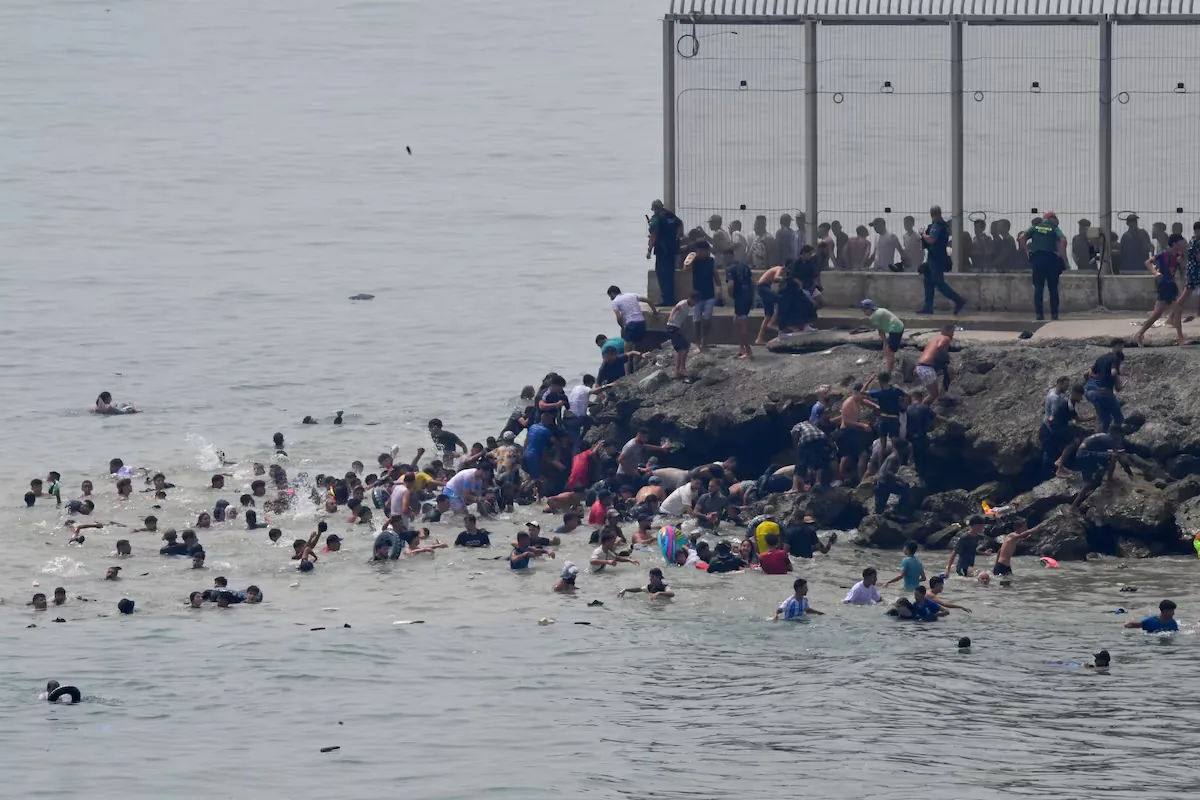









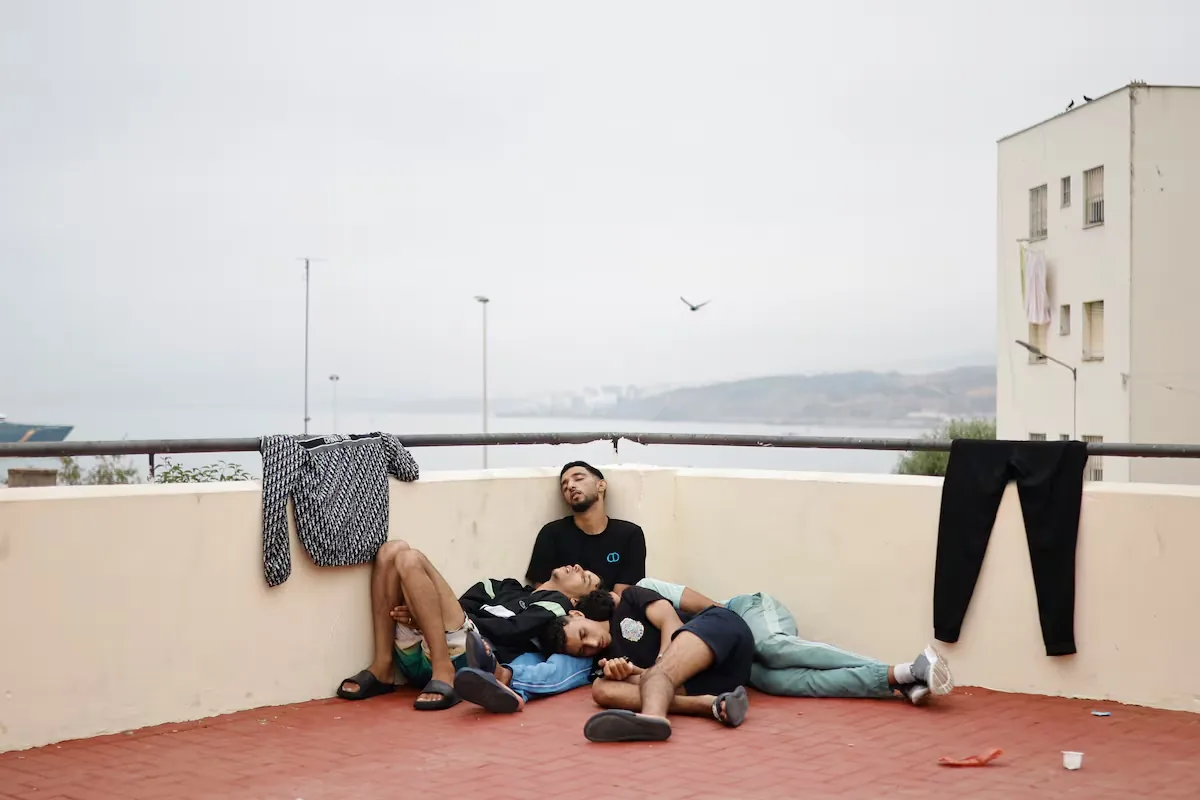
The flow of people who this Friday decided to return to Morocco following the same path they entered the day before in Ceuta has been unstoppable all morning, up to 25,000 people, according to the Government. Thousands of Moroccans and Africans of other nationalities have decided to return after spending a rough night sleeping on the streets, in the hills, in the park, or on the pedestal of statues, many without dinner because on Thursday some shops, restaurants, and bars already refused to serve them while Spaniards ate fried fish. This Friday morning has been even more terrible. Ceuta is tightly closed: the market, boutiques, supply stores, bars, and cafes are closed. It is hard to find water and almost impossible to get cigarettes anywhere; gas stations are also closed.
Read more The new State investment fund will forgive up to 30% of the loan to affordable housing developers
The shortages have driven several thousand to take the way back, and the morning has been smooth at the border. With the Army mobilized and cooperating with the Civil Guard, Morocco has also done its part, and soon those entering were dissuaded and those leaving had a silver bridge. “We are hungry,” they said on the march to the border. Others asked for water and signaled that the children cried at night and wanted to return. The phenomenon is not unknown; it recalls what happened in 2021, when nearly 10,000 people entered, but many left after a few hours. This time, the figures speak of an arrival of 50,000 in barely a day, but many are leaving. Up to 41 people have died trying to cross the border, according to police sources. And the trickle of updates on the deceased is constant.
The lack of clothing, food, or cigarettes is not the only reason pushing immigrants back to Morocco. Many report attacks by neighbors in the neighborhoods at night, and there are videos circulating that confirm the runs they had to make to escape the stones thrown at them in some neighborhoods. “I slept in the hills because people threw stones and guns at us,” said Ali, 22, who had arrived in the city Thursday afternoon by swimming. “Everything is closed for eating, the shops did not let us in,” the young man complained on the beach, next to a friend, on the way back to the water to cross the border again. There was no need; the border posts opened land routes that have registered a continuous flow of people for hours and still continue.
This Friday, the huge march towards Morocco was silent, downcast. The immigrants were tired, sleep-deprived, thirsty, and many hungry. Women, children, and men left in a quiet procession that lasted for hours. Nothing like the joy of the World Cup final that filled Ceuta’s streets on Thursday when tens of thousands of people entered in a flood, 50,000 according to some sources, of whom about 13,000 have left.
Attacks on immigrants also occurred in the city center, where this Friday dozens of people with Spanish flags awaited the arrival of the Spanish president, Pedro Sánchez, but with curses and calls for his resignation. Those same protesters broke up the gathering and went into the streets chasing barefoot teenagers carrying a plastic bag with some belongings or food. Cruel comments against immigrants can be heard on the streets. Others simply express annoyance that, unexpectedly, dozens of people enter a store or bar. A waiter complained on the phone that if he kept the bar closed, the food would spoil, but he did not want to open, he told this newspaper, because they all come in at once and they cannot work like that.
Read more They investigate the murder of a woman in Santander as gender-based violence
This morning, the border has been normalizing. Moroccan boats have entered to take their swimmers back home, they have used deterrent gases in the adjacent hills and water jets. On the Spanish side, besides removing bodies, whose number increases by the minute, they have facilitated the landing of those using a float to enter Spain and opened the way for those heading to Morocco. Thus, with the presence of dozens of military vehicles and the Civil Guard, the border was cleared when President Sánchez arrived.
The start of the morning, however, was expected to be chaotic. From Tarajal beach, which bathes the border breakwater, three columns of black smoke were seen in Findeq (formerly Castillejos), even the reflections of flames when the sky was still dark. “They are burning cars and buses on the Moroccan side,” said a guard. And the military vehicles lined up next to the border offered a pre-war spectacle in the early hours of the morning. But the day organized the flow of people, who have left the city turned into a dump, among bags, wet clothes, plastic bottles, flip-flops, and floats. The same filth that has accumulated on the beach.
Ceuta woke up with young men wanting to sleep anywhere and wandering the city’s promenades, and in a few hours, the city had become a trap for them: everything was closed. The old royal Ceuta wall, a defensive bulwark surrounded by a water moat, one of the city’s tourist emblems, has also closed.
Read more Barcelona exceeds, for the first time, four million annual procedures in 2025