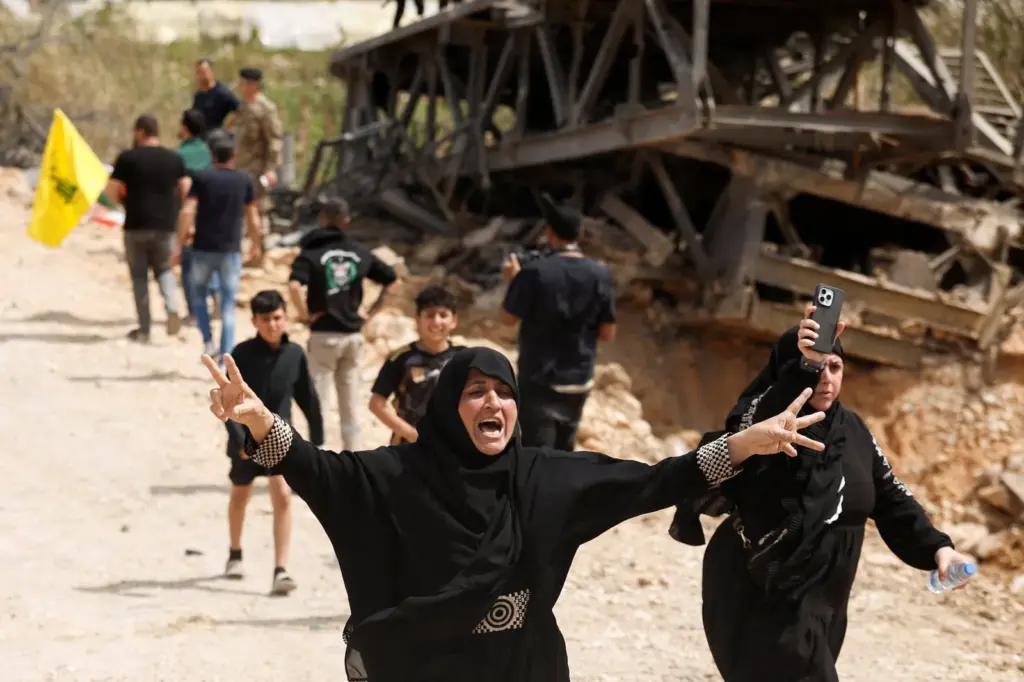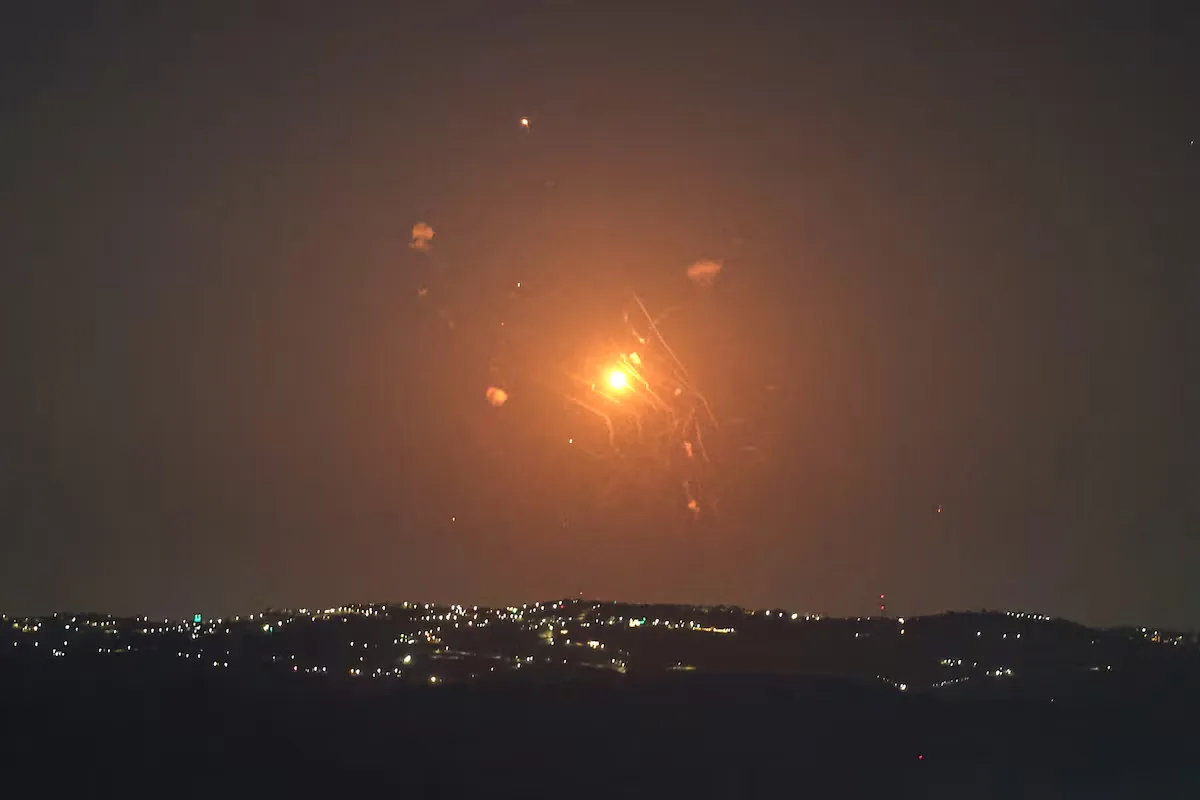










Thousands of Lebanese displaced by the war are trying to return to their homes in the south, despite calls from their Government and Hezbollah for caution to see first how the ceasefire with Israel holds, which marks its first hours this Friday and has paved the way for Iran to fully open the Strait of Hormuz. The 10-day truce in Lebanon is unfolding with hardly any incidents since it came into effect at midnight (11:00 p.m. in mainland Spain). The only incidents occurred in the early hours, when the Lebanese army denounced “acts of aggression” by Israel in violation of the ceasefire — such as the attack on an ambulance in Kounine — and Hezbollah announced attacks on Israeli soldiers in retaliation. These are troops that “will remain in all the territories they occupy” and will continue demolishing homes in the border towns, their Defense Minister, Israel Katz, has announced.
Read more El Prat airport weathers the uncertainty caused by the war and sees “low cost” grow towards America
With 1.2 million displaced after a month and a half of Israeli orders, the highway connecting the capital, Beirut, with southern Lebanon has experienced kilometer-long traffic jams since early morning. Some cars carry belongings and others wave Hezbollah’s yellow flag. The displaced are trying to return to their homes, even though some no longer exist, as the Israeli army has demolished entire villages in the strip it occupies, the closest to the dividing line.
In a new assertion of the state monopoly on arms against Hezbollah and other militias, Lebanese President Joseph Aoun stated this Friday that “there will be no armed forces other than the army and legitimate security forces” to oversee the return of the displaced.
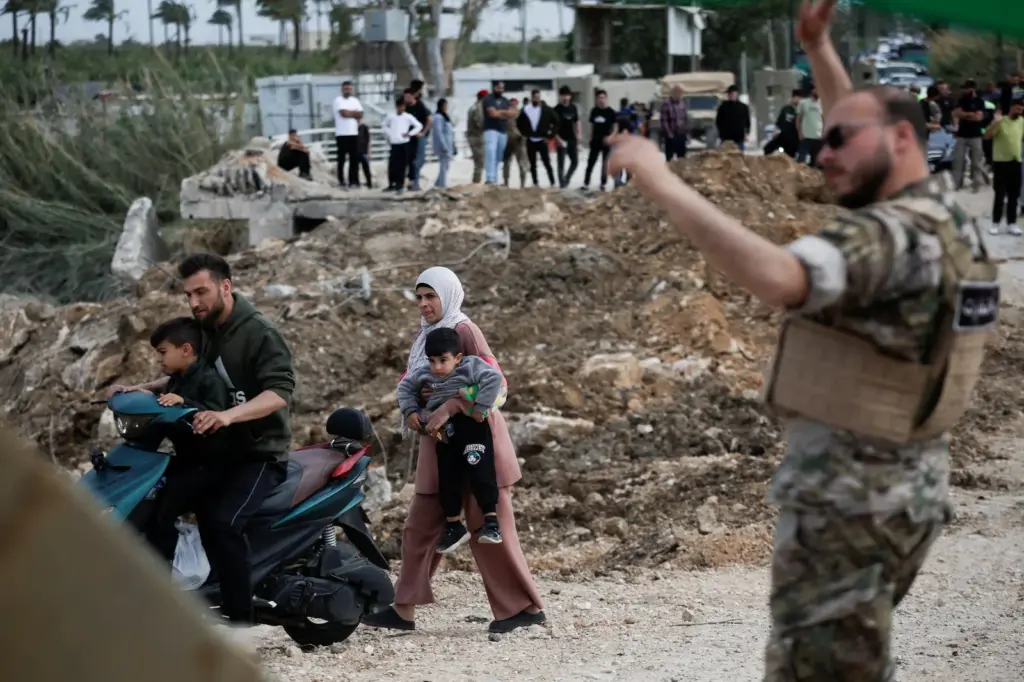
Thousands of them come from towns south of the Litani River that the Israeli army ordered them to evacuate but does not control. Minister Katz warned them this Friday that if hostilities resume, they will have to leave again “to allow the completion of the mission,” since the area will end up being “cleared of terrorists and weapons” through “diplomatic means” or “the continuation of military activity after the ceasefire,” next week. Katz also stated that Israel “maintains and will continue to maintain all the territories it has liberated and occupied.”
In any case, the agreement — released late Thursday by the U.S. State Department — already grants the Israeli army something akin to a carte blanche to bomb Hezbollah targets. Point three of the text emphasizes its “right” to “take all necessary measures in self-defense, at any time, against planned, imminent, or ongoing attacks.” And clarifies that it “will not be hindered by the cessation of hostilities.”
“Planned attacks”
The laxity of the wording, especially framing the response to “planned attacks” as “self-defense,” points to a return to the dynamic following the more than two months of war between Israel and Hezbollah in 2024. Those also ended with a ceasefire mediated by the U.S. and, on that occasion, France. Washington then gave the green light to Benjamin Netanyahu’s government to launch almost daily bombings in various parts of the country, accusing Hezbollah of secretly strengthening in violation of the truce. The attacks caused more than 400 deaths in Lebanon (including over 130 civilians), without the Shiite militia firing a single rocket. Until April 2, when it entered the regional war in support of Tehran.
Netanyahu already said the day before that he had rejected Hezbollah’s demand to base the truce on the “calm for calm” model. The agreement does specify, however, that Israel “will not carry out any offensive military operation” against state targets, such as infrastructure and members of the Armed Forces.
Read more Not paying taxes, the privilege of the new aristocracy

Hezbollah tried this Friday to capitalize on the truce, presenting it more as an achievement for having faced the invading troops and launched hundreds of projectiles against northern Israel, than as an initiative of Trump, who first announced it this Thursday.
In a statement that does not directly mention the ceasefire, the party-militia claimed 2,148 attacks in the 46 days of war with Israel and warned that its militiamen “keep their fingers on the trigger, vigilant against the treacherous enemy,” reports Joan Cabasés Vega. Israeli bombings during that period have killed more than 2,100 people in Lebanon.
Its main backer, Iran, has welcomed the ceasefire with “satisfaction,” but only as a first step. Its Deputy Foreign Minister, Saeed Khatibzadeh, said Tehran wants a definitive ceasefire and the end “once and for all” of the war that the U.S. and Israel started on February 28, which has claimed thousands of lives and plunged the entire Middle East into instability. Speaking to the press on the sidelines of the Antalya Diplomatic Forum, Khatibzadeh said any truce must include all conflict zones, “from Lebanon to the Red Sea.”
French President Emmanuel Macron has also called on Israel to “respect Lebanese sovereignty,” referring to the strip occupied by its soldiers, and to “end the war,” as well as on Hezbollah to “lay down arms.”
This Friday, on the verge of the Sabbath, announcements from the authorities already point to a gradual return to normality. Cultural and sporting events will be held again without restrictions starting Saturday night.
Read more The two Goyas that Seville commissioned in 1789 return definitively