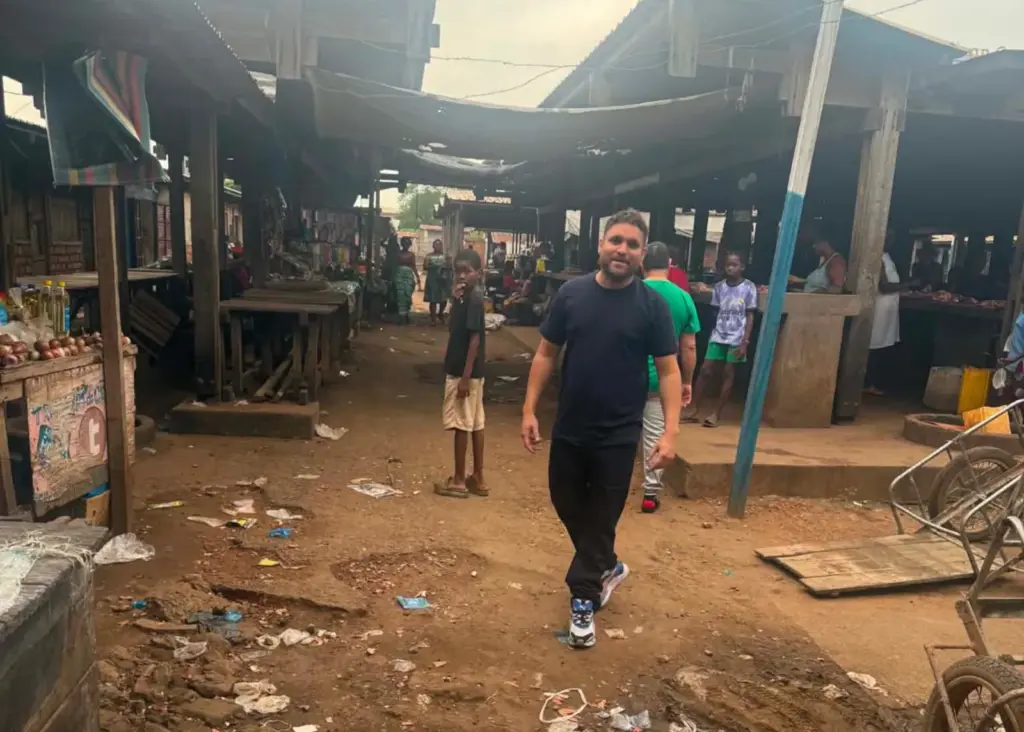
Still unable to believe everything he is experiencing, Brayan Omar Sánchez looks out from the balcony of his room at Maison Confort, an apartment lodging in Lakouanga, a central and bustling neighborhood of Bangui, the capital of the Central African Republic. Sánchez stops to observe with amazement that place, completely foreign, as if he had been sent straight to the ends of the earth. He sees a woman walking at a steady pace with a basket on her head; he sees low house roofs with brick walls; he sees unpaved streets, a reddish color. The day he complained because there was no water to bathe, a guard there told him: “This is Africa, deal with it.”
The Central African Republic, where he arrived, is a little smaller than Texas, the state where U.S. authorities made him board a plane handcuffed and shackled on July 31. He thought it was a joke the first time an officer told him he was on the list of a deportation flight to Africa. “That seemed impossible to me,” he says.
He knew little about the African continent: he imagined it as a place apart from the rest of the earth, or at least from Olancho, the place where he was born in Honduras. If they had sent him to Ethiopia, Botswana, or Cameroon, it would have been the same to him, because Africa in his mind was “a very very very far place, where there are deserts, dangerous animals, bad diseases, languages one does not speak.” It was the last place he thought he would end up when on May 13, 2026, he left early from his home in Allapattah, Miami, and was detained by Immigration and Customs Enforcement (ICE) officers.
Since crossing the border a decade ago, Sánchez, 31, worked as a gardener or truck driver, and until now operated a small pressure washing company. Always undocumented. Now, all that seems to belong to a previous life, and he thinks about it as he paces around the apartment at Maison Confort that he shares with another man. He is trying to find not only an explanation for why he ended up in Bangui but also how he will get out of there.
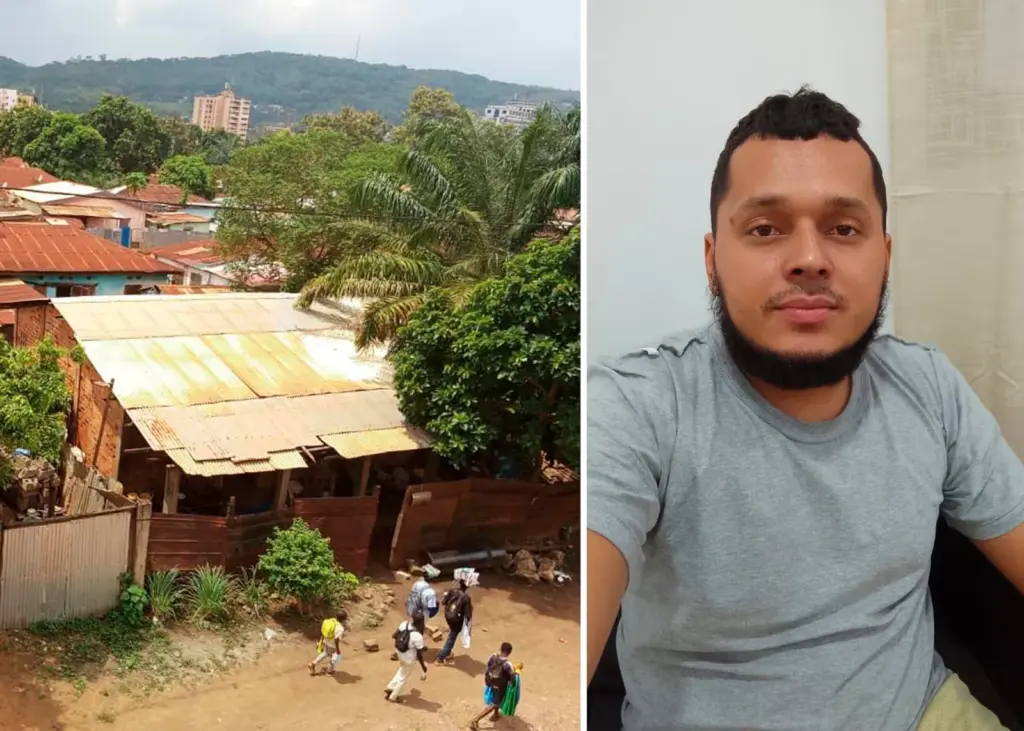
The apartment where he stays has a kitchen he has been asked not to use, a bathroom, a small living room, and a room with two single beds and their respective mosquito nets. “Here the mosquitoes are waiting for you to open the door,” he says through a video call with EL PAÍS. He has seen locals on the street lighting fires to scare them away. If there is electricity, they turn on the air conditioning, but the truth is that most of the time they are in darkness, the same darkness they perceived on the night of August 1 when they arrived at Bangui M’Poko International Airport, on a plane that transported about 80 migrants from Turkey, Romania, Afghanistan, Ecuador, Cuba, Russia, and several African countries, all deported from the United States.
With the only 60 dollars he managed to hide on his body, Sánchez asked an officer in Bangui to do him the favor of exchanging the money and buying him a phone. He called his wife in Miami, more than 10,600 km away, a five-hour time difference and the vast Atlantic Ocean in between.
—I told her, love, I’m free now, but they sent me to Africa.
Sánchez says the woman felt the world collapse on her.
The long journey to Africa
Sánchez was the first to be transferred to a unit with dozens of African migrants at the Prairieland detention center, located in Alvarado, southeast of Dallas, Texas. That started to seem suspicious. “I wondered why they put us with those people, if normally it wasn’t like that. In other centers, they put us separately because they have a different culture, their religion is different,” he says.
The first center where Sánchez was detained was in Krome, Miami. Then he spent two months in Denver, Colorado. On July 26, he was transferred to another in Phoenix, Arizona. There he first heard someone talk about the possibility of sending them to Africa. His last stop was in central Texas, the place where almost everyone who is about to be deported ends up.
“There I thought they were going to send us to Mexico. I said: ‘Mexico is fine, they speak our language, it’s not bad,” says Sánchez, who assures he never signed a deportation order. At one point, when the officers operating the center gave him his documents and the shoes he had made by hand with potato chip and Doritos bags, Sánchez ventured to ask: “And where are they going to send us?” The officer replied that to Africa. “Africa? No, I can’t go to Africa,” he said, scared. By then he still thought it could be a system mistake.
The next day, around six in the morning, they took him to the unit with African migrants. “There I got traumatized, I didn’t sleep. I said: ‘Wow, this is real, they are going to send me to Africa.’ I bathed about 15 times to relax; my head was messed up,” he recalls. Four Cubans later arrived at that same unit, including Yasmani Noel Moreno de Armas, 31, and Arístides Fernández García, 37. Sánchez heard them speaking Spanish. “I approached and asked them what they were doing here, and they asked me the same. I told them it was rumored that they were going to send us to Africa.”
On the afternoon of July 29, an officer came to inform them it was not a rumor. They were going to the other side of the world. “The rules are like this, you will be deported to Africa tomorrow,” he warned. Sánchez replied: “But we haven’t signed anything.” The officer answered: “We don’t care about that, we are ICE and we are the ones who deport.” Sánchez spoke again: “But I have a pending asylum case.” And the officer once more: “Your case is closed.” The Honduran and the Cubans began to complain, warning there was no way they would get on the plane. The officer was definitive: “It doesn’t matter, tomorrow we come with weapons and if you don’t get on, we will beat you, we warn you now.” Then he walked away, laughing.
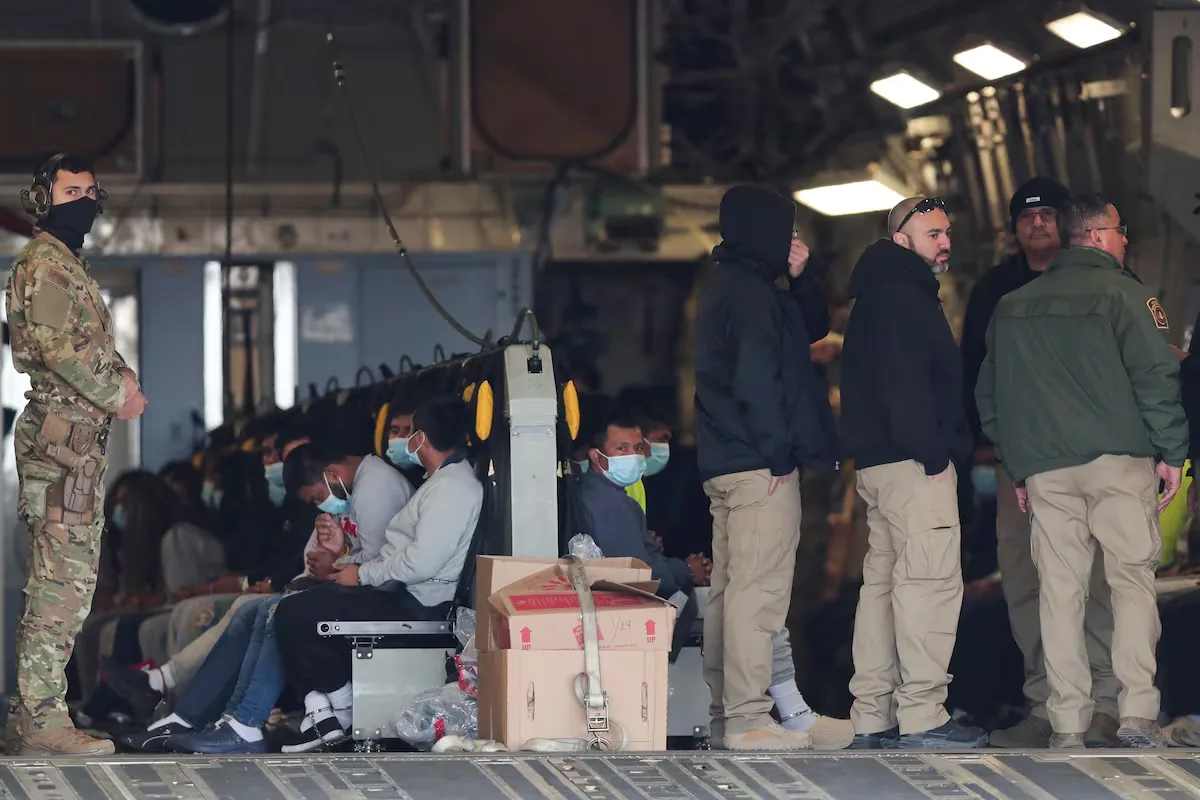
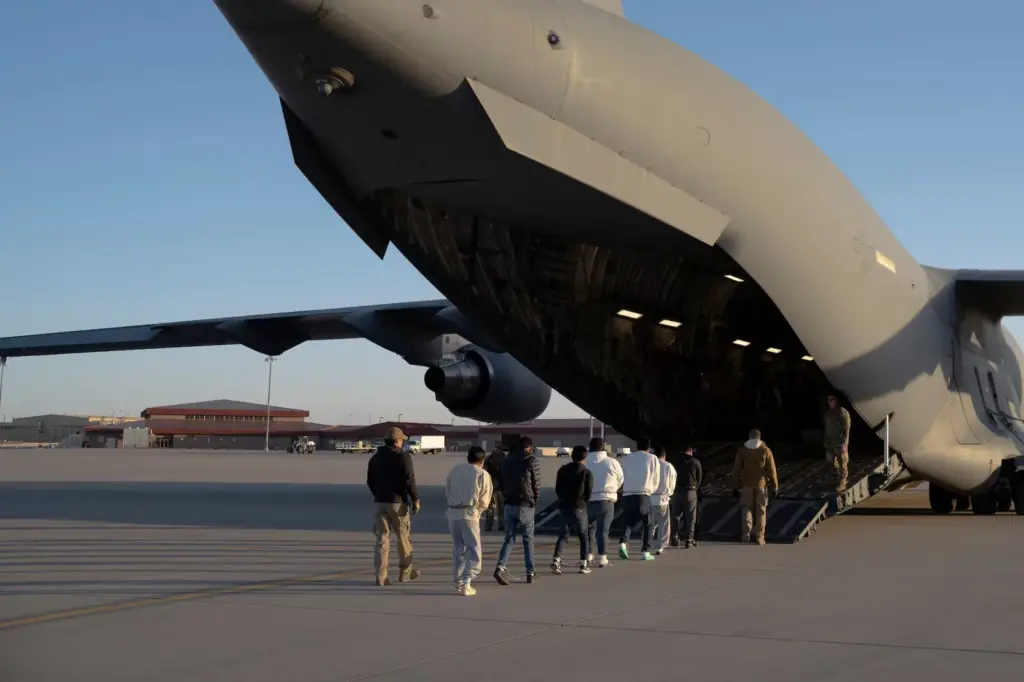
Around ten the next morning, armed officers with protective shields arrived. They handcuffed everyone. A migrant from Vietnam resisted and they beat him. “That person was asking for help but we couldn’t help him. They were practically killing him, he was unconscious,” Sánchez recounts. They were taken to buses without being offered water or food. After three in the afternoon, they were taken to the airport and after two hours boarded the plane from the rear.
“A super big plane, I had never seen a plane like that,” says Sánchez. An officer, mockingly, shouted at him: “Hey, Honduras, why are you going to Africa?” Sánchez was in shock: “There the world collapsed on me. They separated me from my family, it’s very hard.” He started to cry.
It was the longest and saddest flight of their lives. About 22 hours to the Central African Republic, although they made stops to drop off some migrants in Senegal and Nigeria. During all that time, they were only given a bottle of water and some bread.
“They handcuffed us by feet, hands, and waist, we couldn’t even scratch our faces on the plane, nor go to the bathroom,” says García, who until now remained in the United States with an I-220A status, the same that has prevented the legalization of more than 500,000 Cubans. Without having committed any crime, ICE officers detained him the day he appeared before the judge in the Miami immigration court in January and locked him up in the Alligator Alcatraz center. García has a clear memory of the moment he crossed the border through Arizona in 2022: “The officer told me: ‘Welcome to the United States, you have just arrived in a safe country.’” Today the phrase seemed like a mockery to him.
Now he does the math: “I think and say: what is happening to us Cubans?” García wonders. “I had a trucking company, paid taxes, had never been fined in traffic. I did everything right. I left a dictatorship and entered terrorism. I never thought they would send me to Africa, I thought that was impossible, I’m not a terrorist, I’m not a criminal.”
The plane landed with deportees on the night of August 31 in Bangui. “The first thing I saw was that there was no light anywhere,” García says. Local authorities made them get off the aircraft, took them to a tent, and gave everyone an injection. “Without telling us anything, they injected us; until now I don’t know what they injected us with,” he assures. They were put on a bus, entered the dark African night, and arrived at Maison Confort.
Residents of Bangui have already noticed there are new people in the area. People who don’t look like them, who don’t speak Sango or French. Children greet them with curiosity. Some have looked at them suspiciously. “They have no idea who we are,” says Yasmani Noel Moreno de Armas, a 31-year-old Cuban who when he called his parents in Hialeah and told them he was in Africa, they started screaming.
“They went crazy, crying and screaming,” he says. On May 11, 2025, he had gone to the beach in West Palm Beach and, without explanation, ICE officers detained him. He says he is still “traumatized.” “I thought they were going to take me to Cuba. I only realized it was Africa when I had been on the plane for more than two hours.”
The flight that arrived on the night of August 1 in Bangui was the second to land with deportees from the United States in less than two months, since the governments of both countries signed a deportation agreement that, according to reports, amounts to 81 million dollars. On June 12, a Boeing 767 that departed at night from Alexandria International Airport, Louisiana, carried more than 20 migrants, although the exact number of deportees to the Central African Republic is still unknown.
The U.S. government itself has issued a travel alert advising its citizens not to set foot in that country which, they say, has risks of “riots, crime, kidnappings, landmines, health problems, and terrorism.” Nevertheless, the Central African Republic is the last of the African countries to join the list of third destinations for migrants from the United States. On that continent, places like the Democratic Republic of Congo, Ghana, Sierra Leone, Eswatini, or Equatorial Guinea have already accepted deportations and collected millions for receiving migrants in recent months.
EL PAÍS contacted the Department of Homeland Security (DHS) to learn about the selection criteria for sending migrants to Africa and what their legal status would be in the Central African Republic, but the agency limited itself to responding that those questions would be referred to the Department of State.
Everything is very strange and foreign right now for these migrants. To start life, they were each given two shirts, one yellow and one gray, a pair of pants, and flip-flops. They are forbidden to leave the hotel. When they have done so, in the week they have been there, it is because they pay the guards to take them to the corner store or the barbershop, with money that relatives have started sending them. De Armas needed some haircuts, but the barber didn’t understand what he wanted. It is impossible to communicate, and he had to show him a photo of the shaved head. He and García were taken to the hospital; they also didn’t know what to say to the doctors. They have not stopped having stomach problems due to the food and allergies from the weather changes. They have all been impressed, they say, by the deterioration of Bangui. “The hospital was like in Cuba, just as broken. It’s worse than Cuba,” says de Armas.
The passing days have brought a helplessness they don’t know how to resolve. Who to complain to? What is the next step? How long will they be kept locked up in that lodging? What will become of them?
“They brought us here illegally,” says de Armas. “What am I going to do here? Only hang myself, because there is nothing else here.” Sometimes they think it wouldn’t have been the same if they had been sent to some Latin American country, something that at least resembles what they are. For now, they haven’t even been processed for an ID or a visa that would allow them to stay legally in that place. They can barely sleep. They have a lot of anxiety. Sometimes, they even feel fear.
“Everything happened without our consent, by force, we were kidnapped,” says Sánchez. “It’s a thousand times better to be in my country than here. I would never have accepted this.”
They all have the same certainty: they don’t know how, but they will do everything possible to leave Bangui. In the middle of the dark African night, they want the world to dawn for them.
Read more The storms that have battered the rector’s administration: 11 months of crisis at UNAM