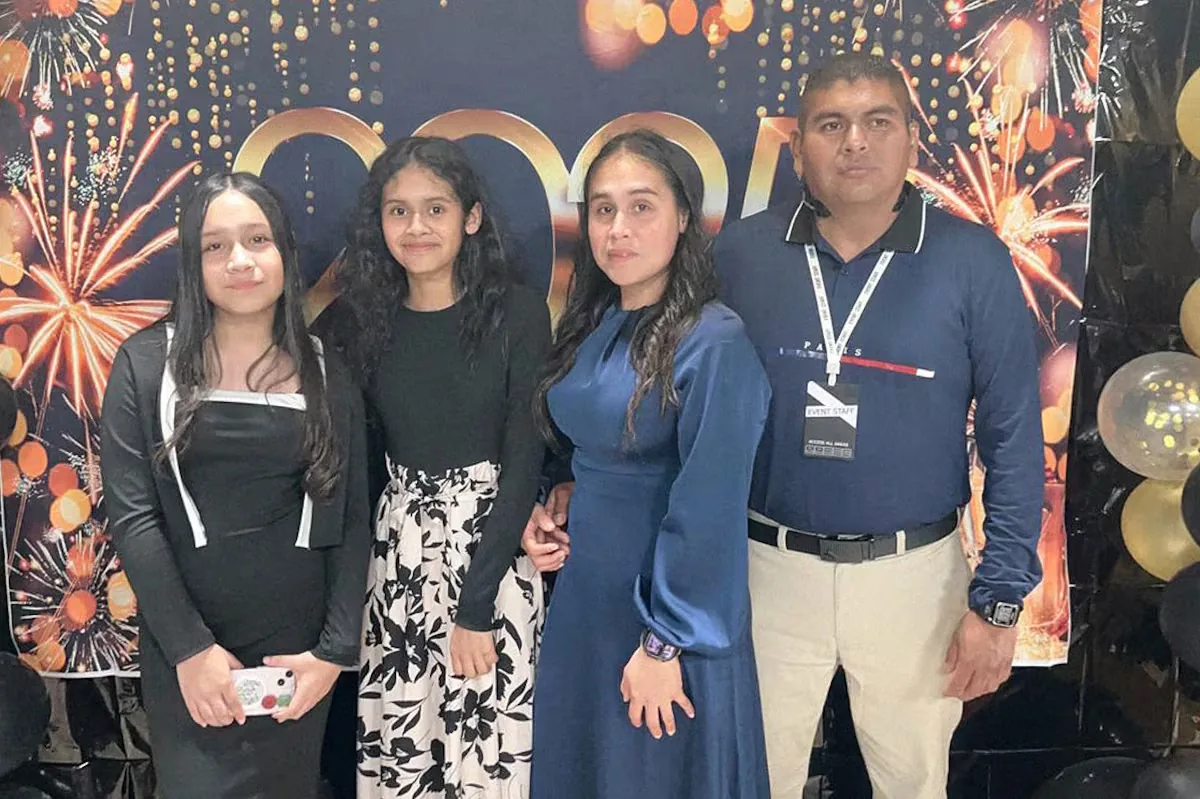
Sarah Moreno will turn 15 on August 26. In the same month, she will return to school. Any other teenager her age in Texas would be with their parents preparing for the return to classes, but above all to celebrate their quinceañera party. She and her two siblings, aged 16 and 13, can no longer live their age. Their parents were deported and now they deal with paying rent, what they will eat, and who can take them for an hour to the Brownsville border crossing to visit their parents in Matamoros, Mexico.
Read more “Don’t even go near the Sierra”: the war fractures in Sinaloa and violence intensifies in Mazatlán
“I had never felt so much stress. Before all this happened, I only worried about my grades, my after-school activities,” the young woman says in a video call from Matamoros, while visiting her parents.
On December 28, 2025, this family’s routine was broken. Sarah and her younger sister were in the car with their parents: their mother, Jessica Treviño, 34, has been a beneficiary of Deferred Action for Childhood Arrivals (DACA) since 2015 and her permits were valid until April 2027.
For Sarah, it was a normal day. The family had bought breakfast and coffee at a Starbucks in Álamo, where they lived, and were on their way to their church. Immigration and Customs Enforcement (ICE) agents began following them in unmarked vehicles. Her father, scared, tried to flee until he stopped his car at a Home Depot store. An ICE vehicle hit them from the front. The airbags exploded, the coffees spilled. The officers pulled them out of the car and Sarah remembers that they hit her father.
“I was telling them: ‘Don’t hit him. Why are you hitting him? He didn’t do anything wrong.’ And they started yelling at me and my sister, telling us that because of him they would also take my mother,” Sarah recalls. The teenager says one of the agents pushed her hard and slammed her against the car door. The blow left a bruise on her neck: “That day I was in shock.”
At night, at her grandmother’s house, Sarah remembers having nightmares about what happened: “I would wake up with teary eyes, full of tears, trying to understand if what I had lived was a dream or was real.”

“My home is in Texas”
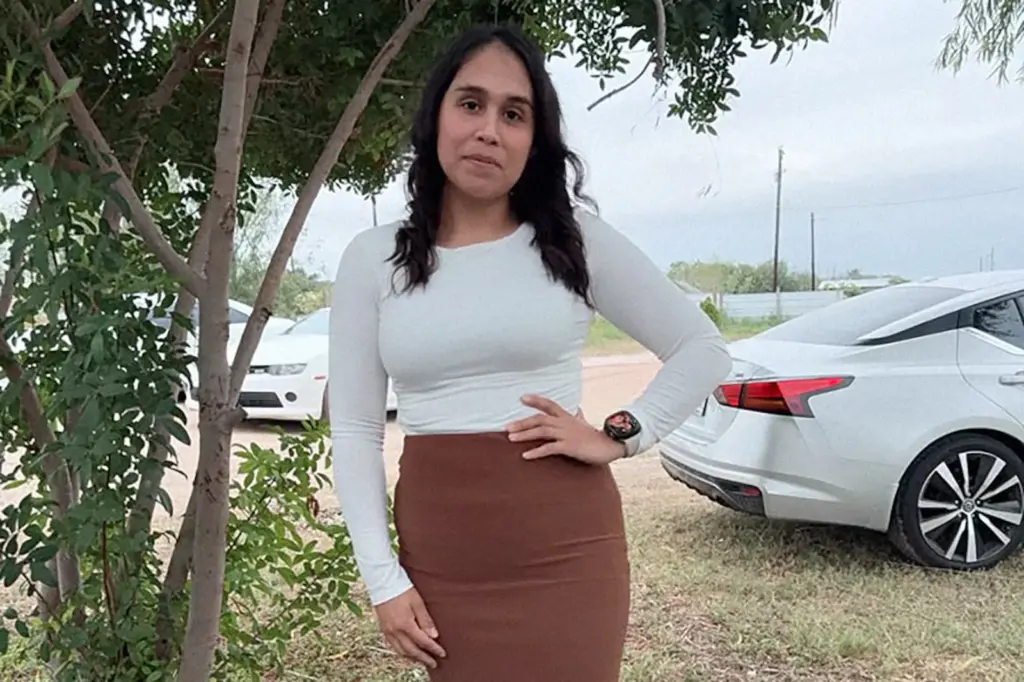
Every time her children visit her in Matamoros, Jessica Treviño is heartbroken when they leave. She would like to be at her home in Álamo making sure her three children are eating well, have clean clothes, and are getting organized to return to school. “I feel like my home is there, in Texas. It has been very hard because my children come every weekend, leave, and well it hurts because I can’t go with them. This really changed their lives,” says the mother.
Treviño says her eldest son took his sisters to school last school year and had been working to supplement the money their parents send them from Mexico. Sarah, the mother says, cooked with her at home, so she has mostly been in charge of the meals.
When they were in the United States, Treviño says she enjoyed having food ready for her children when they came home from school. On Tuesdays they watched movies. On Wednesdays, Fridays, and Sundays they went to church. On Saturday afternoons they went out to dinner as a family. “It hurts me a lot to be separated from them. I feel powerless, like I can’t do anything, like I’m tied up. The only thing that divides us is a river, a border. I am very desperate.”
When they were detained last December, Treviño explained to the agents that she had DACA, a benefit that protects her from deportation. If she cannot be expelled, she could not be in detention either: “They said it didn’t matter, that it was not a legal status,” she recalls. She spent almost 90 days at the ICE center in the Valley, near the Texas border, until at her last hearing the judge ruled her voluntary departure, alleging there was no proof that her DACA was valid. Since the detention, she could not look for her permit at home to show it to them.
A spokesperson for the Department of Homeland Security explained in an email to EL PAÍS that Jessica Treviño “consciously accepted voluntary departure and waived appeal. She left the United States on March 25, 2026, and will not return.” She claims she refused to accept that option.
Read more Colombia begins a new era marked by God and uniforms
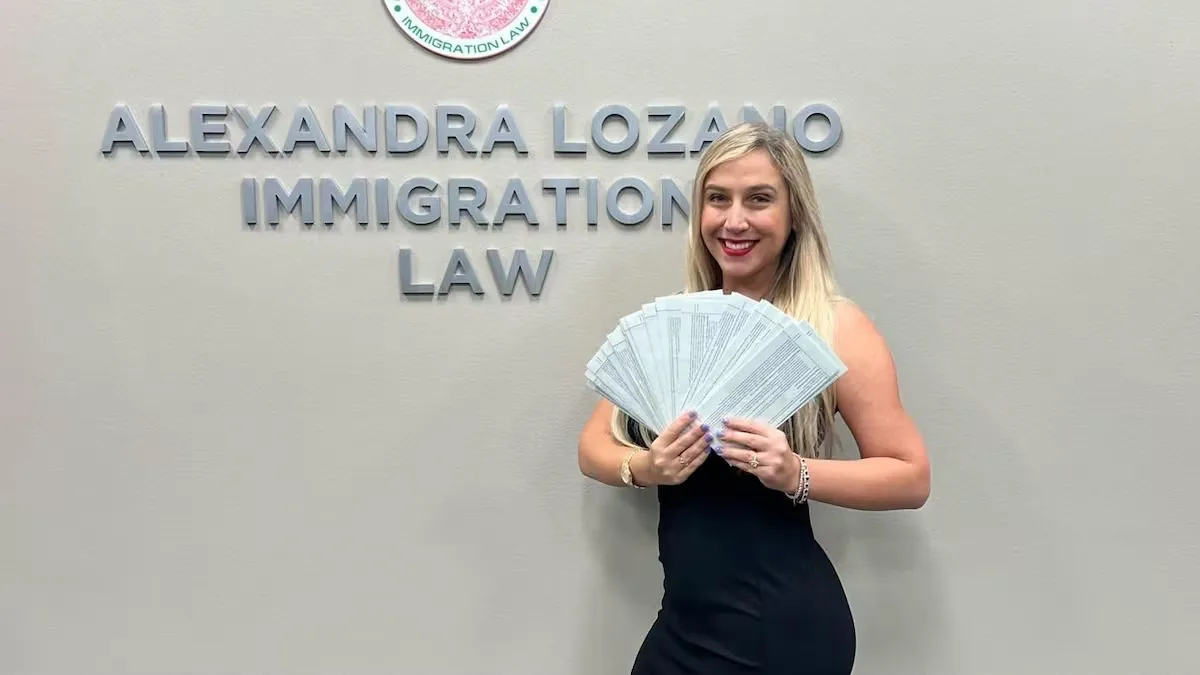
Her lawyer, David Rozas, explains that Treviño was “forced” into a voluntary departure, but a harsher measure was applied: she was deported to Mexico, which entails a longer punishment before being able to return to the United States. After that, she received a letter from Citizenship and Immigration Services notifying her of the intention to revoke her DACA because she had left the United States without authorization.
“It is the irony that the United States Government fully knows she has DACA and deported her,” the lawyer points out. “She was forced to accept a voluntary departure. But then they did not allow her a voluntary departure, they ended up deporting her and it was then, after that, that she received a notification saying ‘hey, by the way, we are going to revoke your DACA because you left the country,’” Rozas condemns.
The lawyer assures that cases like Treviño’s are becoming increasingly common among DACA beneficiaries, especially among those living in border states.
They are now suing the Government in a Texas court so that the mother can return to the country: “We are arguing to the judge that this voluntary departure turned into a deportation order was made under false pretenses, because she did not want to leave and had a valid DACA, she just couldn’t show it at that moment.”
So far in Donald Trump’s second administration, 86 DACA beneficiaries have been deported, according to a letter sent by the Department of Homeland Security to Illinois Democratic Senator Richard Durbin.
The return to routine
In March 2025, Sarah could not hide her sadness seeing other children arrive at school with their parents or seeing the hugs after a school event: “And I was there, alone.” She felt different then and will feel different now, when the school year starts and her mother is not there to take the typical first day of school photo or to have hot food ready at home.
She has not made plans for her quinceañera either. “I can’t even take pictures because my parents are on the other side. I don’t even know who I’m going to celebrate it with, because it’s just my siblings, my aunt, and me,” she says.
Sarah says she feels emotionally overwhelmed. She doesn’t know if with the start of the school year she will have enough time to visit her parents in Matamoros. For now, some relatives in Álamo and her community support the family. Sarah is grateful for that, as well as for being able to cross the border to hug her mom and dad; she knows not all children can do that.
But she still feels the pain of family separation. “When will my parents come back?” she questions. “Everything is harder without them.” She dreams that at least her mother can return home. “I think no child my age or younger should go through this. It saddens me how cruel people can be.”