The intensive use of artificial intelligence (AI) and the digital stress it generates in the workforce is forcing companies to reinvent their offices. Once again. Many had already made their conversion after the pandemic and the massive incorporation of teleworking. This is confirmed by the workspace design firm Steelcase, aware that 75% of workers use this tool daily and, as a consequence, their mental fatigue is increasing. In fact, 45% of AI users suffer from burnout syndrome. “The main impact of artificial intelligence that we are perceiving in all surveys is an increasing excess of stress,” says Alejandro Pociña, president of Steelcase Iberia.
Read more The woman who immortalized New York punk
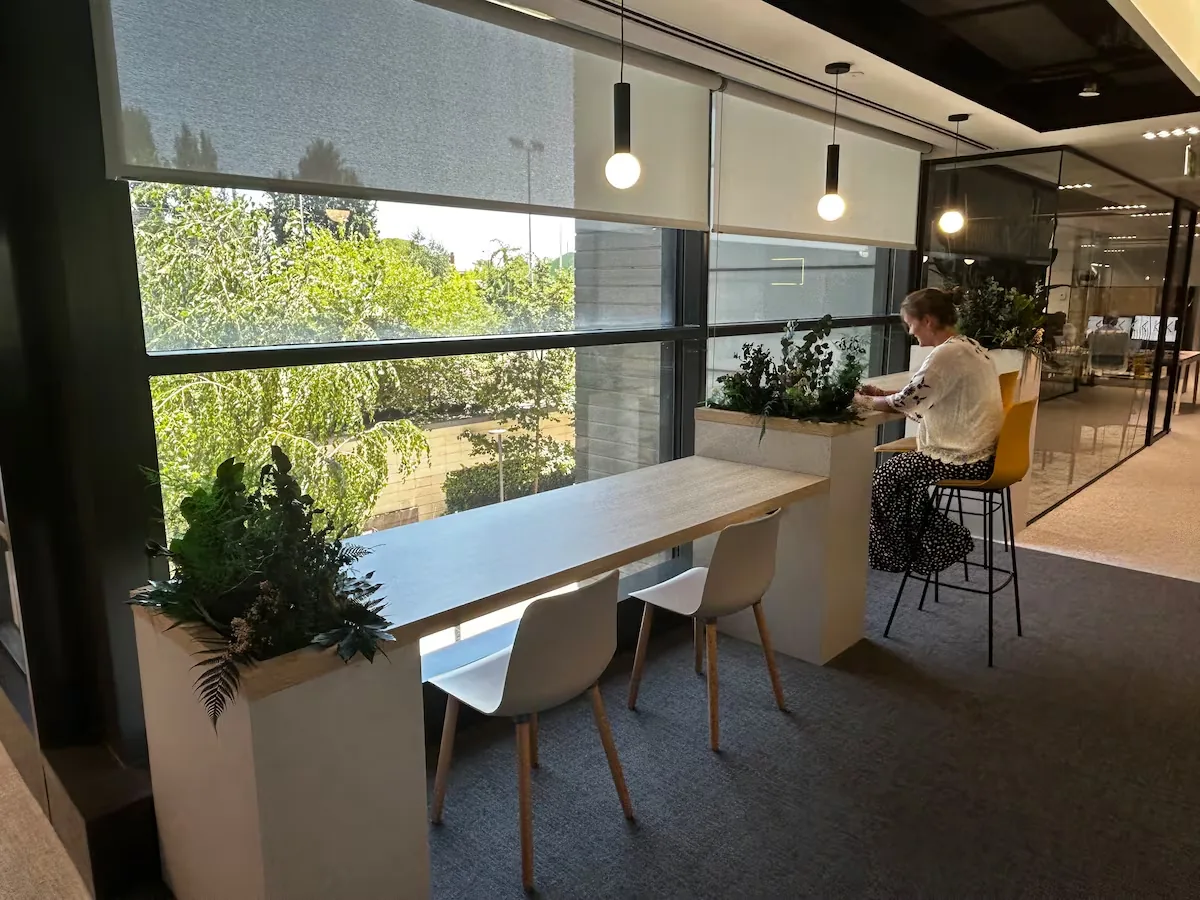
Managing the cognitive overload of the workforce has become a new challenge for organizations. To mitigate it, it is necessary to create work environments that balance concentration, interaction, and mental recovery, explains the executive. Hence the company has developed the so-called AI-Ready Spaces, offices that incorporate screen-free zones to reduce constant stimulation and promote mental recovery.
They are a relevant part of the design of the recent configuration of company headquarters, whose main innovations relate to the variety of work areas “that allow natural alternation between concentration, collaboration, and breaks” and their adaptability to the different uses required by worker interaction. “The office must integrate technology well and allow a person to naturally transition from individual work to a hybrid meeting, an informal conversation, or a creative session,” supports Emma Casas, Human Resources director at Legálitas (1,100 employees).
The maxim of productivity at all costs has been replaced by that of employee well-being, assures Covadonga G. Quintana, founder of the architecture firm Plug&Go: “The headquarters has become a meeting place to facilitate employees’ sense of belonging.” And noise, for example, works against that well-being; it is one of the elements that causes the most stress, she adds, so efforts are made to guarantee silence with specific areas for it and concentration zones. “Right now, the most valued by companies are terraces that promote disconnection from screens. Also flexible spaces that can quickly become training rooms or meditation areas. Or cafeterias where people relax,” she continues.
The businesswoman cites as an example the European hub of the Swiss firm Straumann in Madrid. In more than 10,000 square meters at the end of Alcalá street, the healthcare company has a rooftop where teams of different nationalities hold team buildings to connect informally, and most of its headquarters is designed flexibly and elastically. The incorporated technology achieves that 60% of the spaces are immersive, so they serve, for example, to present their products to clients without needing them physically present, through 3D. This is also seen at Ricoh, but in this case so that on-site and remote teams can interact as if they were together thanks to cameras and audio managed by artificial intelligence, explains José Luis Gión, director of major accounts at the company.
Read more Some European Athletics Championships That Are Almost World Championships
Companies intend for their employees to feel comfortable in the offices. They want to boost workforce engagement, something that was greatly affected after the pandemic. Also, to differentiate between tasks performed remotely and those specific to workplaces. And they are investing more money than before to achieve this. “Before, only Google spent on its social headquarters; now all companies do. Design is more cared for because the headquarters has become a marketing and communication tool,” adds Covadonga G. Quintana. Like the president of Steelcase, she assures that the budget for office conversion has increased. According to the head of Plug&Go, it ranges between 650 and 850 euros per square meter, “because spaces are increasingly quieter: with acoustic solutions in the slabs or double coatings that increase costs, and also versatile spaces and furniture like movable panels or chairs that go up and down so you are not always sitting,” she explains. For Pociña, the average cost of the works ranges between 800 and 2,000 euros per square meter.
Return to the center
And the high cost continues. Because company headquarters are returning to city centers. Young employees demand to travel by public transport; they do not want to know anything about cars. And organizations that want to attract them seek locations in the heart of capitals, where barely any square meters are available and prices have skyrocketed.
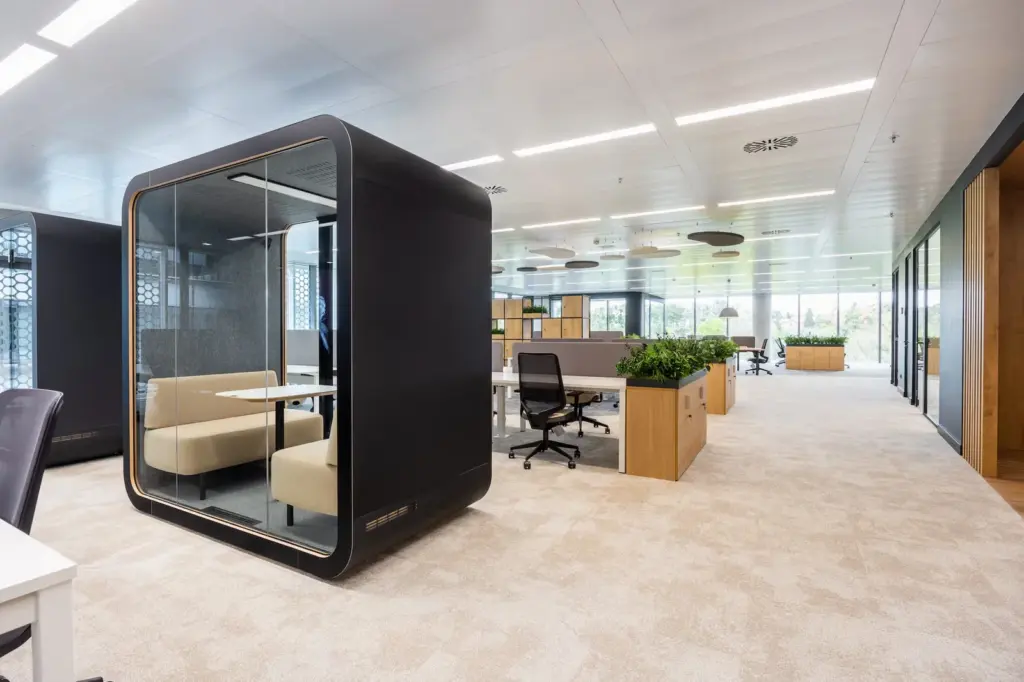
This is the case of Aranzadi La Ley, which has unified in a single headquarters the workers it had distributed in two buildings in Madrid, in “a more central location than Las Rozas,” according to its Human Resources director, Pablo Galán. “We want to make the office attractive so that people want to come and team interaction is reinforced, and for that, we have created connection spaces, meeting rooms, concentration booths, a cafeteria… And to care for mental health, we have plenty of natural light and plants that relieve the burden caused by screens.”
In offices, it is prioritized that people relate more informally and that there are private spaces both for relaxation and concentration, summarizes Alejandro Pociña, for whom the diversity of areas available favors the freedom for each person to use them as they wish and thus mitigate the overload from AI and screens. “What is clear is that traditional paths are avoided and that the cafeteria has become the key element of relationship among people,” he says. In the end, “companies must accompany technological transformation with new ways of organizing time, meetings, and spaces, also protecting moments of concentration and disconnection,” concludes Emma Casas.
Read more Journey along the bed of a Danube stripped by drought: “Every year the situation is worse”