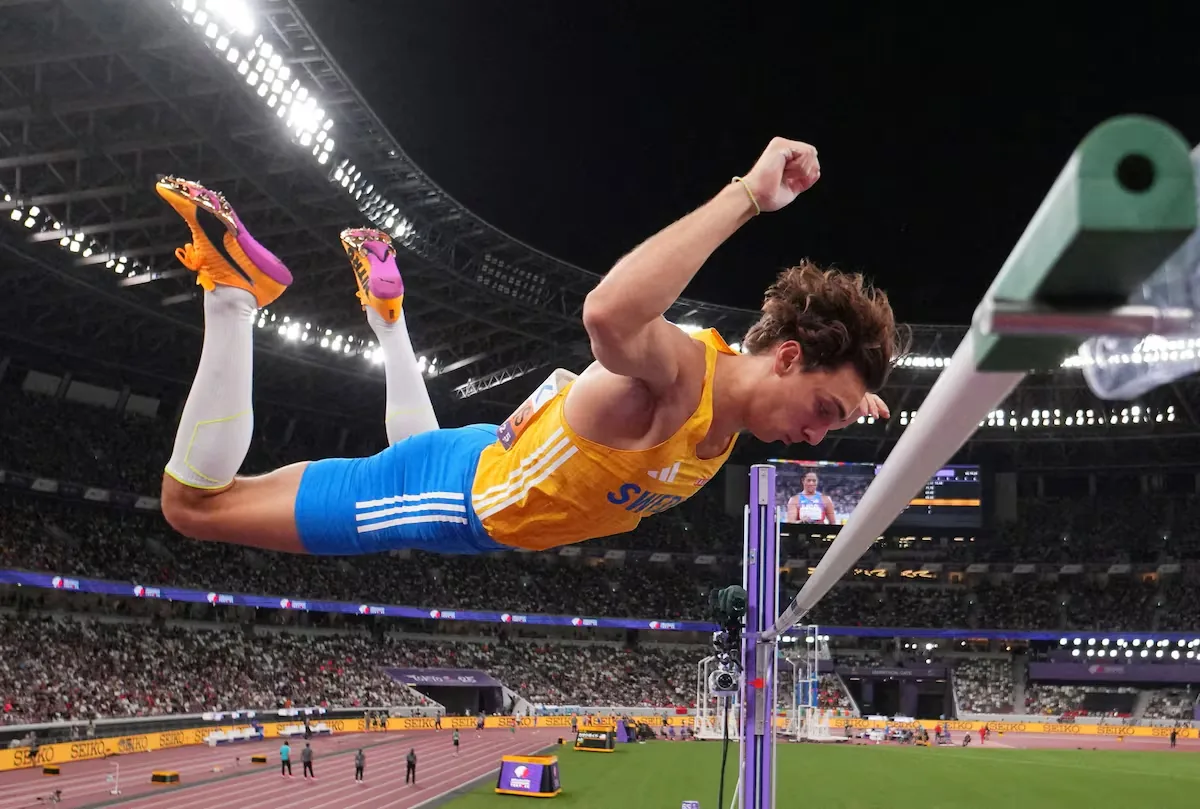
Idle athletics coaches strolling around the canals in tracksuits should bow before the golden statue of James Watts, member of the Birmingham lunar society and inventor of the watt that so fascinates young physiologists, and large posters in the streets remember Ozzy Osbourne, the prince of darkness. In one of its old squares, dozens of Jamaican flags, on the homeland weekend, soak up the smoke from the many barbecues where expatriate Caribbeans fry portions of jerk chicken, and the smell fills the air, giving the city a cosmopolitan touch completed by the flags announcing that this week some great athletics championships are being held, a European Championship that, like the eclipse on the island –91.79% of the sun’s surface in shadow on Wednesday at 19:12, Greenwich mean time—will not be complete, but almost. They are not World Championships nor Games, but almost. Among others, Mondo Duplantis will be there, who jumps to Mars, at least. Average forecast temperature, six degrees above the historical average. And ochres, so dry, the Warwickshire pastures around.
Read more Journey along the bed of a Danube stripped by drought: “Every year the situation is worse”
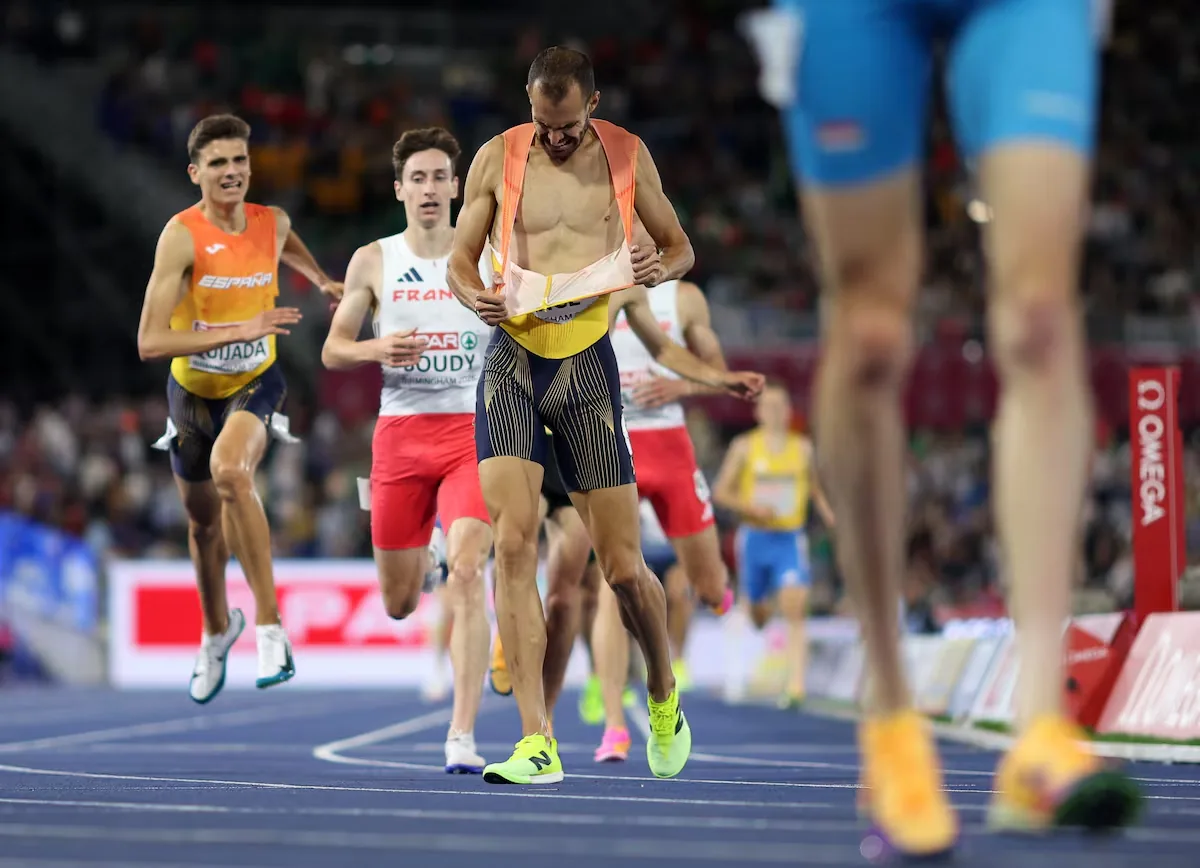
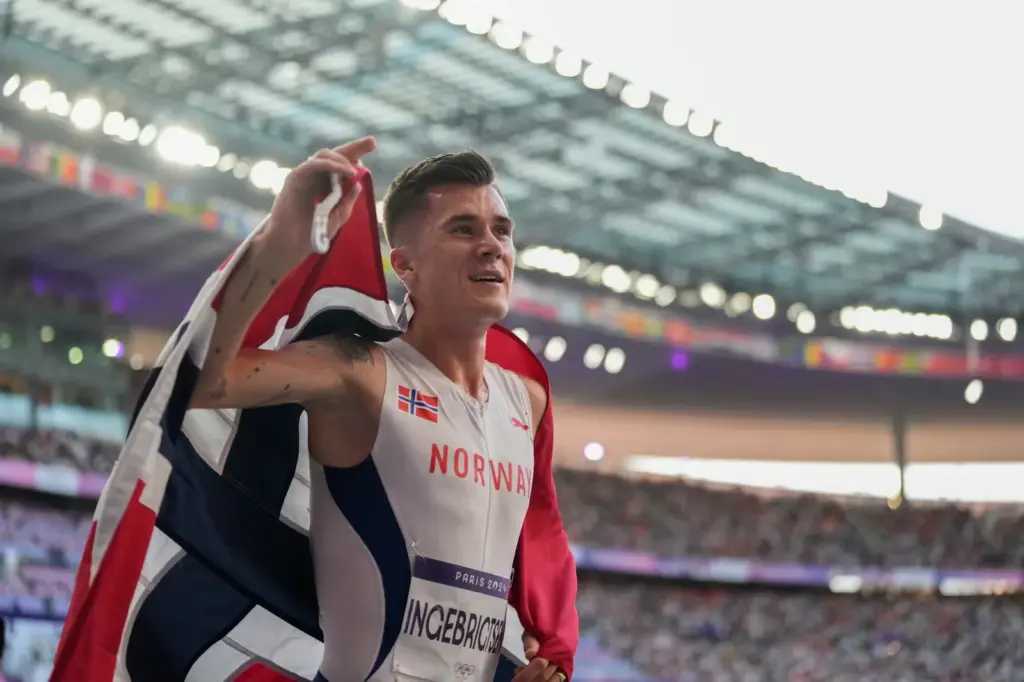
At the Alexander Stadium, famous in the Commonwealth, some of the great global stars will compete for seven days, led by the number one, the one who claims all the spotlight while competing, alone in the stadium seeking a world record so many times, Duplantis, in a European Championship to which Spain contributes 93 athletes, the largest team in its history, more women than men and the same hopes. Returning, after two years of hardships, injuries, pains, despair, and unique, tenacious persistence, are two Spanish athletes from the 2000 generation, María Vicente, on the way to recovering her marks in the heptathlon (Friday and Saturday), and Sara Gallego, who continues progressing in the 400m hurdles (final, Wednesday after the eclipse and sunset, at 22:00), and also returning, on a global scale, is the desired Jakob Ingebrigtsen, also, like Vicente, operated on the Achilles tendon. His last appearance with a bib was brief and tough, at the failed Tokyo World Championships last summer. Revealed to the world, like Duplantis, also a brilliant teenager, at the 2018 Berlin Europeans, with double victory in 1,500m and 5,000m, and after achieving the double twice more in a competition where he is unbeaten, Ingebrigtsen will only run the 5,000m in Birmingham, where there will be no Spaniards. He will not run the 1,500m, nor will the great world figure of the moment and his great rival in world and Olympic finals, the Scot Josh Kerr, who on July 18 broke the historic world mile record in London, erasing, with a time of 3m 42.66s, El Guerruj’s 3m 43.13s from 27 years ago.
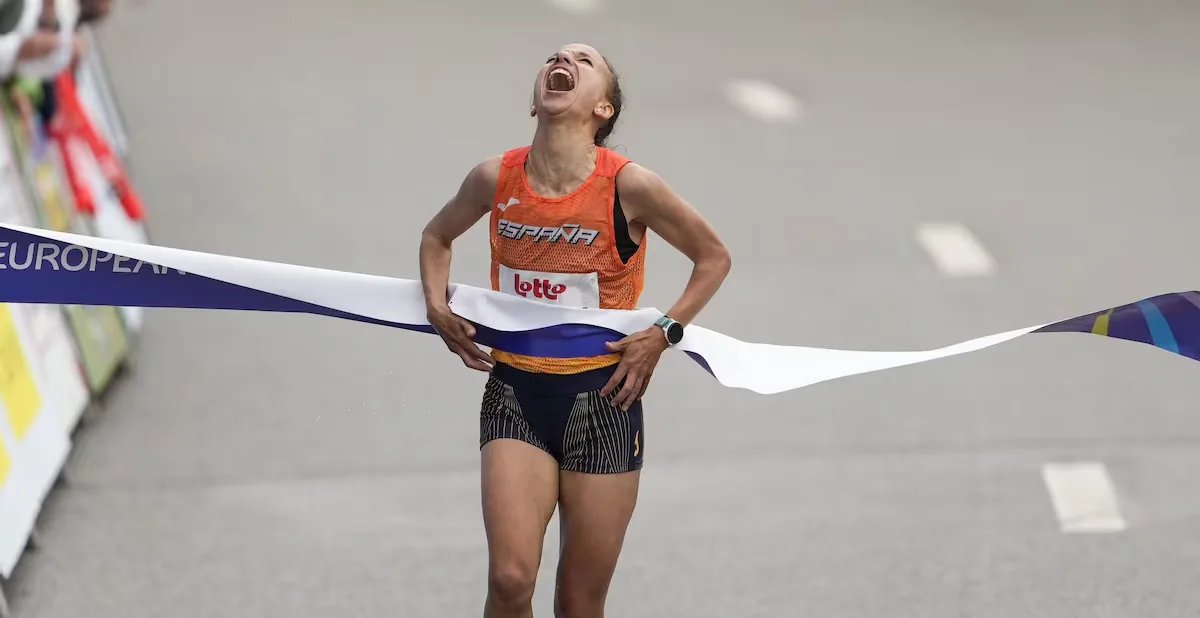
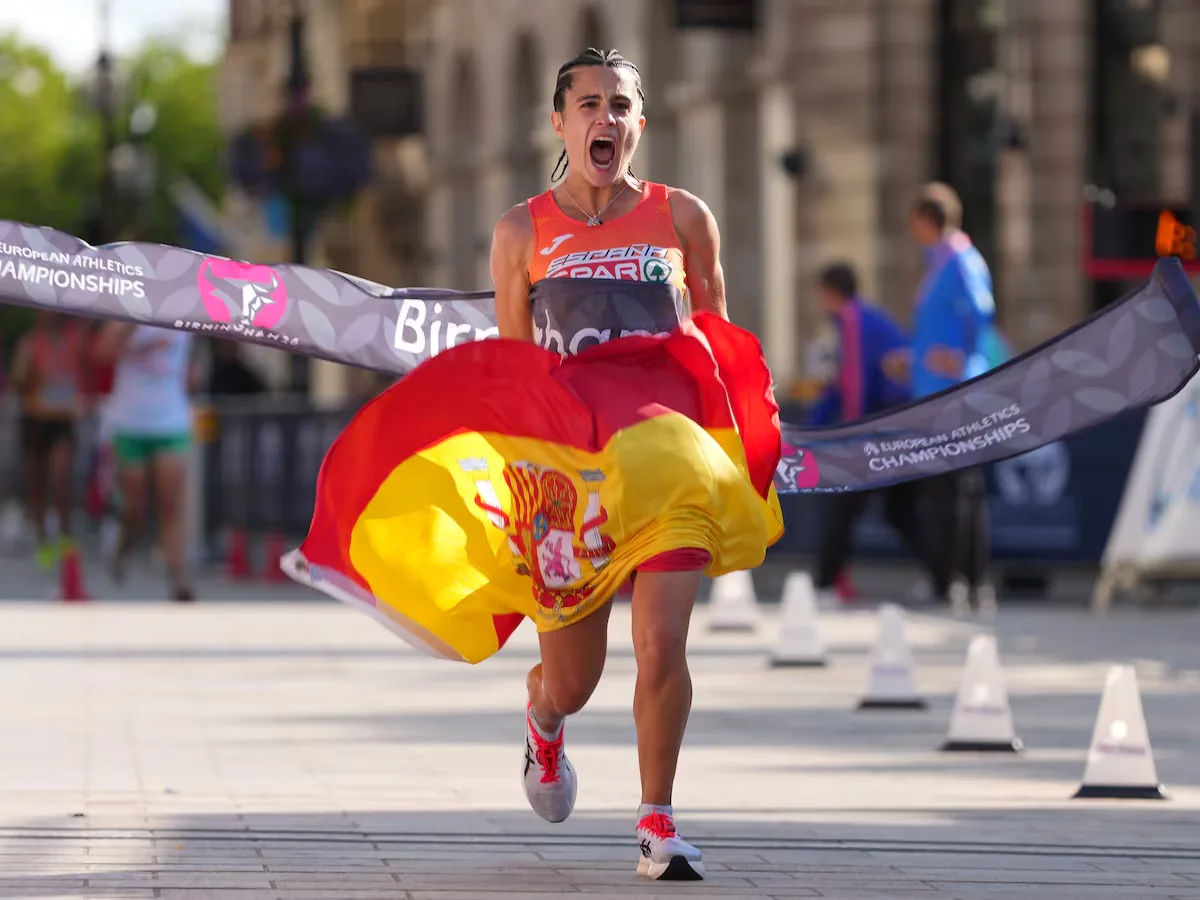
In the sights of the Spaniards, despite the absences of Jordan Díaz and Ana Peleteiro, are the eight medals of Rome 24. And racewalking, as the spearhead, the imperial María Pérez, several times world, European, and Olympic champion at all distances, and the young but mature Paul McGrath, world and European medalist at 24 years old. Their adventures through Victoria Square (Saturday, 8:30) will, however, be as darkened as the sun on the 12th at sunset because in a rash move the European federation decided that men and women compete simultaneously in the two newly invented distances in a discipline fighting not to disappear from the Olympic program, half marathon and marathon: four golds, 12 medals, at stake in a one-kilometer labyrinth. A degraded and unintelligible competition.
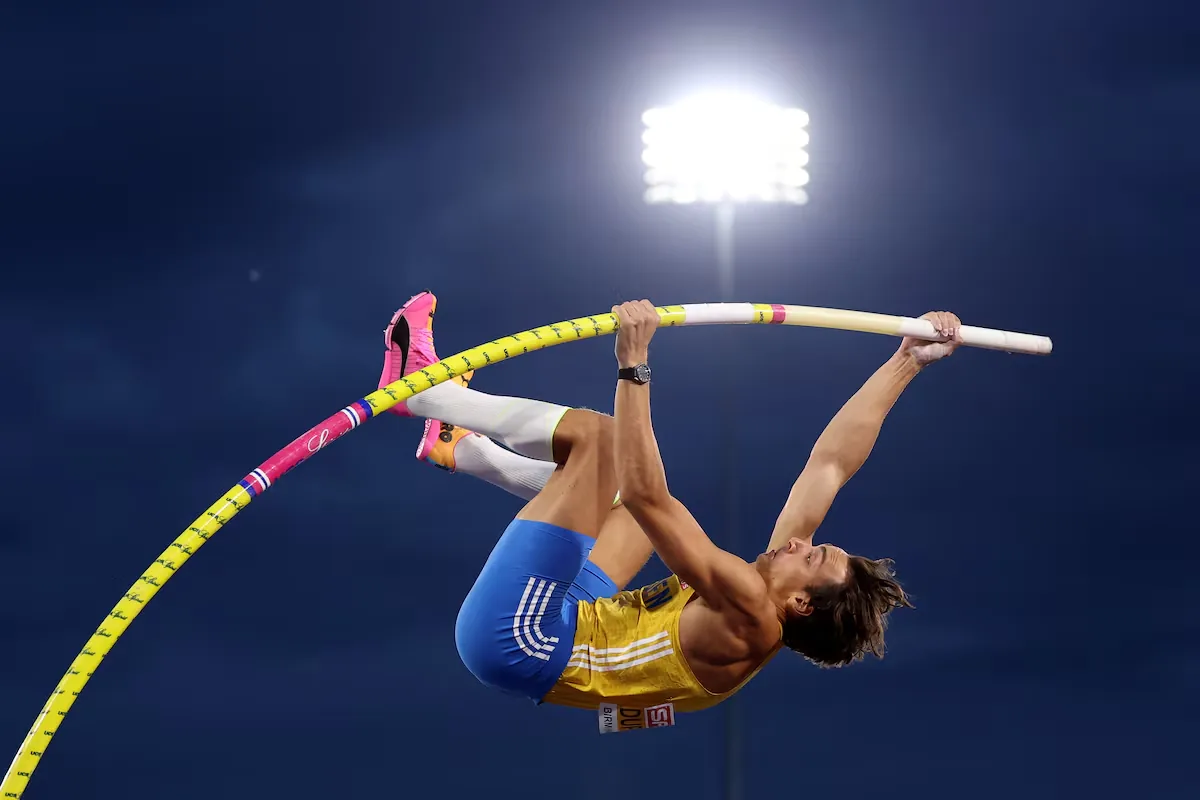
Clearer will be the star pole vault and other contests in the stadium. Duplantis will compete against the Greek Manolo Karalis in a new staging of the latest Olympic and world finals (Sunday, 20:30, and tickets at £6.31, a nod to the current record), and in the sand pit, triple jumpers (Saturday, 21:17) Pichardo and Andy Díaz, Cuban with Portuguese and Italian flags, silver and bronze at the Paris Games, which will highlight more the absence of the compatriot with the Spanish flag Jordan Díaz, absent and lost on the paths of Guadalajara that he walks every morning since the double gold at the last Europeans (Rome 24) and a month later in Paris. In long jump, the three magnificent Spaniards – Cáceres, Guerra, and Lescay – will clash (Tuesday, 21:16) against the world leaders of recent years – Tentoglu (8.66m this year), Saraboyukov (8.49m), Ehammer (8.51m), and Furlani (8.43m); and the Spanish women growing with Pedroso in Guadalajara, Diamé (6.85m) and Ebosele (6.86m), will face in the same arena (Sunday, 21:05) two of the best in the world, Iapichino (7.12m) and Mihambo (7.05m).
Another Olympic champion and Scandinavian world record holder, Norwegian Karsten Warholm, will fly over the low hurdles in the 400m, a race in which the patient Canarian of Alex Codina, Jesús Delgado, “El Flaco,” will try to measure himself against the Viking’s 45.94s with his national record of 48.11s in the final on Friday (21:40). Marcell Jacobs, the Italian sprinter who won the 100m gold in Tokyo 21, will seek his resurrection (Tuesday, 22:47), and all imaginable events will not be for the most conscientious fans but a prelude to what is announced as the great race of the Europeans, Olympic final level for the battle between Swiss Audrey Werro (22 years), English Keely Hodgkinson (24), and Dutch Femke Bol (26) in the 800m (Friday, 22:46). Pushing each other in their duels in the Diamond League, Werro (1m 53.80s) and Hodgkinson (1m 54.33s) have come close to almost burning the last century’s world record, other times for anabolic steroids, of Czech Jarmila Kratochvilova (1m 53.28s), while the Dutchwoman, after revolutionizing the 400m hurdles alongside Sydney McLaughlin, has launched herself this valley year towards the next Olympic Games adventure of starting in the two-lap race. A few months in, 1m 55.60s, the 24th best mark in history. Like her, Rocío Arroyo (23 years, 1m 59.17s), one of the progressing Spanish women in the distance, comes from the 400m, and in a tough year of confirmation in the elite, will try to reach the final, a goal also for Marta Mitjans (19, 1m 59.28s), another woman of the future. The 800m is, thanks to them and some men, the reference distance in Spanish middle-distance running. A 19-year-old from Puertollano, Alejandro Ríos, won a bronze medal last night in Oregon, at the Junior World Championships, and already announces the future in a race whose heats begin this Monday, in which the Extremaduran David Barroso (24 years, 1m 43.60s) is progressing and in which the Cantabrian Moha Attaoui (also 24) established himself among the world crème de la crème two years ago, with his record of 1m 42.04s and Olympic and world finals. Although his summer has not been the dreamed one, Attaoui, who came close in winter to the world indoor 1,000m record, and silver medalist at the last Europeans, is considered a favorite for gold (Thursday, 22:28).