Nora Murillo has woken up several times asking God that it all be a nightmare. She has been trapped in Aguascalientes, the Mexican state where she was born, for six months. She arrived in February to accompany her father, who was sick with cancer, not imagining that when trying to return to Washington, where she had lived for 27 years, she would be denied entry to the United States. That day she discovered that her application for permanent residency had been rejected. “If I had known this was going to happen, I would never have gone to Mexico. Never. To lose everything, to lose my jobs, to be separated from my children,” she laments in an interview with EL PAÍS.
Read more The race for minerals and a justice perspective for Latin America
The “if only” no longer exists for this 46-year-old Mexican woman, who left her three children in Seattle, all U.S. citizens aged between 21 and 24, as well as two jobs. In one of them, she assisted children with autism in a school district. “Of everything, the hardest thing, regardless of the jobs and the situation, is being apart from my children,” Nora says between sobs. Until a few days ago, her youngest son was able to travel to Mexico to visit her. His presence was a relief amid this period of uncertainty. The day she was detained at the airport, she was not allowed to do anything but wait for the flight that would return her to Aguascalientes. “I wasn’t expecting something like that,” she adds.
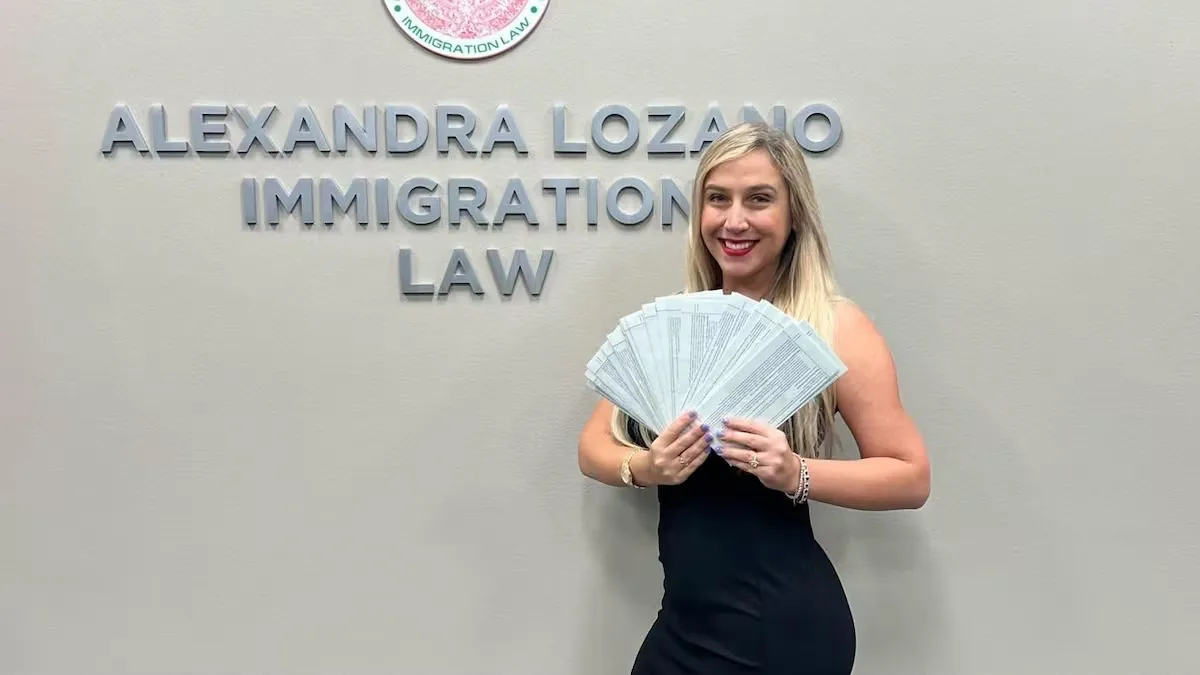
Nora is one of six immigrants who ended up deported to Mexico and who attribute their situation to what they consider negligence by their legal representative, Alexandra Lozano, who turned the nickname ‘The Lawyer of Miracles’ into part of her advertising strategy. Two class-action lawsuits claim that Lozano lied or exaggerated information in applications submitted under a law that protects certain victims of violence and allows them to request immigration benefits. Dozens of cases that her law firm represented were rejected. Lozano resigned her license to practice law and closed her offices, leaving about 54,000 cases in limbo. Some consider it one of the biggest alleged immigration fraud scandals recorded in the United States in recent decades.
Like so many others, Nora fell into Lozano’s web. She had seen her marketing videos on social media, in which the lawyer projected an almost providential image of herself, as someone capable of winning even the most complicated immigration cases. Nora was struck by the painting of the Virgin of Guadalupe that welcomed visitors in Lozano’s office in Seattle. “As a Catholic, you easily get carried away by these things,” she says.

They convinced her, she assures, with the promise that in a few months she would obtain a work permit and, later, the coveted green card. They even offered to refund the $15,000 she would end up paying if they failed to help her become a permanent resident. “She made it seem very easy,” this Mexican woman recounts. “She told me: ‘Don’t worry, we have the right program for you’.”
That program was the VAWA Law, which under certain circumstances allows survivors of domestic violence and other crimes to request immigration relief. Lozano’s firm took Nora’s testimony as a victim over the phone. More than half of the statement they prepared and sent to the U.S. Citizenship and Immigration Services (USCIS) contained false or exaggerated information, Nora claims in her lawsuit. “I remember calling them to tell them that many things hadn’t happened,” she says. Despite that, no one from the legal office asked her for evidence to support the claims included in her application.
“Of course it makes you angry”
The progress of her immigration process allowed Nora to request a travel permit, known as advance parole, to visit her father in Mexico, who was sick with cancer. She traveled to Aguascalientes about five times. Lozano’s office was supposed to keep her informed about her case. That’s why Nora returned to her homeland confident that her process was ongoing. The last visit was on February 12. Five days later, upon landing at Seattle airport, Customs and Border Protection (CBP) agents took her to an isolated room while they checked an alert in their system. Later they told her she had missed a hearing before an immigration court and that her case had been rejected on January 2. “I was not notified about either of those things,” she assures.
Read more Time of tragedy, time of solidarity
In federal custody at the airport, Nora had two options: fight her case from an Immigration and Customs Enforcement (ICE) detention center or close the process and return to Mexico as soon as possible. She chose the second. The next day she took a flight to Aguascalientes. “I was in shock. For weeks, every time I woke up I still said: ‘Let this be a nightmare, let none of this be happening’.”
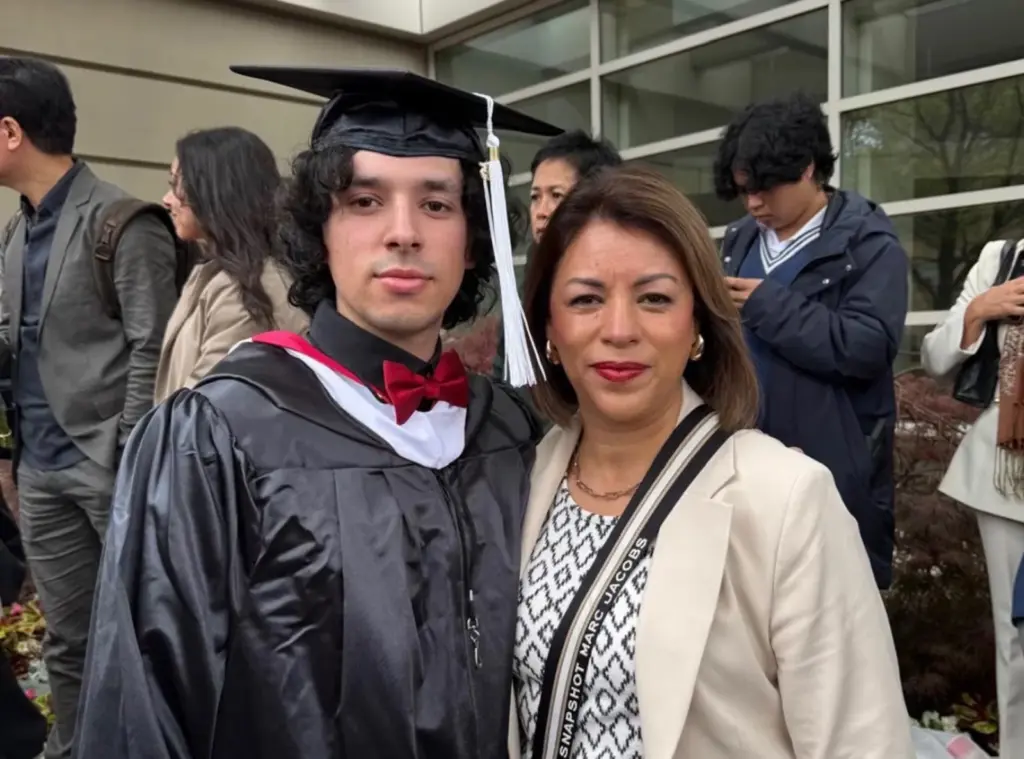
On February 18, she definitively returned to her parents’ home, which she had left in 1999. In Washington, she left behind her entire life. “It was devastating, it was a tragedy for her,” says her lawyer Vicente Barraza, who claims that the Lozano scandal reveals “a level of greed I had never seen before.”
In Mexico, Nora continues looking for a job that allows her to make use of what she learned during her years in the United States, but she believes her age has become the main obstacle. “I have been applying for jobs and in most the limit is 40 or 45 years old. Of course, there are labor jobs, doing things that physically I no longer feel capable of enduring, like standing for so many hours,” she laments.
From her homeland, Nora launched a legal battle against Lozano and became one of the first nine people to file a lawsuit before a federal court in Seattle. The process contributed to ‘The Lawyer of Miracles’ ultimately returning her license to the Washington State Bar Association. More complainants later joined. There are now at least 35, including five other migrants who, like Nora, were deported to Mexico: Severo López, who now lives in Jalisco; Carlos Navarro and Ricardo Reynoso, who returned to Michoacán; Isidro Mendoza, returned to the State of Mexico; and José Luis Ortiz, who went back to Hidalgo.
The lawsuits have also put under scrutiny the assets Lozano allegedly built at the expense of the high fees she charged her clients, up to $25,000. According to the complaints, with that money she acquired a private jet valued at $25 million, a mansion in Mexico City, and two luxury condominiums in Seattle and Chicago, for which she allegedly paid $4 million. “Of course it makes you angry,” Nora says, somewhat angrily. “We were the ones who helped her make those purchases; with these high prices, with these unfulfilled promises.”
Nora trusts that her lawsuit will allow her to recover at least part of the $15,000 she paid, although she knows her immigration case is lost. But above all, she hopes her story will help prevent others from falling into Lozano’s clutches. “Why did she make us those kinds of promises?” Nora asks, addressing the lawyer who destroyed the life she had built in Washington. “Why did she make us dream if she knew this was a risk?”