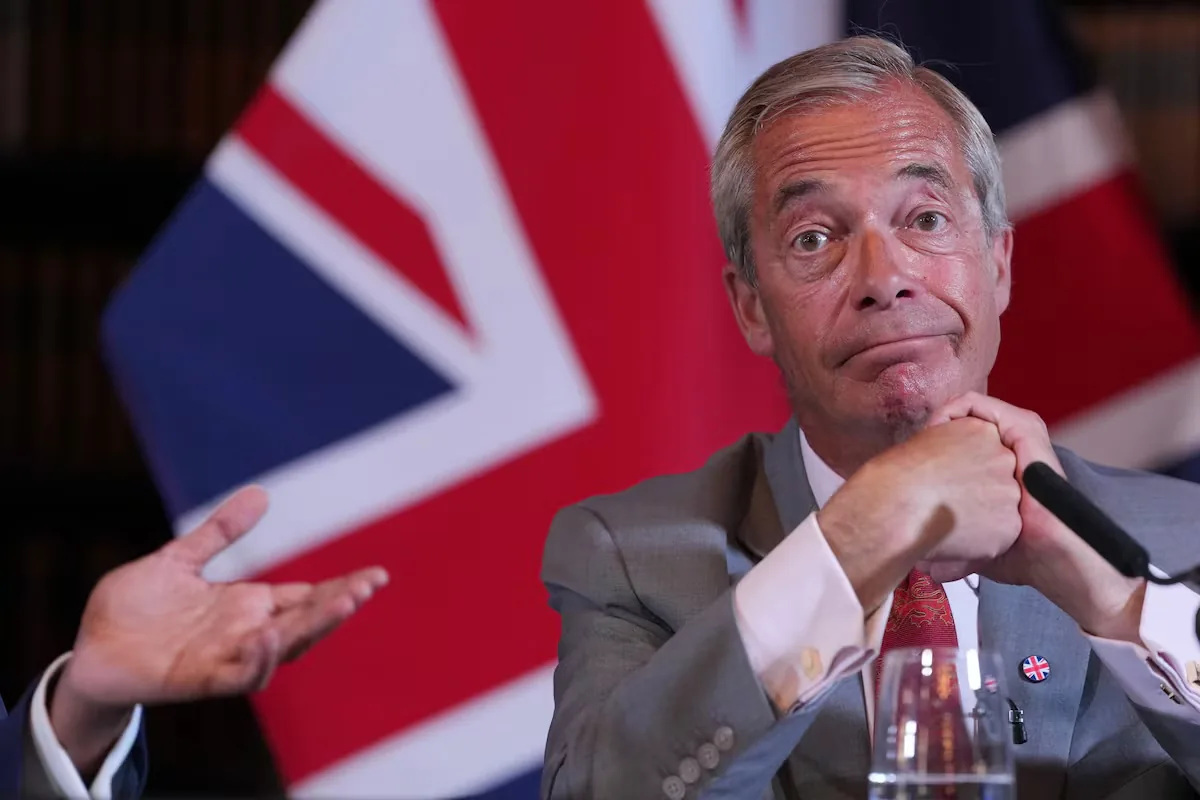
The vote with the most candidates in the history of the British Parliament takes place this Thursday in the Clacton-On-Sea constituency (in the southeast of England), a stronghold of far-right politician Nigel Farage. Despite the boycott by the main parties in the United Kingdom, up to 33 candidates from minor parties or independents are competing with the leader of Reform UK for the Westminster seat he himself had resigned from five weeks ago, in response to corruption allegations and increasing scrutiny over his finances. Farage hastened the call with the purpose of running for re-election and obtaining the endorsement of voters in the face of a parliamentary investigation into undeclared donations.
Read more The increase in diesel prices forces the Government to raise the tax cut to 20 cents in September
Polls give Farage a crushing victory, over 70%, but his attempt to present the elections as a struggle of the “people against the system” has resulted in a fiasco after the major forces declined to stand, considering the maneuver “a circus” and “a farce.” In his absence, the list of opponents to the Reform UK leader is dominated by satirical candidates, maintaining the long tradition of humor as one of the components of the British electoral landscape. Farage’s main rival is Count Binface, alter ego of comedian Jon Harvey, who has gained significant attention with a flashy campaign that mixes absurd sarcasm with serious demands.
This Thursday’s event breaks several records. In addition to the highest number of candidates, eight more than the 26 of the previous record, set in the 2008 Haltemprice and Howden by-election (in northern England), there are 20 independent candidates, an unprecedented volume. As a result, the ballot paper is also the longest in history. It measures 90 centimeters, longer than the arm of most adults, a length that imposes its own operational challenges and whose printing is four times larger than usual.

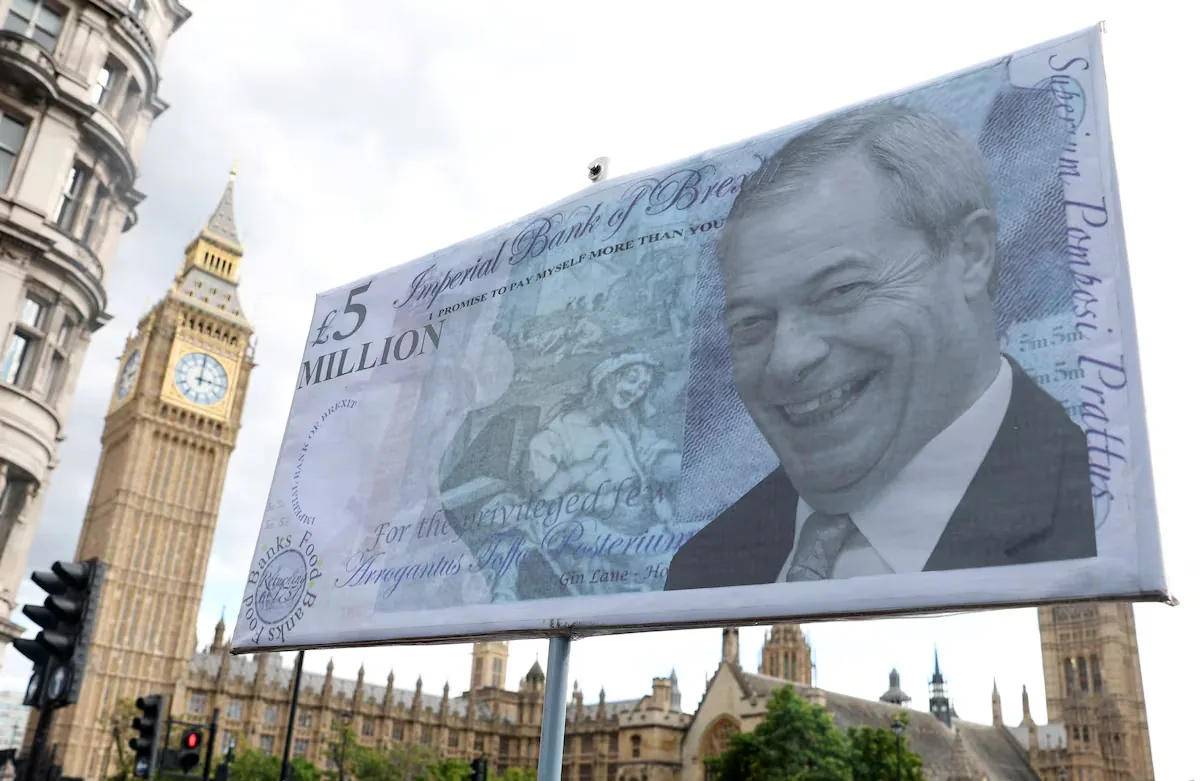
The call, which will cost taxpayers about £250,000 (almost €300,000), has been questioned, given the sure victory of someone who was already an MP. If Farage’s goal was to derail the parliamentary investigation, started in May, into an undeclared donation of five million pounds (about €5.7 million) from businessman and cryptocurrency investor Christopher Harborne, the by-election has only managed to delay it. The process has only been temporarily halted and is expected to resume once the Reform UK leader returns to Westminster.
If the regulator concludes that he violated the ethical code, Farage could receive a minimum suspension of ten days, which would open the possibility of another vote in his constituency. If signatures from 10% of Clacton-On-Sea voters are collected, another election could be forced. In this scenario, the main parties would indeed stand, complicating the re-election of an MP who would come from being reprimanded by parliamentary authorities for breaking the rules.
Read more Galicia seeks the secret of its extreme longevity
An unprecedented scenario
The result will be known on Friday, but any percentage that is not overwhelming will be a blow to the leader of Reform UK, who is also under other suspicions, such as the funding received for years from George Cottrell, known as George the Posho, an aristocrat convicted in the United States for electronic fraud by participating in a money laundering scheme for drug traffickers.
The count could take longer than usual due to the number of candidates. Just finding a way to fold the ballot paper has been a challenge, given the difficulty the resulting thickness posed for inserting it into the postal vote envelope, as well as for passing it through the slot of the ballot boxes. The size also brings inconveniences for the count once voting ends at ten at night (one hour later in mainland Spain time). The paper is longer than many of the counting tables, so it will be necessary to place them two by two to verify the ballots. The process will also have to be done in rounds.
The by-election has attracted characters already familiar in the British electoral scene, some with decades of experience, such as the leader of the Official Monster Raving Loony Party, Alan Howling Laud Hope, who since 1983 has stood for Parliament 37 times. Since he has never reached the 5% threshold set by law to recover the £500 deposit (about €590) that each candidate must pay to run, he has lost nearly £20,000 at the current exchange rate. His party has two more candidates this Thursday, including Nick, The Incredible Flying Brick, second, after the leader, in the number of times he has stood for a seat in Parliament, 14.
Read more Nakashima ends Jódar’s dream at the Canada Masters 1000