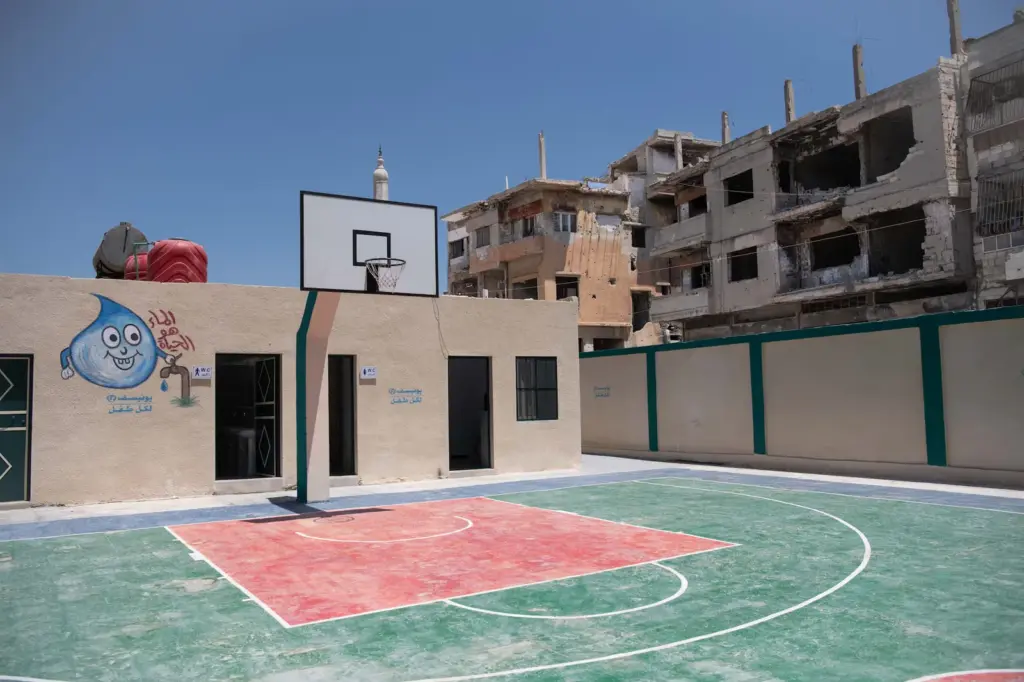
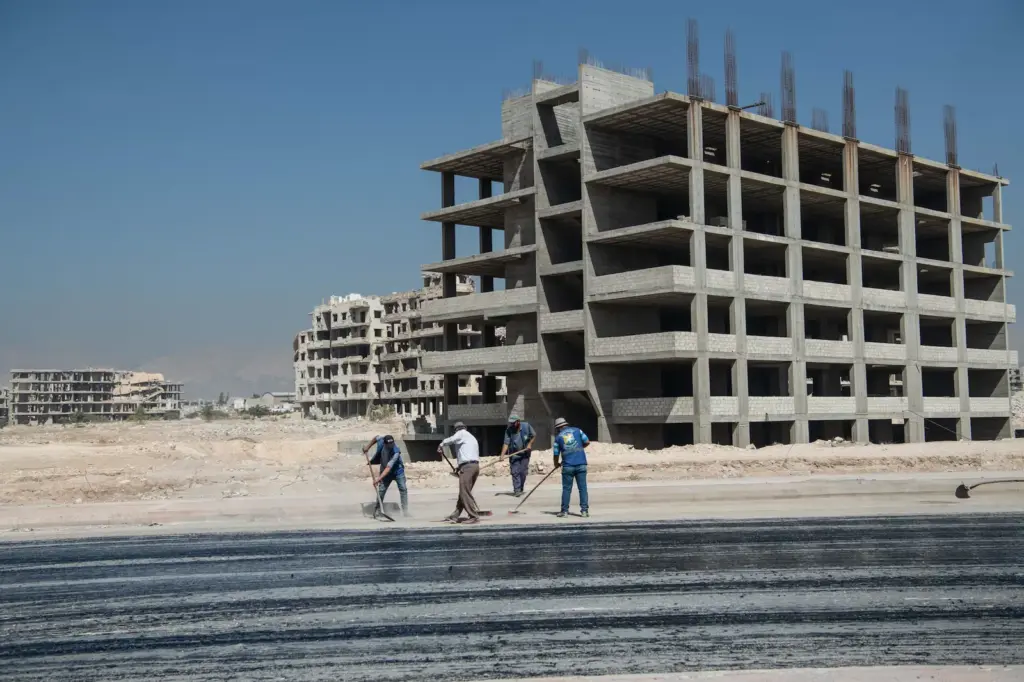
There is some optimism for the Syrians who, while much of the Middle East is dragged into the war unleashed by Israel and the United States against Iran, in their land — where a dozen regional and international actors fought multiple wars for 14 years — pistachios are overflowing during the harvest, solar panels are becoming common in the landscape, and it smells like freshly laid asphalt on the main avenues of the country. It does not happen everywhere, and always more in the cities than in the countryside, but something is moving among the, until a year ago, static image of destroyed buildings and bridges in Syria.
Read more Spain will maintain its strategy with Morocco intact despite criticism over the Ceuta crisis
The people say that the long-announced start of reconstruction has not yet arrived, nor the aid promised by the Gulf, Europe, or the United States, but even so, citizens are rushing to return, pushed to start the process of rebuilding their homes and cultivating their fields alone. “I left the youngest [children] with the family until the situation is more favorable,” says Mohammad Riad al Nassa in the village of Al Hamamiyat, in the northwest of the country. His wife, Samar, has given birth to nine children. The youngest live with their sisters in the Atameh refugee camp, in the northern province of Idlib.
“There are no schools within three kilometers on foot here, and the nearest hospital is about 18,” justifies the head of the family. He sent the eldest daughter “to the city, to another relative’s house” because “she is very intelligent and disciplined in her university law studies,” he says with as much pride as sacrifice. The decision to leave the camp and return to their village was encouraged, he says. First, they cut off their access to water, then reduced NGO services, and it was then that many families left, making it more unsafe for the rest to stay.
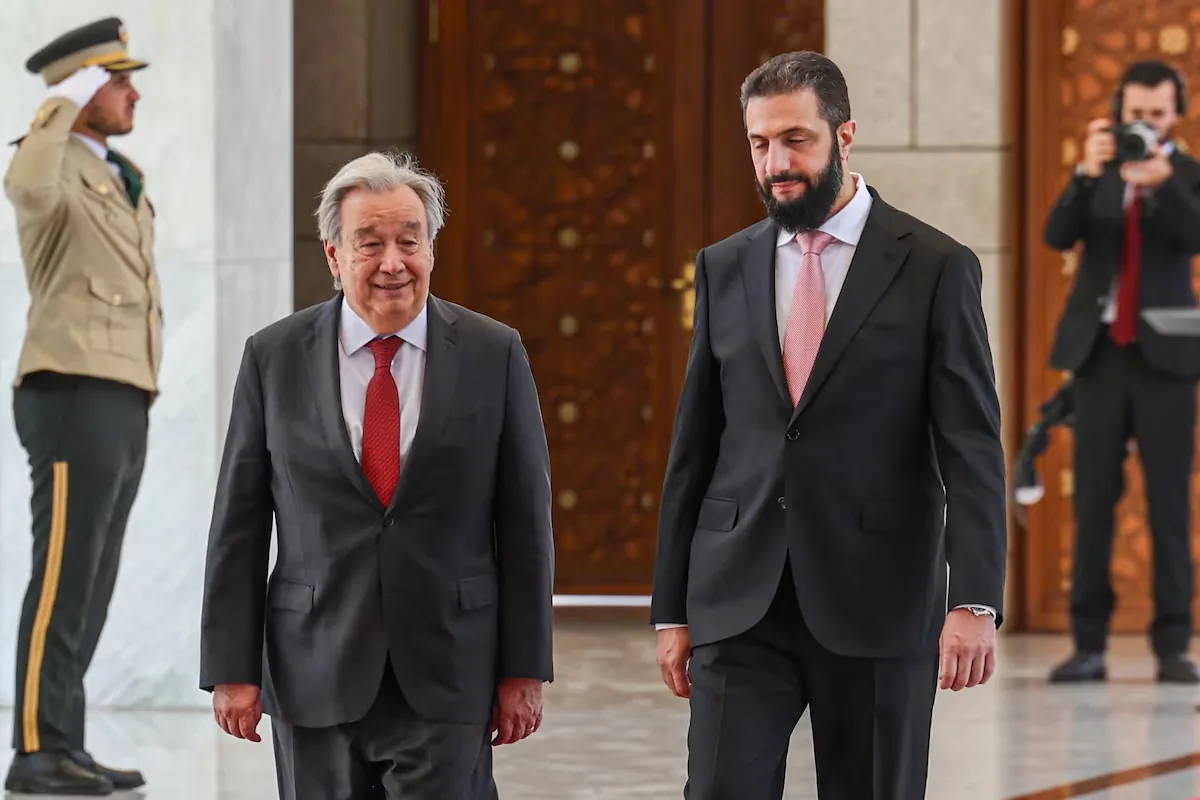
The new Damascus government headed by Ahmed al Shara has been in power for 20 months since overthrowing Bashar al Assad. It has already designed its new Strategic Plan for 2026-2028, with which to coordinate international aid. With limited resources, schools, hospitals, roads, and access to water and electricity are priorities to serve a population in which 90% live below the poverty line. The document includes the maxim of “zero camps [for refugees].” They want, say officials of the new bureaucracy in Damascus, for Syrians to “break with the inertia of welfare and dependence on the outside and work.” There are 1.4 million citizens in tents out of 6.2 million internally displaced. In total, more than three million Syrians have returned to their place of origin among internally displaced and refugees outside the country, half of them minors, according to the UN. Host countries such as Turkey, Lebanon, or Germany are pressuring Damascus to return some of the refugees they host, due to the cost it entails for their domestic policy in electoral calculations.
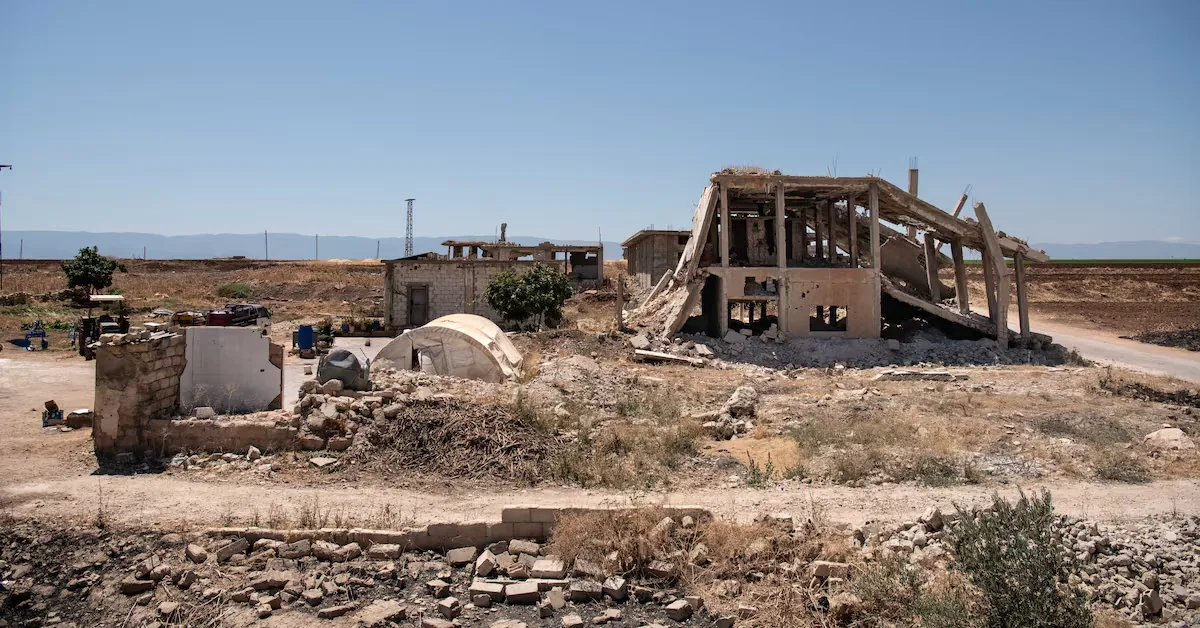
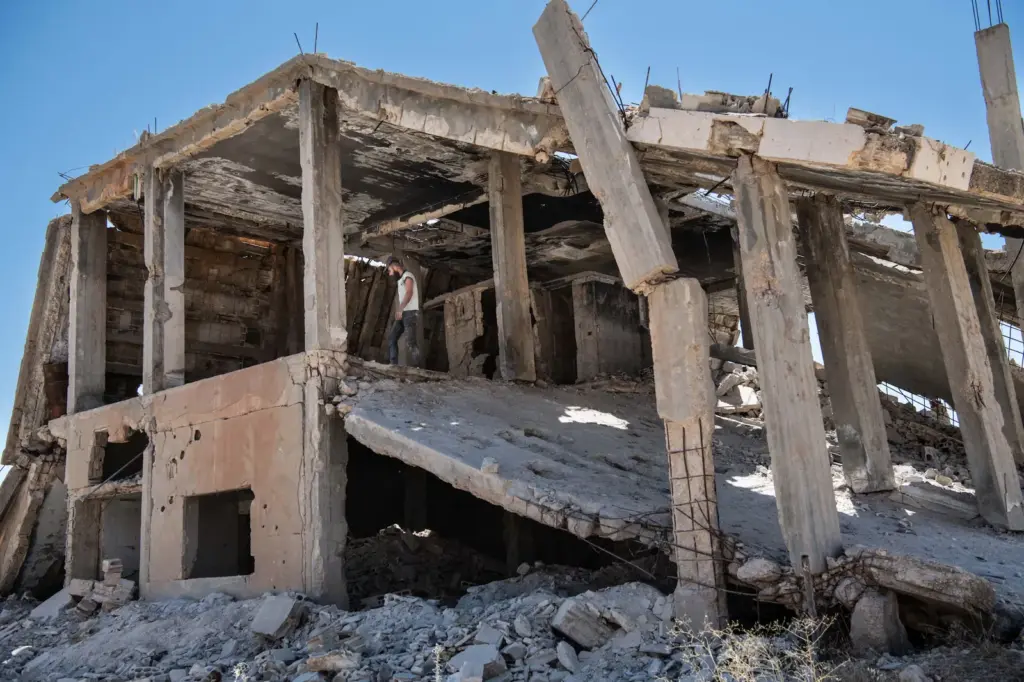
What the new government does not explain is how those returnees are supposed to live while the promises of aid do not materialize in bricks, jobs, public transport, or hospital beds. So Mohammad’s family, like several of their neighbors, decided to stop waiting, dismantled the tent, and set it up again next to the pile of rubble that was once their house. They have no other choice. The village is completely destroyed by bombings from a Syrian air force that coveted the M5 highway, which connects the north and south of the country from Turkey to Jordan and which, to the misfortune of the inhabitants of Al Hamamiyat, passes just a few kilometers away. Thus, its streets became a war front in the province of Hama.
I was turning the soil of the peppers when I stepped on something hard. I lost consciousnessAli al Jalaf, farmer mutilated by an explosive
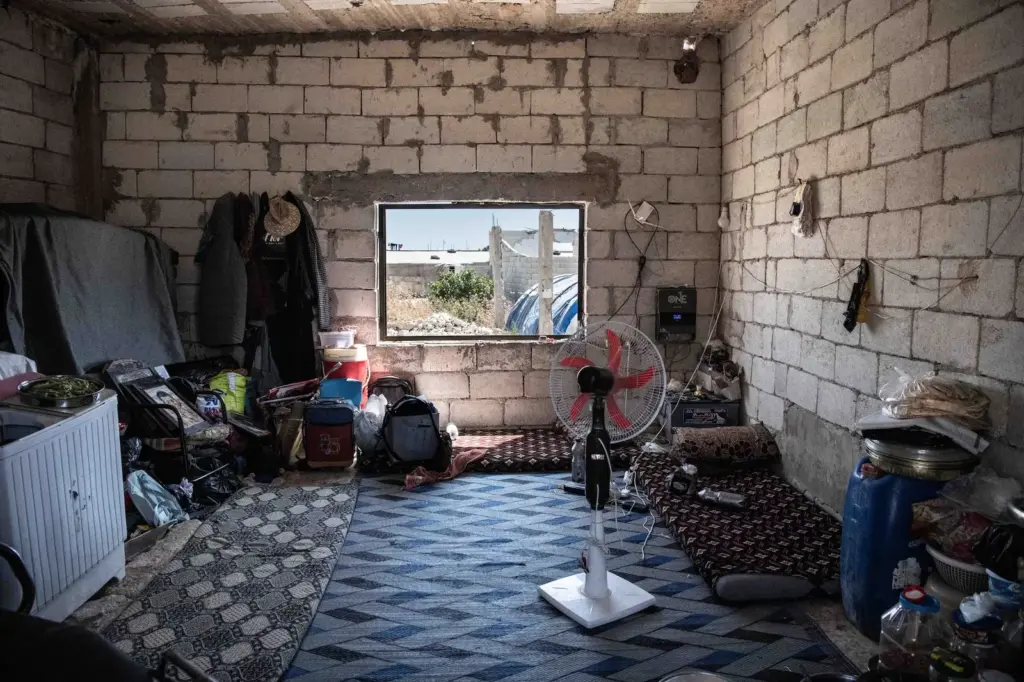
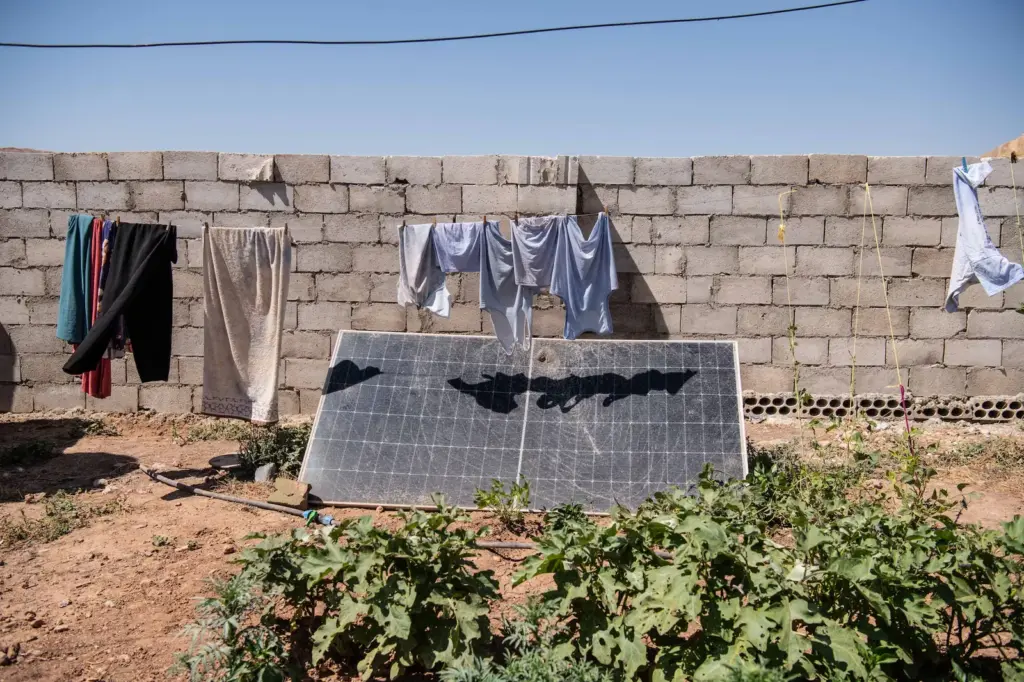
“We started by rebuilding this room and are redoing the rest of the house as some money comes in,” continues the head of the family. From the window of the small room where the parents and four children sleep crowded with three pigeons, in the usual infernal heat of the Syrian summer, you can see the house of their neighbors, transformed into a cement cake. They have also set up a tent to the right, on whose edges sprout green blades of mint and basil planted by its owners. An image that is replicated across the village and throughout the country. Because, as the Al Nassa family clarifies, they are not starting from zero, but from less than zero. “Before building, you have to remove the rubble, and that takes time and money.” They replace the lack of state amperage with the purchase of solar panels, which allow them to work one of the most fertile lands in the country, extracting water from wells for irrigation that gives them income, as well as food. Others simply connect a cable to the nearest state pole, they admit shrugging.
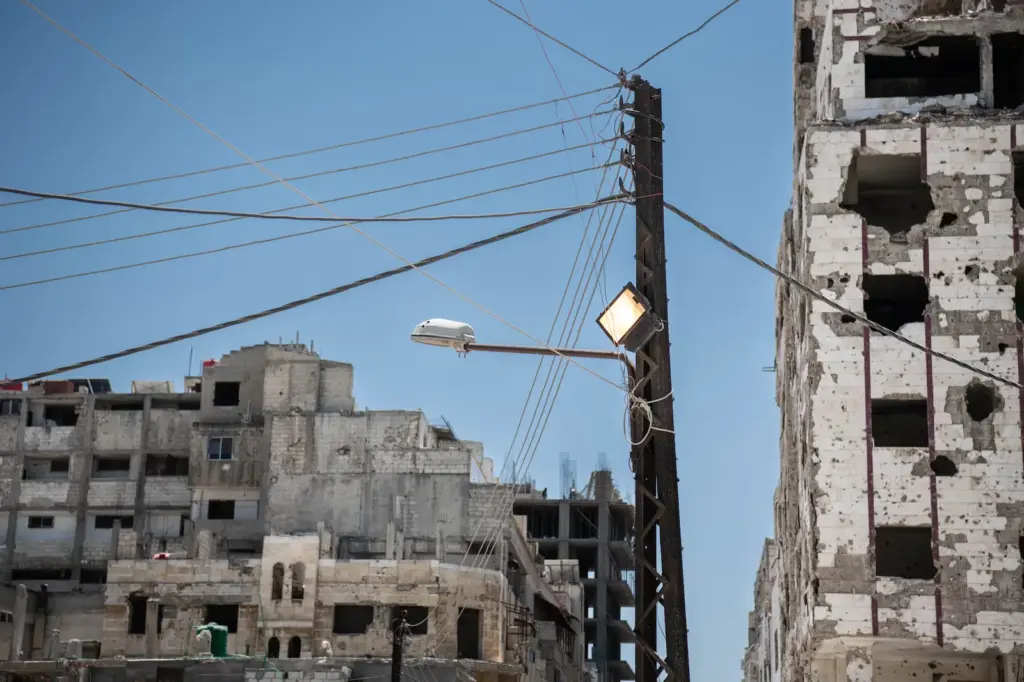
Although most Syrian fronts quieted 10 years ago when Bashar al Assad’s army took the city of Aleppo, little progress was made in rebuilding the areas that remained under his control beyond clearing rubble and debris. Some residential building complexes in large cities like Aleppo or Damascus did, today concrete monsters paralyzed after the flight of their Iranian and Russian promoters or Syrian oligarchs close to the regime.
With Al Shara’s arrival, the construction machinery is shifting across the country map, with timid investments arriving from Gulf countries and Turkey to Sunni working-class neighborhoods, the most destroyed. Mosques and schools have been the first to flourish among the heaps of iron and cement. Places of worship, because they bring peace to those who have suffered too much and have been left with nothing, but also because of the funds that arrive in a more subtle competition among the different religious schools of the region. Schools, so there is no other illiterate generation after the war. In their classrooms, the new socio-confessional order is already beginning to be reflected with boys and girls segregated and new orders that in secondary school, schools be separated by gender.
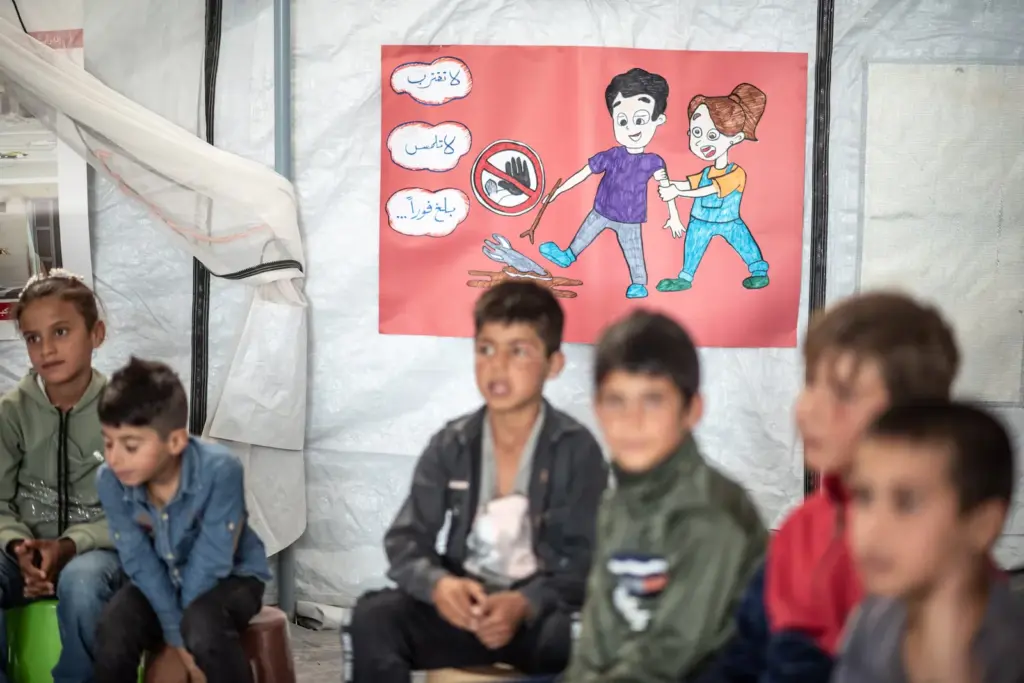
The path from destruction to reconstruction is not without risks, despite talk of a precarious but “safe” return. Two neighbors who returned from the Al Nassa family died after stepping on an unexploded mortar while clearing debris from their land. The UN raises the number to 324,000, mostly in rural areas where the fighting was tougher than in the cities. In provincial capitals, those who still have an economy fill restaurants and hookah cafes.
Read more Three people die, one of them a minor, in a shooting in Isla Cristina (Huelva)
“I was turning the soil of the peppers when I stepped on something hard. I lost consciousness,” recalls a resigned Ali al Jalaf in a video call, a farmer who at 29 years old is already the father of six minors. On the mobile screen, he is seen rubbing the stump that hangs below his left knee on a rickety plastic chair. Originally from another village in Deir Ezzor, he was displaced three years ago to Majawda, from where he speaks, in an agricultural province of impoverished and conservative people, traditionally neglected by the central government, whose employees extracted crude oil from the area without redistributing the income.
The farmer has undergone two operations in the last 14 months since he suffered the “accident,” but cannot afford a third to remove shrapnel that “burns day and night.” The image starts to jump when Al Jalaf decides to get a glass of water. Without crutches, prosthetics, or a wheelchair, he only has the option to hop on the leg he has left. He has been condemned to the charity of relatives to support his family. “The social stigma is a problem that condemns the injured, who in turn already suffer from post-traumatic stress,” says Dr. Yaman Sada in a phone conversation, who works with Doctors Without Borders at the Deir Ezzor hospital. They have already received 218 victims of unexploded explosives this year, he points out. Across the country, there have been 1,419 deaths since December 2024. Most cases are concentrated in rural areas, Sada continues, who has treated children returning from school and those playing in the field (minors account for 40% of the injured), as well as farmers and shepherds.
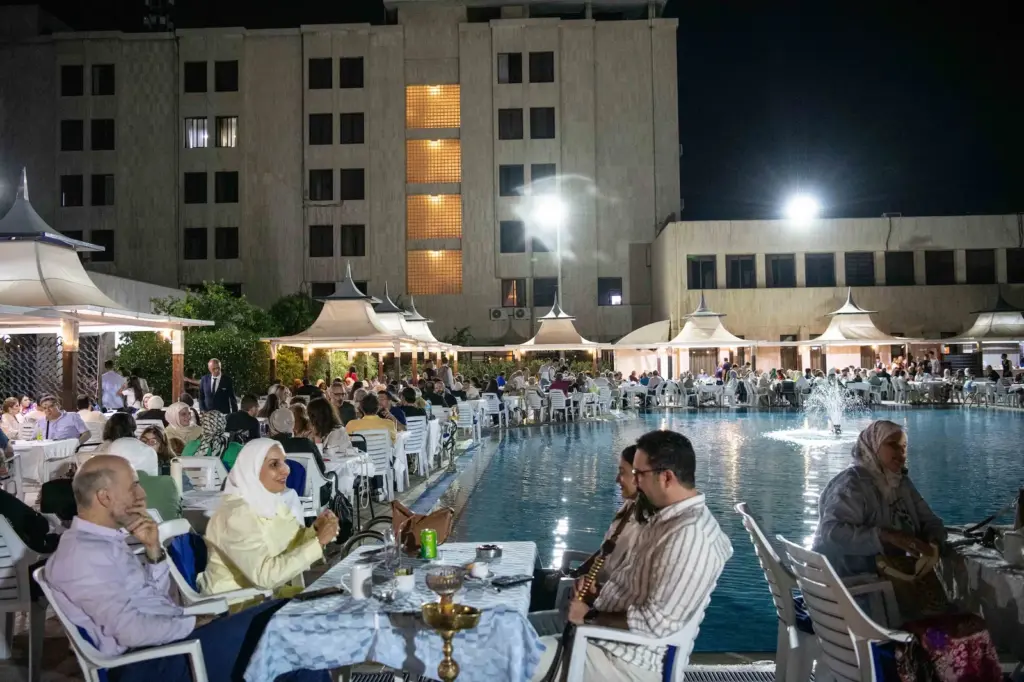
José María Vera, director of Unicef Spain, raises his eyebrows seeing a dozen boys and girls raise their hands. He has just asked: “How many of you here have seen a real mine?” to the twenty students between 10 and 12 years old who crowd around him in a tent that serves as a safe playroom in the village of Mehin ― in the Syrian desert of Homs ― during a trip by this newspaper to the country facilitated by the organization. A teacher shows them photographs of the different types of mines and explosive devices they might encounter. The message of the drawings stuck on the tarps is simple: “Do not touch and immediately run to warn an adult.”
The risk and increase in accidents have led parents to forbid their children a basic right such as going out to play in the field. The prohibition frustrates Emad al Hasan, who at 10 years old has just arrived from Turkey. Also, he loves football and Spain was his favorite team in the World Cup. “Return” is a concept too abstract for Emad who, born in the neighboring country as a refugee, steps into Syria for the first time in a village that is strange to him and where he has no friends. He speaks Arabic at home but does not know how to write it because he studied in Turkish.
His mother shares her experience with other neighbors of Mehin in a conversation that becomes a kaleidoscope of experiences about the meaning of return, whether from Lebanon, Turkey, Jordan, Germany (the few), or Idlib. One of those present, the only one who stayed in the village during the 14 years of war, decides to air her discontent without reservations. “Let’s be frank, there is a hierarchy here and at the top are those who have returned from Idlib,” she sighs from frustration. She refers to the northern province of the same name and insurgent stronghold that remained protected by Turkey and from where most of the new political elite of the country has come. “Then there are those who return from Turkey, then those from Germany, and at the very bottom are us, those who did not leave because we did not have money to leave,” she protests, emboldened as some women nod their heads.
A sentiment also shared in the public administration by those who stayed in the area under Assad’s regime control — about 70% of the population — today stigmatized by the victorious insurgent camp that had to flee leaving their homes at the mercy of bombs and looting.
A few kilometers away, the hustle of excavators and pipes marks the place where part of the new drinking water circuit that will supply the village of Mhardeh begins. Two young engineers from the Ministry of Energy take notes of what is being done there with UN projects. Nearly two-thirds of water treatment plants, half of pumping stations, and a third of elevated tanks have been damaged in the Syrian conflict. Almost half of the population resorts to alternative and often unhealthy sources, and at least 70% of wastewater is discharged untreated, causing outbreaks of infectious diseases such as cholera or hepatitis A.
The infrastructure destroyed during the war is insufficient for those who left, and much more so for all those who have to return. The mayor assures that only 25% of the neighbors have drinking water and that when the whole village is supplied, the remaining 75% will return. And without those missing having returned, the village has already doubled its population, with 6,000 mouths compared to the 3,000 pre-war because, the mayor points out, “those who left 14 years ago single return married and with three or four children.”
Read more A fight between two groups in Lleida ends with one person arrested and five slightly injured