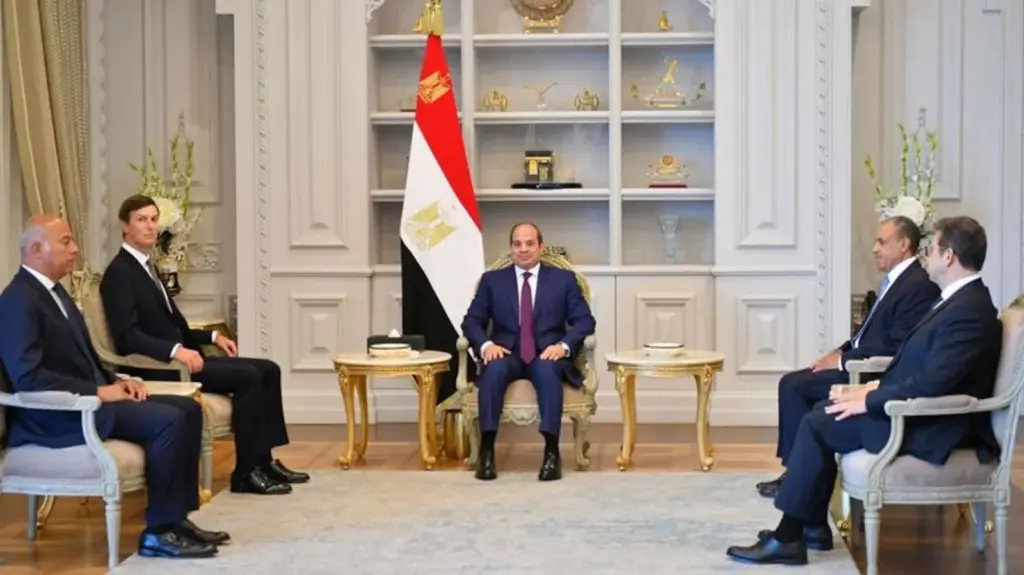
Jared Kushner, the envoy and son-in-law of Donald Trump, has held several meetings in the Middle East over the past 48 hours to promote the ceasefire in Gaza (which was forged by the US president) after Israeli Prime Minister Benjamin Netanyahu rejected this month a specific agreement between Hamas and the Peace Board, the body that oversees the implementation of the truce, regarding the disarmament of the Islamist movement.
One of Sunday’s meetings stands out as extraordinary and as a sign of the Trump Administration’s willingness to break the molds of previous governments. Kushner; Nickolay Mladenov, the head of the Board; and Tony Blair, the former British prime minister involved in the process, met in Egypt directly with Jalil al Haya, the new leader of Hamas, despite the fact that the US considers it a terrorist movement.
Monday was Netanyahu’s turn, who acts in Gaza with an eye on the upcoming October elections, in which polls predict a complicated scenario for him. The statements after the three-hour interview exude optimism, despite Hamas being the one who formally accepts the disarmament agreement of the Board and Israel rejecting it.
The Israeli prime minister reported “deep and constructive conversations” in which they agreed that the reconstruction of devastated Gaza — which has been paralyzed by Israel for ten months — will only begin after the “disarmament and demilitarization” of Hamas and the other armed factions. The Board, for its part, has assured that the “very productive” talks produced an agreement on “a way forward” which Israel “will give a chance.” “Now it is up to Hamas to demonstrate if it really intends to comply,” it added.
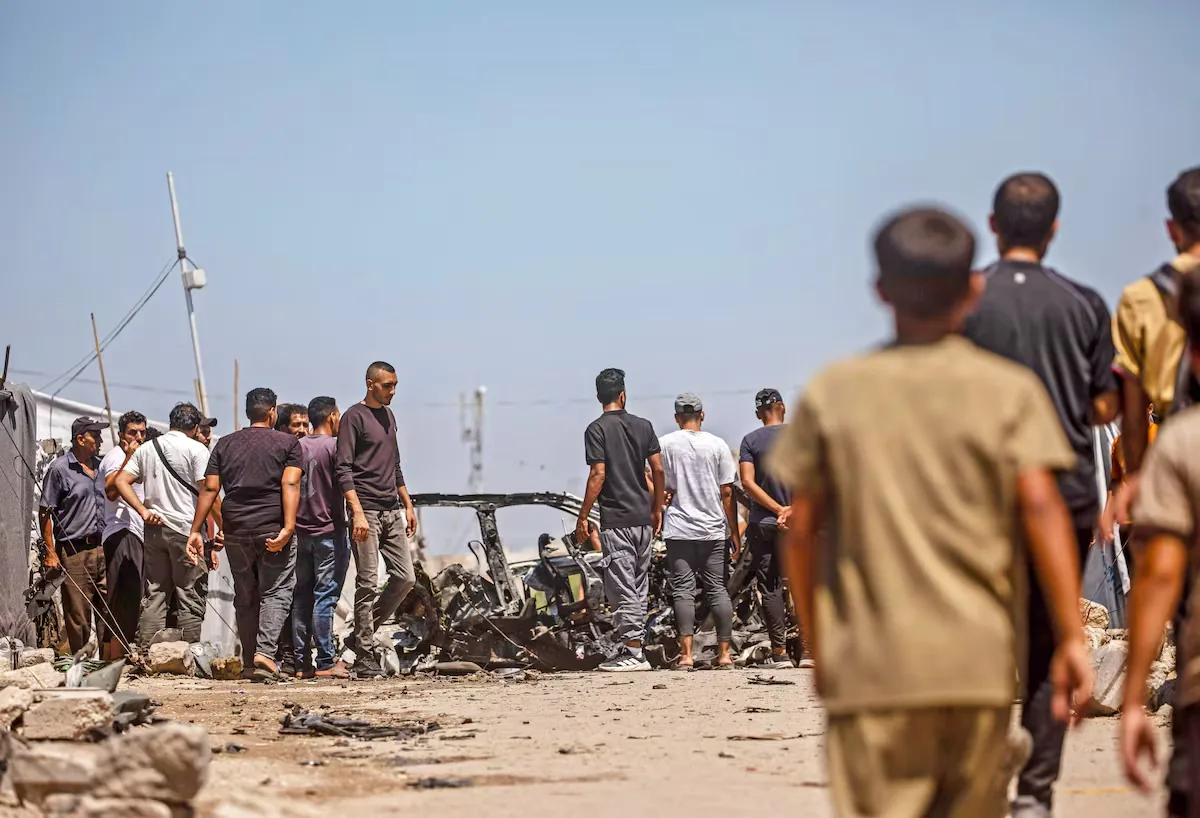
The key issue is how much the US and the Board (presided over by Trump) will continue to allow Israel to fail to meet the obligations it undertook when it signed in October the agreement by which it recovered the last hostages — alive and dead — that Hamas had taken in its October 2023 attack. Since then, Israel has not stopped bombing daily, preventing reconstruction, and hindering the entry of humanitarian aid to a Gaza that still lacks water and electricity, with hundreds of thousands of people living in tents.
Despite Netanyahu’s no to the disarmament plan, Israel has eased attacks in the last two weeks, without stopping them completely. On one hand, there are those it considers self-defense: the dead for approaching or crossing the Yellow Line, which separates the part (53%) of Gaza occupied by Israeli troops and the rest, in the hands of the Hamas government. The army usually describes them as militants against whom it opened fire when they suspiciously approached the troops, but they have often turned out to be civilians trying to return to their hometowns or seeking sustenance.
Read more King Harald V of Norway, hospitalized in Oslo for anemia
Then there are the so-called “targeted assassinations.” Israel has been applying in recent days a distinction according to which it only bombs those Palestinians it presents as “time bombs,” because they would supposedly be planning to attack the troops. This is the case of the two killed this Sunday, adding to more than 1,260 in the ten months of ceasefire. Last week, the far-right Israeli Minister of National Security, Itamar Ben Gvir, advocated killing “every night” in Gaza about 30 or 40 people.
Targeted assassinations were in the spotlight because they were already prohibited by the ceasefire agreement and were again prohibited, in July, by the pact for Hamas to hand over weapons. According to the newspaper Haaretz, the meeting between Kushner and Netanyahu ended with an agreement that will allow them to continue. Leaks from the interview also indicate that the weapons will be kept under the custody of the technocratic government (which Israel still prevents from entering), but they will first be put in the hands of US General Jasper Jeffers for destruction or neutralization, a hard pill for Hamas to swallow. They will also have to hand over light weapons, which they initially intended to keep, considering them defensive, not offensive.

The day before, after the unusual meeting with its leader, Hamas issued a statement that barely provided details. The Islamist movement insisted that the Peace Board and mediators must “fulfill their responsibilities and force the occupation [Israel] to respect all its obligations of the first phase [of the ceasefire], stopping all violations, killings, and raids.” Al Hayya insisted that Hamas will only be able to fulfill its part of the agreement if Israel ceases attacks and that Netanyahu must publicly accept the disarmament pact. Kushner, on the other hand: only if they take tangible disarmament steps, the US will do its best to get Israel to take its own, according to Axios.
Netanyahu’s office has reported another result of the meeting: the creation of two working groups whose composition or schedule is not detailed. One will be dedicated to the demilitarization of Gaza and the other to issues of “sanitation, drinking water, and other public health problems for the population of Gaza.”
The Israeli siege has turned the Strip into an unhealthy cesspool where skin diseases and infestations of insects, mosquitoes, and rodents spread. Aware that any improvement in the living conditions of Gazans annoys much of his base, Netanyahu justifies the measure by saying that Gaza’s public health problems “also impact the population of Israel,” due to the geographical proximity.
Read more Netflix files a motion to dismiss the lawsuit filed by Tyra Banks for defamation