Mexico is getting used to living without El Mencho, a prominent figure in the continental criminal narrative, who evaded the State and justice for years while building his formidable criminal empire. Killed in a military operation six months ago in Jalisco, his void is currently filled by the persistent offensive of the State against his group, the Jalisco New Generation Cartel (CJNG), which he himself founded 15 years ago and led until his death. His disappearance, the subsequent arrests of important figures in the criminal network, and the apparent harassment by authorities of others shape the present. Now, the question points to the future reorganization of the criminal network and its consequences.
Read more Gabriel Boric: the swift comeback operation of the Chilean left leader
It is still strange today to think of a criminal landscape in Mexico without El Mencho, a feeling similar to that left by the arrest of the old Sinaloa capo, Ismael Mayo Zambada, betrayed by his old partners two years ago; and also similar to the final departure of Joaquín Chapo Guzmán to the United States, after fantastic escapes and flights that kept authorities on their toes for a long time. The fall of El Mencho, an operation that left dozens dead, among authorities and civilians, and turned the center of the country upside down that fateful February 22, with roadblocks organized by his group in several states, opened a new era in Mexico, whose main lines are still difficult to guess.
The absence of the capo invites a review of his origins, an exercise that immediately shows parallels with other criminal networks, mainly from the Pacific, and sketches an image of the pioneers of trafficking in the country, seen as aliens by the present. Rubén Oseguera – who later adopted the name Nemesio – was born in 1966, in Naranjo de Chila, a village in Aguililla, a cursed town between Tierra Caliente of Michoacán and the Sierra Costa region. Cursed, because progress, which appeared in the region with the taming of a couple of rivers for agro-industrial use, the Balsas and the Tepalcapetec, and the construction of a port on the coast, in Lázaro Cárdenas, passed it by. The logic of subsistence prevailed in the municipality. Aspiring to better lives seemed out of reach.
However, several families from Aguililla rebelled. They bet on a unique business, the cultivation of marijuana for export. Historian Enrique Guerra Manzo, from the National Autonomous University of Mexico, explains that “since the 30s and 40s, there were already narcotic crops in Aguililla, but they became widespread in the postwar period.” Marijuana gave way to poppy, the raw material for heroin. The hesitations of the early years led to an industry that by the late 60s looked robust. When El Mencho was born, the hippies of California consumed increasing amounts of cannabis from Mexico. The Summer of Love in San Francisco made the farmers of the ravines of southwestern Michoacán happy.
The main family in the cultivation of marijuana and poppy in the area were the Valencia. “The Valencia are from Dos Aguas, a village in Aguililla, and the family patriarch is credited with introducing poppy to Michoacán,” says Guerra, referring to Miguel Ángel Félix Cornejo, who was murdered in 1994. “In those times, in the 70s and 80s, everyone knew each other around there. Dos Aguas, Naranjo de Chila, El Aguaje, El Limón, form a very close triangle. That’s where the Valencia and El Mencho were born,” explains Guerra, author of a monumental study on crime in the area, Violent Territories in Mexico. The Case of Tierra Caliente, Michoacán (Terracota, 2022).
The region pointed out by the expert draws a kind of Michoacán Badiraguato, a counterpart to the Sinaloan municipality where Chapo Guzmán, the Beltrán Leyva brothers, or Rafael Caro Quintero were born, also the cradle of marijuana and poppy crops in the northern golden triangle, a sibling of the Michoacán one. That’s where El Mencho grew up, in the midst of the “golden twenties,” the two decades – from the early 60s to the mid-80s – when Michoacán, particularly Aguililla, became the cannabis granary of North America. Much has been said about the virtues of the ravines of Sinaloa, Durango, and Chihuahua, but those of Michoacán were no less.
In his book, Guerra suggests that such a context gave “three options to young men: to live a rural life (with or without land), to migrate to the United States and aspire to earn better wages, or to enter the narcoeconomy hoping to get rich.” El Mencho tried the last two. “As a teenager, he was already taking care of the Valencia’s orchards, with whom he befriended,” says the author, referring to their avocado crops, in territories somewhat north of the torrid Tierra Caliente, but also to the narcotic fields. In the second half of the 80s, Oseguera crossed to the other side of the border. His first arrests happened there at that time. “Then he was in prison in Texas, roughly from 1991 to 1997, for a drug matter. And then he came back,” explains Guerra.
The following years meant Oseguera’s definitive preparation before reaching the big criminal leagues. At the turn of the century, he became a police officer in Tierra Caliente, emulating other capos, such as Miguel Ángel Félix Gallardo, a trafficker who led the Guadalajara Cartel in the 80s. Later, with the knowledge acquired, his trail was lost in the ravines of Michoacán. These were difficult years in the area, full of change. The PRI lost hegemony in Mexico, its regional power collapsed. The mafia agreements of federal security forces dissolved like wet paper. Everything was up in the air. From Tamaulipas, a new way of understanding criminal economies spread across the country. They are the Zetas, a violent army of thugs at the service of the Gulf Cartel who try to co-opt traffickers and criminals, by force or persuasion.
The wars in Michoacán have been bloody since then. The Zetas against the Millennium Cartel, the name assumed by the Valencia, allied with Sinaloan traffickers, before their fall between 2010 and 2011; the Zetas against the Michoacán Family, a league of local criminals, supported by the regional agroindustry and a narrative of rootedness and respect for the local; the fall of the latter in favor of the Knights Templar, a pseudo-religious evolution of the former, heirs of the Zetas’ plundering logic; the rise of the self-defense groups, a rebirth of the rural guards of the early century, and their wars against the Templars…
In these troubled waters waits El Mencho. At first, he supported the Valencia, but the fall of their leaders in the early 2000s pushed him to venture alone. “In 2011 Nacho Coronel died,” says Guerra, referring to the leader of the Sinaloans in Michoacán, “and El Mencho became independent. That’s when the meteoric and expansionist rise of the CJNG began. And something this cartel inaugurated is this logic of criminal franchises, absorbing structures and making them work for them, something the Zetas did, but they perfected it. In this scenario of incessant wars, there are learnings and adaptations. And the CJNG has shown great capacity for evolution and adaptation,” he concludes.
The previous phrases summarize the last 15 years. With El Mencho looming, new leaderships grow: his brothers Antonio and Abraham and other relatives, like his son Rubén and his stepson, Juan Carlos; Los Cuinis, remnants of the Valencia family; Audias Flores, the Gardener, from southeastern Michoacán; Gonzalo Mendoza, El Sapo, who controls the neighboring state of Jalisco along with others, such as Ricardo Ruiz; the Álvarez Ayala and Guerrero families, in Michoacán… No one touched them for years, while the CJNG, following the logic Guerra proposes, expanded from Tamaulipas to Chiapas, from Nayarit to Tabasco, always innovating. From crop drugs to synthetics, from drug trafficking to fuel theft.
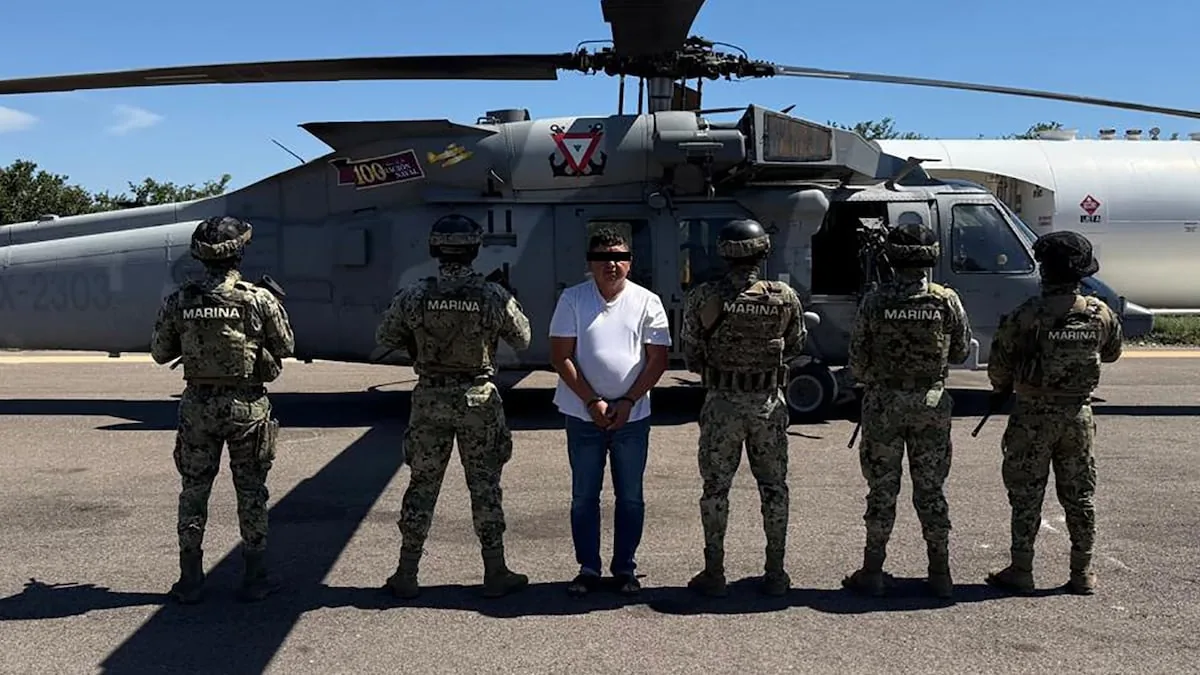
That was the shining panorama of the group until last February. What seemed impossible, even for the federal Government, aware of the powerful security rings protecting the capo, happened. El Mencho fell. Elite Army forces, supported by good intelligence information, found him in a town in Jalisco. In the firefight between his group and the military, the leader died from gunshots. In the following months, authorities have arrested important leaders, such as the Gardener or Ramón Álvarez Ayala, and have been close to capturing others, like Heraclio Guerrero, alias Tío Lako, just this week.
Talking about reorganization right now is somewhat risky. The CJNG remains crouched, watchful, waiting for the first signs of weakness in the state offensive. In Mexico and the US, it is assumed that El Mencho’s stepson, Juan Carlos Valencia, alias 03, has taken leadership. But with so many changes and arrests, such an assertion seems more like a forecast. El Mencho is gone, as are some candidates for succession. Mexico is in a strange limbo: the old does not quite die, nor the new quite born, a statement that also applies to Sinaloa and the fratricidal war in the Pacific Cartel. Few times in recent years in the country has the criminal world seemed so volatile.
Read more Russia has withdrawn its ambassador from the United Kingdom