







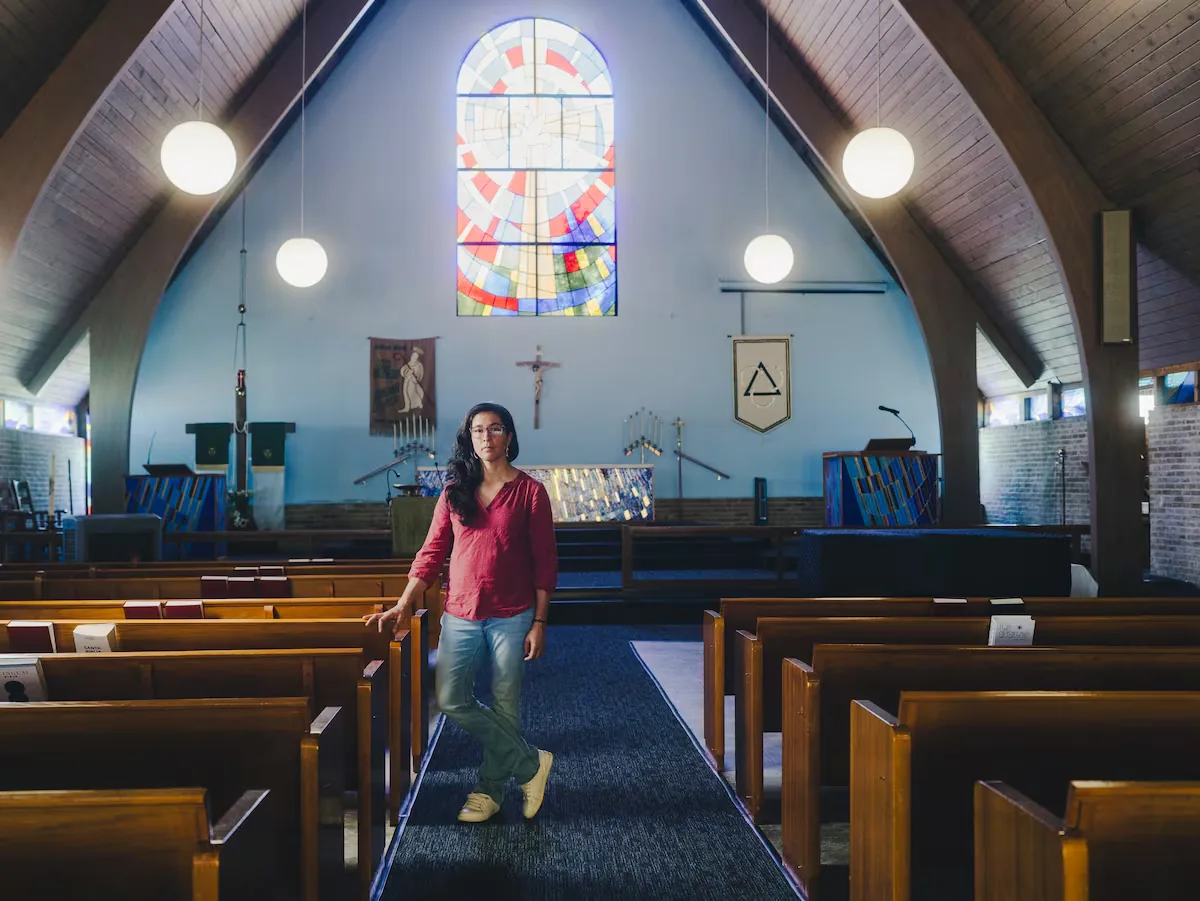
Pastor Dianne García’s church in San Antonio, Texas, has lost 32 of its active collaborators since President Donald Trump returned to the White House: they have been detained by immigration agents and almost all deported. Among her parishioners, who number about 500 migrant families, she estimates that one in four has someone detained or already expelled from the United States. As a result, about 50 children in her community live without one of their parents. The figures are not just in her head. She has been recording each detention and expulsion in Excel spreadsheets to understand the magnitude of the help needed.
Read more Chavismo halts a proposal to dollarize the Venezuelan economy
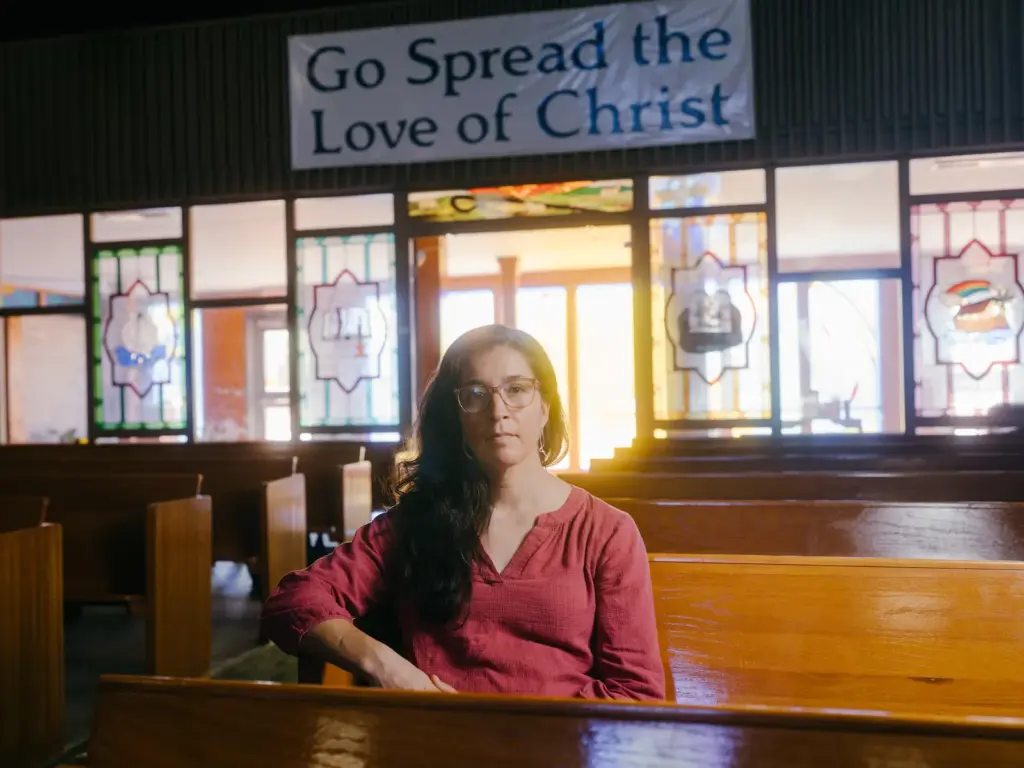
“There are many more families in crisis here in the city because of what ICE is doing. Some tell me: ‘It’s like they are hunting us like animals in the streets,'” says the pastor from her church, which she has named ‘the migrants’ church.’
She, an American whose mother was born in Ecuador, founded this Mennonite religious community in 2023 along with four women newly arrived in the United States with their families from Venezuela, Honduras, the Dominican Republic, and Haiti. The help they provided at that time was to facilitate migrants’ initial stay in the country, among other things, connecting them with the network of shelters set up by the city itself.
But in the last year and a half, García says, the government’s aggressive mass detention campaign has dragged migrants through different stages: the fear of staying in the country; the removal of temporary immigration benefits and generating economic pressure that prevents them from paying rent or buying food for the children; and mass detentions and family separations.
“They know what they are doing. It is their strategy to make the community suffer,” condemns the pastor. “I had never seen anything like this.”
That has caused, she explains, many migrants in San Antonio to avoid asking for help from authorities for months: “They were wandering the city or locked in their homes not knowing what to do.” In April, she decided to ask a group of people to look for these migrants on the street and give them information about the church. She began receiving call after call from affected families, one after another, and then from detainees in Immigration and Customs Enforcement (ICE) centers asking for help.
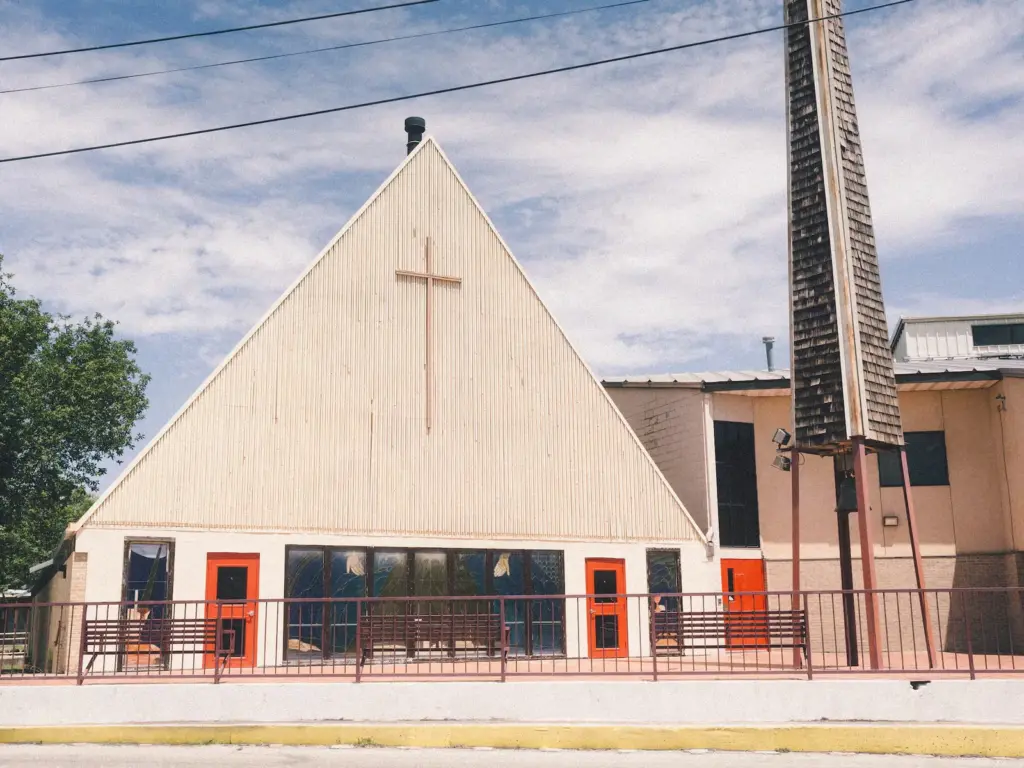
Since then, the church has provided members of its community with religious support, funds to pay rent or buy food, and a space to stay temporarily where they feel safe.
EL PAÍS asked ICE for the daily average of detentions in several Texas cities, including San Antonio. The agency responded to the email with different information than requested. An analysis by the newspaper The New York Times placed this majority Hispanic city in March 2026 as the second with the most daily migrant detentions in the state (71), after Dallas (85).
According to ICE data provided to the Deportation Data Project at the University of California, Berkeley, the federal agency detained nearly 50,000 people in July alone. This is the highest monthly detention figure since Trump assumed his second presidency. And the pressure felt in the numbers is reflected in the migrant families of San Antonio.
“We have not been able to be happy”
Jennifer’s daughters play in the migrants’ church kitchen: the eight-year-old watches videos on a cell phone sitting awkwardly on a chair; the younger ones, five and three years old, flutter in the hallway from the fridge to the door. They do not go to school. The only one who goes out every day is her husband, and he does so fearfully.
“He always tells me: ‘Here I leave you the savings, in case they detain me.’ He says that if that happens, he will immediately sign to be deported. And behind him, we go. Every day we talk about the same thing,” says this 28-year-old Venezuelan woman who preferred to use only her first name out of fear. Two days before the interview with EL PAÍS, they had their last scare: a police officer stopped the car in which her husband was with some coworkers because the driver started without everyone wearing a seatbelt. Shaking, Jennifer called Pastor Dianne García by phone. Shortly after, she calmed down because they let them go.
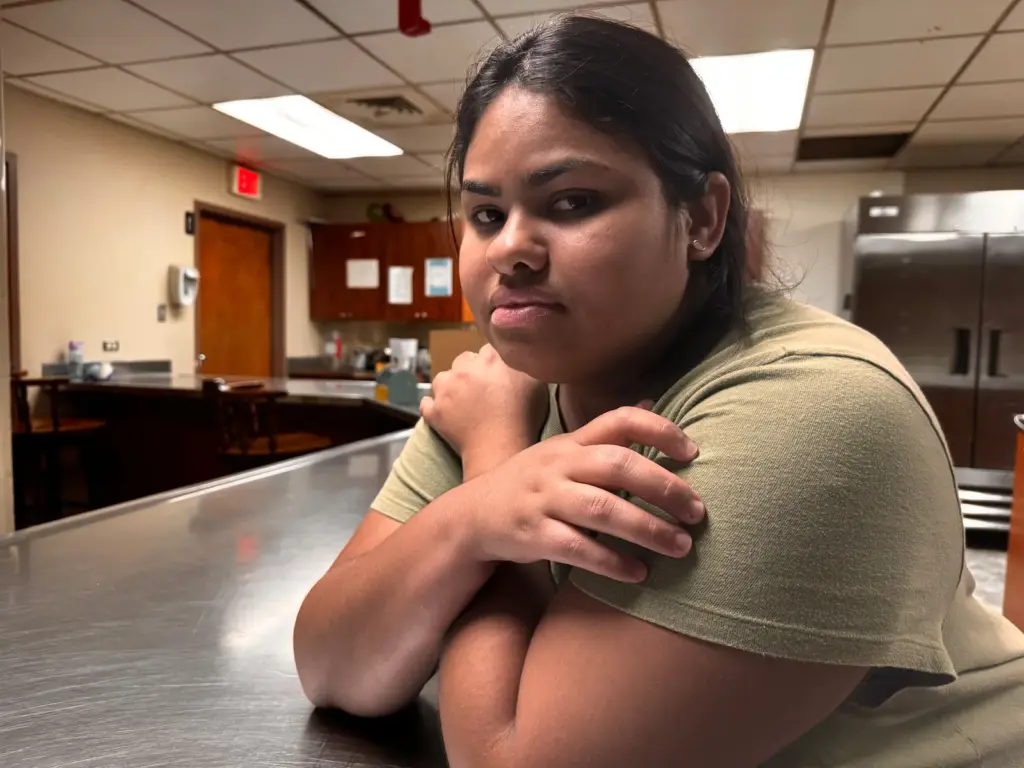
At least six police forces patrolling the city of San Antonio have accepted some form of cooperation with immigration agents, known as 287(g), according to ICE records. This allows them to perform some federal functions to assist in migrant detention. More forces may join: in early August, the Trump administration announced it would distribute up to $3 billion to states and local governments that ally with the Department of Homeland Security.
For Jennifer, living in the United States has gone from “a dream to an American nightmare.” They entered the United States in October 2024 with humanitarian parole (CHNV) granted a year earlier by former President Joe Biden for migrants of four nationalities, one of them Venezuelan. But in March 2025, the Trump administration announced the expiration of that status — which gave them two years of stay while they sought another legal path — for all its beneficiaries. “That’s when we started to become very unstable economically and emotionally,” Jennifer says.
Then, in May, for three consecutive days, ICE knocked on the door of the apartment they rented. “They covered the peephole with a finger, and one agent pointed at the door and the other at the window, as if looking for a fugitive,” she recalls. She believes the person in charge of rentals gave the agency the addresses of those without immigration status because other neighbors suffered the same. One of her friends was detained in the operations.
Jennifer says that one of those days, the knocks on her door were so loud that she hid under the bed with her youngest daughter, just a baby. “The scene was terrifying. It traumatized me a lot.”
After that, the family left the apartment and went for a time to a sparsely populated farm town an hour from San Antonio. Her husband had found a job: “We lived in hiding, but not because we owed anything to justice, but out of fear.”
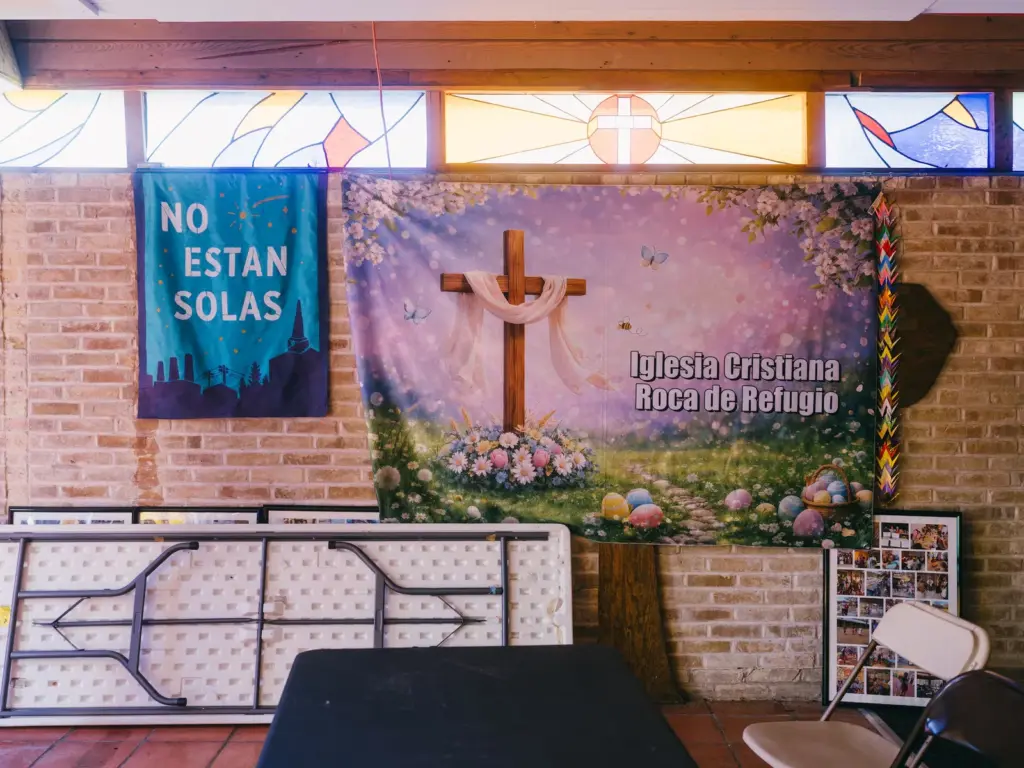
When they returned to the city, they decided to temporarily stay at Dianne García’s church. They already knew her; the pastor had helped them in the past “without seeing if we were Venezuelan or Colombian.” “It is where I feel safe. It is a support network, it is my refuge and where my family is. We all have each other as family and support each other.”
She regrets that, between the fear and persecution they have lived through for years, her daughters have grown up without being able to study regularly, without going out to play in the street with their neighbors or enjoy a summer camp like all children. On the contrary, they do not go out, do not spend: “We have not been able to be happy.”
A collective trauma
The pastor believes God called her to found the church to be able to help at this moment: “We are here because God knew the community would need this support. The worst thing is to go through such a situation alone, and I know many families are alone.” Like Jennifer’s, but also another Venezuelan woman, Yelin, 32 years old, who also decided to use only her first name.
Although they have an asylum process pending, her husband was detained in November and was locked up in an ICE center for eight months. She had to deal alone with rent, food, and house expenses; work; and raising her three daughters aged eight, ten, and fourteen. From working only three days a week as a waitress in a restaurant — to be able to take care of the girls — she had to work every day: “My God, we had so many things to pay. I thought ‘what am I going to do alone.’ I felt like everything was ending.” She also sold the car they had to cover immediate expenses.
One afternoon, when she arrived at her daughters’ school to pick them up, she found them terrified and crying: “They told me: ‘Mommy, the teacher said that if you come late again, she will call immigration,'” Yelin says from the church. Since that day, the girls were afraid to go to school and for their mother to be late picking them up: “They spent a lot of time in terror, a long time that if I was five or six minutes late, the girls would call me scared.”
During that time, Yelin says the church helped cover lawyer fees to free her husband: “Everyone contributed, it was an expense I couldn’t cover. We have met many good people.” ICE released him in July. He still has trouble sleeping at night: he wakes up terrified thinking the agents have come back for him.
Like Jennifer’s family, Yelin’s does not feel free. The mother feels that the experiences they have lived in the United States have changed them all. The eldest daughter, for example, had to grow up abruptly during the months of her father’s detention to take care of her younger sisters while Yelin worked. Now she seems rebellious. The youngest often comforts her mother when she locks herself in the bathroom to cry: “She realized everything and told me: ‘Let’s not suffer, mommy. If you cry, we suffer too.’ They had never been separated from their father for so long.”
By living with migrants and their stories, Pastor Dianne García believes the Trump administration has been generating a collective trauma “that will last for generations” and affects migrants but also everyone living in the United States. The suffering, she says, has been ruining marriages, generating more stress, increasing cases of abuse because there is no trust in authorities. She sees children crying, misbehaving at school, or very reserved children who used to play and now just sit in one place, silent.